
Is Your Attic Costing You Money? The 2026 Guide for Indianapolis & Chicago Homeowners
You just opened your heating bill. December through February in Indianapolis or Chicago will do that to you — peak heating season, and the number on that bill is real. Here's the thing most homeowners never connect: your attic is probably the reason that bill is as high as it is. Nearly half of everything your household spends on energy goes to heating and cooling. And the attic is the single biggest hole in the bucket for most homes in this climate. Not the windows. Not the doors. The attic.
The good news is there's a fix. It's not glamorous, it's not cheap, but it's one of the best investments a Midwest homeowner can make — and March is the best possible time to do it.
Why March Is the Right Time to Fix Your Attic (And Why It Pays Back Twice)
Insulation work is seasonal, and not for the reason you'd think. The attic is miserable to work in during summer (130°F up there) and precarious in deep winter. Late March through May is the sweet spot — moderate temperatures, dry weather, and contractors who haven't yet been swallowed by the HVAC spring rush.
Book now and you get the job done before the spring calendar fills up. Wait until May and you're competing with every other homeowner who made the same New Year's resolution after opening their heating bill.
There's also a compounding return here that most people miss. Insulation you add in spring pays back twice: once in the summer when it slows heat gain and reduces AC load, and again next winter when it keeps heated air inside where it belongs. You get two seasons of savings before you see another painful heating bill.
One more thing worth knowing: the U.S. Department of Energy is explicit that you should optimize your attic insulation before upgrading or sizing your HVAC equipment. Their reasoning is straightforward — if your house leaks heat like a screen door in January, you're paying for more heating capacity than you actually need. Fix the envelope first. Then right-size the equipment. If you've been thinking about an AC upgrade (we wrote about spring HVAC tune-ups here), add the attic to that conversation before you spend money on a new system.

How Bad Is It? How to Check Your Attic Right Now
You don't need a contractor to know whether you have a problem. You need a tape measure and the willingness to poke your head into the attic.
Here's the three-step check:
- Get into the attic. Wear a respirator (N95 minimum), eye protection, and long sleeves — old insulation is itchy and potentially irritating. Bring a flashlight.
- Measure the depth of existing insulation in inches. Measure in a few spots to get a representative read. Stick the tape measure straight down into the insulation and note the number.
- Do the math:
- Blown-in fiberglass: inches × 2.5 = approximate R-value
- Blown-in cellulose (grey, denser): inches × 3.5 = approximate R-value
- Fiberglass batts (pink or yellow rolls/blankets): a 3.5-inch batt = roughly R-11; a 5.5-inch batt = R-19; a 9-inch batt = R-30
Quick benchmark: If you see less than 12–14 inches of blown-in insulation, you are almost certainly below R-38. If you can see the tops of your ceiling joists through the insulation, you're well below that. If the attic floor looks like bare wood or you only see a thin layer of batting, you have a significant problem and this post is for you.

Why Climate Zone 5 Matters (And What the Numbers Actually Mean)
Indianapolis and Chicago are both Climate Zone 5A on the DOE's climate zone map — the same zone, the same R-value targets. This matters because federal insulation recommendations are zone-specific, and Zone 5 is one of the more demanding ones.
Here's what the DOE recommends for attics in Climate Zone 5:
| What's in Your Attic Now | DOE Recommendation |
|---|---|
| Nothing (uninsulated) | Add R-49 to R-60 |
| Existing R-11 (common in 1960s–70s homes) | Add R-38 to R-49 |
| Existing R-11 to R-22 | Add R-38 |
| Target total | R-49 to R-60 (2021 energy code: R-60) |
Now here's the honest reality check for this market. Most homes built before 1970 in Indianapolis and Chicago — Broad Ripple, Irvington, Logan Square, Oak Park, the older inner-ring suburbs — have little or no insulation, or whatever a previous owner threw in years ago that's now compacted and degraded. Homes from the 1970s and 1980s typically have R-11 to R-30. Almost none of them are at R-49.
If your home was built before 1990, assume you're short until the tape measure tells you otherwise.

Air Sealing First — The Step Nobody Tells You About
Here's the thing most insulation posts skip entirely: adding insulation on top of air leaks is mostly a waste of money.
Insulation slows heat transfer. Air leaks bypass insulation completely. A single old recessed light fixture in your ceiling — the kind with an open top — can leak as much air as leaving a window open three inches. You can blow R-60 of cellulose on top of that fixture and the heat is still pouring through the hole underneath, traveling right through the insulation like it isn't there.
The sequence is non-negotiable: air seal first, insulate second. This is what ENERGY STAR and the DOE both say, and it's what any contractor worth hiring will tell you.
Common air leak points in Zone 5 attics include:
- Recessed light fixtures — especially older non-IC-rated cans with open tops into the attic
- The attic hatch or pull-down stairs — usually the single largest unsealed opening in the house; often zero weatherstripping
- Top plates of interior walls — the gap between drywall and framing at the top of every interior wall runs the full perimeter of your house
- Plumbing and electrical penetrations — every pipe and wire going up into the attic is a hole if it's not foam-sealed
- HVAC chases and dropped soffits — large cavities that connect floors and act as thermal superhighways
- Chimney and flue gaps — the gap around the chimney where it enters the attic requires fire-rated caulk and metal flashing, not expanding foam
A professional air sealing job uses a blower door test — a calibrated fan that depressurizes the house so a technician can find and quantify every leak. It measures air leakage in CFM50 (cubic feet per minute at 50 pascals of pressure) and creates a before/after baseline. For Nicor Gas rebate programs in northern Illinois, a documented reduction of at least 200 CFM50 is required. That means a blower door test isn't optional if you want the rebate — it's part of the job.

Your Insulation Options: Blown-In, Cellulose, Spray Foam (And Which to Pick)
Here are your realistic options for a Midwest attic floor, what each one delivers, and when each makes sense.
Blown-In Fiberglass
R-value: R-2.5 per inch. To reach R-49, you need about 20 inches of it. Cost: Roughly $1–$2/sq ft installed. The least expensive option. Good moisture resistance, Class A fire rating, no mold risk. The downside: lowest R per inch of the blown-in options, and it can settle over time. Best use: topping off existing insulation where you just need to add depth.
Blown-In Cellulose
R-value: R-3.2–R-3.8 per inch. Reaches R-49 in 13–15 inches. Cost: $0.60–$2.30/sq ft installed (This Old House, 2025). Made from recycled material, treated with borate for fire and pest resistance. Slightly better air resistance than fiberglass — it settles into gaps rather than sitting on top of them. This is the practical pick for most Midwest attic floor jobs. Better R per inch than fiberglass, decent cost, and it handles the irregular surfaces of an older attic better than batts.
Spray Foam
Closed-cell: R-6.0–R-6.5 per inch — the highest R per inch available, and it doubles as a vapor barrier. Cost: Significantly higher — $2.75+/sq ft for new construction, 2–3x more in retrofits. The right tool for sealing rim joists, specific large penetrations, and unvented roof deck applications (where foam goes on the underside of the roof sheathing to create a conditioned attic). It is not cost-effective for covering an entire attic floor — the math doesn't work when blown-in cellulose exists. Always professionally applied.
Open-cell spray foam (R-3.5–R-3.8/inch) fills gaps and seals simultaneously, but is more expensive than blown-in for coverage of large areas. Best used strategically alongside a blown-in job, not as a replacement for it.

What You Can DIY vs. When You Call a Pro
There's real work you can do yourself here. There's also work that will hurt you or burn your house down if you try it without knowing what you're doing.
Safe to DIY
- Measuring your existing insulation depth and doing the R-value math
- Adding weatherstripping to the attic hatch ($10–$20 in materials)
- Installing an insulated attic hatch cover — pre-made tent-style covers run $50–$100 and make a significant difference on their own
- Sealing visible plumbing penetrations with expanding spray foam ($15–$25)
- Adding blown-in insulation to an accessible attic floor (blower machines are rentable at Home Depot and Menards, sometimes free with minimum bag purchase) — this is messy, itchy work that requires a full respirator, eye protection, and patience, but it's genuinely doable on a simple attic with good access
Call a Pro
- Full air sealing — requires a blower door test to find and quantify leaks; also required for utility rebate programs
- Spray foam application of any type — chemicals during curing require professional PPE and ventilation
- Unvented roof deck insulation — requires an engineering assessment of moisture management
- Any insulation work near old wiring or unknown gray material — see the warnings below
If your home was built before the 1950s, there is a real chance it still has knob-and-tube (K&T) wiring in the attic. K&T wiring relies on open-air cooling to operate safely. Covering it with insulation traps heat and creates a fire hazard. Before any insulation work in an older home, have a licensed electrician assess the attic wiring. Do not DIY attic insulation in a pre-1950s home without this step.
If your attic contains grey, pebble-like material that looks like rough gravel — that may be vermiculite. Much of the vermiculite insulation sold in the U.S. before 1990 came from a mine contaminated with asbestos. Do NOT disturb it. Do NOT add insulation on top of it. Have it tested by a certified asbestos inspector before any work begins. This is not optional.

What Does It Actually Cost in Indianapolis and Chicago?
| Scope of Work | National Range | Midwest Estimate |
|---|---|---|
| Blown-in fiberglass, attic (1,000 sq ft) | $600–$1,200 | $500–$1,100 |
| Blown-in cellulose, attic (1,000 sq ft) | $700–$1,500 | $600–$1,300 |
| Professional air sealing (blower door) | $1,000–$3,000 | $800–$2,500 |
| Full combo: air sealing + attic insulation | $1,500–$4,000 | $1,200–$3,500 |
The ROI math: proper insulation and air sealing cuts heating and cooling costs by an average of 15%, per ENERGY STAR. On a household spending about $1,100 a year on HVAC energy, that's roughly $165 back per year. At that rate, an $800–$1,500 job pays for itself in five to ten years — and keeps paying after that. For Chicago homeowners in Nicor Gas territory who qualify for the full $900 rebate stack (more on that below), a $1,500 job becomes $600 net. Payback under four years.

Rebates in 2026 — What's Gone and What's Still Real
Let's be straight about something that most insulation content is getting wrong right now:
The federal 25C Energy Efficient Home Improvement Tax Credit — which covered 30% of insulation and air sealing costs up to $1,200 — expired January 1, 2026. It is gone. Confirmed by IRS guidance and tax professionals as of January 2026. If you had qualifying work done in 2025 or earlier, you can still claim it on your 2025 taxes. For anything you have done in 2026, there is no federal credit. Anyone still promoting it is behind. Saorr is telling you the truth.
Here's what IS still on the table:
Northern Illinois — Nicor Gas ($900 Stackable Rebate — Active 2026 ✅)
This is the real opportunity for Chicago-area homeowners. Nicor Gas residential customers can stack two rebates on a qualifying project:
- $500 for air sealing — requires a documented reduction of at least 200 CFM50 confirmed by blower door test; must use a Nicor Gas-approved contractor
- $400 for attic insulation — requires the air sealing be done first; existing insulation must be R-20 or less; result must achieve R-49 or better; before/after photos required; Nicor Gas-approved contractor required
Total stackable rebate: $900. Requirements are real — you can't just hire anyone. Check the approved contractor list at nicorgas.com before you book.
Indiana (Indianapolis — AES Indiana, Duke Energy)
Both AES Indiana (formerly IPL) and Duke Energy Indiana have offered insulation rebates for residential customers. Specific 2026 amounts are subject to change — check each utility's website directly or use the ENERGY STAR Rebate Finder at energystar.gov, which pulls current rebates by zip code and is always up to date. Indiana's HOMES program (IRA-funded, via the Indiana Office of Energy Development) also offers whole-home retrofit rebates, though IRA-funded programs have faced some uncertainty under the current federal administration. Verify current status at in.gov/oed before counting on it.
For Both States
The ENERGY STAR Rebate Finder (energystar.gov/rebate-finder) is the cleanest way to see what's available at your specific utility. Enter your zip code and it returns current rebates — not year-old blog post numbers.
How to Find a Qualified Insulation Contractor (Without Getting Burned)
Insulation is a less-regulated trade than plumbing or electrical, which means the quality range is wide. Here's how to sort the real ones from the guys who'll blow fiberglass into your attic without sealing a single leak and hand you a receipt for a job that doesn't accomplish half of what it could.
What to look for:
- BPI (Building Performance Institute) certification — a BPI-certified contractor has been trained and tested on building science, air sealing, and insulation best practices. This is the credential that matters most for whole-home energy work.
- Nicor Gas-approved contractor status (northern Illinois only) — if you want the $900 rebate, the contractor must be on Nicor's approved list. Ask before you book.
- Blower door capability — a contractor who doesn't own a blower door cannot do professional air sealing. Ask: "Do you perform blower door testing?" If the answer is no or vague, they're not doing real air sealing work.
- Written scope and report — you should receive a written estimate that specifies the existing R-value, the target R-value, the type of insulation, and the air sealing work included. After the job, you should get a written report with before/after CFM50 numbers if air sealing was part of the scope.
Red flags:
- A quote that doesn't mention air sealing at all — this is a blown-in-only contractor who may be leaving significant money on the table for you
- No mention of assessing for K&T wiring or vermiculite before beginning — this means they haven't done it or haven't asked
- A price significantly lower than the market range — usually means corners are being cut on the air sealing step, which is also the most labor-intensive part of the job
- No written estimate; verbal-only pricing
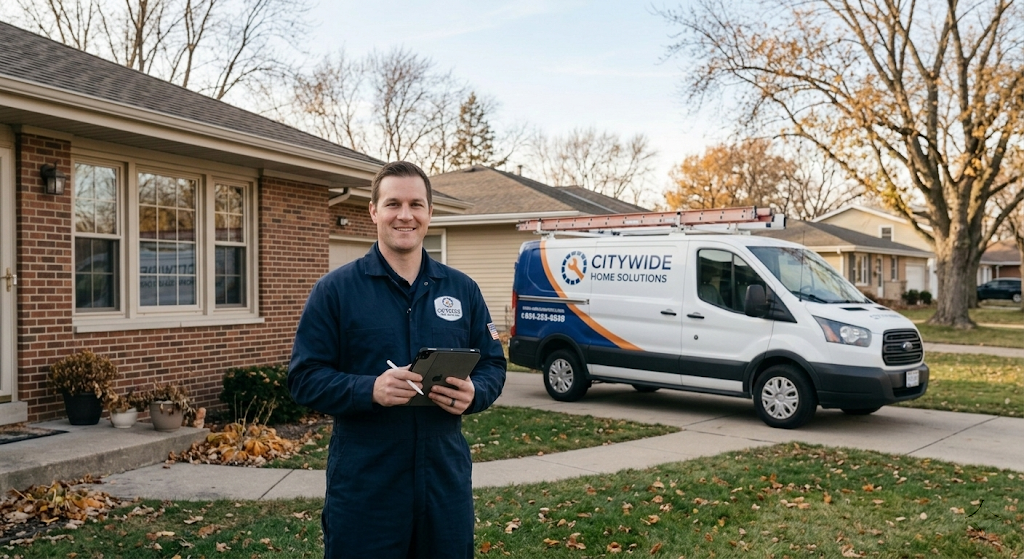
Saorr connects Indianapolis and Chicago homeowners with vetted, qualified insulation contractors — contractors who've been screened, not just whoever's available on an aggregator. Find one in your area, read local homeowner reviews, and get a quote before the spring rush hits. The calendar fills up fast once the weather breaks.
Your heating bill already told you the problem. The fix is in the attic — and the window to do it right, at the right price, with the right person, is open right now. Don't close it.
Find Trusted Pros Near You
Ready to start your project? Connect with vetted, top-rated contractors in your area.
Get Started