
Whole-Home Backup Generator: What Indianapolis & Chicago Homeowners Need to Know Before Storm Season (2026)
Whole-Home Backup Generator: What Indianapolis & Chicago Homeowners Need to Know Before Storm Season (2026)
Every spring it's the same story. A nasty derecho rolls through central Indiana, knocks out power for three days, and suddenly every electrician and generator dealer in the metro has a 6-to-8 week backlog. Phones ringing off the hook. Homeowners with wet basements and spoiled refrigerators scrambling to get on a waitlist they should've been on in February.
Don't be that person.
Whether you're in Indianapolis, Carmel, Naperville, or the northwest Chicago suburbs, this guide is going to walk you through everything you actually need to know about whole-home backup generators — real costs, what size you need, what's legal, and why the "I'll deal with it later" crowd always regrets it. Let's get into it.

Why Midwest Homeowners Can't Afford to Skip This
Let's be real about what we're dealing with here. The Midwest isn't Florida — we don't just get a few tropical storms per year. Indianapolis and Chicago sit in a zone that gets hit from every direction: spring derecho events, summer thunderstorm lines tracking northeast out of central Indiana, lake-effect chaos in the Chicago metro, and the polar vortex winters of 2019 and 2024 — and severe cold events in between — for anyone without backup power.
Indiana averages 10–20 significant storm-related outage events per year. AES Indiana and ComEd — the main electric utilities serving Indianapolis and Chicago respectively — both have aging infrastructure in suburban and rural fringe areas. When those lines go down, you're not waiting six hours. You're waiting two to five days.
Now add sub-zero temperatures to that math. A three-day outage in July is miserable. A three-day outage in January with a broken-down family member on a CPAP machine or home oxygen is a medical emergency.
And here's the Midwest detail most national guides miss entirely: your sump pump. Both Indianapolis (White River basin drainage) and Chicago suburbs (flat terrain, high water table) have some of the highest basement flooding rates in the country. A storm that takes out your power also dumps three inches of rain on your neighborhood. No power, no sump pump. That's a $30,000–$50,000 finished basement flooded in two hours. A generator pays for itself the first time it saves you from that call to your insurance company.
The other timing issue: installation lead times run 4–12 weeks in both markets. If you're reading this in March or April, you're already in the danger zone. Contractors book up fast heading into storm season. Order in the off-season — fall or early winter — and you'll get better scheduling, sometimes better pricing, and definitely less stress.

What Does a Whole-Home Standby Generator Actually Cost?
The internet is full of "generators cost $1,500!" articles that are technically true if you're buying a portable unit to run a space heater and a lamp. For a real, whole-home standby system, here's what the numbers actually look like.
National average installed cost: $5,090 — but that figure is dragged down by portable and partial installs; many sources peg it as labor-only, not all-in. Current cost aggregator data for a complete whole-home standby system puts the real number at $6,000–$12,000 nationally before local labor adjustments. Budget accordingly.
Unit Cost by Size (Equipment Only, Before Install)
- 7.5–10 kW: $2,000–$3,500 — too small for most 2-story homes with central A/C
- 14–18 kW: $4,000–$5,500 — solid for homes under 2,000 sq ft
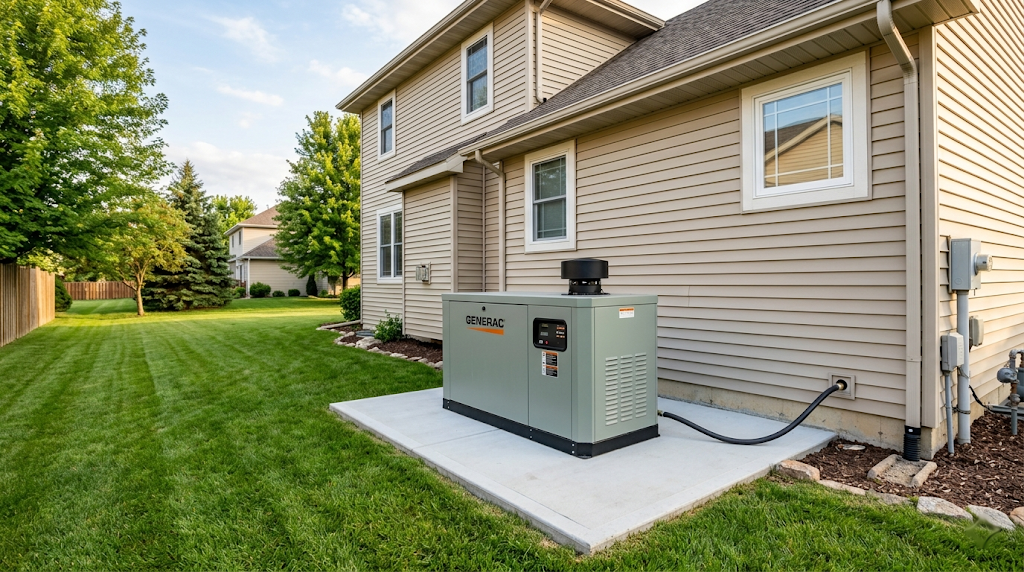
- 20–24 kW: $5,000–$6,500 — the sweet spot for most Indianapolis and Chicago suburban homes
- 26–32 kW: $6,500–$15,000 — larger homes, multiple HVAC zones, electric appliances
All-In Installed Cost (What You'll Actually Pay)
- Indianapolis metro (20 kW, natural gas): $7,500–$12,000 all-in
- Chicago metro (20 kW, natural gas): $9,000–$15,000 all-in (union labor rates push costs up 20–35%)
That all-in number includes the unit, automatic transfer switch ($500–$900), concrete pad ($300–$700), gas line work ($200–$1,500 depending on distance), permits ($100–$500), and labor. Get quotes that spell all of this out. If a contractor gives you a unit price without mentioning the transfer switch or permits, ask why.
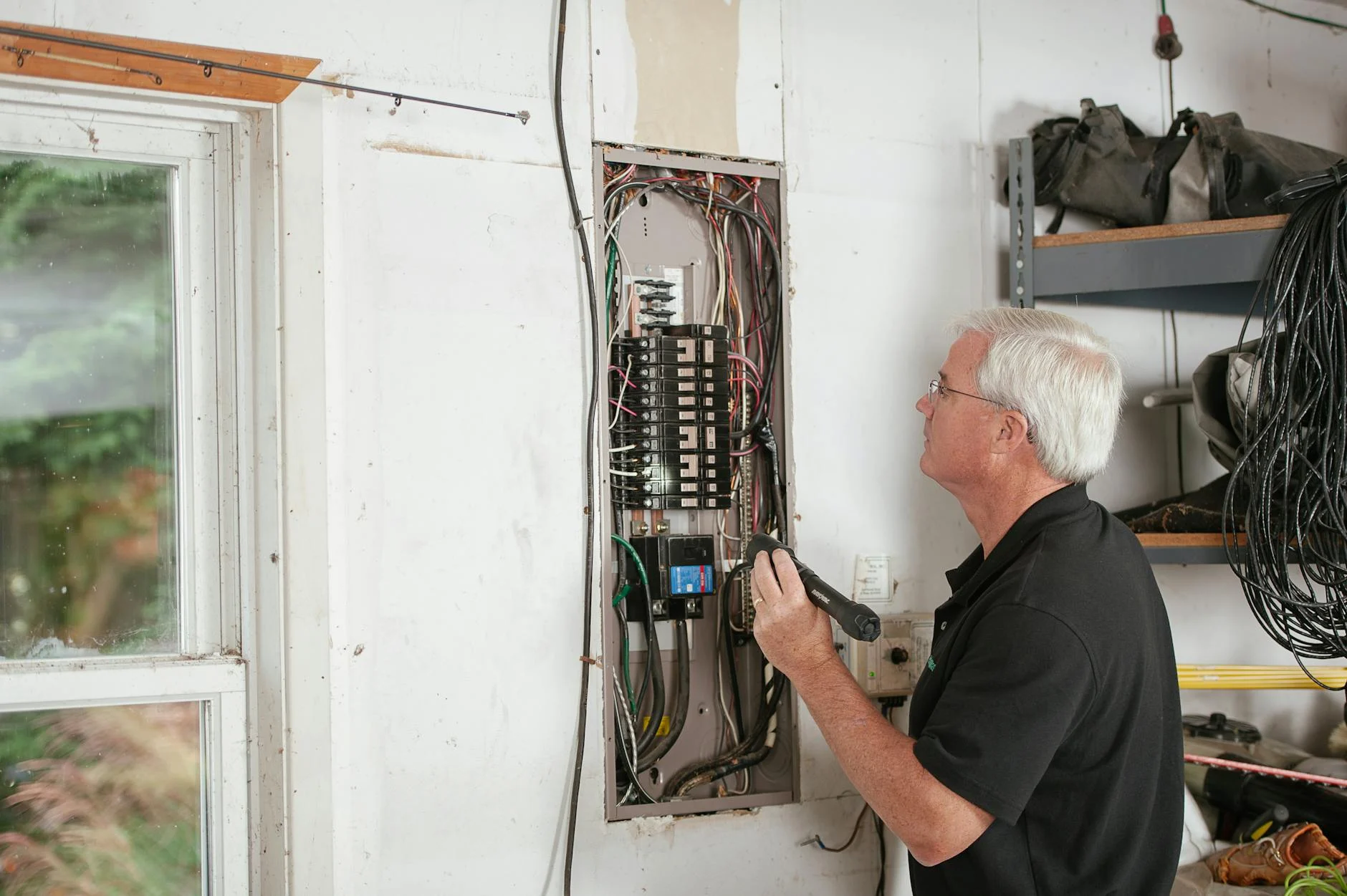
One more budget item to factor in if you're in an older home: electrical panel upgrades. A lot of pre-1990 homes in Indianapolis neighborhoods like Broad Ripple, Irvington, and SoBro — and older Chicago suburbs — are running on panels that aren't compatible with modern transfer switch wiring. Panel upgrades run $1,500–$3,000 and are non-negotiable if the inspector flags it.
What Size Generator Do You Actually Need?
Here's the honest answer: most Midwest homeowners in a 2,000–3,000 sq ft home need a 20 kW unit. Here's how to think through it.
Your dominant load is HVAC. Even though your furnace runs on natural gas, the blower motor and controls are electric. Your central A/C compressor is electric. In Indianapolis and Chicago, those systems run hard — a 3-to-5 ton A/C unit and a forced-air furnace blower are your biggest draws. Size for those first.
Quick Sizing Reference
- Under 1,500 sq ft: 10–14 kW covers basic circuits + HVAC
- 1,500–2,500 sq ft: 16–20 kW for full coverage including A/C
- 2,500–3,500 sq ft: 20–24 kW for standard whole-home coverage
- 3,500+ sq ft: 24–36 kW for large HVAC systems and electric appliances
- Add 3–5 kW if you have a well pump — they have enormous startup surge
- Add 7.2 kW if you want to maintain EV charging during an outage
A properly sized 20 kW generator running a typical Indianapolis or Chicago home will cover: central A/C, gas furnace blower, refrigerator and freezer, sump pump, lights and outlets throughout the house, internet router, security system, garage door openers, and a washer or dryer. That's the full picture — not just the lights and the fridge.
One sizing trap to avoid: don't undersize to save money upfront. A generator that can't handle your A/C compressor startup surge is going to trip breakers on the hottest day of the year, which is exactly the day you need it most. Pay for the right size once.
Natural Gas vs. Propane: Which Fuel Makes Sense Here?
For most Indianapolis and Chicago homeowners, this one is simple: natural gas.
About 70% of Indianapolis metro homes and 80%+ of Cook, DuPage, and Will county homes have natural gas service already. Citizens Energy Group and NICOR have solid infrastructure in both markets. Natural gas gives you unlimited runtime — as long as the gas keeps flowing, your generator keeps running. No tanks to refill, no worrying about a delivery truck not making it through icy roads during a polar vortex event.
The fuel cost math is reasonable too: a 20 kW unit at 50% load burns roughly 150–210 cubic feet of gas per hour (varies by brand). At current Indianapolis and Chicago rates of about $0.80–$1.10 per therm (all-in including distribution and fees), that's around $1.20–$2.20 per hour in fuel. Compare that to a single night in a hotel, the cost of spoiled groceries, or an emergency plumber visit after a frozen pipe.
Propane is the right call if you're in a rural area of Boone, Hendricks, or Will County where gas lines don't reach your property. You'll need at least a 250-gallon tank — 500 gallons preferred — and you'll want to get on your propane supplier's priority delivery list before winter. Don't let the tank get below 30% heading into storm season. At 50% load, a 500-gallon propane tank will run a 20 kW generator for roughly 7–10 days (a 20 kW unit burns around 2.0 gallons per hour at half load, and usable tank capacity is ~80%); at or near full load, expect approximately 4–5 days. Either way, a full tank heading into storm season is the right call.
Battery backup systems like the Tesla Powerwall come up a lot in these conversations. They're good for short outages under 12 hours and they pair well with solar. But a single Powerwall holds about 13.5 kWh. A 3-ton A/C running full blast on a hot day draws around 3.5 kW — that's roughly 4 hours of runtime before you're out of juice. For Midwest winters where you might need heating power for 24–72+ hours, battery-only backup is not a realistic whole-home solution yet. It may be in five years. It isn't today.

DIY vs. Hiring a Pro — Know What You're Getting Into
Let's be straight about this. There's a difference between being handy and being qualified to do this work. Here's the breakdown:
What You Can Handle Yourself
- Site prep and clearing the area where the pad will go
- Researching local setback requirements (call your permit office — it's free)
- Getting three quotes and asking the right questions
- Ongoing maintenance: visual checks, keeping the area clear of debris and snow
What Requires a Licensed Pro (Non-Negotiable)
- Automatic Transfer Switch installation — this is an electrical permit item in both Indiana and Illinois; it requires a licensed electrician
- Gas line connection or extension — requires a licensed plumber or gas fitter in both states
- Permit pulling — reputable contractors pull their own permits; if someone suggests skipping permits, walk away
- Inspection sign-off — required to close the permit in all Indianapolis and Chicago area municipalities
The permit requirement is not bureaucratic nonsense. It protects you. An unpermitted generator installation can void your homeowner's insurance, create liability issues if something goes wrong, and cause problems when you sell the house. Every legitimate installer in both markets pulls permits. Full stop.
The transfer switch requirement is a safety issue, not just a legal one. A generator wired directly into a home's electrical system without a proper transfer switch creates "backfeed" — live voltage on utility lines that can electrocute the lineworkers restoring your power. This is how people die. Don't DIY the electrical.
What to Ask Contractors
- Is this an all-in quote? (unit + transfer switch + pad + gas line + permits + labor)
- Are you licensed in Indiana/Illinois? Can I verify that?
- Do you pull the permits, or do I?
- What's the warranty — on the unit and on your labor?
- What's your estimated timeline from contract to finished install?
Get three quotes. The range can be $2,000–$3,000 apart for the same job depending on who you ask.

Does a Generator Actually Add Home Value?
Short answer: yes, and the math works in your favor in both markets.
A whole-home standby generator typically adds 3–5% to resale value. On a $350,000 Indianapolis home, that's $10,500–$17,500 in added value against an installation cost of $7,500–$12,000. You're potentially coming out ahead just on the value add, before counting a single dollar in avoided damage claims.
In the Chicago suburbs — Naperville, Schaumburg, Downers Grove, Arlington Heights — where home values are higher and buyers are more sophisticated, a whole-home generator is increasingly showing up on buyer wish lists, especially in neighborhoods with a history of extended outages.
The insurance angle is worth understanding too. Some carriers offer discounts for whole-home standby generators — call your agent and ask. More importantly, generators prevent claims. Sump pump failure flooding (very common in both markets during power outages), burst pipe damage from a frozen house, and food spoilage losses all add up. One avoided insurance claim can offset the entire cost of installation.
If you run any part of a business from home — and post-2020, that's a lot of people — a generator may also qualify as a business expense deduction. Talk to your CPA about that one before you file.

Frequently Asked Questions
How long can a whole-home standby generator run?
As long as the fuel holds out. On natural gas, that's effectively indefinite — your generator runs until utility power is restored. On propane, it depends on your tank size and generator load. A 500-gallon propane tank will run a 20 kW generator at 50% load for roughly 7–10 days, or approximately 4–5 days at or near full load.
Do I need a permit to install a generator in Indiana or Illinois?
Yes, in essentially every municipality in both states. You'll need at minimum a building permit and an electrical permit, sometimes a separate gas permit. Marion County, Hamilton County, Cook County, DuPage County — all require permits. Any contractor who tells you permits aren't needed is giving you bad advice. Unpermitted installs can void your insurance and create legal issues at resale.
Can I install a generator myself?
The site prep and pad work? Sure. The electrical transfer switch and gas line connections? No — both require licensed contractors and permits in Indiana and Illinois. The electrical backfeed risk alone makes DIY wiring a serious safety hazard for utility workers. Don't do it.
What size generator do I need for a 2,500 sq ft home?
For a typical 2,500 sq ft Indianapolis or Chicago home with central A/C and a gas furnace, a 20 kW generator is the right call. It covers your full HVAC load, sump pump, refrigerator, and standard household circuits with capacity to spare.
Natural gas or propane — which is better for my generator?
Natural gas if it's available at your home (it is for most Indianapolis and Chicago metro homeowners). Unlimited runtime, no tank logistics, cheapest per hour of runtime. Propane if you're in a rural area without gas service — just maintain adequate tank levels heading into storm season.
What brands should I be looking at?
Generac is the most widely installed residential standby brand and has a dense dealer/service network in both markets. Kohler and Cummins are premium options with excellent reliability records. Briggs & Stratton starts around $3,150 for residential standby units. Get quotes on at least two brands and compare the spec sheets on fuel consumption — it varies more than you'd expect.
How do I find a licensed generator installer near me?
Ask the manufacturer (Generac, Kohler, Cummins all have dealer locator tools). Ask your neighbors who've had it done. Check that any contractor has a current Indiana electrical contractor license or Illinois electrical contractor license — you can verify both online through the respective state licensing boards. Get three quotes. Check references.

Bottom Line: Don't Wait Until the Storm Is On the Radar
Here's the honest summary: if you own a home in Indianapolis or Chicago, have a basement with a sump pump, rely on HVAC to stay comfortable (or safe) in Midwest winters, and you don't have a whole-home standby generator — you have a gap in your emergency plan that a single bad storm can turn into a very expensive problem.
The math is straightforward. A 20 kW natural gas standby generator installed in the Indianapolis metro runs $7,500–$12,000 all-in. In Chicago, $9,000–$15,000. It adds 3–5% to your home value. It potentially saves you from a single $30,000–$50,000 basement flood or a burst pipe disaster. It runs automatically — no hauling out a portable unit at 2 a.m. in the middle of a snowstorm.
The one thing it can't do is get installed the week before a major storm when every contractor in the metro is booked solid. That's why you're reading this now.
If you're in the Indianapolis or Chicago area and you want to get on the right contractor's schedule before the spring rush, reach out to us. We connect homeowners with licensed, vetted generator installers across both metros — no pressure, just real quotes from contractors who pull permits and do the job right.
Get it done before storm season. Your basement will thank you.

Find Trusted Pros Near You
Ready to start your project? Connect with vetted, top-rated contractors in your area.
Get Started