Backflow Preventer Testing & Replacement – Midwest Spring 2026
Backflow Preventer Testing & Replacement: What Midwest Homeowners Need to Know in Spring 2026
Before you flip the switch on your irrigation system this spring, there's a small but important box on your water line that needs attention first — your backflow preventer. It's the last thing standing between your home's drinking water and whatever's sitting in your lawn irrigation lines, garden hose, or boiler system. And in most Midwest municipalities, getting it tested annually isn't optional — it's a code requirement.
Most homeowners don't think about backflow preventers until they get a compliance notice in the mail or fail a home inspection at closing. This guide covers what the testing process actually involves, what it costs across the Great Lakes region, and how to find a certified tester before the spring rush books them solid.
What Is a Backflow Preventer — and Why Does It Matter?
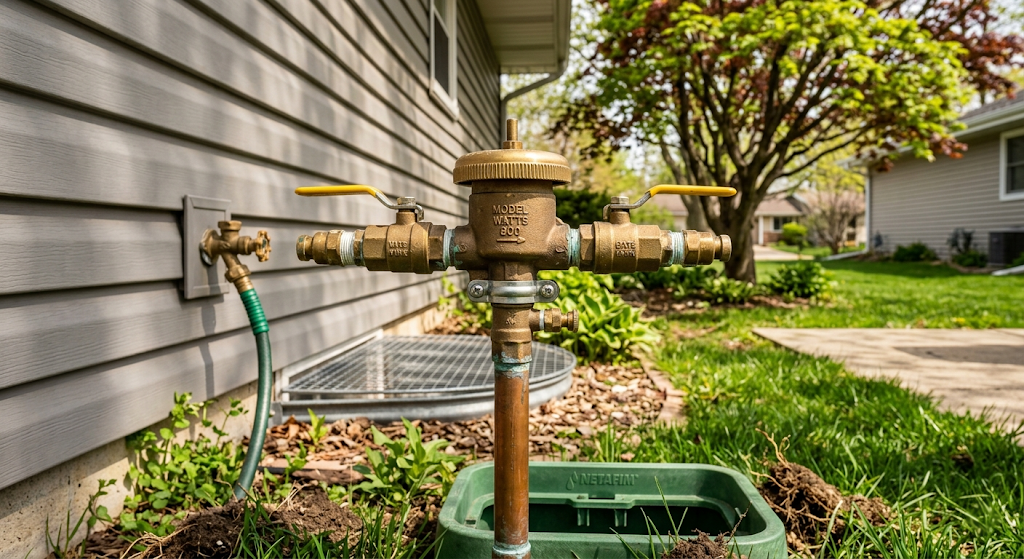
A backflow preventer is a mechanical valve installed on your water line to stop contaminated water from flowing backward into the clean municipal supply. The technical term for what it's guarding against is a cross-connection — any point where potable water and non-potable water can mix. Think irrigation water (fertilizers, pesticides, soil bacteria), boiler water (chemical additives), or even a hose submerged in a bucket of bleach.
When water pressure drops suddenly — a main break, heavy fire suppression use, or a shutoff — the resulting suction can pull contaminated water back through your lines and into the municipal system. A properly functioning backflow preventer stops that from happening.
There are several types, and they're not all the same:
- Pressure Vacuum Breaker (PVB): The most common device on residential irrigation systems. Sits above ground on the supply line to your sprinkler system.
- Reduced Pressure Zone (RPZ): Required for high-hazard connections — boilers, chemical injection, some medical equipment. More complex and more expensive to replace.
- Double Check Valve Assembly (DCVA): Often used for fire suppression systems and commercial applications.
- Atmospheric Vacuum Breaker (AVB): Simple device on hose bibs and individual irrigation zones. Low-hazard use.
- Dual Check Valve: Required at the water service entry in many Midwest cities. Built into the meter assembly.
One common point of confusion: A floor drain backwater valve — the kind that prevents sewage from backing up into your basement — is a completely different device. It's DIY-friendly ($30–$75, roughly 15 minutes to install according to Family Handyman), but it has nothing to do with cross-connection control or the annual testing requirement from your water utility. Don't mix them up.
Why Spring Is the Right Time to Schedule This
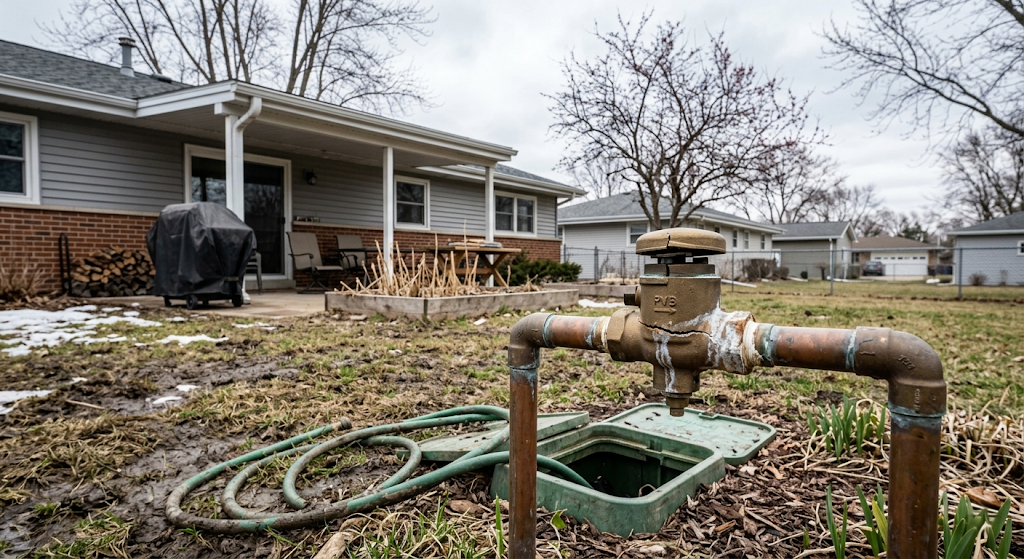
Timing matters for two reasons: utility deadlines and freeze damage.
Most Midwest water utilities mail testing compliance notices in February or March with a May 31 or June 30 deadline. If your utility runs an active program — and many do — failing to get tested on time can mean fines or a water shutoff notice. Columbus Division of Water, the City of Westerville (Ohio), and City of Livonia (Michigan) all maintain cross-connection control programs with enforcement provisions; check each utility's published program details for current requirements. You don't want to find out what "follow-up" means.
The second reason is more practical: spring reveals what winter broke. Across the Great Lakes region — Michigan, northern Ohio, Wisconsin — PVBs and some DCVA units have exterior-mounted components that are vulnerable to freeze-thaw cycles. Detroit's extended freeze-thaw season is among the most demanding in the Midwest for outdoor plumbing. Any device that wasn't properly drained before the first hard freeze may have cracked check valves or damaged springs that won't be obvious until a certified tester pressurizes it in April.
The practical upshot: call in March, not April. Certified testers in suburban Columbus and Detroit markets book up 2–4 weeks out during peak season (April–May). Scheduling in March costs you nothing extra and saves you from scrambling under a compliance deadline.
What Does the Annual Testing Process Actually Involve?
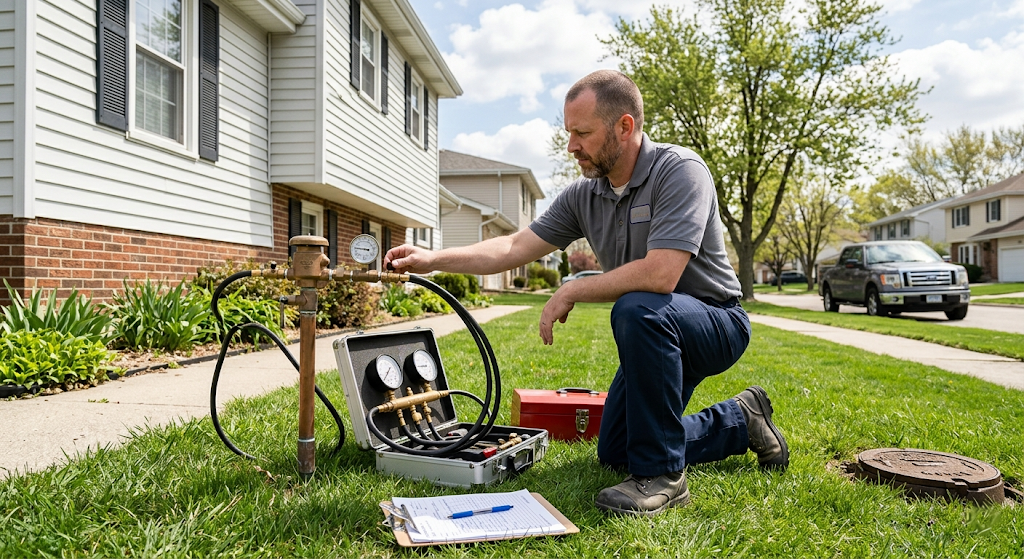
Annual testing isn't just a guy glancing at your device and signing a form. A certified backflow tester uses a differential pressure gauge kit to run the assembly through a series of checks — verifying that the check valves hold under pressure, that the relief valve operates correctly, and that the overall assembly meets the tolerance specs required by your state program.
The test takes 30–60 minutes in most cases. If the device passes, the tester files a report with your utility. If it fails, you've got a decision to make on the spot: repair or replace.
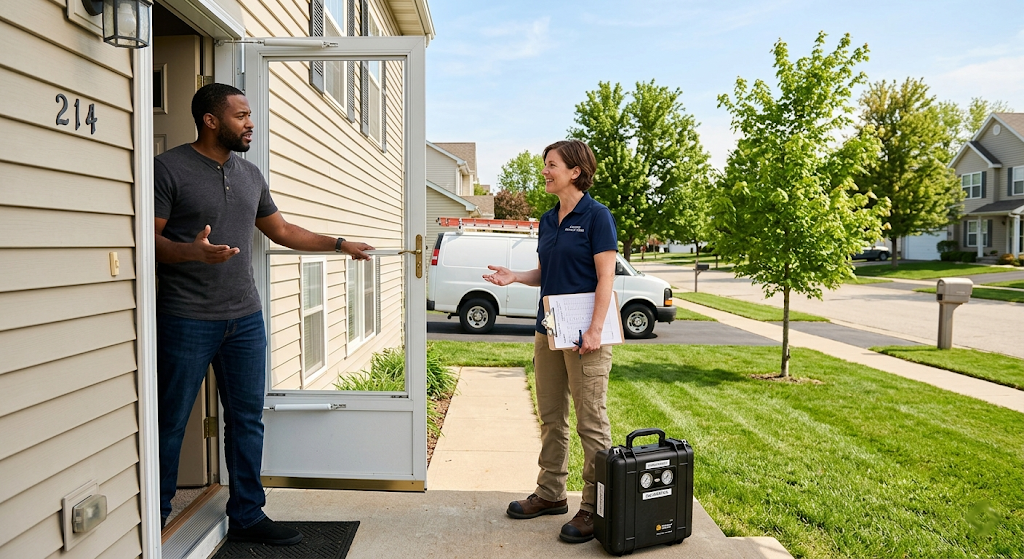
Here's an important detail most homeowners don't know: not every plumber is a certified backflow tester. Every Midwest state — Ohio, Michigan, Illinois, Indiana, Wisconsin, Minnesota — requires state-level certification to perform backflow assembly testing. You can't just call your regular plumber and assume they're qualified. You need someone on your utility's approved tester list. Most utility websites publish this list; if yours doesn't, call and ask before you schedule anyone.
What This Costs in the Midwest
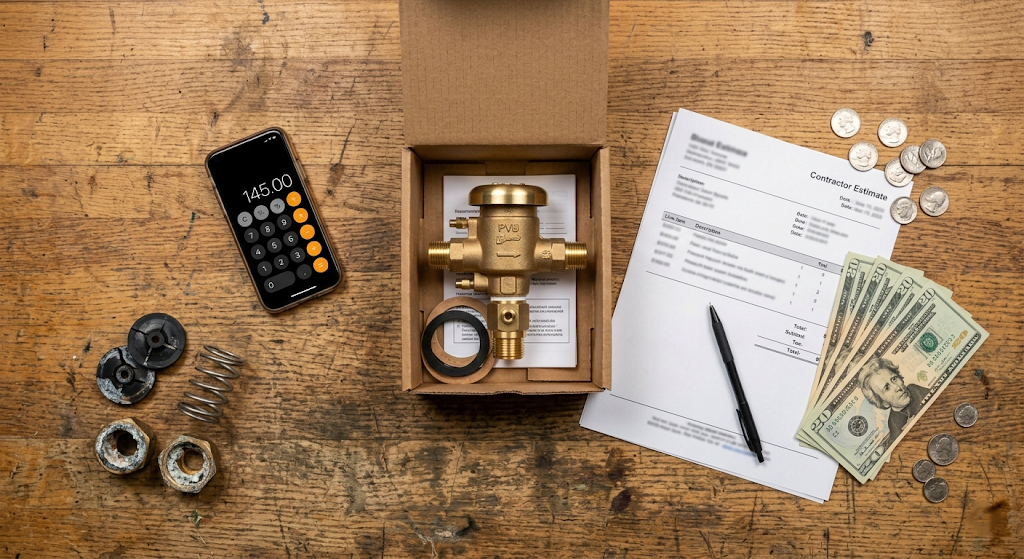
Annual Testing Costs by Market
Testing fees vary more than most homeowners expect — not because the job is different, but because labor market structure and certified-tester availability vary significantly across the region. National average is $100–$200 per device.
| Markets | Annual Testing Range | Notes |
|---|---|---|
| Chicago, Detroit, Minneapolis | $140–$225 | Union-majority labor markets; higher overhead and permit costs |
| Columbus, Milwaukee, Cleveland, Indianapolis | $100–$175 | Near national average; open shop and mixed labor markets |
| St. Louis, Kansas City | $85–$150 | Most price-competitive metros in the Midwest |
| Suburban markets (Dublin OH, Westerville OH, Livonia MI, Naperville IL) | $110–$185 | Slightly above parent metro; high irrigation penetration drives demand but also more certified testers competing for work |
| Rural Indiana, rural Ohio, rural Michigan | $150–$250+ | Travel fees add $50–$100; certified testers are scarce; scheduling lead times 3–6 weeks during peak season |
The test itself is a commodity service — pricing within a market often varies $30–$80 depending on the tester's volume and travel radius. It's worth getting 2–3 quotes, especially in competitive suburban markets like Dublin or Westerville where you'll find more certified testers to choose from.
Replacement Costs: Parts and Installed Pricing
If your device fails a test, repair or replacement is required before the tester can file a passing report. Here's what to expect on the replacement side:
- Minor repair (new seals, springs, seats): $75–$200 in parts and labor, on top of the testing fee
- PVB replacement, residential irrigation (3/4"–1"): $200–$700 installed nationally; Dublin/Westerville suburban market runs $350–$650
- DCVA replacement: $300–$900 installed
- RPZ replacement: $600–$2,500 installed; Detroit metro RPZ jobs (3/4") run $700–$1,400 with older pipe modification sometimes needed
- Parts only (device alone): $75–$350 for a PVB; $200–$1,200 for an RPZ
Access difficulty adds cost — if your device is buried, in a tight mechanical room, or in-wall, expect $50–$200 added to labor. Older Detroit and Cleveland inner-suburb homes frequently run into this when 1980s–1990s assemblies use discontinued fittings that require pipe modification to match current equipment.
Local Factors That Affect Your Quote
Raw pricing tables don't tell the whole story. Here's what actually changes what you'll pay in specific Midwest markets:
Freeze-thaw damage (Michigan, northern Ohio, Wisconsin): PVBs with exterior components are the most vulnerable. If the device wasn't drained before freeze season, plan for possible repair costs on top of the test fee — $75–$200 in parts isn't unusual after a rough Detroit winter. This is why spring inspection matters even if you're technically current on testing.
Housing stock age (Detroit/Cleveland vs. Columbus suburbs): Livonia and Dearborn homes — many built pre-1970 — are more likely to have aging RPZ or DCVA units from the 1980s or 1990s that need full replacement rather than a simple repair. Dublin and Westerville homes (largely 2000s construction) are still within the 10–15 year expected service life for most PVBs, so testing typically stays at the test-and-pass level for now. That window is narrowing though.
Irrigation penetration rates: Suburban Columbus, Indianapolis, and Milwaukee all have high concentrations of homes built 2000–2020 with in-ground irrigation. Every one of those systems has a backflow preventer on the irrigation supply line. This is the primary driver of annual testing volume in those markets — and also why certified testers in those suburbs stay busy through May.
Rural scheduling and enforcement: Outside the metro rings in Indiana, Ohio, and Michigan, certified tester availability drops sharply. If you're 30+ miles from a major city, expect a $50–$100 travel surcharge and 3–6 week scheduling waits during April and May. Some rural utilities also have minimal enforcement — homeowners may not realize testing is required until a home sale triggers a compliance check. That's a bad time to find out your device has been failing quietly for three years.
DIY vs. Hiring a Pro: Where the Line Is

There's a short list of things you can do yourself in this space, and a longer list of things that legally require a certified professional. Be honest with yourself about which side of the line you're on.
DIY is fine for:
- Hose bib vacuum breakers: $8–$25, screw-on attachment, no certification needed. If your outdoor spigot doesn't have one, add it.
- Floor drain backwater valves: $30–$75 in parts, roughly 15 minutes. Prevents sewer backup in basements — not a municipal testing requirement, but worth having.
- Buying replacement parts: You can source a PVB or its components from a plumbing supply house. But installation and testing still require the right credentials.
Do not DIY:
- Annual backflow assembly testing: Requires state certification in every Midwest state. Full stop.
- RPZ or DCVA replacement: Licensed plumber plus certified tester. Permit often required. Not a weekend project.
- PVB replacement on an irrigation system: Homeowner can purchase the part, but licensed plumber required for installation in most jurisdictions — and a certified tester must sign off before the system goes back into service.
The penalty for faking it isn't just a failed inspection. Contaminating municipal water supply is a public health violation. The utilities take it seriously, and so should you.
How to Find a Certified Backflow Tester

Start with your water utility, not Google. Most utilities maintain an approved tester list on their website or will give you one over the phone. Some will only accept test reports from testers on their list, so hiring someone not on it — even if they're properly certified — can mean the test doesn't count.
State-level certification registries are also publicly available:
- Ohio: Ohio Department of Commerce certified backflow tester registry (icsearch.com.ohio.gov)
- Michigan: EGLE Cross-Connection Control program (michigan.gov/egle) — testers must hold ASSE 5110 certification plus a plumbing license
- Illinois: Illinois EPA cross-connection control program
- Indiana: IDEM plus your local utility's approved list (Indiana allows utilities to set their own requirements)
- Wisconsin: Wisconsin DSPS (Department of Safety and Professional Services) registered tester list (dsps.wi.gov)
- Minnesota: Minnesota Department of Labor and Industry (DLI) backflow tester registration (dli.mn.gov)
Once you have 2–3 names, call and get quotes. The test itself is a standardized process — if one quote is $60 higher than another for the same device type, ask why. Sometimes it's travel distance. Sometimes it's just margin. Either way, you have options.
Frequently Asked Questions
How often does a backflow preventer need to be tested?
Annually in most Midwest municipalities. Check your water utility's website or your last compliance notice — some utilities send reminders, others expect you to keep track.
What happens if my backflow preventer fails the test?
Repair or replacement is required, usually before the tester files the report. Minor repairs (seals, springs) cost $75–$200 on top of the test fee. Full replacement depends on the device type — budget $300–$600 for a residential PVB, more for an RPZ.
How long does a backflow preventer last?
PVBs and DCVAs typically last 10–15 years with annual testing and maintenance. RPZ assemblies can last 20+ years. Annual testing extends device life by catching component wear early.
Can I test it myself to see if it's working before calling a pro?
Not in any meaningful way. The proper test requires calibrated differential pressure gauges and state certification to produce a valid report. There's no reliable visual check you can run at home.
My neighbor said their plumber tested it. Is that the same thing?
Only if the plumber holds a current backflow tester certification and is on your utility's approved list. Many licensed plumbers are not certified testers — those are separate credentials. Ask specifically before you assume the paperwork will be accepted.
I'm in a rural area and can't find anyone. Now what?
Start with your state's certification registry and filter by county or zip code. If the roster is thin, try adjacent counties. Some testers in larger nearby towns will travel for a fee. Expect $50–$100 added to the base cost and 3–6 week lead times during peak season. If you're near a smaller city like Mansfield (Ohio) or Traverse City (Michigan), there may be more options than you'd expect from a Google search alone.
Is the floor drain valve in my basement the same thing?
No. A floor drain backwater valve prevents sewage from backing up into your basement — completely separate function, separate device, no municipal testing requirement. If you don't have one and your basement has ever had sewage backup, it's worth adding ($30–$75 in parts, DIY-friendly). But it has nothing to do with cross-connection control or your annual testing notice.
Bottom Line: Schedule Before the Rush Hits
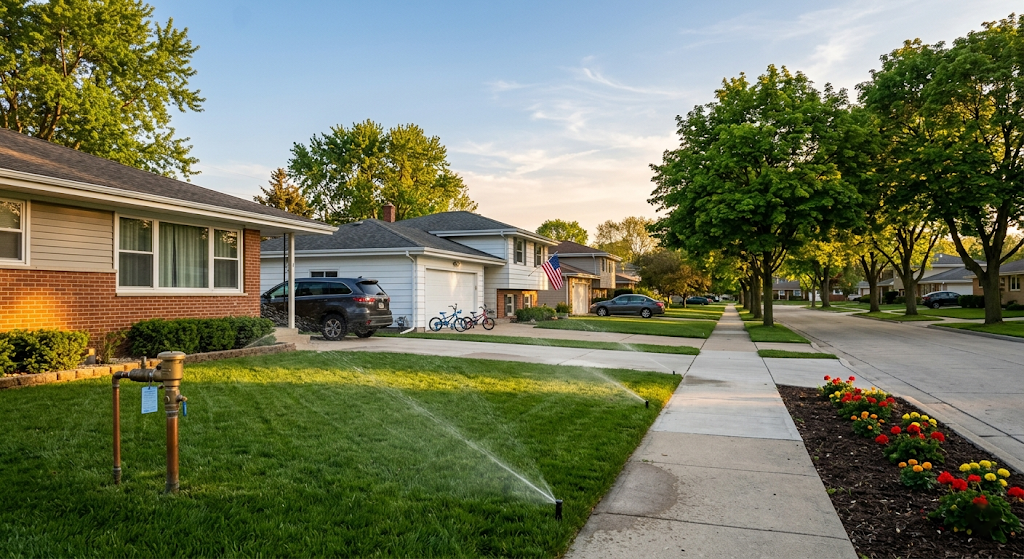
If your home has an in-ground irrigation system, a boiler, or any connection that your water utility has flagged for cross-connection control, annual backflow preventer testing is part of what you owe the house — and in most Midwest markets, what the law requires. The test itself is affordable ($100–$200 in most metro markets), and catching a failing device in the spring means you have time and options before your irrigation season is fully underway.
The practical move is simple: don't wait for the compliance notice. Call in March, get on a certified tester's calendar before the April rush, and walk into irrigation season knowing your water supply is protected. If you're in a suburban Ohio or Michigan market with an older device approaching 10–15 years, have a plumber look at it during the same visit — replacement during a scheduled appointment is almost always cheaper than emergency replacement after a failed test.
Ready to find a certified backflow tester near you? Start with your water utility's approved tester list or check your state's certification registry. If you're not sure where to look, your local utility's customer service line can point you in the right direction.
Find Trusted Pros Near You
Ready to start your project? Connect with vetted, top-rated contractors in your area.
Get Started