
HVAC Spring Tune-Up: How to Get Your AC Ready Before the First Hot Day in Indianapolis and Chicago
Your AC has been sitting since September. Six months. Motor untested, coils unexamined, capacitor slowly aging, refrigerant pressure a total unknown. You haven't thought about it once - and that's fine, because you didn't need to. Until now. For Indianapolis and Chicago homeowners, March is when you find out if that unit is going to make it through the summer or if it's going to quit on you at 4 p.m. on a Tuesday in July when it's 94 degrees and every HVAC tech in the city is already booked two weeks out.
Heating and cooling accounts for 52% of a typical household's energy use (EIA). You're dependent on this machine. Spring is the one window every year to get in front of a problem before it becomes an emergency. Here's exactly how to use it.
Why March Is the Right Time (And Why Waiting Until May Costs You)
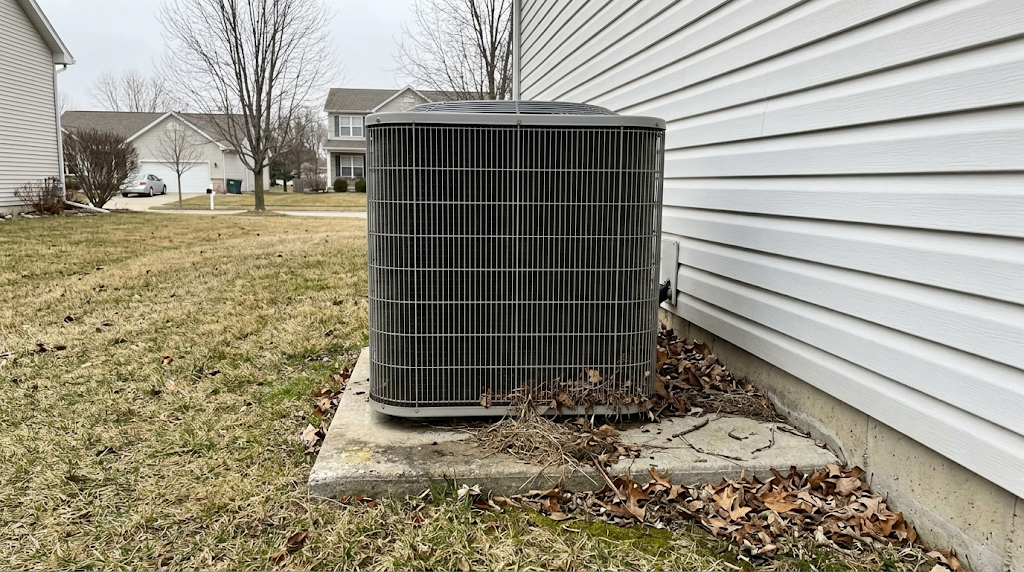
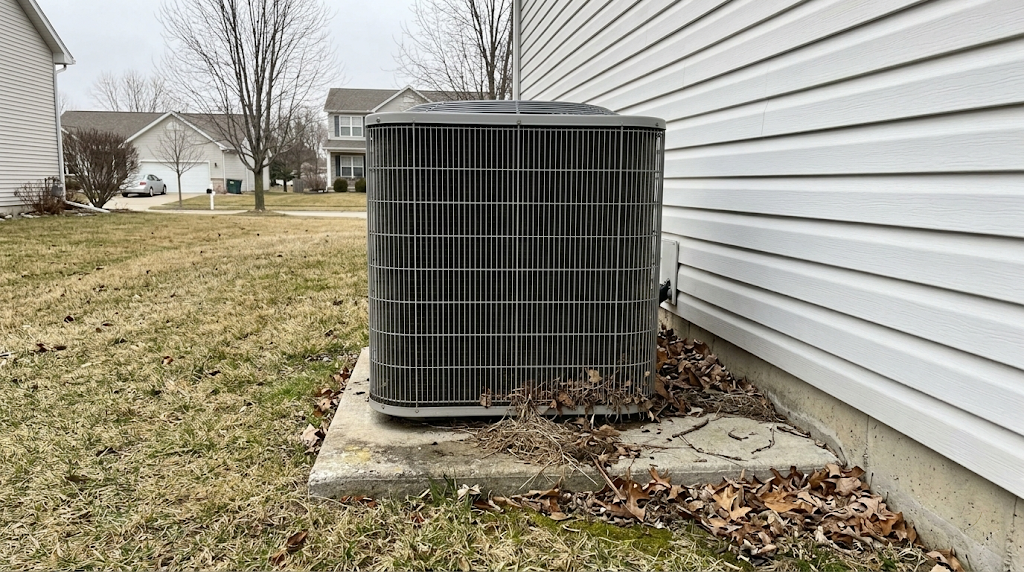
That unit has been sitting since September. Now it's March. Whether it makes it through the summer depends on what you do in the next few weeks.
HVAC companies run on seasons, and the season turns fast. In Indianapolis, the first 80°F days show up in late April or early May. Chicago runs a few weeks behind - late May into early June for the first real heat. That sounds like plenty of lead time. It isn't.
Starting around mid-April, HVAC techs book out three to four weeks. The homeowner who calls in March gets an appointment next week. The one who calls in late April is looking at mid-May at the earliest - which means if something needs parts or a follow-up visit, they're into June. The one who calls in June because the AC just stopped working? They're sitting in the heat for three weeks, paying emergency rates, and hoping the tech has the right capacitor on the truck.
ENERGY STAR says it plainly: schedule AC maintenance in the spring before contractors get busy. This isn't manufactured urgency. It's calendar math. March is when you still have leverage.
There's also a cost angle. Proper annual maintenance can cut your cooling energy use by up to 15% according to the Department of Energy. On a household spending roughly $1,144 a year on HVAC energy, that's about $172 back in your pocket annually - more than the cost of the tune-up itself, every single year you do it.
What a Professional Spring Tune-Up Actually Includes

Checking refrigerant charge with manifold gauges - a task that requires an EPA 608-certified technician. This is not DIY territory.
When you pay for a spring tune-up, this is what a legitimate service call covers. Not a "visual inspection." Not a guy who glances at the unit and hands you a $49 coupon for a refrigerant recharge you don't need. A real tune-up:
- Capacitor test - the capacitor is the component that starts your compressor and fan motors. They degrade with age and heat cycles. A weak capacitor is the most common cause of preventable compressor failure, and it costs about $100-$400 to replace (most jobs average ~$175 installed). A compressor costs $1,200-$2,800. This test alone justifies the service call.
- Contactor inspection - the electrical switch that tells the compressor to run. Pitted or worn contacts cause hard starts that hammer the compressor every time the unit kicks on.
- Refrigerant pressure check - low refrigerant means your system is working harder for less cooling, and it usually means a leak somewhere. Only an EPA Section 608 certified technician can legally handle refrigerant. More on that in a minute.
- Condenser coil cleaning - the outdoor unit pulls air through coils that collect a winter's worth of cottonwood, dirt, and debris. Dirty coils can reduce efficiency by 30% and cause the system to overheat.
- Condensate drain flush - the line that drains moisture from your indoor air handler. Clogged drains back up into the unit, overflow the drain pan, and drip onto your ceiling or floor. Five-minute flush prevents a thousand-dollar water damage call.
- Evaporator coil inspection - the indoor coil that does the actual cooling. Dirty evaporator coils lead to ice formation and reduced airflow. This requires pulling the access panel on the air handler.
- Blower motor and belt check - on older units, worn belts squeal and eventually break mid-summer. Motors with dirty bearings work harder and draw more power.
- Thermostat calibration - a thermostat that reads two degrees off isn't a disaster, but it runs your system longer than needed and adds to the bill over a full summer.
- Temperature split test - the tech measures the air temperature going into the return and coming out of the supply. A healthy system should show a 14-20°F difference. Anything outside that range points to a problem.
That's what you're paying for. A tune-up in Indianapolis runs $59-$150 depending on the company - Peterman Brothers and similar regional chains run seasonal promos as low as $59; independent contractors typically run $100-$150. Some Chicago contractors run $100-$175. Ask what's included before you book. Any contractor who won't tell you the checklist over the phone is telling you something.
One more thing: ask for a written report. Any honest tech gives you one. If they find a weak capacitor or low refrigerant, you want that in writing - the part number, the reading, the recommendation. That's your documentation and your protection if you need a second opinion.
What You Can Do Yourself (And What You Cannot Touch)

Clear debris, trim vegetation, change the filter. These are yours to own. The refrigerant check is not.
There's real prep work you can do before the tech shows up - and a few things that will hurt you or land you in federal hot water if you try them yourself.
Safe DIY Before the Tech Arrives
- Replace the air filter. If you haven't done this since fall, do it now. A clogged filter chokes airflow, makes the system work harder, and is the single easiest maintenance task in the house. A 1-inch filter should be swapped every 1-3 months. Do it before the tech comes so they're testing a clean system.
- Clear the area around your outdoor condenser unit. Pull out dead leaves, clear any plant growth or debris that accumulated over winter. Your system needs at least 18 inches of clearance on all sides for proper airflow. Trim any bushes or vines that have crept in.
- Check the condensate drain outlet. This is usually a small PVC pipe that exits through a wall or drains into a floor drain. Pour a cup of water near it and make sure it flows freely. If it's blocked, now you know before the tech arrives.
- Test the thermostat. Switch it to COOL, set it five degrees below room temperature, and see if the system kicks on within a minute or two. If nothing happens, check the breaker first, then call your tech.
- Straighten bent condenser fins. If the aluminum fins on your outdoor unit are bent from hail or impact, a $10 fin comb from any hardware store can open them up and restore airflow. Go slow and gentle - these fins bend back, but they also break.
Things You Do Not Touch
- Refrigerant. You cannot legally handle refrigerant without an EPA Section 608 certification. This isn't a liability waiver - it's a federal regulation with real fines. If you're low on refrigerant, that's a leak, and fixing the leak and recharging the system is a licensed tech's job. Full stop.
- The capacitor. The capacitor stores a lethal electrical charge and can discharge it even when the unit is unpowered. Homeowners die from this every year. This is not a DIY item under any circumstances.
- Evaporator coil cleaning. Chemical coil cleaners require proper containment and disposal. The evaporator is also inside your air handler, behind panels, in tight spaces that require knowing what you're doing. Let the tech handle it.
- Blower motor service. Bearings, brushes, and motor windings require electrical testing and mechanical knowledge. If your blower is noisy or struggling, that's a diagnosis call, not a DIY project.
To be clear about refrigerant one more time: touching refrigerant without EPA 608 certification isn't just dangerous - it's a federal violation. Anyone offering you a "DIY refrigerant recharge kit" for a home central air system is selling you a lawsuit.
Seven Warning Signs Your AC Needs More Than a Tune-Up
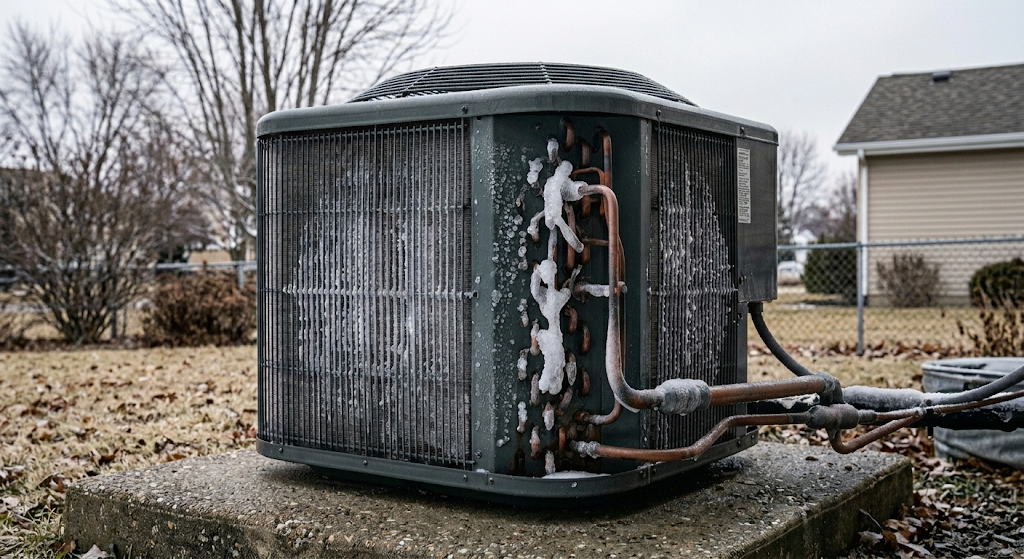
Ice on your AC unit — whether on the outdoor condenser or the refrigerant lines — means the system is struggling. Turn it off and call a technician.
Before you schedule a routine tune-up, do a quick check. If any of these are happening, tell the tech when you book - your appointment may need to be a diagnostic call, not a maintenance visit.
- Warm air from the vents. If the system is running but the air coming out isn't cool, you've got a problem. Most likely causes: low refrigerant from a leak, a failed compressor, or a frozen evaporator coil. None of these are tune-up items.
- Unusual noises. Grinding or squealing usually means a bearing is going in the blower motor or fan. Banging or clanking means something is physically broken inside the unit. Hissing - especially near the refrigerant lines - often indicates a refrigerant leak. Each of these sounds is a specific, diagnosable problem. Don't run the system and hope it stops.
- Short-cycling. The system kicks on, runs for two or three minutes, shuts off, kicks on again. Repeat. This is called short-cycling, and it hammers the compressor with hard starts. Causes range from a dirty air filter (fix it yourself right now) to low refrigerant, an oversized system, or a failing thermostat. Compressors that short-cycle chronically fail early.
- Ice on the refrigerant lines or indoor unit. Ice on your AC is never normal. It usually means the evaporator coil has frozen from restricted airflow (dirty filter or coil) or low refrigerant. If you see ice, shut the system off, let it thaw, replace the filter, and call a tech if it returns.
- Energy bills significantly higher than the same period last year. Pull up last summer's utility bills and compare. If your cooling costs jumped 20% or more without a major change in usage, your system is losing efficiency. Dirty coils, low refrigerant, and aging components all cause this. A tune-up may fix it. A deeper problem may not.
- Water near the indoor air handler. Water under or around the unit in your basement, attic, or utility closet usually means the condensate drain is clogged. The drain pan overflows and the water goes somewhere - onto your floor, into your ceiling, or into the wall. This is a maintenance fix if caught early and a water damage claim if ignored.
- The unit is 10 or more years old and you just got a repair estimate. This one's not a symptom - it's a math problem. Read the next section.
The 10-Year Decision: Repair or Replace?

Every one of these units got a final repair before it ended up here. At some point, the math stops working. Know where your system is on that timeline.
Central air conditioners last 10-15 years without consistent maintenance, and 15-20 years for systems that have been serviced regularly (Family Handyman, This Old House). Once yours is past 10 years old, every repair decision carries a question you have to ask: are you fixing a machine with five good years left, or putting money into something that's going to need replacing regardless?
The standard rule is the 50% rule: if the repair cost exceeds 50% of what a new system would cost installed, replace it. Here's what that looks like with real numbers.
A full AC system replacement in Indianapolis runs $7,500-$12,500 installed, depending on the size of the home and system. Call it $8,500 for a mid-range single-family home. If your 12-year-old unit needs a compressor replacement at $1,500 - that's 18% of replacement cost. By the 50% rule, it's a repair. But here's what the rule doesn't capture: you're spending $1,500 to fix the most expensive component of a system that's already in the last third of its life. Next year it might be the condenser fan motor. The year after that, the evaporator coil. The repair math starts to compound.
A better framing for older systems: what would a new system cost, and what would I save in energy over five years? A modern high-efficiency AC uses significantly less electricity than a 12-year-old unit running at degraded efficiency. For many Indianapolis and Chicago homeowners, the break-even math on replacement is shorter than they expect.
If your air conditioner was manufactured before 2010, there's a strong chance it uses R-22 refrigerant - a refrigerant that's been phased out under EPA regulations and is no longer manufactured in the U.S. As of 2020, production stopped. The R-22 that remains in the market is recovered stock, and it costs $90-$250 per pound, with most AC systems needing 2-4 pounds for a full charge.
If your older system is low on refrigerant, you're looking at $250-$900 or more just to recharge it - into a system that still uses a refrigerant with no production future and a repair cost that climbs every year. An R-22 system isn't a candidate for repair. It's a candidate for a planned, scheduled replacement before the emergency forces your hand at the worst possible time.
What Does an AC Tune-Up Cost in Indianapolis and Chicago?

A tune-up isn't just a 20-minute look-around. A good technician documents system condition, checks every component, and gives you a written report. That's what $75-$200 pays for in Indianapolis.
Nationally, a professional AC tune-up runs $75-$200. Here's what it looks like in your markets:
- Indianapolis: Peterman Brothers and similar regional companies run seasonal promotions as low as $59. Typical range from a solid independent HVAC contractor is $100-$150. If you're paying more than $175 for a standard tune-up with no repairs, ask what's in the price.
- Chicago: Expect $100-$175 for a professional tune-up in the Chicago metro. Labor rates are higher, and the market is more competitive - which actually helps you if you're willing to get two quotes.
Service contracts are worth considering if you're planning to stay in your home. Many HVAC companies offer annual maintenance plans - typically $150-$250 per year - that bundle a spring AC tune-up and a fall furnace inspection into one recurring service. You get priority scheduling (which matters a lot in June), sometimes a labor discount on repairs, and you stop having to remember to call every spring. If you're using both the heating and cooling service, these plans usually pencil out cheaper than two individual visits.
On energy ROI: a 15% efficiency gain on a household spending $1,144 per year on HVAC energy puts $172 back in your pocket annually. A $100-$150 tune-up pays for itself in the first year and keeps paying after that. This isn't a cost - it's maintenance math.
How to Book a Reliable HVAC Contractor Before the Rush

A licensed Indianapolis HVAC technician ready to help before the summer rush hits. Book in March. Avoid the May backlog.
Before you book anyone, know what you're verifying. HVAC licensing in the Midwest is real, and it protects you.
In Indiana, Indiana doesn't have a statewide HVAC contractor license. In Indianapolis and Marion County, HVAC contractors are required to hold a city-issued license through the Department of Business and Neighborhood Services (indy.gov). Outside of Indianapolis, check with your local building department for county-level requirements. If a company can't give you a license number or permit history, keep looking.
In Illinois, Illinois also has no statewide HVAC contractor license, and Chicago has no city-specific HVAC contractor license either. What you CAN and SHOULD verify: that any contractor is insured (general liability + workers' comp), that they pull a mechanical permit for the work (Chicago requires permits for HVAC installations and replacements), and that they hold EPA 608 certification for refrigerant work. A legitimate contractor won't balk at any of these questions.
When you call to book, ask these questions before you commit:
- Are you licensed and insured? (Get the license number.)
- What does the tune-up include? Specifically: refrigerant check, condenser coil cleaning, capacitor test, condensate drain flush?
- Is this a visual inspection or a full service call?
- Do you provide a written report of everything you find?
Red flag: any company that can't or won't answer those questions before booking. You're not asking for anything unusual. A professional operation has a checklist - if they can't tell you what's on it, you don't want them in your equipment.
Door-to-door HVAC sales after the first hot day are another red flag. The tech who shows up unsolicited in May telling you your refrigerant is dangerously low is running a script, not a service call. Book on your timeline, not theirs.
Your AC doesn't care that it's only March. But you should.
Find Trusted Pros Near You
Ready to start your project? Connect with vetted, top-rated contractors in your area.
Get Started