Oil-to-Heat-Pump Conversion Guide
Oil-to-Heat-Pump Conversion in the Northeast: A Complete Guide for 2026
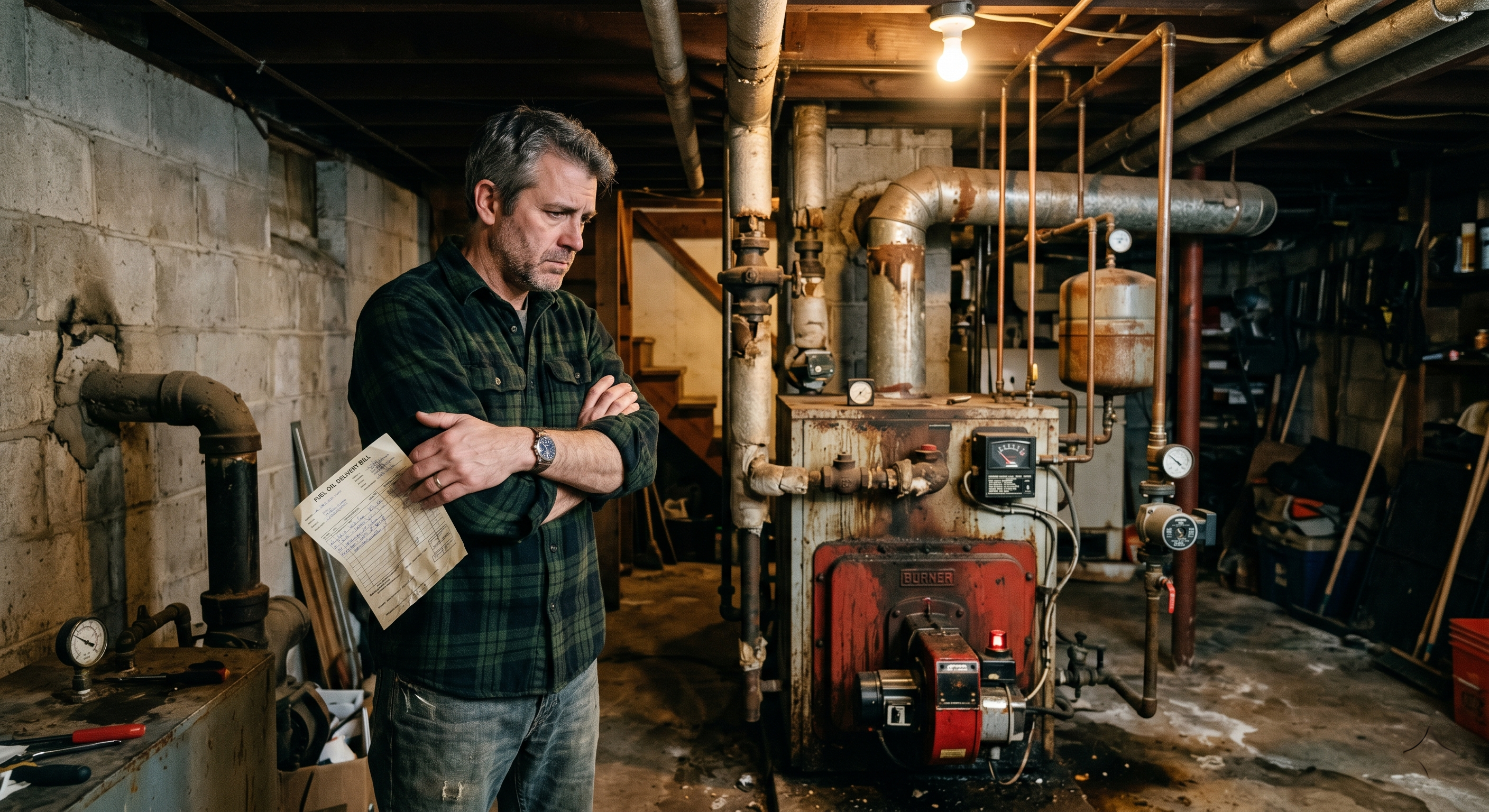
If you've been heating your home with oil for the last 20 years, you've been writing some big checks. Heating oil prices in the Northeast fluctuate wildly - $2.50 a gallon one winter, $4.50 the next - and there's nothing you can do about it except fill the tank and hope for the best. Heat pumps change that equation. You're pulling heat out of the outdoor air instead of burning fuel, and your energy costs stabilize around your electric rate. For millions of Northeast homeowners right now, the math on switching has never looked better.
This guide covers what oil-to-heat-pump conversion actually costs in your state, what the job involves, which rebates and tax credits you can stack, and how to find a contractor who knows cold-climate heat pump work.
Why Northeast Homeowners Are Making the Switch Right Now
The Northeast heats with oil more than any other region in the country - by a wide margin. Maine leads the nation with roughly 50-57% of homes on heating oil. New Hampshire and Vermont are both in the 30-40% range. Massachusetts, Connecticut, and Rhode Island sit around 25-30%. Even New York and New Jersey, with heavy natural gas infrastructure in their cities, have hundreds of thousands of oil-heated suburban homes.
Three things are converging right now to make 2026 a particularly good time to switch:
- Rebates are at a historic high. Massachusetts homeowners can capture up to $10,000-$16,000 in state rebates through Mass Save. New York's NYSERDA Clean Heat program tops out at $10,000-$15,000. These programs may not stay this generous as federal funding shifts.
- Cold-climate heat pumps have gotten genuinely good. Today's certified cold-climate units from Mitsubishi, Daikin, and Fujitsu maintain rated heating output down to around 5°F, then operate with reduced output down to a minimum of -13°F. That's real performance for real Northeast winters.
- Oil prices are unpredictable. Getting off oil locks in more stable energy costs - and if you add solar, you can eventually heat your home largely for free.
What an Oil-to-Heat-Pump Conversion Actually Involves
This isn't just swapping one box for another. A conversion involves several moving pieces that many homeowners don't anticipate.

1. Choosing the Right Heat Pump Type
The key question: does your home have forced-air ductwork or hot water baseboard radiators? Most Northeast oil-heated homes use hydronic baseboard - no ductwork at all. If that's you, a ductless mini-split system is the answer: wall-mounted heads in each zone connected to an outdoor compressor. Mini-splits offer room-by-room control and excellent efficiency. If you have oil forced-air with ducts, a ducted central heat pump is also an option.
2. Oil Tank Decommissioning and Removal
Above-ground tanks typically cost $500-$1,500 to drain and remove. Buried underground storage tanks (USTs) run $2,000-$8,000+ - more if contaminated soil is found. In Maine and other states, buried tank removal involves the DEP, environmental contractors, and soil testing. Get clarity on your tank situation before planning your budget.
3. Electrical Panel Upgrade
Many pre-1970s Northeast homes have 100-amp panels that can't support the additional load. A 200-amp upgrade typically costs $1,500-$4,000 including permit. Note: the federal 25C tax credit (which covered up to $600 toward panel upgrades) expired at end of 2025 — for 2026 installations, budget this cost without a federal offset.
4. The Full Conversion Cost
Add it together - equipment, labor, tank removal, panel, permits - and a full conversion typically runs $10,000-$28,000 before rebates. With aggressive rebate stacking, many Massachusetts homeowners see net out-of-pocket costs of $4,000-$10,000. New York and Connecticut homeowners aren't far behind.
How Oil-to-Heat-Pump Conversion Costs Vary Across the Northeast
Labor rates, contractor density, permit complexity, and housing stock all shift the number by state. Here's the breakdown.

Massachusetts - Boston: $14,000-$26,000 | Springfield: $10,000-$18,000 | Rural Western MA: $9,500-$17,000
Boston commands the highest labor rates in New England - HVAC techs run $100-$150/hour - and dense pre-war housing means panel upgrades and ductless installs are standard. Springfield and Worcester run 10-15% below Boston. Rural western MA has fewer certified contractors and longer lead times. The upside: Mass Save offers up to $8,500 for qualifying systems (up to $16,000 income-qualified) plus 0% interest loans up to $25,000 - the best rebate program in the country.
New York - New York City / Long Island: $12,000-$26,000 | Albany / Buffalo: $10,000-$18,000 | Binghamton: $9,000-$16,000
Long Island is the real oil-to-heat-pump market in NY - 1950s and 1960s colonials with oil forced air are prime candidates. NYC conversions hit $14,000-$26,000 due to DOB permit complexity and union labor. Albany and Buffalo are solid mid-market, though Buffalo's winters make cold-climate spec non-negotiable. NYSERDA's Clean Heat program offers $10,000-$15,000 for qualifying systems.
Connecticut - Hartford / New Haven: $11,000-$20,000 | Stamford-Adjacent: $13,000-$22,000 | Rural NW & NE CT: $10,000-$17,000
Fairfield County commands near-NYC labor rates, pulling from the metro contractor pool. Hartford and New Haven are more moderate. Hot water baseboard is widespread - meaning ductless mini-split installs for most conversions. Rural CT has limited certified coverage; fall wait times can stretch 4-6 weeks. CT Energize offers up to $10,000 income-qualified; standard rebates run $500-$1,500.
Rhode Island - Providence: $11,000-$20,000 | Warwick / Cranston: $10,000-$18,000 | Westerly / Woonsocket: $9,500-$16,000
Providence has enough contractor competition to keep pricing reasonable. The market overlaps with southeastern Massachusetts, which can extend fall wait times. RI Energy offers up to $1,500 for qualifying systems - a lean program. The federal 25C credit expired at end of 2025, so verify current Rhode Island HEAR availability at energy.ri.gov before planning your budget. Income-qualified households should check current ARPA fund status, as those dollars were fully allocated as of 2026.
Maine - Portland: $11,000-$20,000 | Bangor: $10,000-$17,000 | Rural / Downeast ME: $9,000-$16,500 + travel surcharges
Maine is the epicenter of this transition — roughly 50–57% of homes on heating oil means massive demand that has outpaced rural contractor supply. Portland is competitive; Bangor serves central and northern ME. In Aroostook or Washington County, expect 6-10 week waits and $200-$500 travel surcharges. Buried tank removal adds $2,000-$8,000 if contamination is found. Efficiency Maine offers $3,000-$4,000 in rebates. Verify your unit is rated to -13°F minimum output - northern Maine routinely hits -20°F.
New Hampshire - Manchester: $10,000-$18,000 | Nashua: $11,000-$19,000 | Rural NH: $9,000-$16,000
High oil heat penetration, weak rebate program - a tough combination. NHSaves rebates vary by system size — verify current amounts at nhsaves.com. There is no state income tax credit, and the federal 25C credit expired at end of 2025. State rebates and HEAR (when available) are your primary incentive tools. North of Concord, certified cold-climate specialists are scarce - book in June for fall installation or you'll be waiting.
Vermont - Burlington: $11,000-$20,000 | Rutland / Barre: $10,000-$18,000 | Rural VT: $9,000-$17,000
Burlington is the only city with a competitive contractor base. Old housing stock - pre-1900 farmhouses with knob-and-tube wiring and no ductwork - creates real scope complexity. Dual-fuel approaches (heat pump + propane or wood backup) are common and sensible in exposed rural locations. Efficiency Vermont offers up to $3,000 in rebates. Units must be rated to -15°F for Vermont's sustained winters.
New Jersey - North Jersey Metro: $12,000-$22,000 | Trenton / Cherry Hill: $10,000-$18,000 | Rural NW NJ: $9,000-$16,000
NJ has lower oil heat penetration than New England (12-15% of homes), concentrated on the Shore and in Bergen/Essex/Morris County suburbs. North Jersey labor rates bleed from the NYC market. NJ Clean Energy Program and PSE&G offer $1,000-$2,000 — smaller than MA/NY. With the federal 25C credit now expired, state rebates and HEAR (when available) carry the full incentive weight. Denser suburban contractor market means shorter wait times than rural New England.
Pennsylvania - Philadelphia: $14,000-$20,000 | Pittsburgh: $12,500-$18,000 | Allentown / Scranton: $11,000-$16,000
Pennsylvania has one of the largest utility rebate programs in the region - PECO, PPL, and Peoples Gas each offer meaningful incentives for qualifying heat pump installations. Rural PA has a large oil-heated housing stock, particularly in central and northeastern parts of the state. Labor costs are moderate compared to NYC and Boston, and the contractor market is competitive enough in the Philadelphia and Pittsburgh metros for solid bid competition. Stack PECO/PPL rebates with HEAR funding (when available) for the best total offset.
How the Northeast Compares Nationally
The national average for heat pump installation alone runs roughly $5,500-$6,000, but that baseline doesn't include oil tank removal, panel upgrades, or hydronic system complexity - all standard in the Northeast. A true oil-to-heat-pump conversion here costs $10,000-$26,000 before incentives, versus $4,500-$5,500 for a straightforward heat pump replacement in simpler Midwest markets. The critical counterweight: no region matches the incentive generosity of Massachusetts, New York, and Connecticut. With full rebate stacking, Northeast homeowners often end up at similar or lower net cost than a simpler swap elsewhere.
Federal and State Rebates: Where Northeast Homeowners Win Big
Stack everything you can. Here's how the layers work:

Federal 25C Tax Credit (Expired - 2025 Installations Only)
The IRA's 25C Energy Efficient Home Improvement Credit - which offered up to $2,000 for qualifying heat pumps - expired December 31, 2025. If you installed a heat pump in 2025, you can still claim it on your 2025 tax return. For 2026 installations, this credit is no longer available. Check IRS.gov or consult a tax professional for any legislative updates.
IRA Home Electrification and Appliance Rebates (HEAR)
This program offers up to $8,000 for income-qualified households (at or below 80% AMI), administered through state utility programs. Important caveat: As of April 2026, HEAR availability is highly variable across the Northeast - Rhode Island's ARPA-funded funds are fully allocated, Maine limits HEAR to mobile homes and multifamily, Vermont's program remains uncertain pending federal guidance, and New Hampshire's program is not yet launched. Do not count on HEAR funding without first confirming availability in your specific state.
State Programs - Quick Reference
- Massachusetts (Mass Save): Up to $8,500 standard; up to $16,000 income-qualified. 0% interest loans up to $25,000. Best program in the country.
- New York (NYSERDA Clean Heat): $10,000-$15,000 for cold-climate systems. Additional utility rebates by territory.
- Connecticut (CT Energize): $500-$1,500 standard; up to $10,000 income-qualified. CT Green Bank low-interest financing available.
- Vermont (Efficiency Vermont): Up to $3,000. Well-run program with consistent availability.
- Maine (Efficiency Maine): $3,000-$4,000. MaineHeat initiative adds income-qualified support.
- Rhode Island (RI Energy): Up to $1,500. Verify HEAR availability at energy.ri.gov — ARPA-funded Clean Heat RI dollars were fully allocated as of 2026.
- New Hampshire (NHSaves): Verify current amounts at nhsaves.com — no state income tax credit; federal 25C expired end of 2025.
- New Jersey (NJ Clean Energy): $1,000-$2,000. PSE&G Comfort Partners for income-qualified households.
- Pennsylvania (PECO / PPL / Peoples): Varies by utility; stack with HEAR funding where available for best result.
Best strategy: Call your utility before you call contractors. Get rebate paperwork started early - Mass Save and NYSERDA have pre-approval processes. Verify current amounts at program time, as funding levels change.
DIY vs. Pro - Know Your Limits
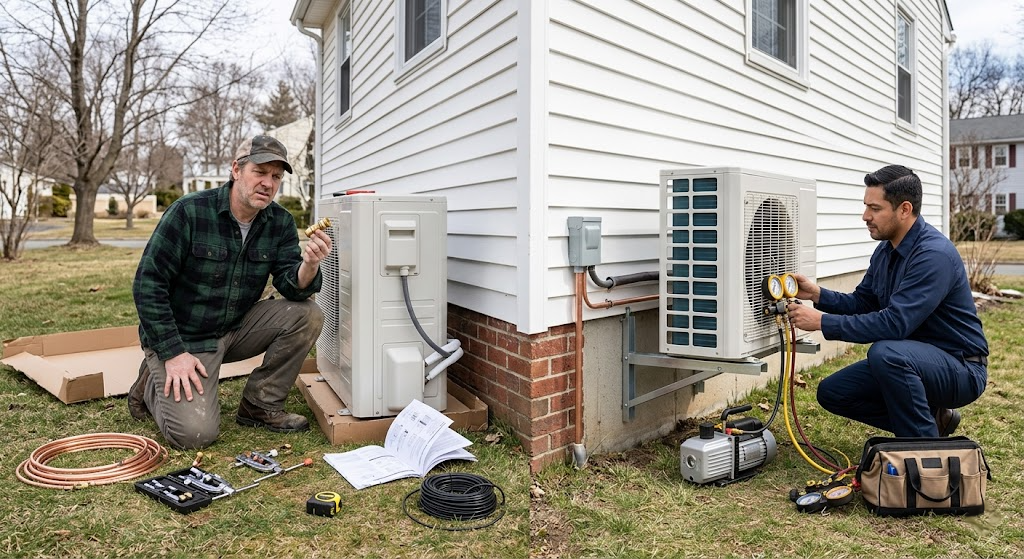
Let's be direct: this is not a weekend DIY project. Oil-to-heat-pump conversion involves licensed refrigerant work, electrical permits, and environmental compliance for oil tank removal.
What You Cannot DIY
- Refrigerant handling. EPA Section 608 certification is required to purchase and handle refrigerants. You cannot legally install or commission a split system without it.
- Electrical panel upgrades. A licensed electrician and permit are required in every Northeast state.
- Oil tank decommissioning. Most municipalities require a licensed technician to properly decommission and document removal. Buried tanks require an environmental contractor and DEP notification in most states.
- Refrigerant line work. Improper brazing or flaring voids warranties. Most manufacturers void warranties on DIY-installed units.
Where You Can Save Money
- Prep work: Clear the work area, remove basement clutter around the oil tank before the tech arrives.
- Get multiple bids: Shopping three qualified contractors can save $1,000-$3,000 on a project this size.
- Timing: Booking in June or July instead of October can save 10-15% on labor and get you a better contractor.
- Handle your own rebate paperwork: Contractors often submit applications, but tracking approvals yourself ensures nothing slips.
How to Hire the Right Contractor
Not all HVAC contractors are equal on cold-climate heat pump conversions. This is a specialized skill set, and the wrong contractor can install wrong equipment or undersize the system for your climate.

Ask These Questions Before Signing Anything
- "Can I see your EPA 608 certification and state HVAC license number?" Every legitimate heat pump contractor has these. Hesitation means move on.
- "Have you done oil-to-heat-pump conversions before - not just heat pump replacements from gas?" The oil side involves tank coordination and panel work that gas-to-heat-pump contractors may not have experience with.
- "What cold-climate brands do you install, and can you show me the NEEP ccASHP spec sheet?" NEEP (Northeast Energy Efficiency Partnerships) maintains a certified cold-climate heat pump list. Your unit should be on it.
- "Do you handle the rebate paperwork?" The best Mass Save and NYSERDA contractors are registered rebate partners who deduct rebates from your invoice up front.
- "Can you give me two or three references from oil-to-heat-pump conversions in my area?" Call them. Ask about scope accuracy and whether final costs matched the quote.
Red Flags
- No Manual J load calculation or walk-through before quoting
- No mention of cold-climate certification or ENERGY STAR Most Efficient designation
- Pressure to sign before you've gotten other bids
- Can't provide proof of state contractor registration
- Quote seems unusually low - underbidding on this scope usually means shortcuts
Book Early - It Matters
September through November is peak demand across every Northeast state. Contractors are booked 4-6 weeks out in Boston and Hartford, and 6-10 weeks out in rural Maine, Vermont, and New Hampshire. Call contractors in June or July for fall installations - better scheduling, more contractor attention, and often 10-15% lower rates.
What to Expect After the Switch
The first winter with a heat pump is an adjustment. Here's what's normal and what isn't:
The Heat Feels Different
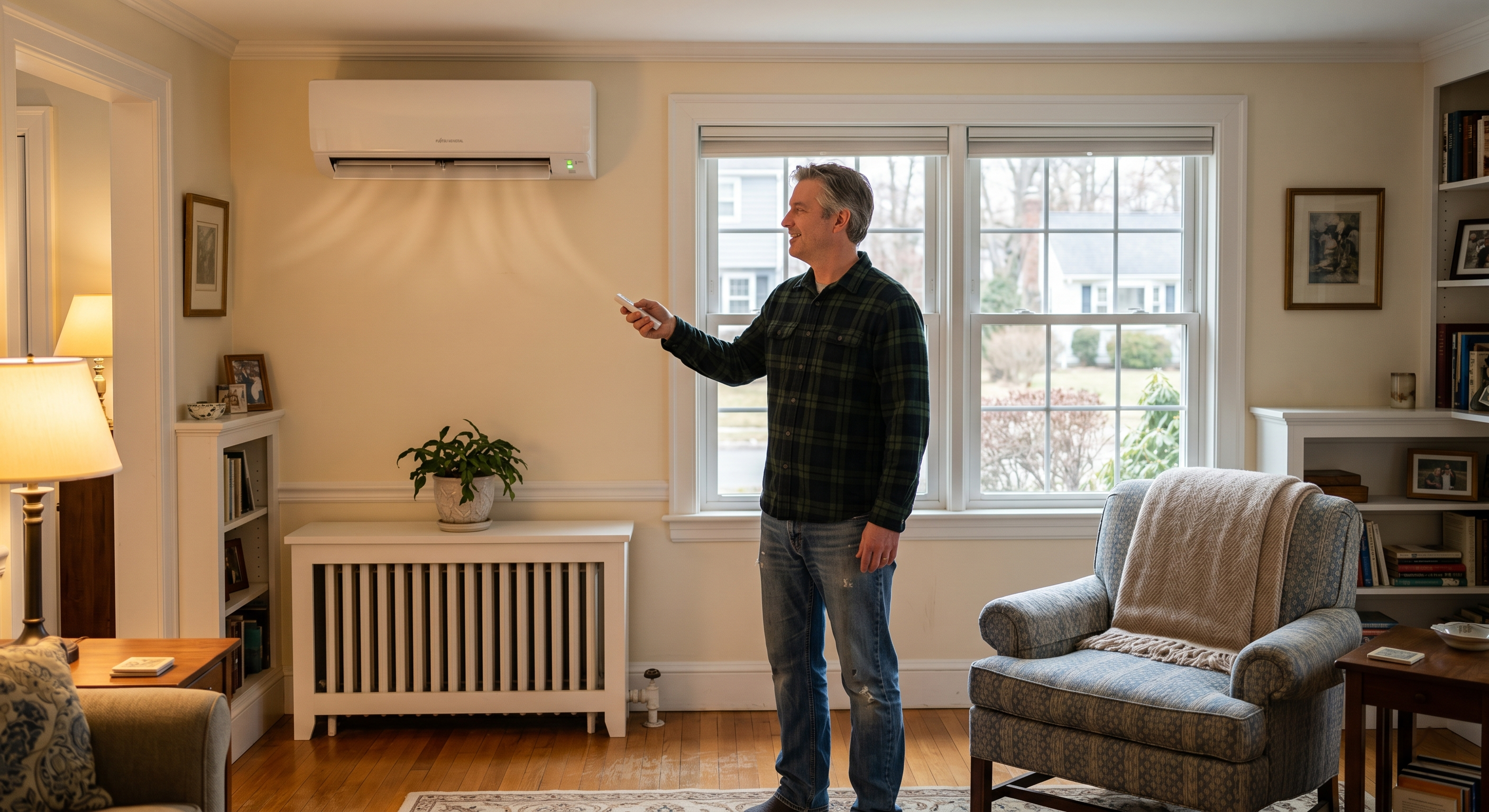
Hot water baseboard heat radiates at 140-180°F and you feel it immediately. A heat pump delivers air at 90-105°F in longer, lower-intensity cycles. Your home will still reach setpoint - it just gets there differently. Give yourself a few weeks to adjust before concluding something is wrong.
Monitor Your Energy Bills the First Month
Most homeowners see 30-50% lower annual energy spend after conversion. The first winter's electric bill will be higher than pre-conversion (you're running more on electricity), but the net versus what you were paying for oil typically favors the heat pump significantly. Track actual costs against prior-year oil spending.
Keep a Backup Plan for Extreme Cold (VT, ME, NH, Upstate NY)
Don't decommission your oil tank until you've lived through a full winter with the heat pump. Even certified cold-climate units have reduced output at -15°F to -20°F. A propane space heater or wood stove as backup isn't a sign the heat pump failed - it's sensible hedging in extreme climates.
Schedule Annual Maintenance
Heat pumps need annual service: refrigerant pressure check, coil cleaning, condensate drain inspection. Service agreements typically run $150-$300/year. This keeps efficiency high and catches problems before they become expensive.
Ready to Make the Switch?
Oil heat in the Northeast is an expensive habit - and the window to switch with maximum financial support is open right now. State programs in Massachusetts, New York, Connecticut, and Maine are paying homeowners thousands of dollars to make the conversion, and today's cold-climate heat pumps can handle whatever a New England winter delivers. (Note: the federal 25C credit expired end of 2025 — check IRS.gov for any updates before filing.)
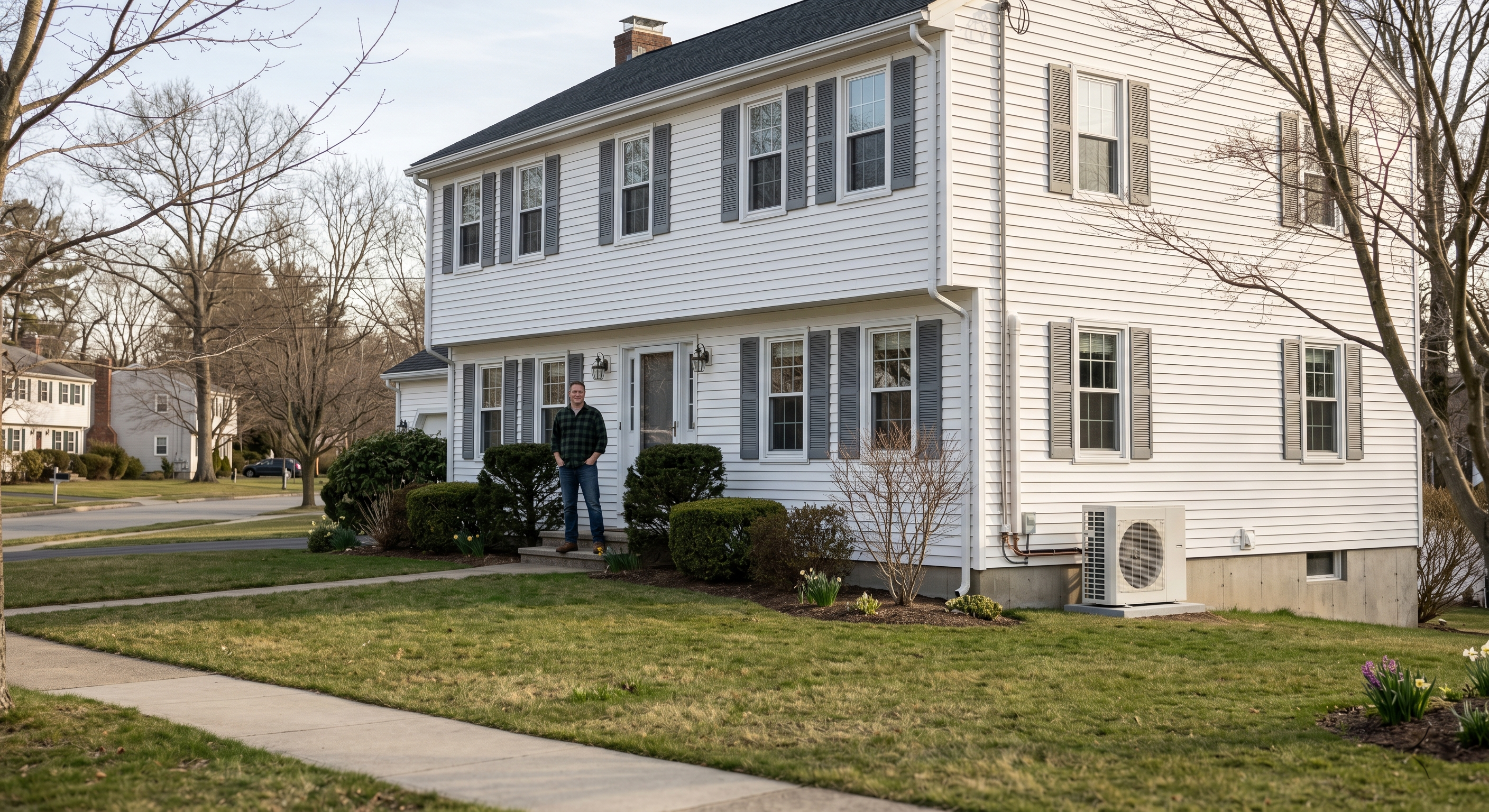
The move makes financial sense for most Northeast homeowners who've run the numbers. The key: find a qualified contractor who knows cold-climate systems, understand the full scope (don't forget the tank and the panel), and book in the off-season to avoid competing with everyone who waited until October.
Get three bids. Ask for NEEP certification. Start your rebate paperwork before the contractor arrives. Those three habits alone can save you $5,000-$10,000 on a project that should pay itself back in 5-8 years and keep paying for the next 20.
Find Trusted Pros Near You
Ready to start your project? Connect with vetted, top-rated contractors in your area.
Get Started

