
Smart Thermostat Installation Guide — Midwest 2026
Smart Thermostat Installation Guide for Midwest Homeowners — 2026
Heating and cooling account for nearly half of the average home energy bill — over $900 a year, according to EPA data. A smart thermostat, properly installed and configured, can trim that by 10–23%. That's not a rounding error; that's real money, especially when a Midwest winter means your furnace runs hard from November through March.
But "just swap it out" isn't always accurate. Older housing stock in Detroit and Cleveland, heat pump conversions in Columbus suburbs, and aging wiring in Chicago bungalows all add complications that a $30 YouTube tutorial won't warn you about. This guide covers everything: compatibility checks, top models, what installation actually costs across the Midwest, and which utility rebates are worth claiming.

What You Need
- New smart thermostat (verify compatibility first)
- Flathead and Phillips screwdrivers
- Smartphone for the setup app
- Wire labels or painter's tape and a marker
- Optional: non-contact voltage tester
Step-by-Step
- Kill power at the breaker. Your thermostat runs off the same circuit as your HVAC system. Don't skip this.
- Remove the old thermostat and photograph the wiring before you touch anything. This photo is your safety net.
- Label every wire by the terminal letter it's connected to — R, G, Y, W, C, O/B, etc. Use the labels that came in the box or tape and a marker.
- Mount the new base plate. Most smart thermostats include a level and wall anchors. Get it plumb — it matters for the display and any built-in occupancy sensors.
- Connect wires to the matching terminals on the new thermostat. Follow the in-app wiring guide — most brands (Nest, ecobee, Honeywell) walk you through it visually.
- Restore power and complete the in-app setup: system type, heating stages, cooling stages, fan wiring, location for weather data, and WiFi.
- Test every mode — heating, cooling, fan-only — before you close up and walk away.
When to Call a Pro Instead
DIY works well for standard single-stage gas furnace systems with an existing C-wire. Call a licensed HVAC technician when:
- There's no C-wire and you're not comfortable running one
- You have a heat pump, dual-fuel, or multi-stage system
- The wiring looks damaged, corroded, or non-standard
- You have an older mercury thermostat (requires special disposal)
- You have a zoned system with multiple thermostats
- You have a boiler or radiant heat system
A professional installation typically takes one to two hours on a standard system, two to four hours if C-wire work is needed. Total installed cost nationally runs $150–$500 depending on complexity. In the Midwest, see the pricing section below.

Utility Rebates — Midwest Programs Worth Knowing
Midwest utilities have been among the most active in the country on smart thermostat rebate programs, partly due to grid stress during polar vortex events and peak summer demand. Here's what's currently available — check your utility's current program before purchasing, as rebate amounts and eligibility requirements change frequently.

| Utility | State / Market | Rebate Amount | Notes |
|---|---|---|---|
| ComEd | Northern IL / Chicago metro | $25–$75 | ENERGY STAR required; Nest and ecobee both enrolled in demand response. Peak Time Savings can add $50–$150/yr. |
| Ameren Illinois | Central/Southern IL | $50–$75 | ENERGY STAR required; demand response enrollment available. |
| AES Indiana | Indianapolis metro | $50–$100 | Connected Home Program; Peak Time Rebate for demand response participants. |
| NIPSCO | Northern Indiana | $50 | Qualifying ENERGY STAR models; check nipsco.com for current enrollment. |
| DTE Energy | Detroit metro / SE Michigan | Up to $100 | DTE Marketplace program; Peak Power credits for demand response on top of device rebate. |
| Consumers Energy | West/Central MI (Grand Rapids, Lansing) | $50–$75 | Smart Thermostat program; enrolled customers earn demand cycling credits. |
| Columbia Gas of Ohio | Ohio statewide | $25–$50 | Focused on gas heat systems; verify at columbiagasohio.com/save-energy. |
| AEP Ohio | Columbus metro / Central OH | $25–$50 | ENERGY STAR certified models required. |
| Duke Energy Ohio | Cincinnati metro | $50–$75 | Verify current eligibility at duke-energy.com. |
| Xcel Energy | Minneapolis-St. Paul | $50–$100 | Active demand response program; one of the more generous Midwest rebates. |
| We Energies | Milwaukee metro | $25–$50 | ENERGY STAR models; check focus-on-energy.com for Wisconsin rebate stacking options. |
Demand response programs are the often-missed extra savings. ComEd, DTE, AES Indiana, Consumers Energy, and Xcel all run programs where they can nudge your thermostat a degree or two during grid stress events — typically summer afternoons, a handful of times per year. You opt in, nothing happens automatically that you can't override, and you earn $25–$100 in seasonal bill credits on top of the device rebate. Most major smart thermostat brands participate. If your utility offers it, enroll.
What This Costs in the Midwest

Urban vs. Suburban vs. Rural
Installation cost breaks down into device cost plus labor. The device is the same price wherever you buy it. Labor is where geography matters.
| Markets | Installed Cost (device + labor) | Why |
|---|---|---|
| Chicago (city proper), Detroit (city proper), Minneapolis | $250–$550 | Union labor density, older building stock, permit requirements, higher overhead for city-based contractors |
| Naperville, Carmel, Dublin, Livonia, Westerville | $175–$375 | High contractor competition in dense suburban markets; newer housing stock (post-1990) usually has C-wire; easier installs |
| Columbus, Indianapolis, Milwaukee (metro areas) | $175–$350 | Near national average; open-shop labor market; mix of housing ages |
| Rural Indiana, Ohio, Michigan | $160–$350 (when available) | Fewer HVAC contractors means limited quote competition; travel time charges offset lower hourly rates; 1–2 week waits common; DIY rate is higher here |
Suburban markets — Naperville, Carmel, Dublin, Livonia — are typically the sweet spot for homeowners. You can get three quotes in a week, contractors compete, and newer housing stock keeps the job simple. Outside the metro ring, expect fewer options and less price competition, even if the hourly rate looks lower on paper.
Local Factors That Affect Your Quote
Older housing stock in Detroit and Cleveland adds real scope. Pre-1960s housing dominates much of the Detroit metro. Pre-1960s homes in Dearborn, Livonia, and Cleveland's west-side neighborhoods are more likely to have 2-wire thermostat setups, missing C-wires, and occasionally boiler or radiant heat systems that require a completely different approach. Smart thermostats are not plug-and-play in these homes. Budget $100–$200 extra for C-wire work and ask about the existing wiring condition before committing to any price. Cleveland and Detroit are also the markets where you're most likely to encounter hot water baseboard systems — if that's yours, a standard smart thermostat won't work, and you'll need to discuss relay-based solutions with your HVAC contractor.
Chicago's union labor market drives a legitimate premium. The Chicago metro has one of the highest union densities for building trades in the country. Billable HVAC labor in city shops runs $100–$150/hr versus $75–$95/hr in Columbus or Indianapolis (based on contractor quotes, 2025–2026). For a simple swap that's an extra $75–$150 on the labor line. In multi-unit buildings — common in Lincoln Park, Logan Square, and Chicago's North Side — you may also need building engineer approval or a licensed electrician for permit work. Suburban Chicago (Naperville, Schaumburg, Aurora) operates on a more competitive open-shop market and typically costs 20–30% less than city rates.
Heat pump adoption is changing the job mix in Columbus and Indianapolis suburbs. IRA tax credits have accelerated heat pump installations across Ohio and Indiana since 2022. New construction in Dublin, Westerville, and Carmel increasingly ships with heat pump systems. This is good for energy efficiency but changes the thermostat job: heat pump installations require compatible thermostats and more careful wiring, adding 30–60 minutes of labor and pushing the job toward the higher end of the labor range. If your contractor quotes you for a heat pump system, confirm the thermostat is compatible before they arrive.
Midwest utility rebates vary significantly by metro — and stacking matters. A homeowner in the AES Indiana (Indianapolis) service territory can claim up to $100 on the device, then enroll in the Peak Time Rebate for an additional $25–$75 per season. A homeowner in DTE's Detroit territory gets up to $100 in device rebate plus Peak Power credits. That's potentially $150–$200 in year-one return on a $130–$250 thermostat. By contrast, AEP Ohio customers in Columbus get $25–$50 — real money, but less dramatic. Know your utility before you buy.
DIY or Hire Out?
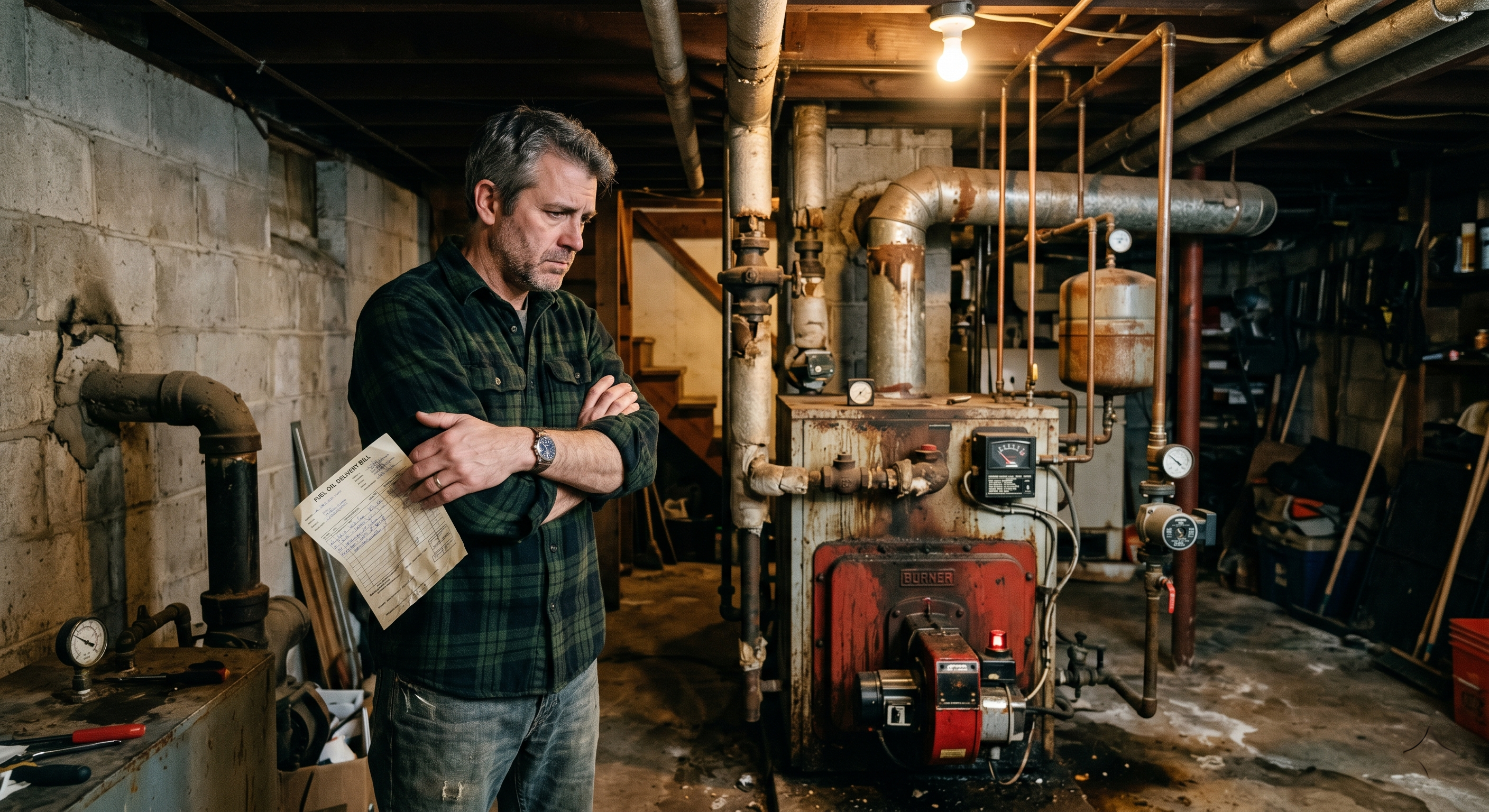
For a standard single-stage gas forced-air system with C-wire already present, DIY is genuinely reasonable. The manufacturer apps from Nest and ecobee are well-designed, and the job takes 30–60 minutes for a handy homeowner. You'll save $75–$150 in labor.
For anything beyond that — heat pumps, multi-stage systems, no C-wire, older wiring — hire a licensed HVAC technician. The savings on professional installation don't justify the risk of misconnecting a $250 device to a $6,000 HVAC system. Some utilities require professional installation documentation to process rebates on more complex jobs, which is another reason to go pro when in doubt.
If you're in a rural area with limited contractor access, DIY is also more common by necessity. The Nest and ecobee apps are good enough that a careful homeowner with a basic wiring background can handle a straightforward swap — just photograph everything, go slowly, and verify compatibility before purchasing.

The Numbers on Energy Savings
ENERGY STAR's average savings estimate of $50/year is a conservative midpoint. Independent studies have found savings ranging from 10–23% on heating and cooling costs. For a Midwest home spending $900–$1,200/year on HVAC energy, that's $90–$275 in annual savings once the thermostat is properly configured with scheduling, geofencing, and demand response enrollment.
Payback math on a professionally installed ecobee SmartThermostat Enhanced:
- Device: ~$170
- Professional installation (suburban market): ~$175
- Total cost: ~$345
- Less DTE Energy rebate (Detroit homeowner): -$100
- Net cost: ~$245
- Annual savings (conservative $100/yr energy + $50/yr demand response credits): ~$150/yr
- Payback: under 2 years
That math improves further if you're on a utility with a larger rebate (AES Indiana, Xcel) or in a market with higher heating costs. Midwest winters are hard on HVAC systems — which is exactly why the savings opportunity is real here.

Ready to Move Forward?
If you're in the Midwest and ready to install a smart thermostat — whether you're doing it yourself or want a vetted local contractor — Saorr can help you find qualified HVAC professionals in your area, compare installation quotes, and make sure you're not leaving utility rebates on the table.
Smart thermostat installation is one of the highest-ROI home upgrades you can make in 2026. The devices are better than ever, the utility rebate programs are active, and demand response enrollment turns a one-time hardware purchase into ongoing annual savings. The only way to lose is to buy the wrong thermostat for your system or skip the rebate enrollment entirely.
Get matched with a local HVAC contractor on Saorr →

Find Trusted Pros Near You
Ready to start your project? Connect with vetted, top-rated contractors in your area.
Get Started