Your Water Heater Survived Another Winter — But For How Long? A Homeowner's Guide to Replacement in Indianapolis & Chicago
The Water Heater Nobody Talks About — Until It Floods Your Basement

Here's the thing about your water heater: it has done its job every single morning of your life without a word of thanks, tucked away in a corner of your basement or utility closet where nobody goes unless something's wrong. It doesn't have a user interface. It doesn't send you a notification. It just quietly heats forty to fifty gallons of water and waits.
Until it doesn't.
March is a good time to pay attention to it. Not because anything's wrong — hopefully — but because winter just put your unit through its hardest four months of the year. Cold inlet water from frozen ground means the burner or element has been working longer and harder than it does in July. If your water heater was already borderline, it's been quietly accelerating its own decline since November.
Here's the financial argument for acting now instead of waiting: an emergency replacement — called in on a Saturday night after discovering a puddle on your basement floor — runs $200–$500 more than a planned weekday appointment. Contractors also offer seasonal discounts in spring and fall, when things slow down between HVAC season rushes. You have a window right now. Use it.
This guide is for homeowners in Indianapolis and the Chicago metro area who have a water heater that's 8 years old or older, or one that's been acting up. We'll cover what the warning signs look like, what your options are, what things actually cost in the Midwest, what rebates are currently on the table, and why this is a job for a licensed plumber. Real numbers throughout. No hedging.
Warning Signs Your Water Heater Is On Its Last Legs
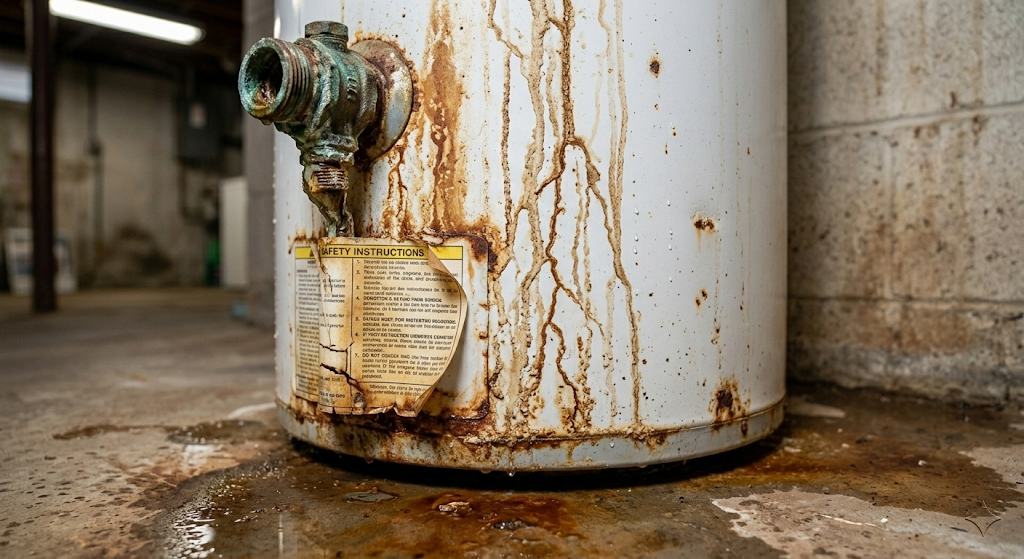
Water heaters don't usually die without warning. They send signals. Most homeowners just aren't looking.
Start With Age
Tank water heaters typically last 8–15 years, with most landing between 10 and 13. Tankless units push 20 years or more. If you don't know how old your unit is, here's a quick trick: find the serial number on the rating plate (usually a sticker near the top of the tank). The first letter represents the month (A = January, B = February … L = December). The next two digits are the year. So a serial number starting with D09 means April 2009 — your unit is pushing 17 years old. Time to have a conversation.
Manufacturer warranties on tank units run 6–12 years. If yours is expired, you're not protected and you're statistically on borrowed time.
The Five Warning Signs
- Rumbling, popping, or crackling noises. That sound is sediment — calcium, magnesium, iron — that has settled on the tank floor, hardened, and is now getting knocked around every time the burner fires. It reduces capacity, slows heating time, and accelerates corrosion. Sometimes a flush fixes it. Sometimes the damage is already done.
- Rusty or discolored hot water. Yellowish or brownish water from the hot tap — and only the hot tap — means the tank lining is corroding. This is not a repair. This is a replacement.
- Running out of hot water faster than you used to. Reduced capacity and dropping efficiency mean the unit can't keep up with the same demand it handled five years ago. If your energy bills have been quietly creeping up, that's part of the same story.
- Low hot water pressure. Hard water deposits or corrosion narrowing the outlet. In tankless units, a flow rate that's too low will actually prevent the unit from igniting at all.
- Moisture or standing water at the base. The tank has rusted through. A drip at the base is not a "check on it in a few weeks" situation. Replacement is imminent.
A Note for Midwest Homeowners
Indianapolis and most of the Chicago metro area run on hard water — high in calcium and magnesium. Hard water is rough on water heaters. If you haven't been flushing your tank annually (and most people haven't), assume the interior is in worse shape than the exterior suggests. It's also worth knowing that Indianapolis and Chicago sit in older housing stock — a significant share of owner-occupied homes in these cities were built before 1980, meaning they've already cycled through three or four water heaters. If you bought a home built in the 1970s and haven't replaced the water heater since, do the serial number math right now.
The Rule of Thumb
If your unit is 8 years or older and showing symptoms, replace it — don't repair it. If it's under 6 years old, a targeted repair (heating element, thermocouple, anode rod) usually makes more sense. When repair costs exceed half the price of a new unit, replacement is the more economical choice. That's the 50% rule, and it holds.
Tank vs. Tankless vs. Heat Pump: Know What You're Buying

You have three real options. Here's the plain version of each, without the marketing language.
Traditional Tank (Gas or Electric)
The standard. Stores 20–80 gallons of pre-heated water, keeps it at temperature around the clock. Most Indianapolis and Chicago homes have one of these. Efficiency runs around 58–60% — meaning roughly 40 cents of every energy dollar you spend is lost to standby heat loss while the water just sits there waiting. Lifespan: 8–15 years. Installed cost ranges from $600–$2,300 depending on size (40-gallon vs. 80-gallon) and whether you're doing a like-for-like swap or switching fuel types. If you're switching from electric to gas, budget an additional $1,500–$2,300 for the new gas line.
Best for: homeowners who want to get the job done quickly and affordably, replacing like for like, not interested in a bigger project right now.
Tankless (On-Demand)
No storage tank. Water is heated instantly as it flows through the unit. Efficiency jumps to 92–95%. Lifespan is 20+ years — double a standard tank. Wall-mounted, so it frees up floor space. The catch: it costs more to install. Expect $2,100–$4,000 installed, and closer to the top of that range if the job requires gas line work, panel upgrades, or new venting. Installation takes 4–6 hours versus 1–3 for a standard tank swap.
Best for: homeowners with a longer time horizon who want better efficiency and lifespan, or anyone who's already remodeling the utility room anyway.
Heat Pump Water Heater (HPWH)
This is the smart play if you have electric service and the right space. Instead of generating heat directly, a heat pump water heater pulls heat from the surrounding air and transfers it to the water — similar to how a refrigerator works, but in reverse. It uses roughly one-third the electricity of a conventional electric water heater. ENERGY STAR certified. Lifespan: 20+ years, with a minimum 6-year manufacturer warranty on certified models. Installed cost: $2,500–$3,500 before rebates — and the rebates on these units are substantial (see Section 5).
One installation note: the unit needs ambient air between 40°F and 90°F year-round and at least 1,000 cubic feet of air space around it. A utility room or mechanical room works. A tight closet does not. During Chicago and Indianapolis winters, the unit may temporarily kick over to backup electric heating — that's normal and still averages out to meaningful annual savings. As a bonus, it cools and dehumidifies the space in summer.
Best for: electric homes with adequate utility space, homeowners who want to stack rebates and tax credits, anyone looking at a long-term efficiency play.
The Quick Decision Matrix
| Type | Installed Cost | Efficiency | Lifespan | Best For |
|---|---|---|---|---|
| Tank (gas/electric) | $600–$2,300 | 58–60% | 8–15 years | Budget-conscious, like-for-like swap |
| Tankless | $2,100–$4,000 | 92–95% | 20+ years | Long-term savings, space-savers |
| Heat Pump | $2,500–$3,500 | 300%+ COP (uses 1/3 the electricity) | 20+ years | Electric homes, maximum rebate value |
What Does Water Heater Replacement Actually Cost in Indianapolis & Chicago?

The national average for a water heater replacement, installed, runs around $1,950 — but national averages are almost useless when you're writing a check. Here's what the Midwest market actually looks like.
Standard Tank Replacement (Like-for-Like Swap)
For most Indianapolis and Chicago homeowners replacing a gas or electric tank with the same type: $1,100–$2,100 installed. That breaks down roughly as:
- Unit (40-gallon gas or electric): $600–$1,000
- Labor: $300–$800
- Venting, connectors, misc materials: $200–$500
Mid-Atlantic and Midwest markets typically run 5–10% below the national average for this work, which is in your favor. The national median plumber wage is $62,970 per year ($30.27/hour) as of May 2024, but homeowner-facing rates are higher — $45–$200/hour — once you account for overhead, travel, and service call minimums.
Tankless Installation
$2,100–$4,000, with most standard jobs landing in the middle of that range. If you need gas line work, a panel upgrade for electric units, or new venting runs, expect to be near the top. Most tankless installs take 4–6 hours of labor.
Heat Pump Installation
$2,500–$3,500 before rebates. After applying the rebates and credits covered in the next section, this number changes significantly.
Additional Line Items to Budget For
- Old unit removal and disposal: $100–$300 (ask if it's included — it often isn't)
- Permits and inspections: $50–$200 (most jurisdictions require one, especially for fuel type changes)
- Emergency or weekend service premium: $200–$500
- Expansion tank (some municipalities require): $40–$150
- Switching from electric to gas (new gas line): add $1,500–$2,300
- Water damage repair if the unit failed before you caught it: $500–$2,500
The 50% Rule
If your plumber quotes you a repair — say, a bad heating element or a faulty thermocouple — check the math. When repair costs exceed half the price of a new unit, replacement is the better economic choice. A $400 repair on a 12-year-old tank that'll cost $1,400 to replace isn't a deal. It's a delay.
How to Keep Costs Down
- Get three quotes — pricing varies more than you'd expect
- Schedule on a weekday during business hours
- Replace before the unit fails — emergency rates are real
- Apply for rebates and credits before you buy (see below)
- Bundle with other plumbing work if you have it — some contractors discount multi-service calls
Federal Tax Credits and Local Rebates: Real Money on the Table

This section is where people leave money on the table by not doing the paperwork. Don't do that.
Federal Investment Tax Credit (ITC)
The federal government currently offers a tax credit of up to $2,000 for qualifying energy-efficient home improvements, including heat pump water heaters. This is a direct credit — it reduces what you owe in taxes, dollar for dollar. Not a deduction. Not a rebate after the fact. A credit. Verify your specific unit qualifies (ENERGY STAR certification required) before purchase.
AES Indiana — Indianapolis Area
AES Indiana residential customers can claim a $600 rebate for purchasing an ENERGY STAR-rated heat pump water heater. Apply online or call 866-908-4915. You'll need your receipt, model number, and serial number. Checks arrive in 4–6 weeks. Applications must be submitted within 90 days of purchase.
Ameren Illinois — Chicago Area
Ameren Illinois electric customers have three ways to capture savings on a heat pump water heater:
- Option 1: Apply online after purchase for an $800 rebate
- Option 2: Use an instant $800 coupon at Lowe's or Home Depot at the point of sale — the discount comes right off the register
- Option 3: Buy through a program ally contractor for a $1,150 off contractor purchase discount
Limit one per household. Must be purchased by December 31 of the calendar year. Ameren Illinois electric customers only.
Illinois Statewide ENERGY STAR Appliance Rebates
The state of Illinois runs a separate ENERGY STAR appliance rebate program through keepwarm.illinois.gov covering gas-condensing water heaters, electric heat pump water heaters, gas storage water heaters, and gas tankless water heaters. Minimum efficiency requirements apply and rebates are not retroactive. Use the EnergyStar Rebate Finder at energystar.gov to check current eligibility by your zip code before you buy.
Stack the Savings — The Math That Changes the Decision
Here's what this looks like when you put the numbers together:
- Indianapolis homeowner: Federal ITC ($2,000) + AES Indiana rebate ($600) = up to $2,600 in savings
- Chicago-area homeowner: Federal ITC ($2,000) + Ameren Illinois rebate ($800) = up to $2,800 in savings
On a heat pump water heater installed at $3,000, that brings your net cost down to somewhere between $400 and $1,000 — depending on your tax situation and which rebate path you take. That is competitive with, and in some cases cheaper than, a new conventional electric tank. The unit lasts longer, costs less to run, and cools your utility room in the summer as a bonus.
The one thing you have to do: check that your specific model is ENERGY STAR certified before you buy. Don't assume. Verify using the EnergyStar Product Finder. If the model isn't on the list, the rebates don't apply.
Why This Is a Licensed-Plumber Job (And What to Expect When You Hire One)

Some people will read this post and immediately start watching YouTube videos about DIY water heater replacement. That's fine. Some of those people are genuinely capable of doing it. But here's the honest version of the risks, because nobody should go into this blind.
Why DIY Gets Complicated Fast
Improper installation of a gas water heater can cause gas leaks, carbon monoxide exposure, or — in worst-case scenarios — tank rupture. Improper electrical work on electric units creates shock and fire hazards. A badly installed pressure relief valve is a pressurized tank waiting for a bad day. Most states require a permit for water heater replacement, and unpermitted work can create real problems with your homeowner's insurance and with future buyers when you sell. DIY also voids the manufacturer warranty on most units.
The U.S. Department of Energy is pretty plain about it: "It's best to have a qualified plumbing and heating contractor install your storage water heater." They're right.
What the Process Actually Looks Like
For a standard tank replacement by a licensed plumber:
- Plumber turns off gas or power and water supply, drains the old tank
- Disconnects gas line (or electrical), water lines, and vent pipe
- Removes the old unit (a 40-gallon tank weighs 150 lbs or more — this takes a dolly)
- Installs new pressure relief valve and pipe assemblies
- Reconnects water lines, gas line (or wiring), and venting
- Tests for backdrafting — a critical safety check to ensure combustion gases vent properly
- Tests all gas connections with soapy water for leaks
- Lights the pilot, sets thermostat to 120°F
- Inspector may review the work if a permit was pulled
Total time for a standard tank swap: 1–3 hours for a plumber. Tankless installations take 4–6 hours. Plan for the unit to be offline for at least a half day.
On Permits
In Indianapolis, that's the Building & Housing Division. In Chicago, it's the Department of Buildings. Call before you schedule and ask whether a permit is required for your specific job. Most licensed plumbers pull permits as part of their service, but ask explicitly whether it's included in the quote. Do not skip the permit. It protects you if something goes wrong — with the installation, with an insurance claim, or at the closing table when you sell the house.
What to Ask When Getting Quotes
- Is the permit included in your price?
- What brand and model are you recommending, and why?
- Will you flush and inspect the old unit first to confirm replacement is needed?
- Do you handle disposal of the old unit?
- What's your warranty on labor?
A plumber who can't answer these questions clearly is a plumber you don't need to hire.

If your unit is approaching the 10-year mark, a call to a licensed plumber in Indianapolis or Chicago for an inspection is money well spent — usually around $100. They'll tell you whether to flush it, repair it, or replace it. If it's time to replace, you'll go into it with a plan instead of a panic. And before you pull the trigger on a new unit, check the AES Indiana or Ameren Illinois rebate portals first. A heat pump upgrade that looks expensive at $3,000 looks very different at $400–$1,000 after you've stacked the credits. The math is there. Do the homework.
Find Trusted Pros Near You
Ready to start your project? Connect with vetted, top-rated contractors in your area.
Get Started