Window Screen Repair & Replacement
Window Screen Repair & Replacement: What It Costs, When to DIY, and How to Get It Done Right
A torn window screen isn't going to make the evening news, but it's the kind of thing that quietly drives you crazy every time you open a window. Bugs get in. It looks bad. And the longer you put it off, the more beat-up the frame gets.
Here's the good news: most screen repairs are cheap, fast, and beginner-friendly. A basic rescreen kit runs $10–$25. Even hiring a pro is usually a one-and-done job that won't break the bank — the national average for professional screen replacement is around $317 per screen, with a typical range of $147 to $515 depending on size, material, and where you live.
This guide breaks down when to patch versus replace, what the job costs across every region of the country, how to tackle it yourself, and how to find a good pro when DIY isn't in the cards. Let's get into it.
Signs Your Window Screens Actually Need Attention
Not every imperfection means it's time to act — but a few specific problems are worth dealing with before they get worse.

- Rips or tears in the mesh. Even a small hole lets mosquitoes in. A tear longer than a few inches is generally worth fixing, not ignoring. Pets, wind-driven branches, and kids with toys are the usual culprits.
- Spline popping out. The spline is the flexible rubber cord that holds the mesh in the frame's channel. When it gets brittle and cracks — usually after years of sun exposure — the mesh loosens and eventually pulls free. If your screen mesh is sagging or coming out of the frame at the corners, spline failure is almost always the cause.
- Rust or corrosion. Steel and aluminum screens corrode over time, especially in humid or coastal climates. Light surface oxidation is cosmetic; heavy rust that's eating through the mesh means it's time to replace.
- Bent or warped frame. A frame that's bowed, bent, or won't sit flat in the window can prevent the window from sealing properly. That's not just an annoyance — it affects ventilation and can let gaps open up that bugs exploit.
- Faded or discolored mesh. UV exposure weakens fiberglass mesh over time. A screen that's yellowed, brittle, or tears easily when you touch it has had its run. Aluminum holds up better, but even it eventually dulls and degrades.
The key question: is the frame still good? If the frame is intact and square, you can usually just rescreen it. If the frame is bent or damaged, you're looking at a full replacement.
Patch or Replace? Here's How to Make the Call
There's no reason to replace a whole screen when a rescreen will do the job. Here's a simple decision framework:

Rescreen the existing frame if:
- The aluminum or vinyl frame is straight, square, and undamaged
- The damage is confined to the mesh — a rip, hole, or spline failure
- The window is a standard size (18"×20" up to 36"×74") and replacement mesh is readily available
- You want to upgrade the mesh material without buying a whole new unit (e.g., swapping fiberglass for pet-resistant or solar screen mesh)
Replace the full screen if:
- The frame is bent, warped, or corroded beyond use
- The frame doesn't fit properly in the window track anymore
- The window is a non-standard shape or size that requires a custom order anyway
- You're upgrading to a retractable or integrated screen system
Rescreening an existing frame — materials only — costs $10–$40. Full replacement of a standard screen (materials plus labor) typically runs $60–$350 depending on size and mesh type. The frame is usually the cheapest part; it's labor and specialty mesh that drive costs up.
A note on mesh upgrades
If you're already going to the trouble of rescreening, it's worth considering a material upgrade. Fiberglass is the cheapest and most common option, but it sags on larger spans and tears relatively easily. Aluminum is more rigid and lasts longer. In hot climates like Texas and Arizona, solar screen mesh (which blocks 70–90% of solar heat gain) is popular enough that it's often the default choice for replacement jobs. Pet-resistant mesh is thicker, heavy-gauge fiberglass designed to take claws and impact — worth it if you have dogs or cats that paw at the windows.
What Window Screen Repair & Replacement Costs Across the US
Labor costs for window screen work vary 30–50% from the cheapest markets in the country to the most expensive. Below is a breakdown by region with real price ranges for both major metro and secondary market cities. All prices are per screen, including materials and professional labor.

National average: $317/screen. Typical range: $147–$515.
Northeast — Boston, New York City: $225–$700 | Hartford, Providence, Albany: $185–$580
The Northeast runs 30–45% above the national average, driven by high cost of living and strong union labor markets — Connecticut and Massachusetts have some of the highest glazier union rates in the country. Older housing stock is another factor: pre-1950s brownstones and triple-deckers often have non-standard window sizes that require custom screens, pushing the average up. Homeowners in New England also commonly remove and store screens over winter, which means annual handling and storage damage creates a steady replacement cycle every spring.
Mid-Atlantic — Washington DC, Baltimore: $195–$620 | Pittsburgh, Richmond: $165–$520
DC and its suburbs run 20–35% above the national average — the region's government contractor workforce sets a high floor for all skilled trades. Baltimore sits in a similar range, with its large stock of older row homes adding custom screen demand. Pittsburgh and Richmond are more affordable, coming in 5–15% above national average; both cities have aging housing stock that creates rescreen work but don't carry the same labor cost premium as the DC metro.
Southeast — Atlanta, Miami, Charlotte: $170–$540 | Raleigh, Tampa, Nashville: $155–$490
The Southeast is close to the national average in most markets, making it one of the more affordable regions for screen work. Florida is the major exception: coastal zones around Miami and Tampa face windstorm code requirements, and storm/impact screens ($600–$1,050+) are a common upsell for hurricane-zone homes. The region's heavy concentration of post-1990 vinyl-frame construction means standard screen sizes are more common, which keeps costs down — but Nashville and Charlotte are seeing labor costs tick up as their populations grow.
Midwest — Chicago, Detroit, Minneapolis: $180–$560 | Indianapolis, Columbus, Milwaukee: $155–$490
Chicago runs 10–20% above national average due to its strong union presence; Detroit and Minneapolis sit closer to the national baseline. The Midwest's short active season — screens typically come out of storage in May and go back in by September — compresses demand into about 10 weeks, which can create appointment backlogs and slight price pressure in peak weeks. Indianapolis and Columbus are among the most affordable screen repair markets in the country, with strong handyman competition keeping rates competitive.
South & Gulf Coast — Houston, Dallas: $165–$520 | San Antonio, Austin, Oklahoma City: $150–$470
Texas is consistently below the national average — lower cost of living, no state income tax, and a large contractor population create a competitive market. Mobile screen repair vans are a common sight in Houston and DFW suburbs, and solar screens are the dominant product rather than the exception. Austin is the outlier: rapid population growth has pushed labor costs toward the national average. Oklahoma City faces a different driver — hail and tornado-season storm damage can replace entire neighborhoods' screens at once, creating periodic surge demand.
Mountain West — Denver, Phoenix: $175–$545 | Salt Lake City, Boise, Albuquerque: $155–$490
Denver runs 10–20% above national average as its population growth has tightened the contractor market. Phoenix is solar screen territory: energy savings from heat reduction are a primary selling point, and solar screens are often the default rather than an upgrade. Boise has seen above-average wait times as contractor capacity has lagged behind rapid population growth. Albuquerque and the Southwest generally see screens in active use 10+ months a year, with sand and dust abrasion as a damage factor that tilts the market toward aluminum over fiberglass.
Pacific Coast — Seattle, Los Angeles, San Francisco: $235–$725 | Portland, San Diego, Sacramento: $195–$600
The Pacific Coast is the nation's most expensive region for screen work — 35–50% above the national average in major metros. San Francisco leads the country: minimum service fees of $75–$150 before any work begins are common, and even a basic screen replacement often tops $200 just for the call-out. California's contractor licensing rules add another wrinkle — jobs over $500 may require a CSLB license (C-17 glazing), which limits the pool of handymen who can legally take multi-screen jobs. Portland is notably cheaper than Seattle despite their proximity, a reflection of Oregon's lower cost of living and less unionized trades market.
DIY Screen Repair: What the Job Actually Takes
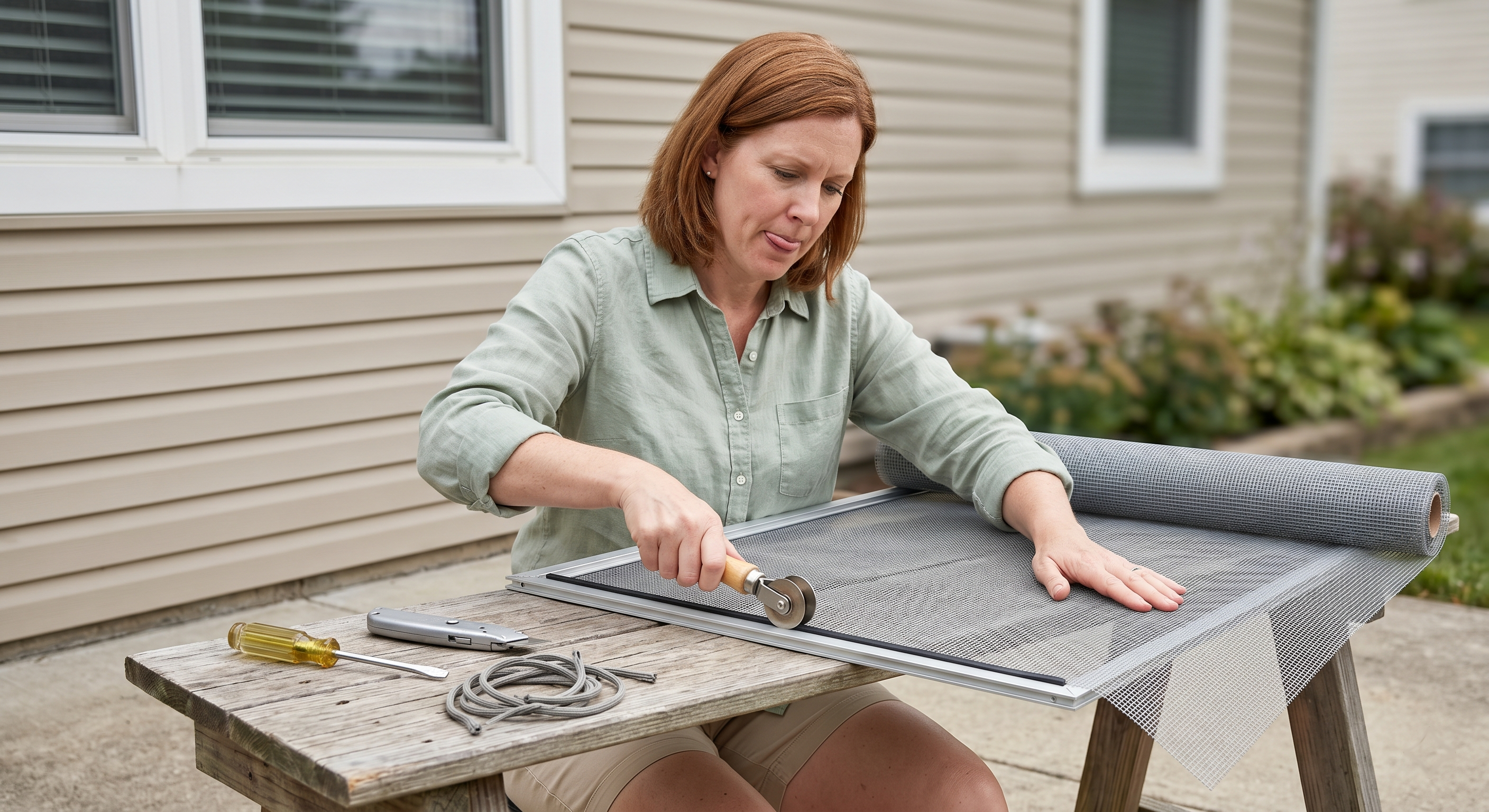
Standard screen repair is one of the most beginner-friendly home improvement tasks out there. If the frame is in good shape and you just need new mesh, you can do this in an afternoon with a $10–$25 kit from any hardware store.
What you'll need
- Replacement mesh roll (fiberglass or aluminum — match your existing or upgrade)
- Replacement spline (rubber cord, same diameter as your existing spline)
- Screen rolling tool (also called a spline roller — two-wheeled tool, one concave, one convex)
- Flathead screwdriver
- Scissors and a utility knife
- A flat work surface — a workbench, a table, or a clean garage floor
Total material cost for a standard single-screen rescreen: $15–$40, depending on mesh type. A basic kit is often cheaper — you're paying more if you choose pet-resistant or solar mesh, which cost 2–3× more than standard fiberglass.
The basic process
- Remove the screen from the window and lay it flat.
- Use the flathead screwdriver to pry out the old spline from the channel around the frame perimeter.
- Pull away the damaged mesh and discard it.
- Lay new mesh over the frame with at least 1–2 inches of overlap on all sides.
- Use the convex (rounded) wheel of the rolling tool to press the spline into the channel, starting at a corner. Work your way around, keeping the mesh taut but not overtightened.
- Trim excess mesh flush with a utility knife.
The most common mistake is pulling the mesh too tight before the spline is fully seated, which causes the frame to bow. Work the spline in gradually and check the corners as you go.
When DIY doesn't make sense
- Non-standard window sizes that need custom-ordered frames
- Difficult-to-reach windows on upper floors or skylights
- Stainless steel or heavy-gauge pet mesh, which is harder to cut cleanly and seat properly
- Five or more screens to replace — a contractor with bulk pricing can often beat the combined cost of your time plus materials
- Integrated or retractable screen systems, which require specific tools and know-how
When to Hire a Pro
Hiring out screen work makes sense in more situations than people realize. When you're staring down a list of 8 damaged screens after a bad storm, or your windows are custom-sized and nothing off the shelf fits, the math shifts toward a pro pretty quickly.

Handyman vs. window specialist
For standard flat screens, spline replacement, and basic rescreening, a handyman is the right call. They handle this work every day and typically charge $40–$70/hour in most markets. A window specialist or glazier is appropriate for larger, more complex jobs — integrated screen systems, security screens, or when the screen work is part of a larger window replacement project.
Don't overpay by hiring a window company to swap out three standard fiberglass screens. That's handyman work. Save the specialty contractor for specialty problems.
Bulk discounts are real
Most contractors will discount per-screen pricing when you give them more volume. Getting 5+ screens done at once versus one or two can cut per-screen cost by 20–30%, because the fixed cost of travel and setup gets spread across more units. If you're on the fence about a few screens that are "not that bad yet," it often makes sense to bundle them into the same appointment.
Consider what material you actually need
When you hire a pro, you're also buying their product knowledge. A good contractor will ask about your situation — pets, sun exposure, coastal location, allergies — and recommend mesh accordingly. Fiberglass is fine for a shaded bedroom window in a mild climate. In Phoenix or Houston, the same contractor would push solar screens hard, and they'd be right: blocking 70–90% of solar heat gain has a measurable effect on cooling bills. In Florida near the coast, they should be talking about storm-rated screens. Let them make the case; it's their market.
How to Find and Hire the Right Person
Screen repair isn't a high-stakes hire — you're not bringing someone into your attic or your electrical panel. But there are still a few smart moves worth making.

Where to look
- Local Facebook groups and Nextdoor. Neighbors who've had screen work done recently are your best referral source. Look for someone who does it regularly, not a one-off.
- Google "window screen repair [your city]". Mobile screen repair services and small window shops show up clearly; check reviews on Google Maps rather than their website.
- Hardware store bulletin boards. Old-school but still works in smaller markets. Local handymen who focus on screen work often post there.
- Home improvement apps (Angi, Thumbtack, TaskRabbit). Good for getting multiple quotes quickly. Read reviews carefully — focus on recency and whether previous customers mention screen work specifically.
What to ask before you book
- "Do you bring the screens to a shop, or work on-site?" Some mobile services do the work in their van in your driveway. Others take frames to a shop. Both are fine — just know what to expect.
- "What mesh types do you carry?" A contractor who only carries standard fiberglass can't give you a real choice. Someone who stocks pet-resistant, solar, and aluminum can solve more problems in one visit.
- "What's your minimum service fee?" In high-cost markets especially, there's often a trip charge built into every job. Know this upfront so you're not surprised by a $125 charge to replace one $60 screen.
- "Do you offer a discount for doing multiple screens?" Ask directly. Most contractors will say yes.
Licensing and permits
Screen repair is not a licensed trade in most states — it's typically classified as handyman work. The main exception is California: jobs over $1,000 may require a Contractors State License Board (CSLB) license (C-17 glazing classification or general B license), which affects who can legally do multi-screen jobs there. If you're in California and replacing several screens, verify that whoever you hire is properly licensed. In other states, handyman licensing is either minimal or not required for this scope of work — focus on reviews and references over licensing paperwork.
Get at least two quotes for bigger jobs
For one or two screens, the quotes will be close enough that it's not worth shopping hard. For five or more screens, or a custom order, get at least two quotes. Price variation on larger jobs can be meaningful, and you'll quickly find out who's actually competitive in your market.
The Bottom Line
Window screen repair is one of those home maintenance tasks that's easy to push off but genuinely pays to stay on top of. Bugs are the obvious reason, but damaged screens also affect how well your windows ventilate and how your home looks from the curb — and a sagging, rusting screen doesn't exactly help the case when you're selling.

If the frame is good and the mesh is the problem, grab a $20 spline kit and handle it yourself on a Saturday morning. If you're looking at multiple screens, a damaged frame, or a non-standard size, get two quotes from local handymen and bundle as many screens as possible into the same visit. The per-screen cost drops fast when you give a contractor a full list to work from.
Either way, the window screen problem is solvable — usually faster and cheaper than you think.
Ready to get it done? Use the resources below to find a local pro who handles window screen work in your area — or if you're going the DIY route, hit your local home center for a spline kit and get after it this weekend.
Find Trusted Pros Near You
Ready to start your project? Connect with vetted, top-rated contractors in your area.
Get Started