Spring Concrete Crack Repair: Fix Winter Damage to Sidewalks, Patios & Driveways
Spring Concrete Crack Repair: Fix Winter Damage to Sidewalks, Patios & Driveways
Every spring, Midwest homeowners walk outside and get the same gut punch: their driveway, patio, or sidewalk looks like it tried to survive a warzone. Cracks, spalling, heaved slabs — winter did a number on it. And it's not bad luck. It's physics.
Indianapolis and Chicago each see dozens of freeze-thaw cycles every winter — some years 20+, others pushing 35 or more depending on the season. Each cycle, water seeps into your concrete, freezes, expands about 9%, then thaws — wedging cracks a little wider every single time. Add road salt into the mix and you've got a recipe for concrete that looks 20 years older than it is.
The good news: spring is your window. Temps are climbing back above 50°F, the ground is stable, and contractors aren't slammed yet. Here's everything you need to know to assess the damage, fix what you can yourself, and know when it's time to call in a pro.

Understanding What Winter Actually Did to Your Concrete
Not all cracks are created equal, and the type of crack tells you a lot about what you're dealing with — and what it'll cost to fix.
Hairline and Surface Cracks (DIY territory)
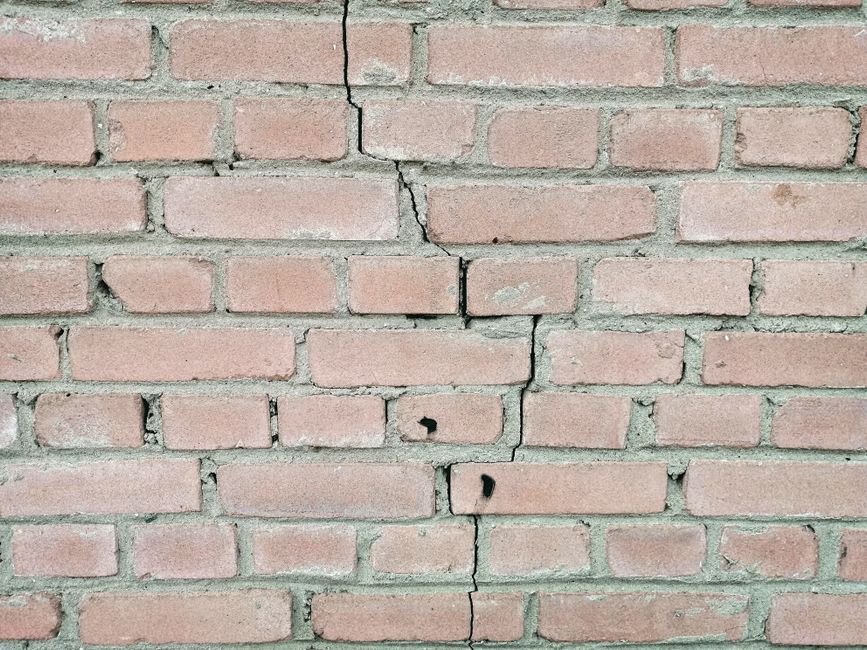
If a crack is less than 1/8 inch wide and the slabs on either side are flush with each other, you're looking at surface-level damage. These are typically caused by normal curing shrinkage or freeze-thaw action on the top layer. You can seal these yourself with a flexible concrete crack filler or polyurethane caulk for $5–$15 in materials. Don't ignore them — sealed this spring, they stay hairlines. Left alone, they'll be structural problems by next year.
Structural and Settlement Cracks (Call a pro)
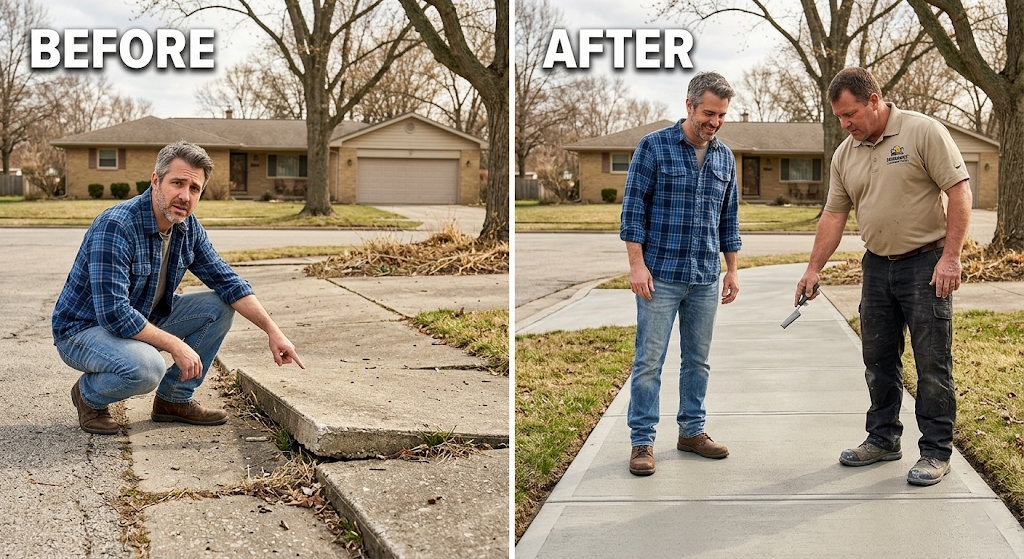
If a crack is wider than 1/4 inch, or if one slab sits higher or lower than the one next to it, that's not a cosmetic issue anymore. You're looking at soil settlement, tree root intrusion, or base failure underneath the slab. No amount of crack filler fixes this. You need a professional to assess whether the slab can be leveled or needs replacement.
Spalling and Surface Scaling
This is the flaking, pitting, crumbling-surface stuff — and it's everywhere in the Midwest because of de-icing salt. Road salt significantly accelerates concrete spalling compared to untreated surfaces — industry data consistently shows de-icing salt is one of the primary drivers of premature surface deterioration in Midwest climates. Minor spalling (small pits, light flaking) is a DIY fix with a concrete resurfacer like QUIKRETE Concrete Resurfacer or Sakrete Top'N Bond. If you're looking at widespread damage across 20+ square feet, a pro resurfacing job is probably worth the money.
Expansion Joint Cracks
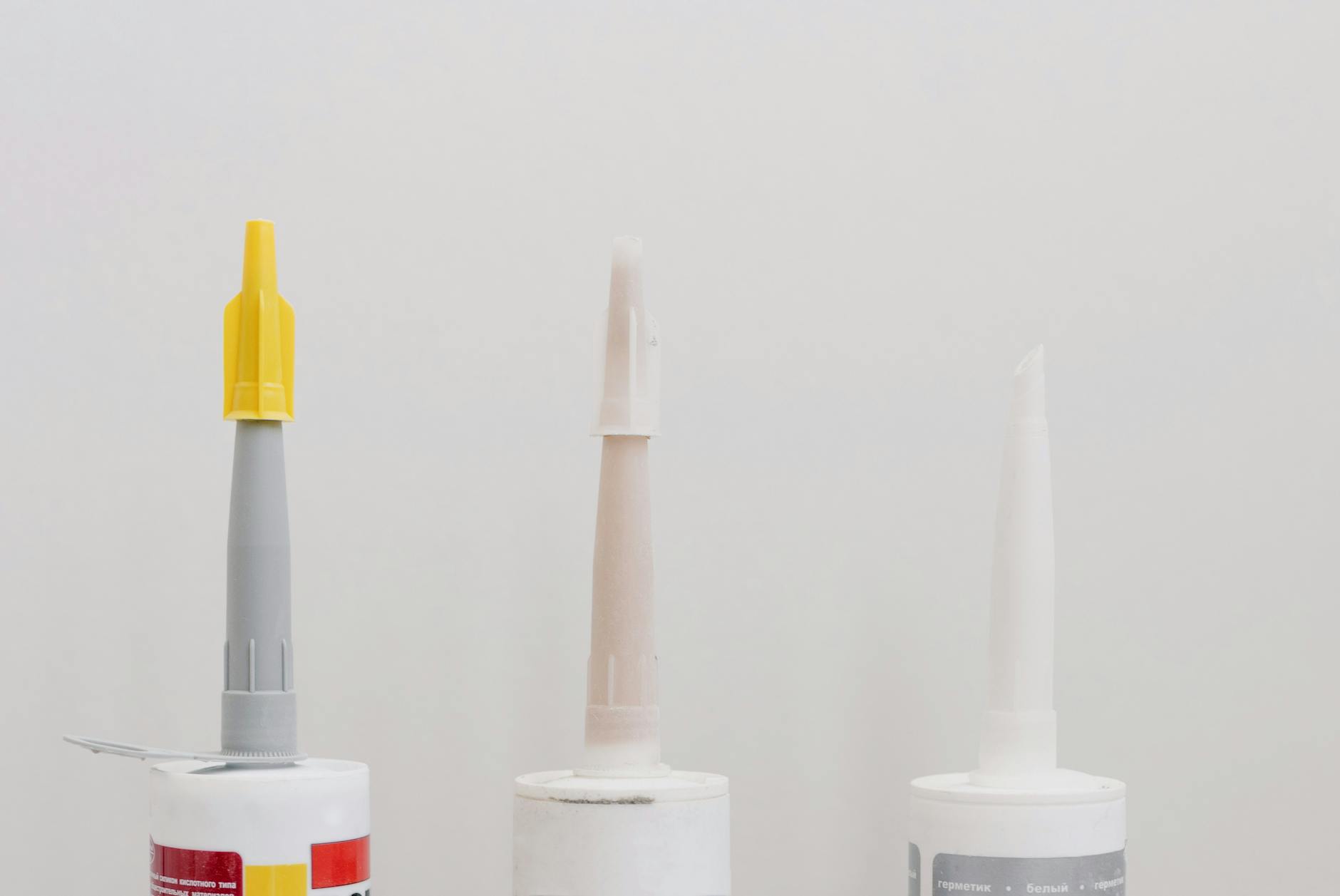
The gaps between your driveway slabs or where your driveway meets the garage — those are control joints, and they're designed to be the weak point so the rest of the slab doesn't crack. When filler in these joints breaks down, water gets in and freeze-thaw damage accelerates. Fix: self-leveling polyurethane caulk, with foam backer rod installed first if the joint is deeper than 1/2 inch.

How to Repair Surface Cracks Yourself: Step-by-Step
For hairline cracks and expansion joints, this is a solid Saturday morning job. You don't need special skills — just the right materials and a little patience.
What you'll need:
- Flexible concrete crack filler or self-leveling polyurethane caulk (Sika Sikaflex, Quikrete Polyurethane Concrete Crack Sealant, or DAP Concrete and Mortar Sealant)
- Foam backer rod (for cracks or joints deeper than 1/2 inch)
- Wire brush or 5-in-1 tool
- Leaf blower or hose to clean debris
- Caulk gun
Steps:
- Clean the crack completely. Knock out loose concrete, pull any weeds, remove old dried filler. A wire brush and some elbow grease go a long way. Then blow it out with a leaf blower or rinse it out and let it dry completely. Moisture is the enemy of bonding.
- Install backer rod if needed. For any crack or joint deeper than 1/2 inch, push in foam backer rod first. This gives the caulk something to bond to and prevents it from sinking too deep.
- Apply the filler. Hold the nozzle right at the depth of the crack and slightly overfill — the material will settle a bit as it cures.
- Smooth it out. Run a wet finger or a caulk tool along the fill to create a slight concave shape. This sheds water instead of pooling it.
- Match the texture (optional). Sprinkle a little sand over the wet filler to match your surrounding concrete texture.
- Stay off it. Keep it dry for at least 24 hours. Don't let the sprinklers hit it. Don't park on it.
One hard rule: If you look at the crack and one side is higher than the other — even by a quarter inch — stop. That's a leveling problem, not a filling problem. Putting caulk in a settled slab just hides the hazard.
Temperature matters too. Most repair products need temps between 50°F and 90°F to cure properly. Don't apply if rain is expected within 24 hours. In Indianapolis, mid-March through May is your sweet spot. Chicago is usually late March through April before the summer construction rush kicks in.
What It Actually Costs: DIY vs. Hiring a Pro
Here's the honest breakdown of what repairs cost in 2026 — whether you do it yourself or bring in a contractor.
DIY Material Costs
- Crack sealing (caulk/filler): $5–$15
- Surface patching (small areas): $10–$80
- Concrete resurfacing (DIY): $50–$200
Professional Service Costs
- Crack sealing (minor): $100–$300
- Full driveway caulking: $300–$1,000
- Surface resurfacing: $2,000–$5,000
- Slab leveling (mudjacking): $500–$2,000
- Slab leveling (polyfoam injection): $800–$4,000
- Full slab replacement (small area): $500–$2,000
- Full driveway replacement: $3,000–$15,000+
The math on DIY is pretty clear for surface-level repairs — $10 of caulk beats a $300 service call every time. But for structural work, the pros earn their money. Mudjacking (pumping a slurry under a sunken slab to lift it) and polyfoam injection (more precise, less invasive) are not weekend warrior jobs. Done wrong, you make the problem worse.
One more cost factor: book early. Spring contractor schedules in both Indianapolis and Chicago fill up fast. Guys who call in March are getting April slots. Guys who wait until June are paying summer premium rates and waiting weeks.
When to Stop DIYing and Call a Professional
There's no shame in knowing when a job is outside your lane. Here's the checklist:
- The crack is wider than 1/4 inch
- One slab sits higher or lower than the adjacent slab
- The crack runs the full length of a slab or crosses between slabs
- You see multiple cracks in the same area (may indicate base failure underneath)
- There's a crack in or near a foundation wall or basement
- You suspect tree roots are involved
- Spalling covers 20+ square feet
- You've got a vertical displacement of 1/2 inch or more — that's a legal trip hazard
That last point is worth emphasizing. In Chicago, homeowners are responsible for maintaining the sidewalk abutting their property under the Chicago Municipal Code — and the city can require repairs or issue fines for neglected hazards. Contractors and inspectors commonly flag vertical displacements of 1/2 inch or more as repair-priority trip hazards. Indianapolis homeowners don't face the same municipal enforcement, but the personal liability exposure from a fall on unrepaired concrete is real anywhere. When in doubt, fix it — a $500 repair beats a lawsuit.
Local Considerations for Indianapolis and Chicago Homeowners
Indianapolis
Indiana DOT uses salt brine pre-treatment plus rock salt heavily throughout the winter. Marion County's clay-heavy soils expand and contract with moisture changes, which means your concrete slabs are moving even when it's not freezing. That soil movement is often the real culprit behind settlement cracks — the freeze-thaw damage is just what you see on top.
Best repair window: mid-March through May. Temps are reliably above 50°F, ground moisture is stabilizing, and summer heat (which can cause products to cure too fast) hasn't arrived yet.
Chicago
Chicago homeowners carry the additional weight of municipal code compliance. You own the sidewalk in front of your house, and the city can fine you for unrepaired trip hazards. If your sidewalk has a lifted slab, this spring isn't optional maintenance — it's a liability issue. Late March through April is your window before summer construction season crowds out contractors and drives up prices.
De-Icer Choice Going Forward
For both markets: if you're still using rock salt on your concrete, switch to calcium chloride or magnesium chloride. Rock salt (sodium chloride) is hard on concrete — it increases freeze-thaw cycles at the surface and accelerates spalling. Calcium chloride works at lower temps and is significantly less damaging. Your concrete will thank you over the next 5 winters.
Also worth noting: new concrete (less than 1 year old) is especially vulnerable. If you poured anything in 2025, keep all de-icers off it this winter and next.
Frequently Asked Questions
- Can I repair concrete in cold weather?
- Most concrete repair products need sustained temps above 50°F to cure properly. Applying below that threshold leads to poor adhesion and the repair failing within a season. Wait for a reliable warm spell — in Indianapolis and Chicago, that's typically mid-March at the earliest.
- How do I know if my crack is getting worse?
- Mark both ends of the crack with a pencil or paint pen and check it every few weeks. If the mark is no longer at the tip of the crack, it's actively growing. Cracks that grow over spring and summer typically indicate ongoing soil movement — a pro should assess.
- Is concrete resurfacing worth it, or should I just replace?
- Resurfacing makes sense when the underlying slab is structurally sound — no settlement, no major heaving — and you're dealing with surface-level spalling and pitting. If the slab has structural issues, resurfacing over them is just putting lipstick on a problem. A concrete contractor can tell you which side of that line you're on after a 15-minute inspection.
- What's the difference between mudjacking and polyfoam lifting?
- Both raise sunken slabs by injecting material underneath. Mudjacking pumps a cement-soil slurry and is cheaper ($500–$2,000) but adds weight and uses larger holes. Polyfoam injection uses expanding foam through smaller holes, is more precise, and the foam won't wash away over time. It costs more ($800–$4,000) but is generally the better long-term fix.
- How long do concrete repairs last?
- Done right with quality materials, surface crack repairs last 5–10 years. Slab leveling repairs can last 10+ years depending on soil conditions. The biggest factor is soil stability underneath — if the base continues shifting, no surface repair will hold long-term.
- Should I seal my concrete after repairs?
- Yes — a penetrating concrete sealer applied after repairs and every 2–3 years significantly slows future freeze-thaw damage. Look for a silane-siloxane penetrating sealer for driveways and exterior surfaces. Apply when temps are above 50°F and rain isn't expected for 24 hours.
Fix It Now — Before Next Winter Makes It Worse
Concrete damage in the Midwest is a compound problem. Every winter cycle you let a crack sit unrepaired, it gets wider. What costs $10 in caulk this spring costs $300 in professional repairs by fall, and potentially $3,000 in slab replacement in two years. Spring is your lowest-cost intervention window, and it's open right now.
Here's the action plan:
- Walk your property this weekend. Driveway, sidewalks, patio, garage apron. Mark every crack with chalk.
- Categorize what you find. Hairline and surface cracks: DIY fix this month. Displaced slabs or cracks wider than 1/4 inch: get a pro out for an assessment.
- Fix the DIY stuff yourself — it's a few hours and $20 in materials.
- Book a contractor now for anything structural. Don't wait until June.
- Seal everything once repairs are complete and cured.
Your concrete has been through a Midwest winter. Give it some attention this spring and it'll last another decade. Let it go, and you're looking at a driveway replacement conversation before your daughter starts high school.
Need a concrete repair contractor in Indianapolis or Chicago? Find vetted local pros on Fixxit — get quotes, check reviews, and book the job before the spring rush fills their calendars.
Find Trusted Pros Near You
Ready to start your project? Connect with vetted, top-rated contractors in your area.
Get Started