Drywall Repair & Texture Matching Guide
Drywall Repair & Texture Matching: What It Really Costs in 2026
Drywall damage is one of those things that sneaks up on you. A doorknob punches through a wall. Water drips from a leaky pipe and leaves a brown bloom on the ceiling. A kid hangs something heavy in the wrong spot. Suddenly you've got a hole — or worse, a ragged section of crumbling gypsum — staring back at you every time you walk into the room.
That hole isn’t getting smaller on its own.
The good news: drywall repair is one of the more affordable home fixes you can make. The not-so-great news: if your walls have any texture — orange peel, knockdown, skip trowel, popcorn — that texture match is going to cost you more than the actual patch. A lot more, sometimes.
This guide breaks down what real drywall repair costs in 2026, from a quick nail-hole fill to a full wall section replacement with professional texture matching. We cover every region of the country, the DIY vs. pro math, and exactly what to look for when you're hiring someone to do the work right.
What Does Drywall Repair Actually Cost?
Here's the national baseline, based on 2024–2025 contractor pricing and U.S. Bureau of Labor Statistics wage data for drywall and ceiling tile installers:

- Small holes (under 4 inches): $60–$200 professionally patched
- Medium holes (4–6 inches): $100–$320
- Large holes (over 6 inches): $200–$640+
- Crack repair: $60–$330 (stress cracks from settling are common)
- Whole-wall repair or section replacement: $500–$1,600
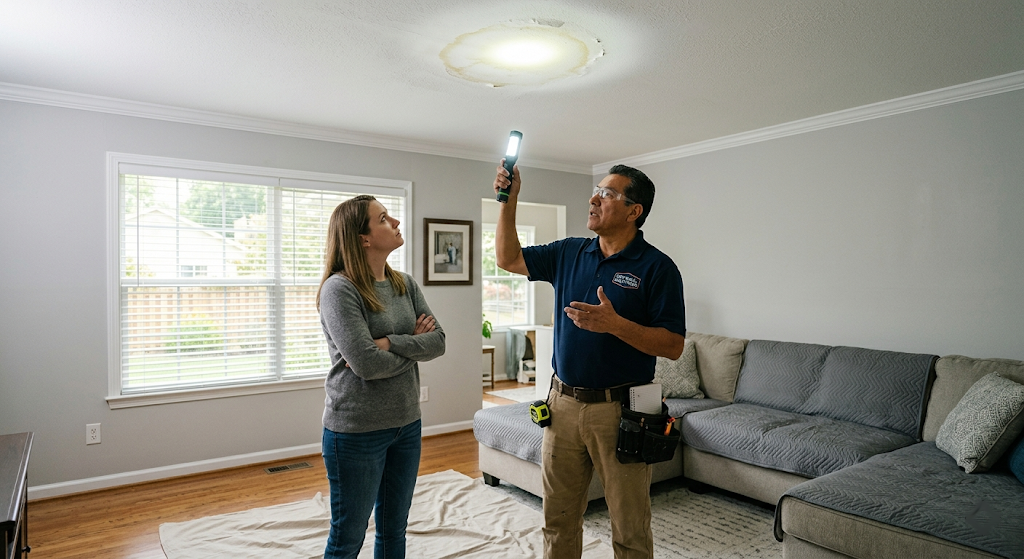
- Ceiling hole repair: $320–$1,300 (overhead work costs more — expect it)
- Water damage with mold: Starts around $2,300+ once remediation enters the picture
The national average lands around $50–$80 per square foot for professional repair, or roughly $450–$2,000 for a typical project. That's a wide range — and location is the biggest variable. More on that in a moment.
One thing most homeowners don't expect: the texture match costs as much — sometimes more — than the patch itself. Minimum trip fees for texture work alone run $100–$200. A contractor isn't going to roll up with a spray rig for a $40 job. Budget for that reality upfront.
What Drywall Repair Costs Across the US
Labor drives 65–75% of drywall repair cost. That means where you live matters as much as the size of the job. The BLS reports a national median wage of $26.78/hr for drywall installers — but that number swings from under $22/hr in parts of Texas and Idaho to nearly $46/hr in the San Jose metro. Here's what that looks like in your region:
Northeast — Boston & New York City: $500–$2,300 | Hartford, Providence & Albany: $450–$2,000
New York City anchors the high end of the Northeast, with BLS data showing drywall installers earning a mean of $33.69/hr in the NYC metro — about 14% above the national average. Boston tracks close behind. Hartford, Providence, and Albany generally run at or just below the national baseline. The Northeast also has the oldest housing stock in the country: pre-1940 homes with original plaster walls are common, and matching plaster finishes or converting to modern drywall adds 20–35% to the job. NYC's strong union presence (IUPAT locals cover most commercial and much residential work) means union shops command a 25–40% premium over open-shop contractors in the five boroughs.
Mid-Atlantic — Washington DC & Baltimore: $450–$2,100 | Pittsburgh & Richmond: $360–$1,600
DC and Baltimore sit right at the national average, maybe nudging 5% above it — the region has competitive contractor supply and a mix of union and open-shop operations. Pittsburgh and Richmond are meaningfully more affordable, with wages estimated around $21–$25/hr, putting total project costs 15–20% below the national baseline. One DC-specific wrinkle: federal construction activity keeps skilled trade labor in consistent demand year-round, which can push wait times during busy spring and fall seasons. Baltimore and DC also have substantial older rowhouse stock where plaster repair is more common than drywall-only work.
Southeast — Atlanta, Miami & Charlotte: $315–$1,400 | Raleigh, Tampa & Nashville: $290–$1,300
The Southeast is among the most affordable regions in the country for drywall work. Florida's statewide mean wage for drywall installers is $20.77/hr — about 30% below the national average — and Atlanta and Charlotte aren't far off. The big exception is Miami: Miami-Dade's high-velocity hurricane zone (HVHZ) building codes add complexity and cost that push Miami prices 10–15% above the rest of the Southeast group. Charlotte and Raleigh are growing fast — contractor demand is outpacing supply as the population booms, so wait times are tightening even if prices haven't spiked yet. Post-hurricane repairs along the Florida coast can drive prices 20–40% above normal during active storm seasons.
Midwest — Chicago, Detroit & Minneapolis: $405–$1,800 | Indianapolis, Columbus & Milwaukee: $360–$1,600
Chicago has strong IUPAT union influence, which pushes Midwest costs 5–10% below the national average but still meaningfully above the secondary markets. Indianapolis, Columbus, and Milwaukee are open-shop dominant and consistently come in 15–20% below the national baseline — among the more competitive pricing environments in the country for straightforward repair work. The Midwest's brutal temperature swings (think Chicago's −20°F winters and 95°F summers) cause constant expansion and contraction in building materials, meaning nail pops, tape bubbling, and drywall stress cracks are endemic. Midwest homeowners tend to have recurring drywall repair needs more than most other regions.
South & Gulf Coast — Houston & Dallas: $340–$1,500 | San Antonio, Austin & Oklahoma City: $315–$1,400
Texas is a low-cost labor market for drywall work: the BLS reports a state mean of $22.51/hr, with the Dallas-Fort Worth metro at $23.06/hr and Houston estimated around $21–$23/hr. Both and cities here run 20–30% below the national average, and Texas's light contractor licensing requirements keep pricing competitive. Austin is the outlier on an upward trajectory — the tech boom has pushed wages up toward $23–$26/hr, and that gap is widening. Oklahoma City trails the Texas metros, with wages estimated around $19–$21/hr making it one of the more affordable repair markets in the country. Gulf Coast homeowners should factor in post-storm surges: after Hurricane Harvey, Houston-area repair contractors ran multi-year backlogs with prices spiking accordingly.
Mountain West — Denver & Phoenix: $380–$1,700 | Salt Lake City, Boise & Albuquerque: $340–$1,500
Phoenix has a high concentration of drywall contractors (BLS location quotient 2.44x the national average), which keeps pricing competitive despite solid regional demand — the BLS Phoenix metro wage is $24.98/hr, about 15% below national. Denver sits higher, around $26–$28/hr, as the tech and real estate boom has driven wages up. SLC and Boise are both growth-market metros where new construction competes heavily with repair work for skilled finishers, so availability can be tighter than the prices suggest. One thing that surprises homeowners in this region: Phoenix and Albuquerque's desert climate dries joint compound very fast — sometimes too fast — and experienced contractors know to adjust their technique. Botched texture in arid climates is a common re-do situation.
Pacific Coast — Seattle, Los Angeles & San Francisco: $520–$3,100 | Portland, San Diego & Sacramento: $495–$2,500
The Pacific Coast is in a league of its own. BLS wage data puts San Francisco at $44.77/hr and San Jose at $45.94/hr — 51–55% above the national average. Seattle clocks in at $39.28/hr (+33%), and even LA at $34.13/hr and Sacramento at $34.64/hr run meaningfully above national. California requires a C-9 Drywall Contractor contractor license from the CSLB, and any job over $1,000 must be done by a licensed contractor — which creates a quality floor but also a price floor. San Francisco Bay Area properties frequently specify Level 5 finish (a full skim coat over the entire wall surface), which is the most labor-intensive finish level and can cost $1.50–$3.00/sq ft for the finish coat alone. If you're in the Bay Area, budget for premium work — and get multiple quotes.
Texture Matching: The Part That Trips Everybody Up
Here's what most cost estimators don't tell you upfront: texture matching is usually harder and more expensive than the patch itself. You can fix a hole in 20 minutes. Getting the texture to blend invisibly into a 20-year-old wall? That takes skill, experience, and the right equipment.

The most common textures and what they cost to professionally match:
- Orange peel: $1.25–$1.95/sq ft — spray-applied, the most common texture in Western and Sunbelt markets; DIY aerosol kits exist but matching pressure and distance is harder than it looks
- Knockdown: $1.50–$2.00+/sq ft — spray-then-flatten; very popular in the Southeast and Mountain West; requires two steps and real skill to blend
- Skip trowel: $1.50–$2.50/sq ft — hand-applied with a curved trowel; common in Southeast and Southwest; highly variable results without experience
- Popcorn/acoustic ceiling: $1.00–$2.00/sq ft to apply; important note — pre-1978 popcorn ceiling texture may contain asbestos; testing and abatement run $3–$7/sq ft additional in affected homes
- Smooth/flat (Level 5): $0.50–$1.00/sq ft — deceptively expensive because it requires extensive sanding and skim coating; common in the Northeast and Mid-Atlantic, and premium Bay Area properties
- Comb or stucco: $1.50–$3.00/sq ft — regional and niche; found in older Midwest homes and some Southwestern properties
The pro tip that saves you a redo: Always prime the patch with PVA (drywall primer) before applying texture. An unprimed patch will absorb moisture differently from the surrounding wall and cause the texture to look different — a problem called "flashing." This is the most common reason DIY texture jobs look obviously wrong.
Also: feather your texture out at least 12–18 inches beyond the patch edge. A texture that stops exactly at the repair boundary will be visible in raking light from any window. Good finishers blend wide.
DIY vs. Hiring a Pro — Be Honest With Yourself
The patch is easy. The blend is the hard part.

DIY drywall repair can absolutely work — on the right job. Here's an honest breakdown:
DIY Makes Sense When:
- The hole is small (under 4 inches) and the wall is smooth finish — a spackle kit costs $10–$30 and the result can be invisible
- You're filling nail holes or hairline cracks — this is genuinely beginner-territory
- You have time to do multiple coats (joint compound needs 24 hours to dry between coats) and patience to sand properly
- Painting is happening anyway — a fresh coat hides a lot of sins
Hire a Pro When:
- Any textured surface needs matching — this is the hard rule. Texture matching looks obviously wrong when done poorly, and "obviously wrong" means you'll pay a pro to redo it anyway
- The damage involves water — even if it looks dry, moisture-damaged drywall may hide mold behind the paper facing
- The hole is on a ceiling — overhead compound work is miserable and dripping compound is a real problem
- You're looking at anything larger than about 6 inches — at that size, you're cutting out a section, installing backer boards, and taping full joints; skill matters
- There's any structural cracking (diagonal cracks at corners of doors/windows indicate settling; that's a foundation conversation, not just a patch)
- The home was built before 1978 and you're touching popcorn ceilings — test for asbestos first
The DIY cost floor: $10–$30 in materials for a simple patch. The professional floor is roughly $100–$200 minimum trip fee, even for small texture-only work. For anything involving texture, the math almost always favors hiring someone who does this every day.
How to Hire a Drywall Contractor (Without Getting Burned)
Ten thousand patches builds the muscle memory for this sweep.
Drywall finishing is a skilled trade, but it's not heavily regulated in most states — which means the quality gap between contractors is enormous. Here's how to hire smart:
1. Check Licensing Requirements for Your State
California is the strictest: the CSLB requires a C-9 Drywall Contractor license for any job over $1,000. Unlicensed work is illegal and creates liability problems if you ever sell the house. Most other states have lighter requirements, but always ask for proof of general liability insurance and verify it's current. A contractor without liability insurance means any damage they cause comes out of your pocket.
2. Get Three Quotes
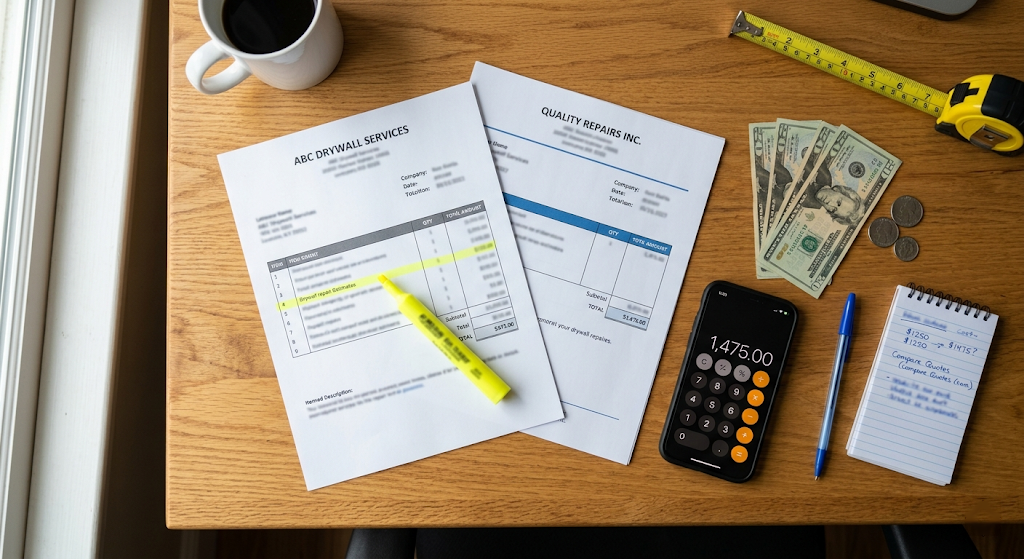
For any job over $300, get at least three bids. Ask each contractor to break out labor vs. materials — this tells you who's padding materials margins. The lowest bid isn't always wrong, but a bid significantly below the other two usually means something's being skipped (primer coat, proper feathering, adequate dry time between coats).
3. Ask About Texture Specifically
This is the question that separates the finishers from the patch-and-run guys: "How do you match existing texture, and what's your process for blending?" A good contractor will talk about test boards, feathering distance, and priming. A bad one will say "no problem" and change the subject. Ask to see photos of previous texture-match jobs.
4. Clarify What's Included
Is paint included or not? Most drywall contractors don't paint — they patch, prime, and texture, then leave you to paint. Confirm this upfront. Also confirm who moves furniture, who handles cleanup, and whether the estimate includes primer coat (it should — unprimed patches will flash under paint).
5. Watch for Red Flags
- Cash-only, no written contract
- Can't provide a local address or verifiable business name
- Wants a large deposit upfront (50%+ before work starts is unusual)
- Can't show insurance certificate on request
- Rushes through your questions about process
6. Know the Seasonal Timing
Spring (March–May) is the national peak for interior remodeling — the best contractors book up fast. If you're in the Northeast or Midwest, the pre-spring rush (February–March) fills schedules quickly. In the Southeast and Gulf Coast, post-hurricane season (October–November) can create backlogs in Florida and coastal Texas. Mountain West homeowners in Phoenix will find contractors more available during the brutal summer months when most people pause renovation projects. Booking 3–4 weeks out in peak season is normal; 2 weeks in off-season.
Pre-1978 Homes: Read This Before You Touch Anything
If your home was built before 1978, two hazards deserve your attention before any drywall work begins:
Asbestos in texture: Popcorn ceiling texture applied before 1978 frequently contained asbestos as a binding agent. Disturbing it — scraping, drilling, cutting — releases fibers. Before removing or repairing old popcorn texture, test it. Home test kits run $30–$50; certified lab testing costs $25–$50 per sample. If asbestos is present, licensed abatement runs $3–$7 per square foot on top of normal repair costs. This isn't optional in most states — it's code.
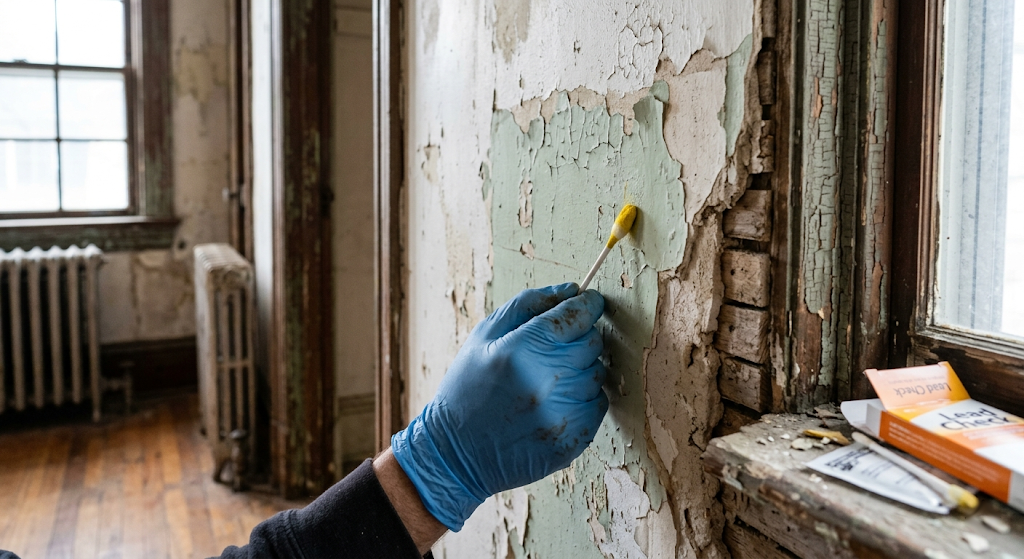
Lead paint: Pre-1978 walls in the Northeast, Midwest, and California are highly likely to have lead paint somewhere in the paint layers. Any drywall repair that sands or disturbs that paint requires lead-safe work practices (EPA RRP Rule). Under the federal EPA RRP Rule (and state-authorized equivalents), contractors must be certified to do work that disturbs lead paint in pre-1978 homes — this applies in all 50 states. Ask for that certification before work begins. The fine for an unlicensed contractor doing lead-disturbing work can land on the homeowner.
Get the Right Contractor for Your Repair
The best drywall repair is the one nobody notices.

Drywall repair is one of those projects where the difference between a good job and a bad one is almost invisible to the untrained eye — until you paint over it and the light hits wrong. A good patch with proper texture match disappears. A rushed patch with mismatched texture announces itself every time someone walks through the room.
The national average runs $450–$2,000 for a typical project, but your actual cost depends heavily on where you live, what texture you're matching, and whether the damage involves water or asbestos complications. Pacific Coast homeowners — especially in the Bay Area — should budget on the high end. Southeast and South & Gulf Coast homeowners are sitting in some of the most competitive labor markets in the country. Everyone else falls somewhere in between.
If you need a drywall contractor in your area, get multiple quotes and ask the right questions. The best contractors book up — don't wait until the damage gets worse.
Ready to get started? Find licensed drywall contractors in your area and get free quotes today.
Find Trusted Pros Near You
Ready to start your project? Connect with vetted, top-rated contractors in your area.
Get Started