
Your Fence Took a Beating This Winter: What to Fix, What to Replace, and What It Costs in Indianapolis & Chicago (2026)
What Winter Does to Fences in Indianapolis and Chicago (And Why Spring Is Your Window)
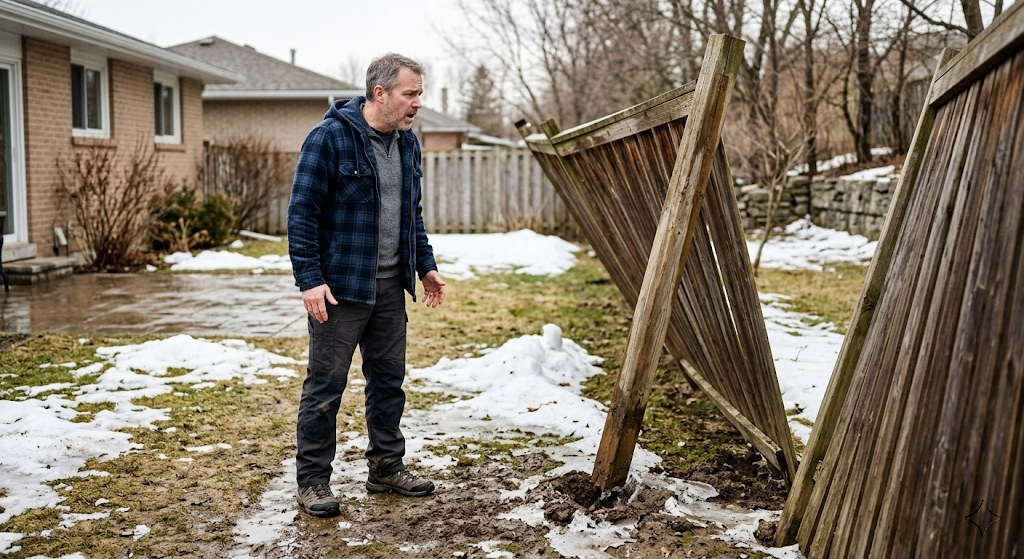
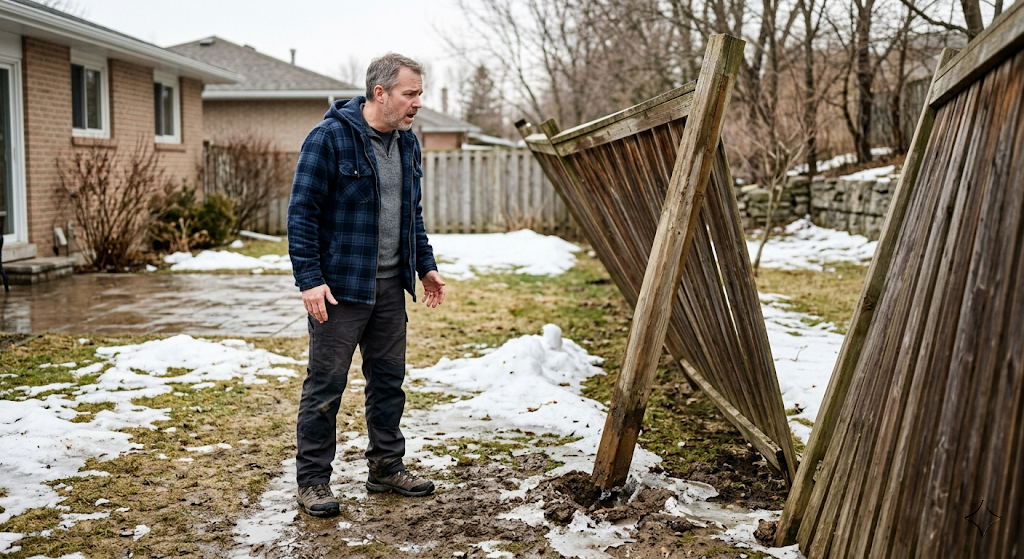
That moment when spring arrives and you realize winter had other plans for your fence.
You walked your backyard this weekend and something looked off. The back fence — the one that was perfectly fine last October — is now leaning like it had a rough winter. Because it did.
This isn't bad luck. It's physics.
In Indianapolis and Chicago, the ground freezes deep every winter. We're talking 36 inches deep in Indianapolis and 42 inches deep in Chicago. When the soil moisture freezes, it expands — and that expansion pushes upward against anything in its path. Including your fence posts. The technical term is frost heave, and it is the single biggest killer of residential fences in the Midwest.
Here's the ugly part: posts that were only set 24–30 inches deep (common in older installs or budget jobs) have no chance. The frost line is deeper than the footing. The ground grabs the post, freezes around it, and as the ice expands, the post rides up. Sometimes an inch. Sometimes six. By spring, you've got a fence that looks like it lost a fight with the neighborhood.
And it's not just heaving. Freeze-thaw cycles — where temperatures dip below freezing at night and warm above it during the day — happen dozens of times per Midwest winter. That repeated expansion and contraction:
- Splits and warps wood boards (especially pine)
- Cracks vinyl panels (vinyl gets brittle below 20°F)
- Loosens post hardware and gate hinges
- Causes metal components to rust where protective coating has chipped
- Pushes entire fence sections out of plumb
The reason spring is your window isn't just that it's nicer outside. It's that March and April are when the ground releases — the frost works its way back up, and the full extent of the damage finally shows itself. This is also when contractors start booking out fast. By June, you're competing with every other homeowner who waited too long. More on that in a minute.
The point is: if you're seeing problems now, don't ignore them. A leaning post doesn't fix itself. It just leans further.
Your Post-Winter Fence Inspection Checklist

The optimism of "maybe I can just push it back" usually lasts about 90 seconds.
Before you call anyone, walk the entire fence line. Not a glance out the window — actually walk it. Bring your phone and take photos of anything that looks wrong. Here's what you're checking for:
- Heaved posts: Look at the base of each post. Is it flush with the ground, or has it lifted? Even a 1–2 inch heave can throw an entire fence section out of alignment. Grab the post and try to rock it. It should feel like concrete is holding it. If it moves, the footing is compromised.
- Leaning sections: Stand at one end of the fence and sight down the line. It should be straight. Any section that's leaning more than a few degrees needs attention before it falls — or falls on something.
- Split or warped boards: Wood moves. After a wet winter, boards — especially pine — may have cupped, cracked, or split at the grain. These aren't just cosmetic; cracked boards invite rot and insects.
- Gate function: Open and close every gate. Does it swing freely? Does it latch? A gate that's dragging the ground or won't close properly usually means the post has shifted. This also creates a security and containment issue if you have kids or dogs.
- Rust (metal fences): Check chain link, aluminum, and any metal hardware for rust spots. Surface rust can be treated. Deep rust that's compromising structural integrity needs replacement.
- Cracked vinyl: Look for cracks or chips in vinyl panels. Cracked vinyl typically can't be patched — individual panels need to be replaced. Also check for sections that have popped out of the rail channels.
- Hardware and caps: Post caps, rail brackets, and picket fasteners can all work loose over winter. A quick tighten now prevents bigger problems later.
Document everything. Knowing whether you're dealing with two bad posts versus a leaning 40-foot section makes a significant difference in what comes next.
Fence Repair vs. Replacement — How to Decide (And What Each Costs)

Photo: Pexels
Here's the question every homeowner asks: should I fix what's broken or just start over? There's a simple rule that contractors use — we call it the 50% rule.
If the cost to repair your fence exceeds 50% of what it would cost to replace it, replace it.
You're throwing money at a depreciating asset. And with an old fence, you're usually just buying yourself one or two more winters before the same problems come back.
What Repairs Actually Cost
Nationally, fence repair runs between $302 and $922, with an average around $594. Labor typically runs $50 per hour. Indianapolis homeowners typically pay 10–20% more than national averages; Chicago homeowners are looking at 20–30% higher due to labor and permitting costs.
| Repair Type | Typical Cost Range |
|---|---|
| Post reset (re-set heaved post with new concrete) | $120 – $400 per post |
| Gate repair (rehang, realign, new hardware) | $100 – $400 per gate |
| Leaning section repair | $200 – $600 per section |
| Board replacement (wood) | $10 – $30 per board installed |
| Vinyl panel replacement | $50 – $150 per panel installed |
What Replacement Costs
When repair doesn't make sense, here's what full fence replacement runs per linear foot — installed, including materials and labor:
| Material | Cost Per Linear Foot (Installed) |
|---|---|
| Wood — Pine | $15 – $35 |
| Wood — Cedar | $20 – $45 |
| Vinyl | $20 – $45 |
| Chain Link | $10 – $25 |
| Aluminum | $25 – $45 |
On a typical Midwest backyard — say, 150 linear feet of 6-foot privacy fence — you're looking at $3,000–$5,250 for pine, $3,000–$6,750 for vinyl or cedar, and $3,750–$6,750 for aluminum. These aren't lowball estimates. Get three quotes. The cheapest bid isn't always the right call, especially on a job that involves post depth and concrete footings.
One more thing: book in spring. Fence contractors are significantly less busy in March and April than they are in June and July. Booking early can save you 10–20% compared to peak summer pricing, and you're more likely to get a crew that isn't rushing through five other jobs.
Choosing the Right Fence Material for the Midwest Climate

Photo: Pexels
Not all fence materials are created equal — and the Midwest climate is particularly unforgiving. You're dealing with hot, humid summers, cold winters with deep frost, and that relentless freeze-thaw cycle. What holds up in Phoenix doesn't necessarily hold up in Carmel or Oak Park.
Wood
Cedar beats pine in the Midwest. Full stop. Pine is cheaper upfront but it absorbs moisture readily, which means it rots faster and warps more aggressively through freeze-thaw cycles. Cedar contains natural oils that repel moisture and insects. It costs more — $20–$45/linear ft vs. $15–$35 for pine — but it lasts significantly longer in the Midwest climate. If you're going wood, go cedar.
Either way, wood requires regular maintenance: staining or sealing every 2–3 years to hold up properly. Skip it and you'll be replacing boards within 5–7 years in a Chicago-area climate.
Vinyl
Vinyl looks great and requires almost no maintenance. No painting, no staining. But vinyl has a cold-weather vulnerability that doesn't get talked about enough: it becomes brittle below 20°F. In an Indianapolis or Chicago winter, that means impact damage (a fallen tree branch, a car backing into it) can shatter the panel instead of just denting it. Vinyl also expands and contracts significantly with temperature swings, which is why proper installation with expansion gaps matters. A cheap vinyl install will have panels popping out of the rails by December.
Cost: $20–$45 per linear foot installed. Mid-to-high range for quality panels with proper hardware.
Chain Link
The workhorse. Chain link is the most affordable option ($10–$25/lnft) and holds up extremely well in freeze-thaw conditions because there's nothing solid for ice expansion to push against. It's not pretty, but if you're fencing a large property, a dog run, or a utility area, chain link is hard to beat on cost and durability. Galvanized or vinyl-coated chain link will resist rust in Midwest conditions.
Aluminum
Aluminum is the best performer in cold-weather climates of all the common fence materials. It doesn't rust, doesn't rot, doesn't warp, and its freeze-thaw performance is excellent. It looks like traditional wrought iron but without the rust problems. The tradeoff is cost — $25–$45 per linear foot — and the fact that it's typically an open-style fence, so it doesn't provide privacy the way a wood or vinyl panel fence does. If you want a decorative front yard or perimeter fence that will outlast everything else, aluminum is it.
A Quick Comparison
| Material | Midwest Durability | Maintenance | Privacy | Cost/LnFt |
|---|---|---|---|---|
| Pine Wood | Fair | High | Full | $15–$35 |
| Cedar Wood | Good | Medium | Full | $20–$45 |
| Vinyl | Good* | Low | Full | $20–$45 |
| Chain Link | Very Good | Very Low | None | $10–$25 |
| Aluminum | Excellent | Very Low | None/Partial | $25–$45 |
*Vinyl cold-weather brittleness is a real factor below 20°F — quality of installation matters significantly.
Permits, Property Lines, and HOA Rules — What Indianapolis and Chicago Homeowners Must Know
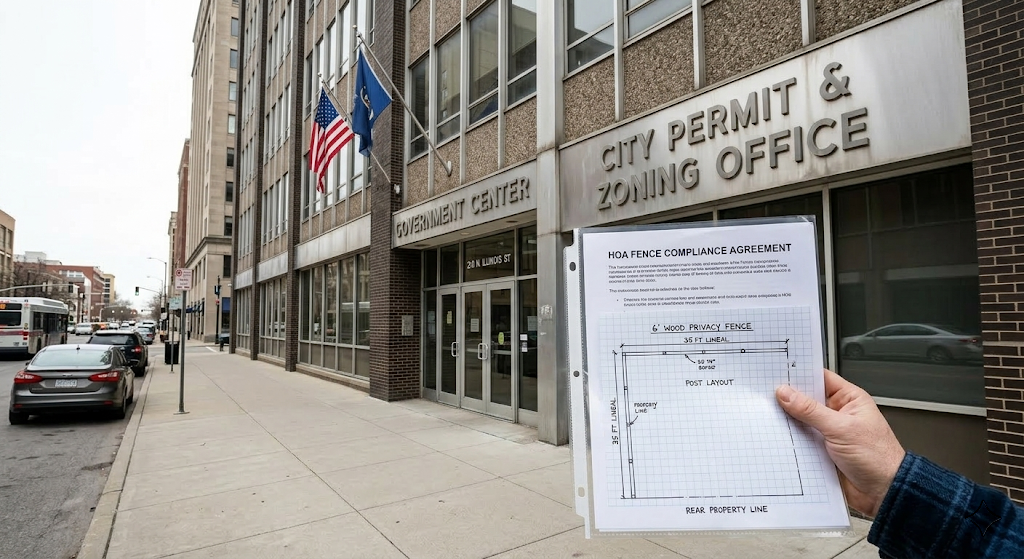
Pull the permit. Check the HOA docs. Do it before the posts go in the ground — not after.
This is where people get themselves into trouble. You buy materials, hire a crew, the fence goes up — and then a city inspector or HOA board sends a letter. Don't be that person.
Indianapolis / Marion County Permit Rules
In most of Indianapolis and the surrounding metro, you do not need a permit for a residential fence that is 6 feet or under in height in your rear or side yard. For the front yard, the limit drops to 3.5–4 feet depending on your zoning district. Anything taller than those thresholds requires a permit and plan review.
Check with Indianapolis Business and Neighborhood Services or your municipality's zoning office. If you're in a suburb (Carmel, Fishers, Noblesville), the rules may vary — Hamilton County has its own overlay requirements, and those cities have active code enforcement.
Chicago Permit Rules
Chicago's rule is simpler: no permit required for fences under 5 feet in height. For fences 5 feet and above, a permit is required. Given that most privacy fences are 6 feet, most Chicago homeowners will need to pull a permit. Budget for that time and cost when planning your project. The Chicago Department of Buildings handles this — your contractor should know the process cold.
Property Lines
Before anything goes in the ground, know where your property line actually is. Not where you think it is. Not where your neighbor thinks it is. Pull your survey or have one done. A fence installed even 6 inches over the property line can result in mandatory removal at your expense — and a strained relationship with your neighbor for the next decade. Most contractors won't pull permits for you or verify your property line; that's your responsibility.
HOA Rules — Don't Skip This Step
HOAs in Indianapolis suburbs like Carmel, Fishers, and Westfield are extremely active. Same story in Chicago suburbs — Naperville, Schaumburg, Downers Grove. Many HOAs have specific requirements covering:
- Approved fence materials (some prohibit chain link entirely)
- Maximum height
- Color and finish
- Which direction the "finished side" must face
- Setback requirements from the property line
- Approval process and timeline (some require 30–60 days for architectural review)
Submit your plans to the HOA before you hire a contractor. Getting approval after the fact — or worse, after installation — is a nightmare. Read your CC&Rs. Call your HOA management company. Do it first.
How to Find and Hire a Fence Contractor in Indianapolis or Chicago This Spring

Photo: Pexels
Finding a good fence contractor isn't hard. Finding a great one who shows up, does the job right, and sets posts to the correct depth — that takes a little more effort. Here's how to do it right.
Start Early
The best fence crews in Indianapolis and Chicago are booked out 4–8 weeks by mid-April. If you're reading this in March, start making calls now. Not next week. Now. You'll have more options, better pricing, and a crew that's not rushing through your job to get to the next one. Booking in spring typically saves 10–20% compared to summer peak pricing.
Get Three Quotes
Get at least three written quotes from licensed, insured contractors. Make sure each quote specifies:
- Post depth (should meet or exceed the local frost line — 36" in Indianapolis, 42" in Chicago)
- Post material and diameter
- Concrete footing type (bags vs. mixed pour vs. fast-setting)
- Whether existing fence removal and disposal is included
- Timeline and payment schedule
- Warranty on labor and materials
If a contractor doesn't specify post depth, ask. If they give you a vague answer, walk away. Post depth is the single most important factor in whether your fence survives the next Midwest winter.
Verify Licensing and Insurance
In Indiana, fence contractors aren't required to hold a state-issued contractor's license (unlike some trades), but they should carry general liability insurance and workers' compensation coverage. Ask for certificates. A legitimate contractor will send them without hesitation. One who hedges or delays? That's a red flag.
In Illinois, the licensing landscape is similar — check your municipality, as some Chicago-area suburbs require local contractor registration. The permit process will flush out unregistered contractors anyway.
Check Real Reviews
Google, Yelp, and the BBB are your friends. Look for contractors with a substantial review history — not just five glowing reviews that showed up last month. Pay attention to how the company responds to negative reviews. That tells you more about how they handle problems than the 5-star reviews do.
Also ask neighbors. Seriously. If you see a solid fence on your street, knock on the door and ask who installed it. Word-of-mouth referrals from actual homeowners in your area are worth ten Google ads.
Ask the Right Questions
When you talk to a contractor, ask:
- "How deep do you set your posts, and how do you handle our frost line?"
- "Do you pull permits, or is that my responsibility?"
- "What's your process if you hit underground utilities or rock?"
- "Who's actually doing the work — your crew, or a subcontractor?"
- "What's your warranty if a post heaves within a year of installation?"
A contractor who gives you confident, specific answers to those questions has done this before. One who fumbles, deflects, or tells you "don't worry about it" — worry about it.
Call 811 Before Anything Goes in the Ground
This applies whether you're DIY-ing a repair or having a contractor handle it. Call 811 (or submit online at call811.com) at least 3 business days before any digging. It's free, it's required by law, and it prevents you from accidentally hitting a gas line while re-setting a fence post. Any reputable contractor will already know to do this. Make sure yours does.
Your fence has a job to do — keep your yard defined, your pets contained, and your property looking like someone gives a damn. Winter is hard on fences in the Midwest, and ignoring the damage doesn't make it cheaper to fix. The opposite is true.
Walk your fence line. Document what you find. Call a contractor now while the good ones still have openings. And this time, make sure the posts go deep enough to outlast the next February.
Ready to get quotes from vetted local fence contractors? Find licensed fence pros on Saorr — serving Indianapolis and Chicago homeowners who need it done right the first time.
Find Trusted Pros Near You
Ready to start your project? Connect with vetted, top-rated contractors in your area.
Get StartedRelated Articles

Spring Pest Control 2026: When to Spray, What to Watch For, and Why March Is Already Too Late to Wait

Spring Sprinkler Startup: What Irrigation Contractors Find Wrong Every Year (And What It Costs You)