

Spring Pest Control 2026: When to Spray, What to Watch For, and Why March Is Already Too Late to Wait
Spring Pest Control 2026: When to Spray, What to Watch For, and Why March Is Already Too Late to Wait
Mary Kowalski thought She had a small ant problem.
It was the first week of April - one of those bright Indiana mornings where the frost is finally off the grass and you're almost optimistic about things. She noticed a line of ants running along the edge of her kitchen counter, near the window above the sink. "Just a few ants," She told her husband. "They do that every spring." She sprayed some store-bought stuff, wiped the counter, went to work.

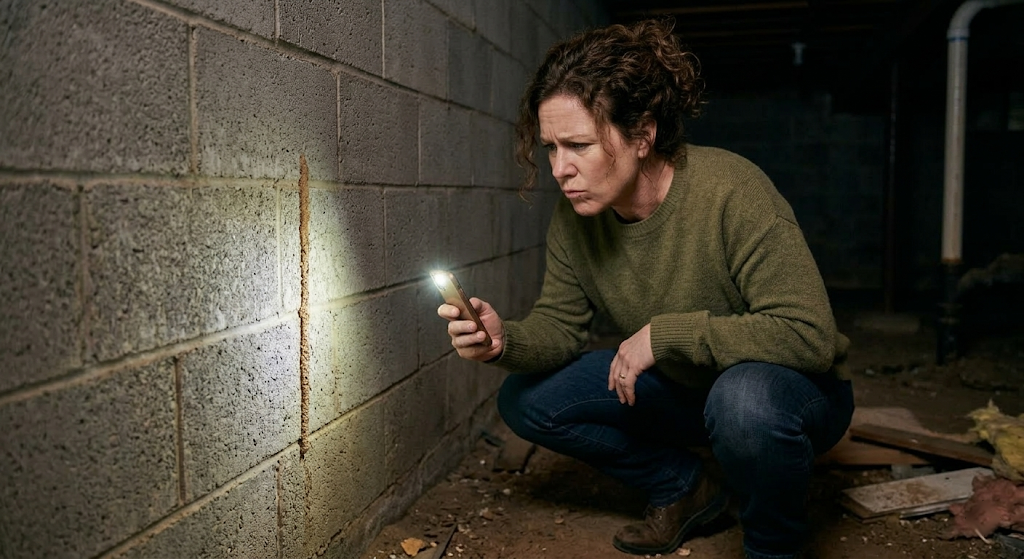
A month later, in early May, Mary was down in the basement grabbing a box out of storage when her flashlight caught something on the concrete block wall near the sump pump. A thin brown tube, about the width of a pencil, running up from the dirt floor. She poked it. It crumbled slightly, exposing tiny white insects inside. She didn't know what it was. She Googled it later. Mud tube. Termites. She told herself She'd call somebody next week.
Next week turned into next month. July came.
The structural engineer's estimate: $12,400 to replace the floor joists in the northeast corner of the basement where the termites had been working undisturbed for - the guy estimated - at least two years. Two years. While Mary was spraying the kitchen counter.
This post is for every homeowner who has done exactly what Mary did. Spring pest control isn't about reacting to the bugs you can see. It's about getting ahead of the bugs you can't - before the colony is established, before the nest is the size of a basketball, before the estimate starts with a comma.
Let's talk about what's coming in 2026, when it gets here, and what you can actually do about it.
The Midwest Spring Pest Timeline: What's Coming and When

Enjoy your yard all season - but the window to treat before pests establish is narrower than you think. Photo: Pexels
The Midwest is not the South. Our pest season doesn't start in January. But by the time most Indianapolis and Chicago homeowners start thinking about bugs - usually when they see something crawling - the clock has been running for weeks.
Here's roughly how it plays out in Marion County and the Chicago metro, give or take depending on the year's weather:
Late February - Mid-March: Underground termite colonies that have been active all winter start moving upward as soil temps warm. Nothing visible yet, but the workers are feeding. Overwintering stink bugs and boxelder bugs are starting to stir inside your walls.
Mid-March - April: This is when it gets real. Ant colonies send out scout workers - those lone ants on your counter aren't random, they're scouts reporting back to a colony that's probably been living under your foundation all winter. Wasp queens that survived the winter begin waking up and looking for nesting sites. If you can intercept a wasp queen in March, you prevent a colony of 5,000 workers by August.
April - Early May: Termite swarm season. Warm days after rain trigger reproductive termites (called swarmers or alates) to take flight. If you see what looks like a cloud of winged insects near your foundation or inside your basement - that's not flying ants. That's a termite colony announcing itself. Mosquitoes become active when evening temps consistently hold above 50°F.
May - June: Yellowjacket nests are now large enough to be dangerous to disturb. Carpenter ant satellite colonies inside your walls become active and visible. Mosquito populations hit stride.
The window to act cheaply and effectively is February through early April. After that, you're managing instead of preventing.
Termites: The One You Cannot Afford to Ignore
Let's spend some real time here, because termites are the one pest that can genuinely wreck your finances.
Indiana and Illinois are solidly in eastern subterranean termite country. The eastern subterranean termite (Reticulitermes flavipes) is the most destructive wood-destroying insect in North America, and it's present in all 92 Indiana counties. The pressure is worst in southern Indiana - Evansville, the Ohio River corridor - but Indianapolis homeowners are not off the hook. Marion County has active termite pressure. So does the entire Chicago metro.
Here's what makes them so dangerous: you rarely know they're there until the damage is done.
Eastern subterranean termites build colonies underground and travel through mud tubes to reach wood. They never surface in the open. A mature colony can contain anywhere from 60,000 to over a million workers, all feeding around the clock. A serious infestation can cause structural damage that goes unnoticed for years - behind drywall, inside floor joists, under finished flooring.
What to look for:
Mud tubes. These are the big one. Pencil-sized tunnels of dirt and debris running up your foundation walls, along plumbing pipes, across concrete block in your crawl space. The termites build them to travel from the soil to the wood while staying humid. If you see one in your basement or crawl space, don't panic - but do call a professional that week, not next month.
Swarmers. Flying termites or piles of discarded wings near windowsills, door frames, or basement floors. Swarmers look similar to flying ants, but termite wings are equal length (ant wings are unequal). If you find wings near your foundation in April or May, a mature colony is almost certainly nearby.
Hollow wood. Tap on wooden sills, floor joists, baseboards. A solid tap sounds dense. A termite-damaged tap sounds hollow or papery. If something that should sound solid doesn't, investigate further.
Paint bubbling or soft spots in floors. Termites working inside wall cavities can look exactly like water damage from the outside. If you have "water damage" but no leak, get a termite inspection.
The cost of waiting: A standard subterranean termite treatment in Indianapolis or Chicago runs $1,000-$3,500 depending on foundation type and colony size. That's significant, but it's a fraction of what Mary paid for joist replacement. Termite damage repairs routinely run $3,000-$15,000+. The treatment is always cheaper than the damage.
One rule you need to hear: Consumer termiticides available to homeowners can kill termites on contact, but they cannot achieve effective colony elimination. That requires either a full liquid soil barrier treatment (trenching and treating around the entire foundation) or a professional-grade baiting system - both require licensed applicators, proper equipment, and follow-up monitoring. This is not a DIY situation. Call a pro.
Carpenter Ants vs. Regular Ants: Know the Difference

Cracks in your foundation aren't just structural concerns - they're highways for carpenter ants and other pests looking for moisture-damaged wood. Photo: Pexels
Seeing ants in your kitchen in April is annoying. Seeing carpenter ants in April might mean you have a structural problem.
Regular pavement ants - the little brown guys trailing across your floor - are a nuisance. A few bait traps, some caulk around the entry point, maybe a perimeter spray, and you're done. Annoying, not alarming.
Carpenter ants are a different conversation.
Black carpenter ants are the largest ant in Indiana and Illinois - up to ¾ inch long, black or black-and-red. They're most common in older Midwest homes because they love wood that's been softened by age or moisture. And here's the thing: they don't eat wood. They excavate it - carving smooth, clean galleries to build their nests. The wood they remove gets pushed out as sawdust-like debris (called frass). If you find little piles of what looks like sawdust near a wooden beam, window frame, or wall void, that's your first warning sign.
Carpenter ants usually signal that you have a moisture problem somewhere. A leaking pipe under the sink, condensation around window frames, improperly flashed roof trim - something is keeping wood damp, and the ants moved in because damp wood is easy to excavate.
The fix for carpenter ants is twofold: treat the ants and find and fix the moisture source. A professional can treat the colony, but if you don't fix the moisture, they'll come back. In older Indianapolis homes - Irvington, Fountain Square, Broad Ripple - and Chicago's older bungalow and two-flat stock, carpenter ant problems are extremely common.
Spring is when carpenter ant satellite colonies (smaller colonies that have split off from the main outdoor nest and moved inside your walls) become active and visible. See large black ants emerging from wall voids or around window frames? Time to call.
Wasps and Yellowjackets: The Window You're Missing

This abandoned nest from last year is a reminder of what spring queens are already working to rebuild. Treat early, before the colony establishes. Photo: Pexels
Most homeowners think wasp season is summer. That's backwards. Summer is when you deal with wasp nests. Spring is when you prevent them.
Every yellowjacket and paper wasp nest you see in August started as a single queen in April. One queen, looking for a protected spot - under your deck, inside your soffit, behind your shutters, in a gap in your siding - builds a few cells, lays her first eggs, and by June you've got fifty workers. By August you've got a nest the size of your head and a real hazard if you mow near it or accidentally disturb the siding.
Treat for wasps in spring and you're dealing with a queen. Wait until summer and you're dealing with a colony.
A good perimeter treatment in March or April will knock down overwintering queens before they establish. Walk your eaves, your deck framing, the gap between your foundation and siding every spring. Small, papery cells starting to form? Knock them down early. For nests in wall voids or attic spaces, call a professional - spraying into a wall void without knowing where the colony is can create a much worse problem.
Mosquitoes: Don't Wait Until You're Scratching

The backyard you want to enjoy all summer starts with mosquito treatment in April - not July. Photo: Pexels
Mosquitoes need standing water to breed. That's it. That's the whole biology lesson that matters.
In Indianapolis and Chicago, mosquitoes become active when evening temps hold above 50°F - usually by mid-to-late April. By May they're established. By June, if you haven't treated, you've got a yard you can't use.
The DIY list for mosquito reduction is short and effective: dump standing water everywhere. Gutters, bird baths, buckets, low spots in the yard, kids' toys, old tarps, clogged downspout extensions. If it holds water, it's a breeding site. Mosquitoes can breed in a bottle cap's worth of water.
For serious yard treatment, professional mosquito services apply barrier sprays to shrubs and foliage where adult mosquitoes rest during the day. Monthly treatments through the season keep populations manageable. Costs vary but expect $75-$150 per treatment for a standard suburban yard, or bundled into an annual contract.
Start treatment in April before the population explodes. Waiting until July means playing catch-up all season.
The Case for Professional Treatment: Why DIY Has Real Limits
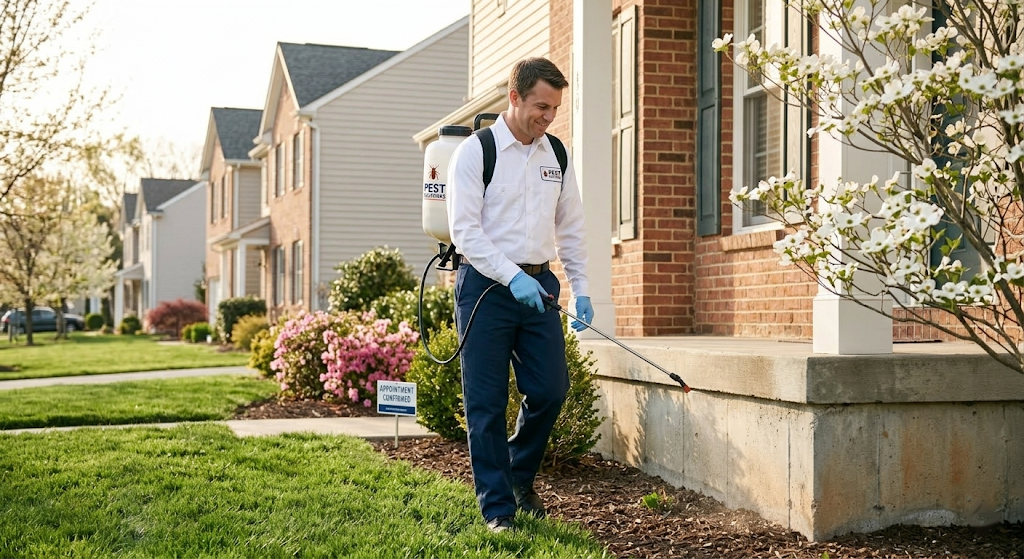
Look, hardware stores sell a lot of pest control products, and some of them genuinely work - for the right pest, in the right situation, applied correctly. If you've got a few ants on the counter and you know where they're coming in, a can of spray and some caulk will handle it.
But here's the honest math on professional pest control:
A basic annual contract in Indianapolis or Chicago runs $275-$600 per year - call it $35-$50 per month. For that, you typically get quarterly treatments, free re-treatments between visits, a perimeter barrier that's refreshed four times a year, and a professional set of eyes on your property every season.
The alternative is buying $60 worth of stuff at the hardware store, spending a Saturday applying it, and hoping you got the right product in the right place at the right dilution rate. Sometimes that works. For ants and spiders, often it does. For carpenter ants, termites, yellowjackets in walls, or a wasp nest in your attic - it usually doesn't, and now you've wasted time while the problem got bigger.
The bigger argument for professional service is timing and consistency. Pest control isn't a one-time event, it's a system. A perimeter barrier needs to be refreshed. Bait stations need to be checked. The gaps in your foundation that let ants in need to be identified by someone who does this every day. A professional on a quarterly schedule catches problems before they become expensive.
For termites specifically, the only responsible answer is professional treatment with a guarantee. Period.
How to Vet a Pest Control Company

Not all pest control companies are equal. Here's how to separate the good ones from the ones who'll oversell you, underdeliver, and disappear when you need a re-treatment.
Check licensing. In Indiana, pest control companies must be licensed by the Office of Indiana State Chemist. In Illinois, the Illinois Department of Public Health issues licenses. Ask for their license number. A legitimate company will tell you without hesitation.
Ask what's in the treatment. A professional should be able to tell you what product they're applying, why, and what the safety protocol is for pets and kids. If they're vague, that's a red flag.
Understand the contract. Annual contracts should include free re-treatments if pests return between visits. Confirm this in writing. Watch for contracts that auto-renew without notice.
Get more than one quote for termites. Termite treatment costs vary significantly based on foundation type, linear footage, and treatment method. Get at least two quotes and make sure they're quoting the same method (liquid barrier vs. bait system).
Read reviews, but read them right. Don't just look at star rating - look at how the company responds to negative reviews. A company that acknowledges problems and makes them right is telling you something important about how they operate.
Ask about seasonal timing. A good pest control company in Indianapolis or Chicago should be able to tell you specifically when they recommend starting service and why. If they can't explain the pest cycle in your area, find someone who can.
Don't Be Mary

Mary Kowalski got a $12,400 lesson in the cost of procrastination. her termites didn't show up in July - they'd been working since at least 2024. The spring She noticed the ants on the counter and the mud tube in the basement was the spring She could have stopped the damage for the cost of a treatment. She didn't.
The bugs are coming. They come every year, right on schedule. The eastern subterranean termites under your foundation didn't die over the winter - they went deeper. The wasp queens that will build August nests are waking up right now. The carpenter ants in the neighborhood that found moisture in your window frames last summer remember the way back.
Spring isn't the time to react. It's the time to act.
If you're in Indianapolis or Chicago and you're not already on a pest control program, the calendar is working against you. The best pest control pros in both cities are booking spring slots now - and the homeowners who call in March get the early-season pricing, the best scheduling windows, and the perimeter treatments in place before the season peaks.
Find a vetted pest control contractor on Saorr - Indianapolis and Chicago pros are booking spring slots now.
Whether you need a full termite inspection, a spring perimeter treatment, or just a professional set of eyes on that thing in your basement you're not sure about - the right contractor is the first call you make, not the last.
Find a Pest Control Pro on Saorr →
Don't wait until July.
Find Trusted Pros Near You
Ready to start your project? Connect with vetted, top-rated contractors in your area.
Get StartedRelated Articles
Spring Sprinkler Startup: What Irrigation Contractors Find Wrong Every Year (And What It Costs You)
Spring Lawn Care 2026: Aeration, Overseeding & Why Most Homeowners Get It Backwards