Spring Sprinkler Startup: What Irrigation Contractors Find Wrong Every Year (And What It Costs You)
Spring Sprinkler Startup: What Irrigation Contractors Find Wrong Every Year (And What It Costs You)
Dave had been watching the weather app all week. April 28th. Highs in the mid-60s. No frost in the forecast. The grass was starting to green up, and his neighbors — the overachievers on the cul-de-sac — had already been running their sprinklers for a week.
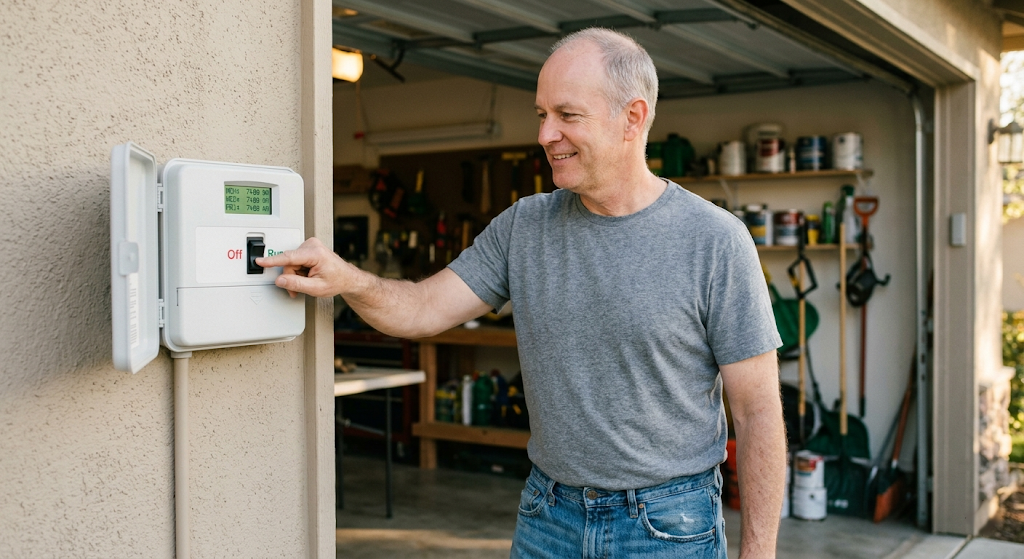
So Dave walked into the garage, found the irrigation controller mounted on the wall, and did what he'd done every spring for the past eight years: he flipped it from "Off" to "Run," set the schedule to every other day, and headed back inside to get his coffee.
He didn't look out the window for another 20 minutes.
When he did, he saw Zone 3 had become a geyser. Not the kind of gentle, rotating fan-spray that's supposed to cover the back right corner of the yard — a geyser. A broken pop-up head was firing water sideways at full pressure, soaking the fence, puddling against the foundation, and making a sound like a busted fire hydrant.
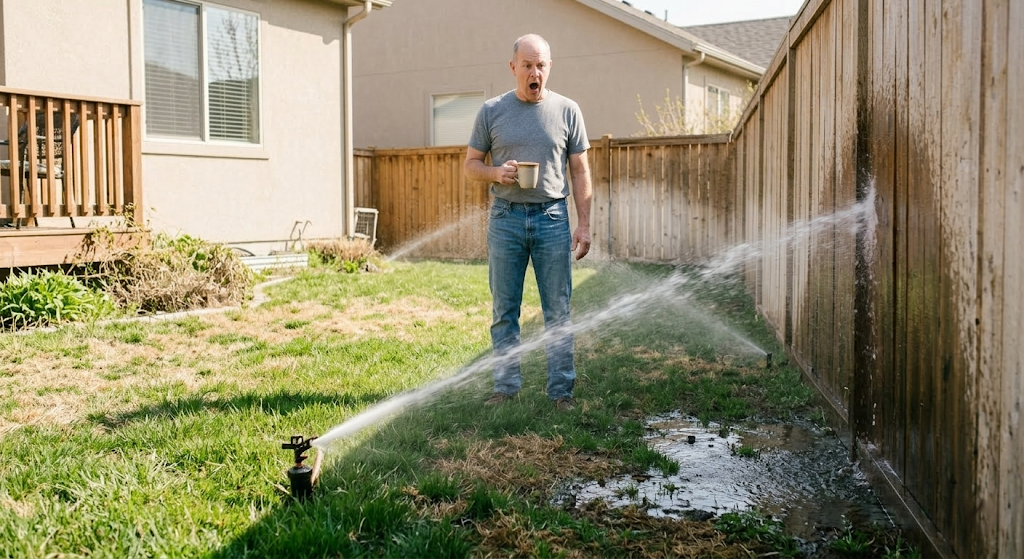
Dave had skipped his spring startup. Again.
That morning cost him $340 — two cracked heads, a valve that had seized over winter, and the emergency trip charge from an irrigation company that squeezed him in between two already-scheduled jobs. And that was the cheap version. The neighbors on the next block had a broken main lateral line that didn't show itself until they saw a soggy patch in the yard that never dried out. Their bill was $720.
Here's the thing: most of that damage wasn't because of anything Dave did wrong this spring. It was because of what happened to his system between October and April — the freeze-thaw cycles, the ground contracting and expanding, the pressure that built up in components that weren't fully drained. A professional startup visit would have found the cracked head before the water came on. It would have tested the valve. It would have caught it.
Instead, Dave caught it. With his eyes. While drinking coffee. On a Tuesday morning. Through the kitchen window.
Don't be Dave.
What Actually Happens to Your Irrigation System Over Winter
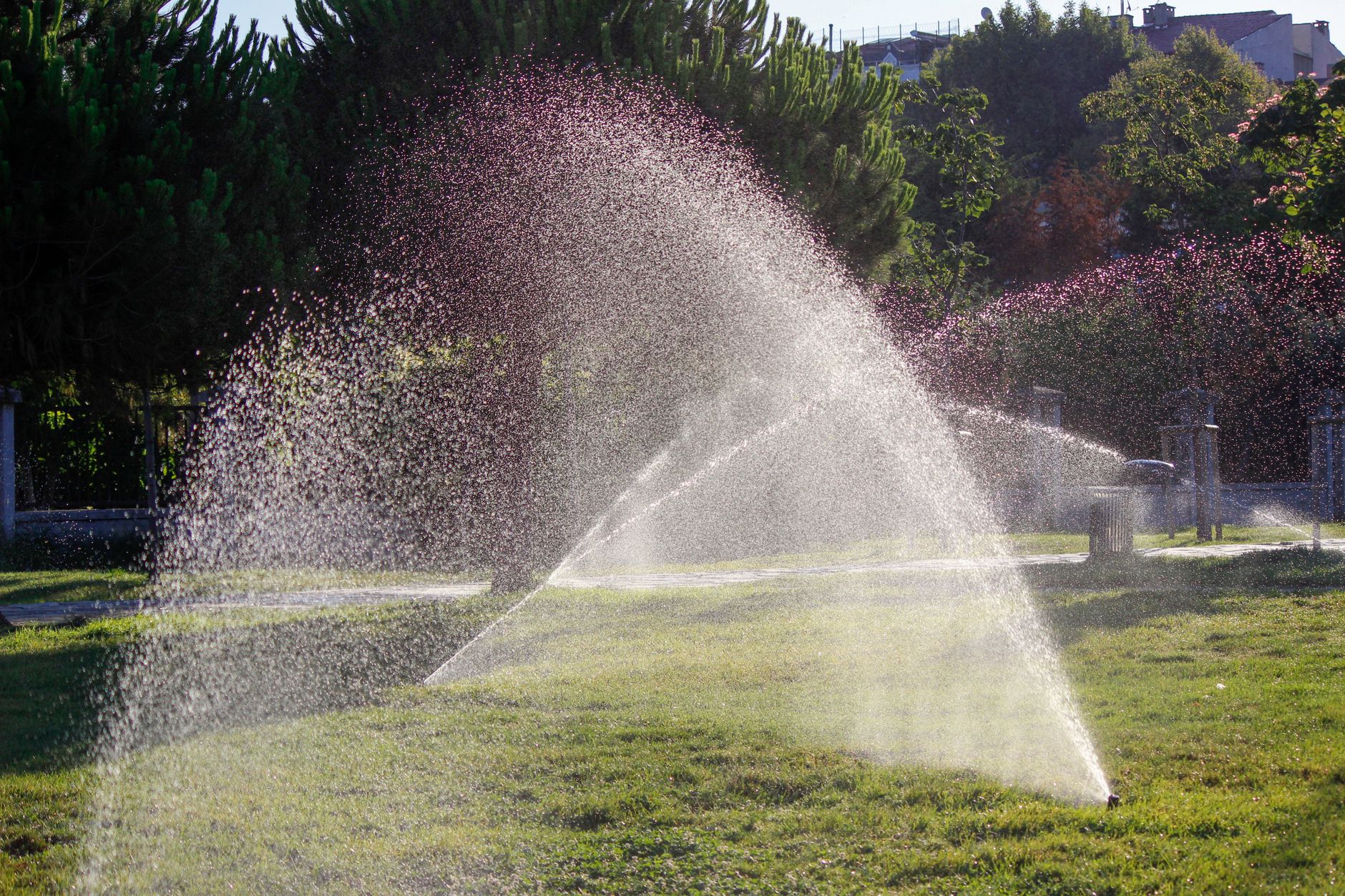
An in-ground irrigation system running as intended — but without a proper spring startup, what you see here could turn into a flood fast. Photo: Pexels
Here's something that might surprise you: your irrigation system doesn't just sit there patiently waiting for spring. It goes through a war.
In Indianapolis, the ground freezes to roughly 30 inches deep. In Chicago, the frost line is closer to 42 inches. Every underground pipe, fitting, valve, and head in your system is subject to the freeze-thaw cycle — and that cycle is merciless. Water expands by about 9% when it freezes. If there was any water left in a pipe, a fitting, or a sprinkler head that didn't get fully blown out during winterization, that water became a slow-motion wrecking ball.
Cracked sprinkler heads are the most common finding. When water freezes inside the plastic housing of a pop-up head, the housing cracks. It might not break open visibly, but when you pressurize the system in spring, that crack becomes a geyser or a sideways spray. You've got maybe three or four of those per zone in a typical residential system. They're $15–$40 each in parts, but $59–$150 each by the time a technician comes out and replaces them.
Underground pipe breaks are worse. A 1-inch lateral line crack underground shows up as a soggy patch in your yard — or worse, it doesn't show up at all until your water bill comes in. A simple underground pipe repair runs $100–$400, not counting excavation if the break is deep.
Valve failures are the sneaky ones. Your valves live in underground boxes, usually near the house. If water got into a valve solenoid or the valve body during winter, it may have cracked. A zone that won't turn on or won't turn off is usually a valve problem. Valve replacement: $100–$250.
And then there's the backflow preventer — which is in a category of its own, and one that carries legal weight in both Indianapolis and Chicago.
The Backflow Preventer: The Part You Can't Ignore

Your home's water connection and backflow prevention infrastructure — annual testing in Marion County and Chicago keeps your water supply safe. Photo: Pexels
If you've got an in-ground irrigation system, you've got a backflow preventer. It's that cluster of pipes and valves on the outside of your house, usually near the main water line. Its job is to make sure contaminated irrigation water — water that's been sitting in underground pipes, picking up fertilizer, pesticides, and whatever else is in your soil — can never flow backward into your drinking water supply.
It's not optional. And in both Indianapolis and Chicago, annual testing is required by law.
In Marion County (Indianapolis): Indiana state law under 327 IAC 8-10 mandates annual testing of backflow prevention devices. Citizens Energy Group, Indianapolis's water utility, requires that test results be submitted electronically. Testing must be performed by a State of Indiana-certified tester — someone who completed specialized training, passed a written exam, and demonstrated hands-on competency. This is not a DIY test.
In the City of Chicago: Chicago Plumbing Code Section 18-29-312 requires that backflow prevention assemblies be tested at minimum annually, with results reported to the city within 30 days of testing. This covers reduced pressure principle assemblies, double check-valve assemblies, and pressure vacuum breaker assemblies — basically everything you'll find on a residential irrigation system. Testing must be performed by a licensed plumber or certified backflow tester.
Why does this matter for spring startup? Because a cracked or malfunctioning backflow preventer is one of the most common things contractors find at startup — and it's also one of the most expensive to ignore. A failed backflow preventer has to be repaired or replaced before you can legally run your irrigation system. Replacement runs $200–$500 depending on type. And if you've been running a system with a failed backflow preventer, you may have a conversation with your water utility you'd rather avoid.
The good news: if your irrigation contractor does the startup and finds a problem with the backflow preventer, they can flag it for testing at the same visit. Some are certified backflow testers themselves. Either way, you want to know before the system is running all summer.
What an Irrigation Contractor Actually Does During a Startup Visit
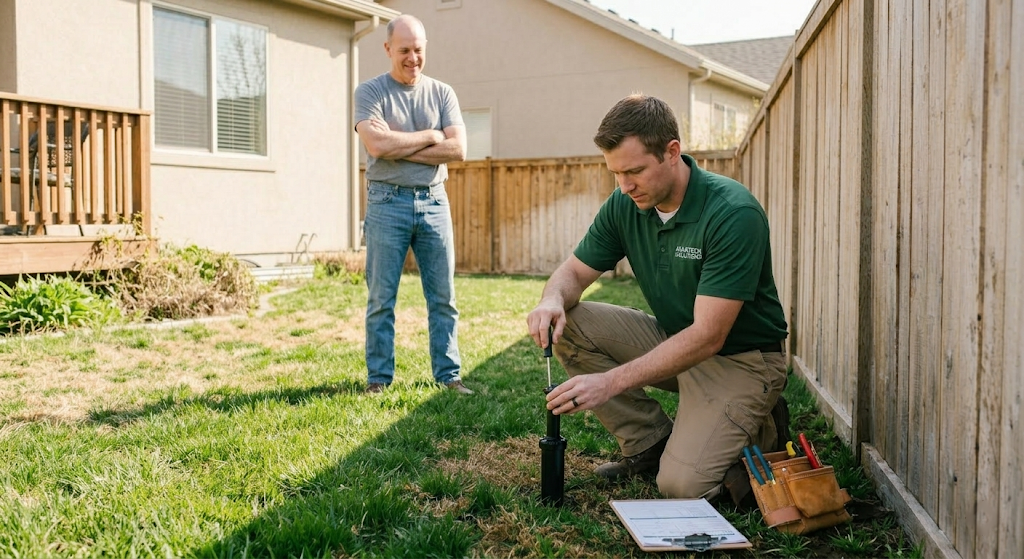
Most homeowners imagine a spring startup as "guy comes out, turns on the water, says it's fine." It's more involved than that.
A proper startup visit — from a contractor who knows what they're doing — runs 45 minutes to two hours depending on system size. Here's the actual sequence:
1. Visual inspection of the backflow preventer. Before any water moves, the tech checks for visible winter damage — cracks, frost damage on the assembly, loose connections. If something looks wrong here, you know before the pressure goes on.
2. Slow main valve open. This matters more than most homeowners realize. Opening the main shut-off valve fast causes water hammer — a pressure shock wave that can crack fittings and damage valves throughout the system. A good tech opens it slowly, in stages, listening for the system to pressurize evenly.
3. Zone-by-zone walk. Every zone gets activated manually. The tech watches each head come up, checks rotation (for rotors), spray pattern, coverage overlap, and whether any heads are cracked, sunken, or misdirected. A sprinkler head spraying the sidewalk instead of the lawn isn't just wasteful — it's a sign something's wrong.
4. Valve box inspection. The underground boxes that house your valve manifolds get checked for standing water (sign of a leak) and for valve condition. Stuck valves — ones that won't open or won't close — get noted for repair.
5. Controller programming. After a winter in sleep mode, your controller's schedule needs a spring reset. Early in the season, you generally want shorter, more frequent cycles. The tech will set it appropriately and check that the rain sensor is functioning.
6. Damage report and estimate. If anything's wrong, you get a rundown of what needs fixing and what it'll cost — before you've been running a busted system all spring.

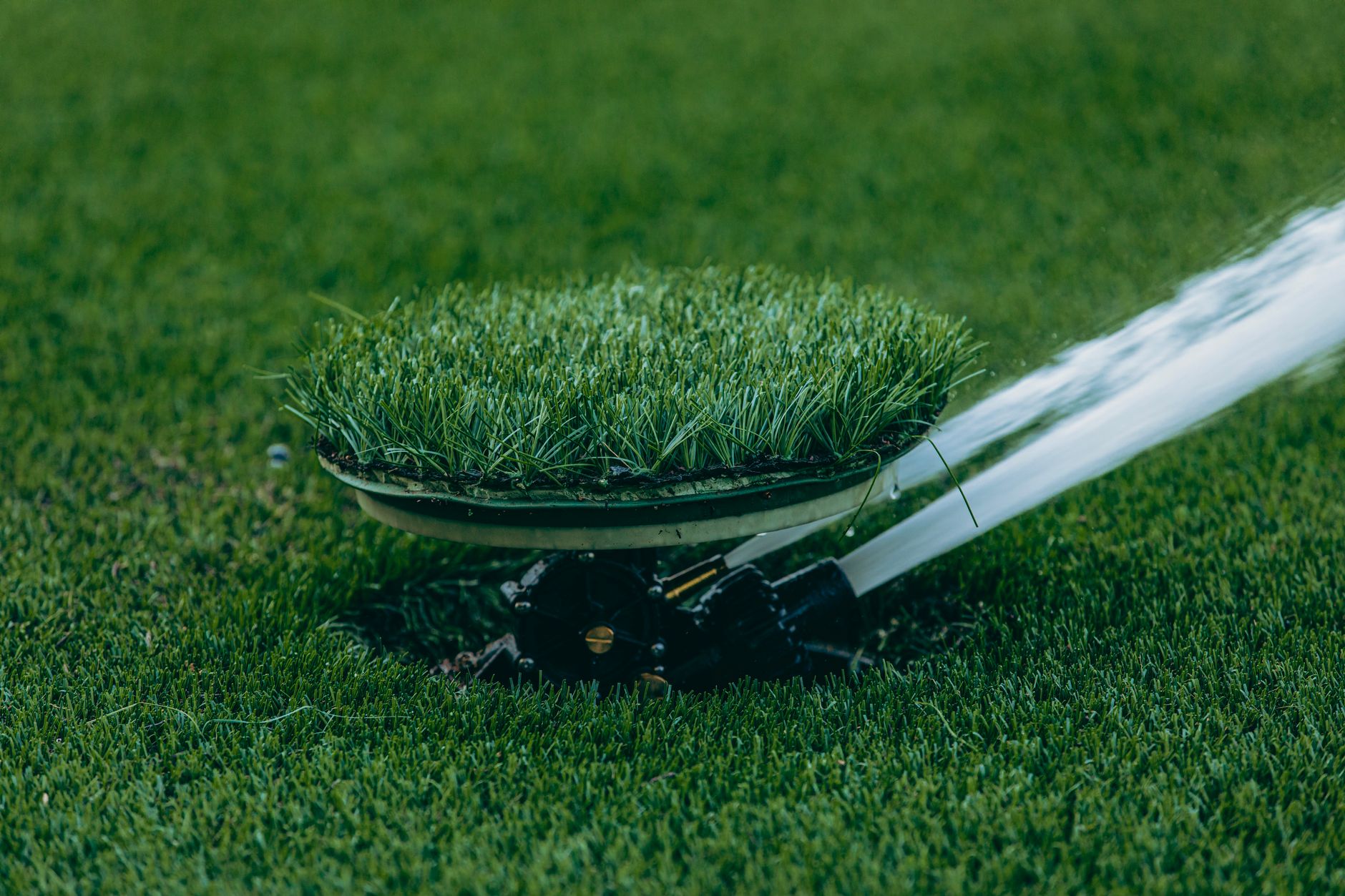
A sprinkler head like this one gets inspected, adjusted, and tested on every zone during a professional spring startup visit. Photo: Pexels
That's what $75–$150 buys you in Indianapolis or Chicago. Compare that to the $340 Dave spent on emergency repairs — and Dave had a relatively minor situation.
The Real Cost Breakdown: Startup vs. Skipping It

A properly maintained irrigation system protects this kind of investment. A $100 startup visit is cheap insurance against a $400 repair. Photo: Pexels
Let's talk numbers, because this is where the math becomes pretty clear.
Professional spring startup in the Midwest: $60–$150 for most residential systems. Add $5–$15 per zone if you've got a larger system. For a typical 6-zone system in Indianapolis or Chicago, you're looking at $75–$125.
What startup finds and prevents:
Cracked sprinkler heads that went undetected over winter: $59–$150 each to replace. Most systems have at least one or two after a hard winter. That's $120–$300 — already double the startup cost.
A seized or cracked valve: $100–$250 per valve.
An underground pipe break: $100–$400 per break, not including excavation for deeper breaks.
A failed backflow preventer: $200–$500 to replace.
Finding all of this before you've been running a broken system all spring — and before you're fighting for a contractor appointment in late April when everyone is booked — is the entire value proposition of a professional startup.
Here's the other thing: a system that runs with a broken head or a cracked lateral isn't just expensive in repairs. It's expensive in water. A single spraying broken head running 20 minutes per day through a summer is hundreds of gallons wasted. Your water bill knows.
The Timing Window: When to Turn On Your System
Timing your startup right — after the last frost risk clears — means your sprinklers can run all spring without freeze damage. Photo: Pexels
This is where Indianapolis and Chicago homeowners need to pay attention, because the timing is tighter than people think.
Indianapolis: The average last spring frost is around April 26 (NOAA 30-year normals). Turning on your irrigation system before that date doesn't mean it'll freeze — but a late frost after startup can damage backflow preventers and exposed components that weren't designed to sit wet in freezing temps. Most contractors start scheduling Indianapolis startup visits in mid-April, but the sweet spot is late April. Don't rush it just because it's been warm for a few days. One cold night in early April can end with you paying for emergency service.
Chicago: The average last spring frost for Chicago comes earlier — around April 17 — thanks to the lake effect moderating temperatures along the lakeshore. Chicago homeowners can generally target mid-to-late April for startup. But the Chicago startup window is even more compressed, because Chicago contractors are also handling all the North Shore suburbs, the western suburbs, and the city proper simultaneously. That's a lot of systems needing attention in a narrow window.
Winterization timing: Indianapolis' first fall frost typically hits around October 16 — winterize by mid-October. Chicago's first fall frost typically hits around November 1, so Chicago homeowners actually have a bit more time — late October is the safe window there. You have more runway than you might think before you need to call the contractor for fall blowout.
Why You Can't Wait Until Late April to Book

Irrigation contractors in Indianapolis and Chicago are running full spring schedules. The ones worth booking are already filling up. Photo: Pexels
Here's the part nobody tells you until it's too late.
By the last week of April in Indianapolis or Chicago, most of the good irrigation contractors are fully booked. Not a few days out. Weeks out.
The spring startup rush is the single busiest period in the irrigation industry. Every homeowner in the Midwest wants their system on at roughly the same time — after the last frost risk, before the grass gets stressed in May. That creates a two-to-four-week window where every irrigation company in town is running crews flat-out.
Irrigation contractors report being booked 3–4 weeks out during spring startup season. Midwest contractors face the same crunch, often worse, because the weather window is narrower. One late frost can compress the whole season even further.
What happens when you wait? You get the appointments nobody else wanted. The 7 a.m. Thursday slot. The two-week-out booking when you really needed it last week. Or you get the less-vetted company that's still available because the people who know their systems are already maxed out.
Book in March. Seriously. Call in early March, get on the schedule for late April, and you'll be the one with a properly running system while your neighbor is frantically calling around after their Zone 3 becomes a geyser situation.
When It's OK to DIY — And When It Absolutely Isn't

A certified irrigation or plumbing contractor does more in your yard than you might expect — and finds problems before they become expensive surprises. Photo: Pexels
Let's be honest: not every startup requires a professional. If you've got a simple two- or three-zone drip system with no backflow preventer, and you know what you're doing, a careful DIY startup is reasonable.
But for most Midwest homeowners with in-ground sprinkler systems? The math doesn't work in favor of DIY.
Here's when you call a pro:
The backflow preventer test is legally required. In Marion County and the City of Chicago, this test must be performed by a certified tester. Period. That alone means someone with credentials has to touch your system.
You don't know if the winterization was done right. Bought a house recently? Moved in last fall? Had someone else do the winterization? You have no idea what's lurking underground. A contractor's inspection is cheap insurance.
Your system is more than five years old. Components age. Heads that were fine last spring might be cracked from this winter. A visual walk of each zone, done by someone who knows what to look for, is worth the cost.
You've had problems before. If last spring had a soggy spot, a zone that wouldn't activate, or a head that never quite rotated right — those problems didn't fix themselves over winter.
You want to sleep at night. The purpose of an irrigation system is to protect a significant landscaping investment. A startup visit is $75–$150. Replacing dead sod is $300–$500. Fixing a foundation drainage issue caused by a broken lateral that ran all summer? Much more.
Find a Pro Before the Rush Hits
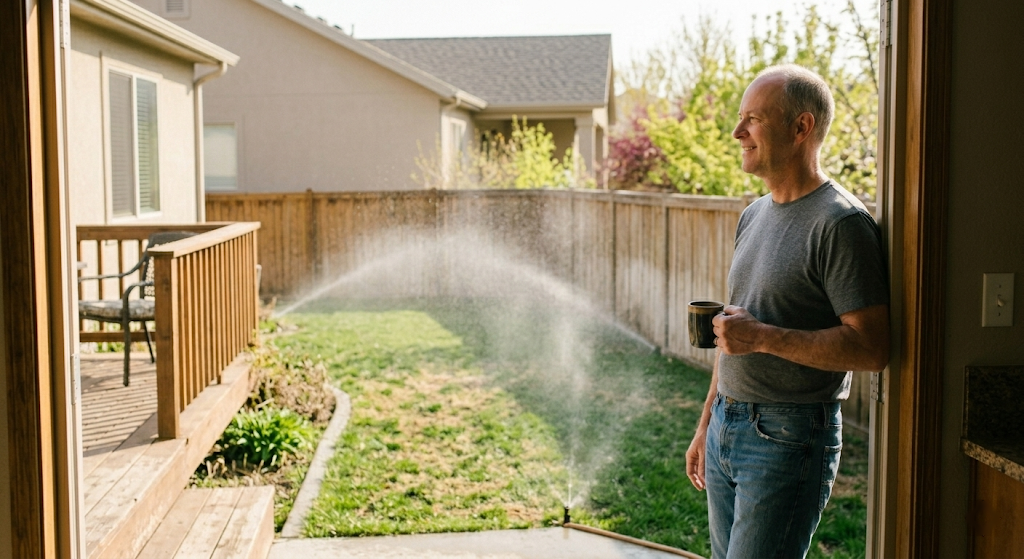
The good news: you're reading this before late April. Which means you still have time to get ahead of it.
A professional spring startup in Indianapolis or Chicago runs $75–$150 for most residential systems. It takes less than two hours. It finds the Dave-situations before they become $340 emergencies. It satisfies the backflow testing requirements that Marion County and Chicago actually enforce. And it means your system is running right from day one of the watering season, not limping through June while you wait for a repair appointment.
The contractors who are worth hiring are getting booked now. The ones still open in late April are open for a reason.
Find a vetted irrigation contractor on Saorr — most Indianapolis and Chicago pros are booked out 2–3 weeks by late April. Don't wait.
Find Trusted Pros Near You
Ready to start your project? Connect with vetted, top-rated contractors in your area.
Get StartedRelated Articles

Spring Pest Control 2026: When to Spray, What to Watch For, and Why March Is Already Too Late to Wait
Spring Lawn Care 2026: Aeration, Overseeding & Why Most Homeowners Get It Backwards