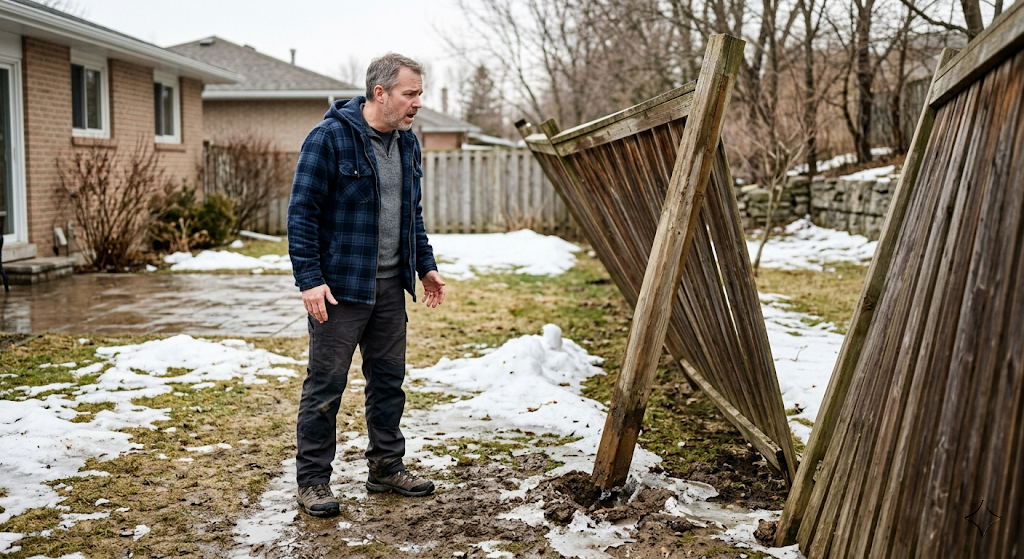
Spring Lawn Care 2026: Aeration, Overseeding & Why Most Homeowners Get It Backwards
Spring Lawn Care 2026: Aeration, Overseeding & Why Most Homeowners Get It Backwards
A no-nonsense guide for Indianapolis and Chicago homeowners who are tired of doing everything right and still ending up with a garbage lawn.
Why Your Lawn Looks Terrible Every Spring (And It's Not Your Fault)
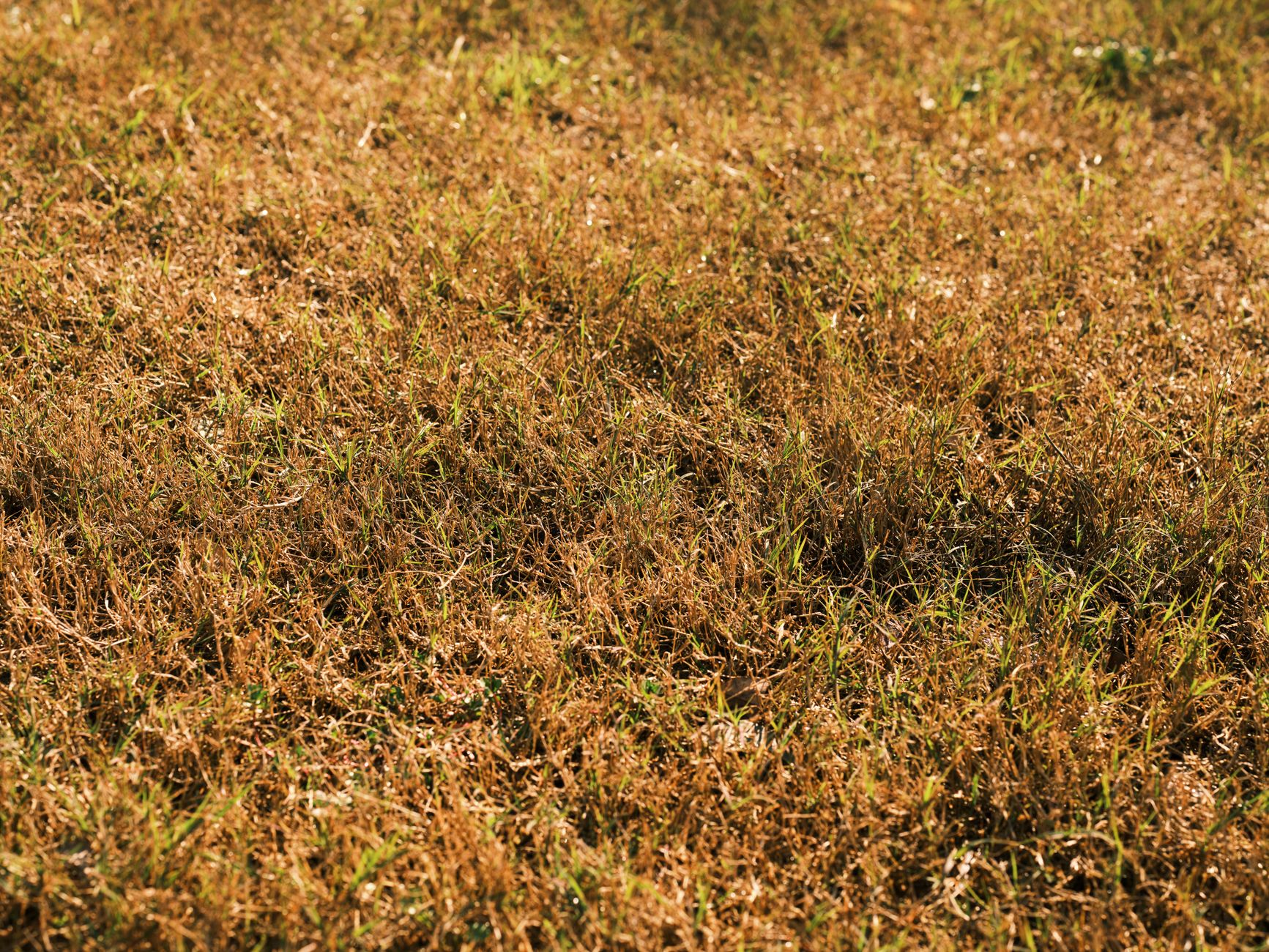
A dry, patchy lawn — the all-too-familiar spring reality for Midwest homeowners dealing with compacted soil. Photo: Pexels
Every spring, millions of homeowners walk outside, look at their lawn, and feel that same sinking feeling. The bare spots are back. The grass looks thin and sad. There might be a new crop of weeds setting up shop in exactly the spots where you tried to seed last fall.
Here's the thing: you probably did something. You probably tried. And the lawn still looks like this.
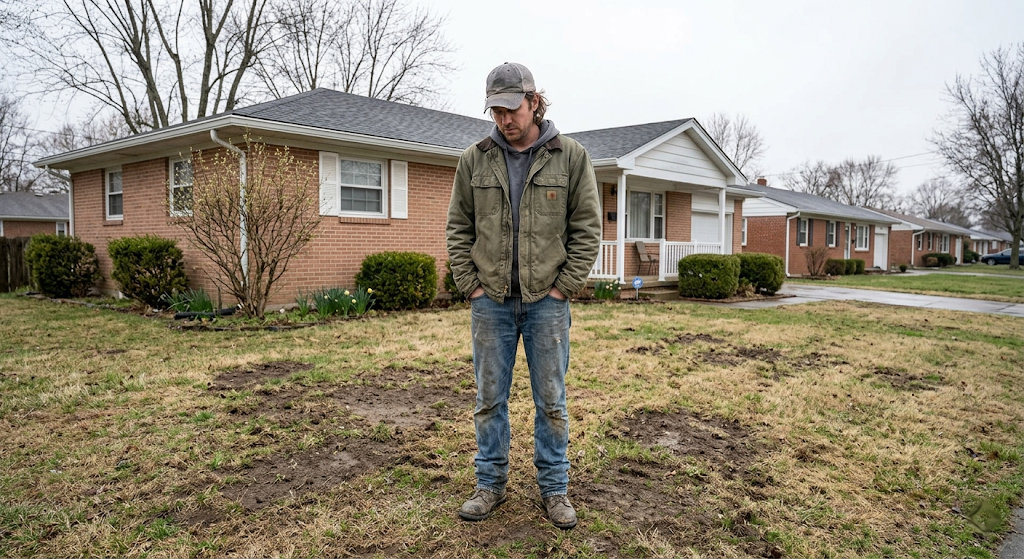
Compacted soil is the #1 reason Midwest lawns look rough every spring — not neglect. Aeration breaks the cycle.
That's not laziness. That's a knowledge gap — and it's not your fault, because the lawn care industry runs on $184 billion a year in the U.S., according to LawnStarter's 2026 industry report. Some of that money comes from people buying products that don't work together, or hiring services that don't explain what they're actually doing. The average household drops around $600 a year on lawn and garden. A lot of that money goes sideways.
The root cause for most bad lawns in the Midwest — especially in Indianapolis and the Chicago metro — is soil compaction. You can't see it. You can't smell it. But it's quietly strangling your grass from underneath.
Compacted soil doesn't let air, water, or nutrients reach the root zone. Grass roots can't penetrate it. Seed can't establish in it. You can water every day, fertilize twice a season, and spread premium seed — and if the soil is compacted, you're wasting time and money.
Here's the quick test: grab a standard screwdriver and push it into moist soil. If you can't get it 6 inches deep with moderate hand pressure, your soil is compacted. That's the problem. That's where to start.
The fix is aeration. But not all aeration is created equal — and getting this wrong will make things worse.
Core Aeration vs. Spike Aeration — Get This Wrong and You've Wasted Your Money
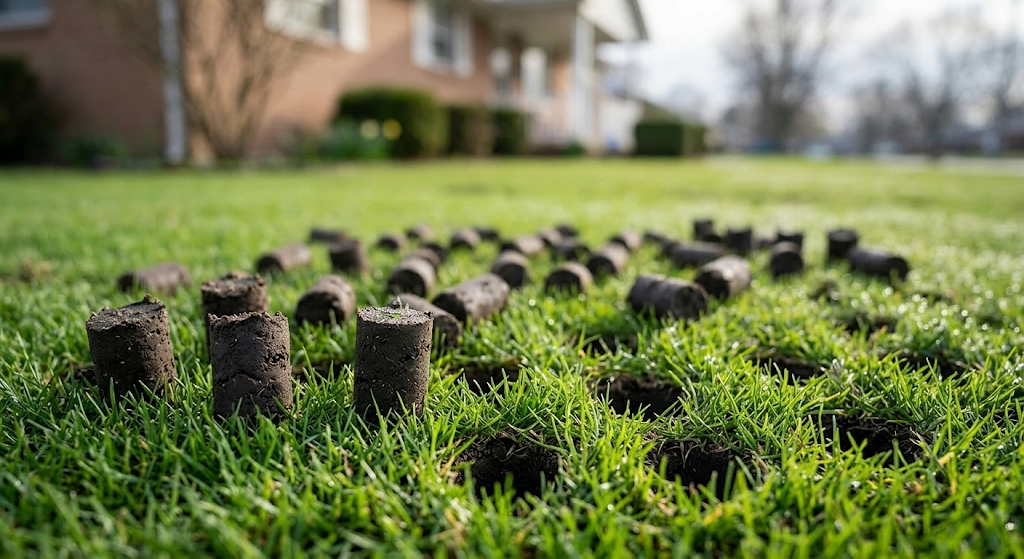
Fresh core aeration plugs on a residential lawn. These plugs break down naturally within 1–2 weeks, feeding the soil as they go. Photo by Nick B.
Walk into any big-box hardware store and you'll find spike aerator shoes — those sandal-looking things with metal spikes on the bottom. Strap them on, walk around your yard, done. Easy. Cheap.
Also: counterproductive. Especially in the Midwest.
Spike aeration pushes soil aside to create holes. Sounds good. The problem is that pushing soil aside increases compaction in the surrounding area. If your soil has clay content — and most soil in Indianapolis and Chicago does — spike aeration can actually make your compaction problem worse over time. You're just rearranging the same dense clay.
Core aeration is completely different. A core aerator pulls out actual plugs of soil — typically 2–3 inches deep, about the diameter of your finger — and deposits them on the surface. Those plugs break down over a few weeks and return organic matter to the surface. The holes left behind give roots room to expand, allow water to penetrate, and create channels for fertilizer and seed to reach the soil.
In the Midwest, with our heavy clay soils, core aeration isn't just better — it's the only option worth doing. If someone shows up at your door with a spike aerator and offers you a deal, pass.
The plugs on the surface look ugly for a week or two. That's normal. Let them break down. They're doing work.
The Spring Timing Trap: Why You Can't Aerate, Overseed, AND Apply Pre-Emergent at the Same Time
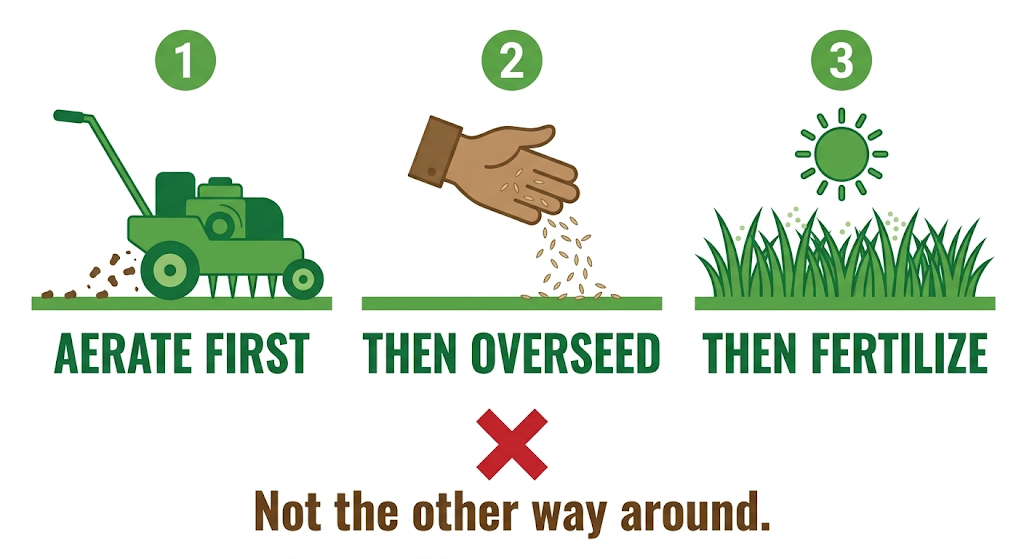
Applying pre-emergent in spring blocks crabgrass — but it also blocks new grass seed. You have to pick one. Most Midwest pros recommend fall for aeration and overseeding.
This is where most homeowners get wrecked — and nobody warns them in advance.
Picture this: it's March. You're motivated. You want a great lawn this year. So you go online, read a few articles, and come up with a plan: apply pre-emergent to stop the crabgrass, aerate to fix the compaction, overseed to fill in the bare spots. Sounds like a complete spring lawn care program, right?
You execute the plan. You apply the pre-emergent. You aerate a few weeks later. You seed in April. You water religiously. You wait.
Nothing grows.
This happens to thousands of homeowners every single year, and the reason is one brutal biological fact: pre-emergent herbicide doesn't know the difference between crabgrass seed and Kentucky bluegrass seed. It kills all of them.
Pre-emergent works by creating a chemical barrier in the soil that prevents seeds from germinating. That's the whole mechanism. It doesn't target weeds specifically — it targets germination. So when you seed after applying pre-emergent, you're planting grass seed into a germination-killing barrier. The seed just... sits there and dies.
Here's the timing problem that makes this especially cruel: the soil temperature window that triggers pre-emergent application (around 50–55°F) is the same window that's ideal for overseeding cool-season grass. Early spring, soil warming up, everything waking up — that's prime time for both. Except you can't do both. You have to pick one.
And the wait time between applying pre-emergent and safely overseeding? A minimum of 8 to 12 weeks. Apply pre-emergent in March, and you're looking at June or July before it's safe to seed. By then, the summer heat is already working against cool-season grass germination. You've missed your window.
So what's the right spring strategy? It's less exciting than the full plan, but it actually works:
- Spring: Aerate now (relieve compaction, improve soil health). Apply pre-emergent (get ahead of crabgrass and weeds). Skip overseeding this spring.
- Fall (August–October): Overseed into the aerated soil and cooler temps. This is when cool-season grass actually wants to grow.
It's a two-season plan. It requires patience. But it's the plan that actually produces results.
Best Time to Aerate in Indianapolis & Chicago (The Honest Spring vs. Fall Take)

Spring lawn care window is real but narrow — get to it before the soil dries out or pros book up solid. Photo: Pexels
Let's be straight about something: if you ask ten lawn care pros when to aerate, most of them will tell you fall. And they're not wrong.
For cool-season grasses — which is what you've got in Indianapolis and Chicago — the ideal aeration window is late summer through early fall, roughly August through October. Soil is still warm enough for good root activity. You've got weeks of growing season left. The grass has time to recover before winter stress hits. If you're going to aerate and overseed in the same pass, fall is when that combination actually works.
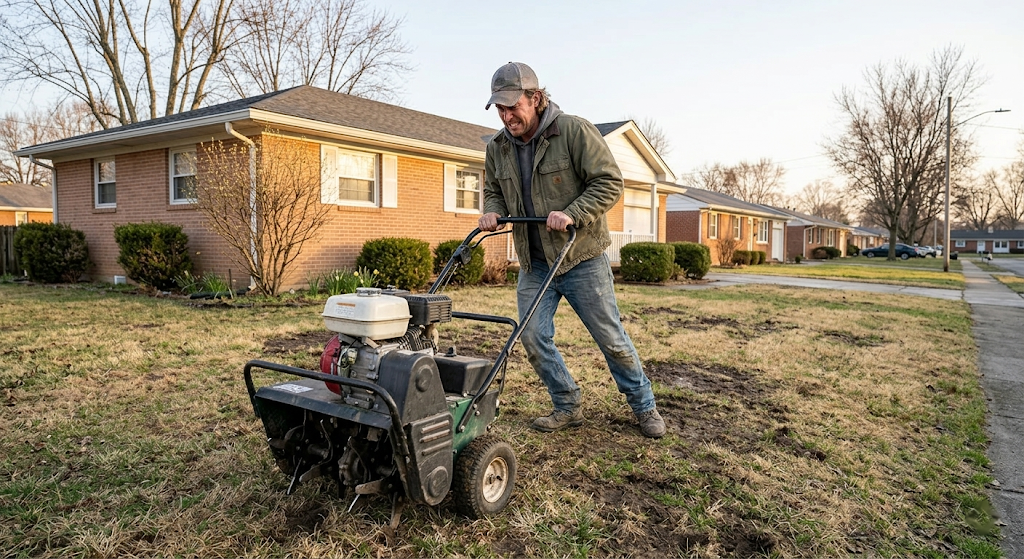
Renting a core aerator sounds straightforward. They're 300+ lbs, hard to maneuver on slopes, and most rental windows are 4 hours. Factor that into your DIY math.
But spring aeration isn't wrong. It's a valid option, especially if your lawn has severe compaction, your soil is visibly stressed, or you missed the fall window. Spring aeration still relieves compaction and improves soil structure. The grass will respond. Just understand that if you're aerating in spring, you're probably pairing it with pre-emergent — not overseeding.
Timing specifics for both cities:
- Indianapolis spring window: Late March through April, once soil temperatures hit 50–55°F and the ground is no longer frozen or waterlogged.
- Chicago spring window: Similar window, but typically 1–2 weeks later than Indianapolis given the colder northern temperatures. Late April into early May.
- Fall window for both cities: Late August through mid-October is your ideal aerate-and-overseed timing. Soil is warm, air is cooling, cool-season grasses thrive in exactly this condition.
One more thing: aerate when the soil is moist, not soaking wet or bone dry. If you've had rain in the last day or two, that's your window. Dry, hard soil makes it difficult to pull full-depth plugs. Saturated soil is a muddy mess.
Overseeding After Aeration — What Actually Works
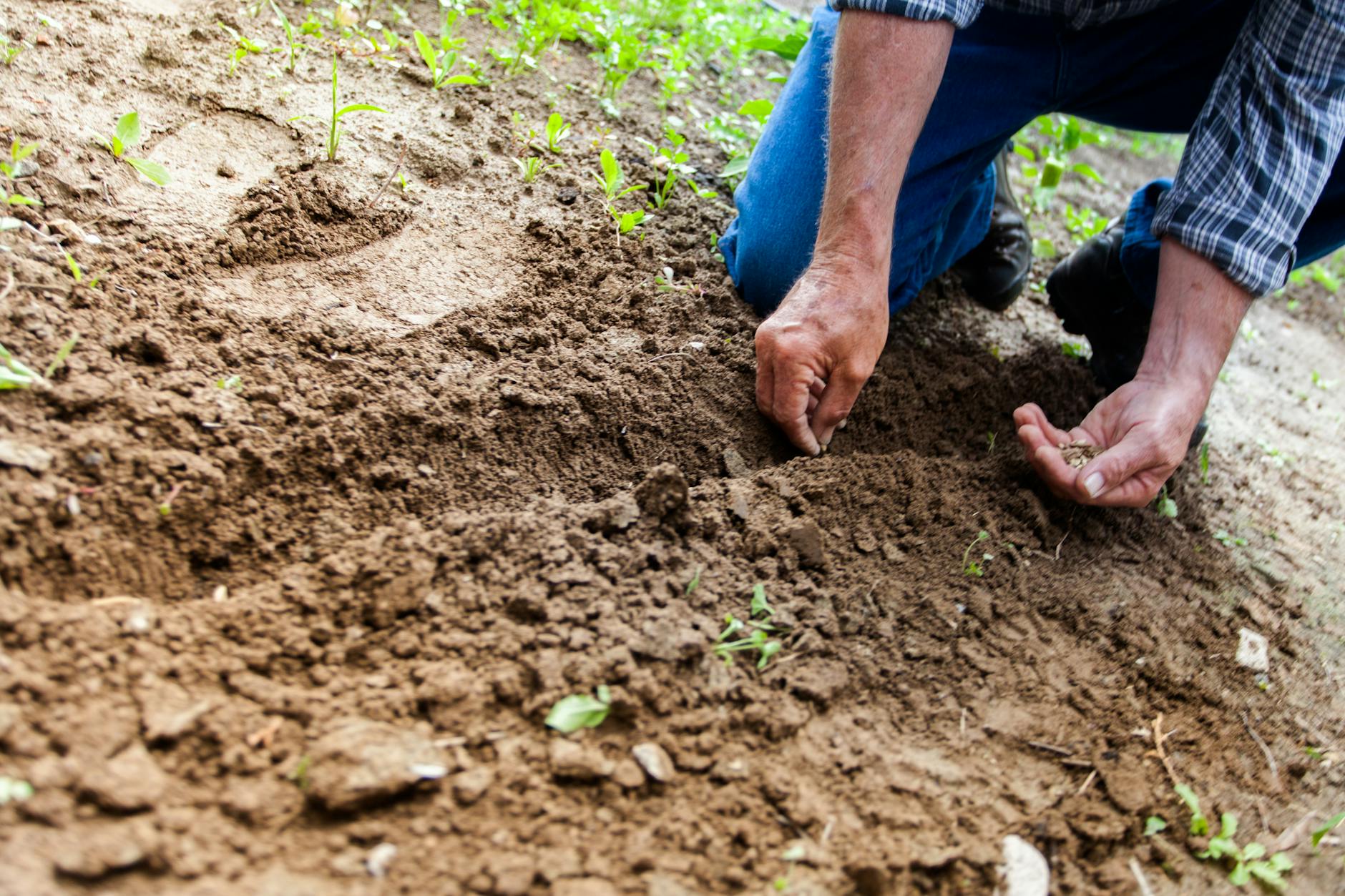
Seed-to-soil contact is everything. Aeration holes give your seed somewhere to land that actually works. Photo: Pexels
When you do overseed — whether it's this fall or right now because you're skipping pre-emergent — the aeration holes are your best friend. Seed dropped into freshly aerated soil has direct soil contact. It's not sitting on top of thatch. It's not blowing away in the wind. It's exactly where it needs to be to germinate.
But you need to use the right amount of seed for the grass type you're growing. This is where a lot of people under-apply and wonder why coverage is still patchy.
The cool-season grasses you're working with in Indianapolis and Chicago:
- Kentucky bluegrass: The classic Midwest lawn grass. Beautiful, dense, blue-green color. Also the slowest to germinate — 14 to 28 days. Apply at 1.5 lbs per 1,000 sq ft when overseeding. Don't go heavy; it spreads laterally over time.
- Tall fescue: More drought-tolerant and adaptable than bluegrass. Germinates in 7–14 days. Apply at 3–5 lbs per 1,000 sq ft when overseeding.
- Perennial ryegrass: The fastest to establish — germinates in 5–10 days. Often mixed with bluegrass for quick coverage while bluegrass fills in. Apply at 3–5 lbs per 1,000 sq ft.
After seeding, use a starter fertilizer — not your regular lawn fertilizer. This distinction matters. Starter fertilizer is phosphorus-rich (look for something in the 18-24-12 range) to support root development in new seedlings. Regular lawn fertilizer is typically nitrogen-heavy for top growth. New seed needs roots first. Get the right product.
Keep the top inch of soil consistently moist until germination is complete. For Kentucky bluegrass, that can mean 3–4 weeks of daily light watering if it doesn't rain. That's the commitment.
Fertilization Timing — The Spring vs. Fall Question
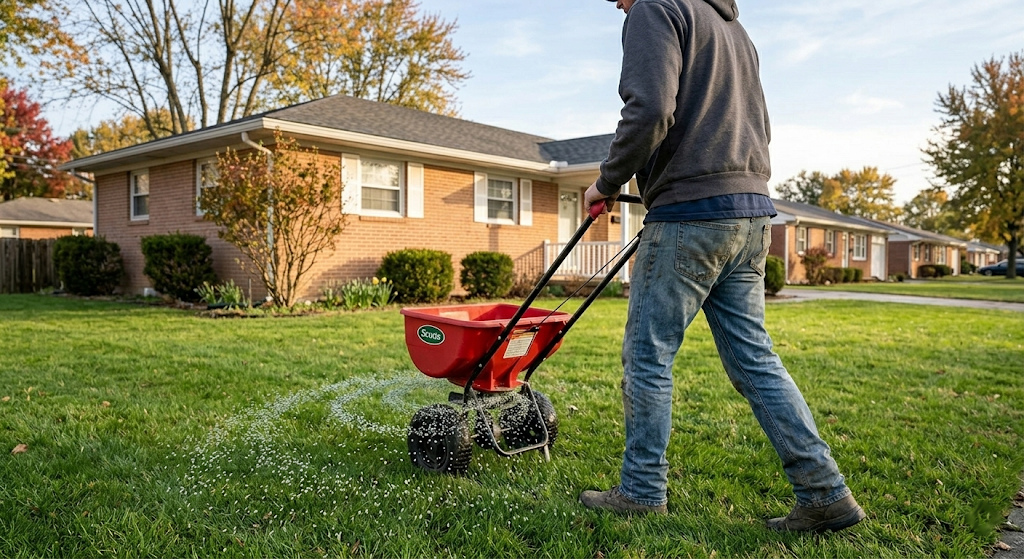
Spreading fertilizer right after aeration gets product directly into the root zone — one of the few times timing actually makes a measurable difference. Photo by Nick B.
Fertilization has its own timing logic, and it doesn't always line up with what the bag says or what's on sale at the hardware store in March.
For cool-season grasses, the fall feeding is the most important one of the year. Full stop. Fall fertilization — typically September through October — builds root reserves that carry the grass through winter and fuel the spring green-up. If you only fertilize once a year, do it in fall.
Spring fertilization is secondary. It can help push early green-up, but heavy spring nitrogen can actually stress cool-season grasses heading into summer heat. The rule of thumb: light feeding in spring, heavier feeding in fall.
A standard cool-season fertilization schedule for Indianapolis and Chicago:
- Early spring (April): Light application — focus on slow-release nitrogen if you fertilize at all.
- Late spring (May–June): Optional application, especially if the lawn looks thin or pale.
- Early fall (September): Primary feeding. This is the big one.
- Late fall (October–November, before ground freeze): Final winterizer feeding. High potassium to support root hardening.
If you're overseeding this fall after spring aeration, use starter fertilizer at seeding time — then follow with your regular fall feeding schedule once the new grass is established (typically 6–8 weeks after germination).
DIY vs. Hiring a Pro — The Real Cost Comparison for Indianapolis & Chicago

A pro crew with the right equipment covers your lawn faster and better than any rental aerator you'll wrestle out of a trailer. Photo: Pexels
Let's talk money, because this is where people make decisions based on bad math.
Roughly half of homeowners handle their own lawn care. That's a big number. And it makes sense — lawn care feels manageable, the YouTube tutorials look easy, and the DIY options are right there at Home Depot.
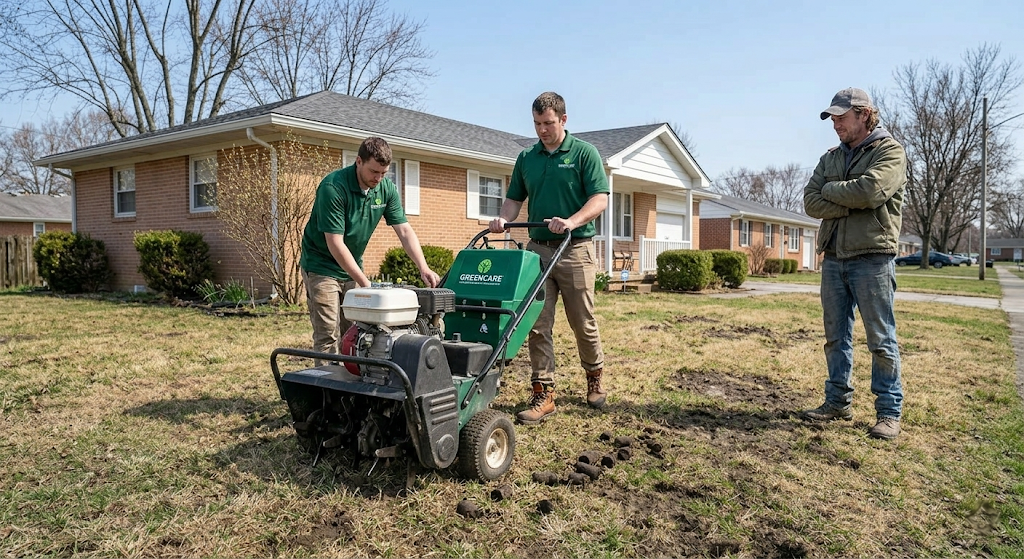
A pro crew can aerate and overseed a typical suburban lot in under two hours, including cleanup. At $200–$400 all-in, that's often hard to beat on a Saturday afternoon.
But aeration specifically has a hidden cost problem. A core aerator is a 200–300 lb machine. Nobody owns one. You have to rent it, and rental runs $80–$120 per day. Then you have to load it, transport it, operate it, and return it. That's half a Saturday, minimum, plus a truck or trailer you may or may not have.
Here's what the numbers actually look like for a typical 5,000 sq ft lot:
DIY Route
- Aerator rental: $80–$120/day
- Grass seed: $30–$60
- Starter fertilizer: $20–$40
- Pre-emergent (if applicable): $20–$40
- Total DIY: approximately $130–$250 (plus your time)
Pro Route (Indianapolis)
- Standalone aeration: $53–$102 in Indianapolis (based on 674 completed local projects, Homeyou February 2026)
- Aeration + overseeding + fertilizer combo: $275–$525 for 5,000 sq ft
- For reference, the national average for aeration on a suburban lot runs $107–$202
Indianapolis homeowners are getting a genuinely good deal compared to national averages. Chicago pricing runs a bit higher given labor costs, but the gap isn't enormous for standalone aeration.
The honest DIY vs. pro calculation isn't just dollars. It's dollars plus time, plus equipment logistics, plus whether you actually do it correctly. A professional with a commercial aerator covers your lawn faster, pulls better plugs, and knows the right depth and spacing for your soil type. If your Saturday is worth anything to you, the pro math gets more attractive fast.
The 1.4 million grounds maintenance workers in the U.S. exist for a reason. This is skilled physical work. Outsourcing it isn't weakness — it's resource allocation.

A vetted local crew shows up with the right tools, does the work right, and your Saturday stays yours. Photo: Pexels
Spring Lawn Care Action Plan: Book Before April Fills Up

Your neighbors with the best-looking lawns this July made their moves in March and April. The window is open right now. Photo: Pexels
Here's where we get practical. No more theory. Here's exactly what to do right now.
Step 1: Assess Your Lawn (5 Minutes)
Grab a screwdriver. Push it into moist soil. Can you get 6 inches in with hand pressure? If yes, compaction isn't critical — you might be able to wait for fall. If no, you need aeration this spring, regardless of what else you decide to do.
Also look at your bare spots. If they're in high-traffic areas or shaded zones, that's a compaction and grass-type problem. If they're scattered randomly, you might have a different issue (disease, grubs, drought stress) that aeration alone won't fix.
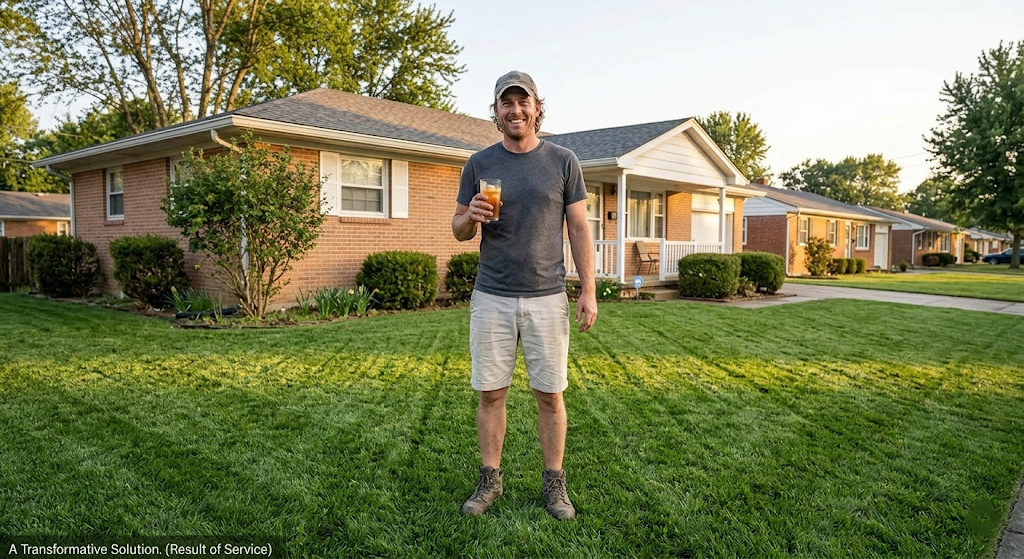
The same lawn after professional aeration and overseeding. Visible improvement typically shows within 3–4 weeks once new grass germinates.
Step 2: Make the Call — Pre-Emergent or Overseeding This Spring?
You can't do both. Pick one:
- If crabgrass and weeds were a serious problem last year: Apply pre-emergent now. Aerate for compaction relief. Overseed this fall. Your lawn will look thin this summer, but next year it'll be cleaner.
- If bare spots are your main problem and weeds were manageable: Skip pre-emergent. Aerate. Overseed now (if temps are right) or plan for fall overseeding. Accept some weed pressure this season.
You're making a trade-off either way. The key is making it intentionally, not accidentally.
Step 3: Book Your Aeration Now
This is the part people procrastinate on — and then can't get anyone until May.
Good lawn care pros in Indianapolis book out by mid-April. In Chicago, by late April. The window between "spring thaw is over" and "every decent crew is booked solid" is about six weeks. You're in that window right now.
Get quotes from vetted local pros before the spring rush locks out every good lawn service in your zip code. Saorr connects Indianapolis and Chicago homeowners with vetted lawn care pros who know your soil, your grass types, and your spring timing windows. No guessing, no getting outbid by people who booked in February.
Your lawn isn't going to fix itself. But it also doesn't have to stay ugly. The work isn't complicated — it just has to happen in the right order, at the right time, with the right equipment.
Start with the screwdriver test. Make your call on pre-emergent vs. overseeding. Then get aeration booked before April is gone.
The homeowners who have the best-looking lawns in your neighborhood this July aren't smarter than you. They just moved a little earlier.
Find Trusted Pros Near You
Ready to start your project? Connect with vetted, top-rated contractors in your area.
Get StartedRelated Articles

Spring Pest Control 2026: When to Spray, What to Watch For, and Why March Is Already Too Late to Wait
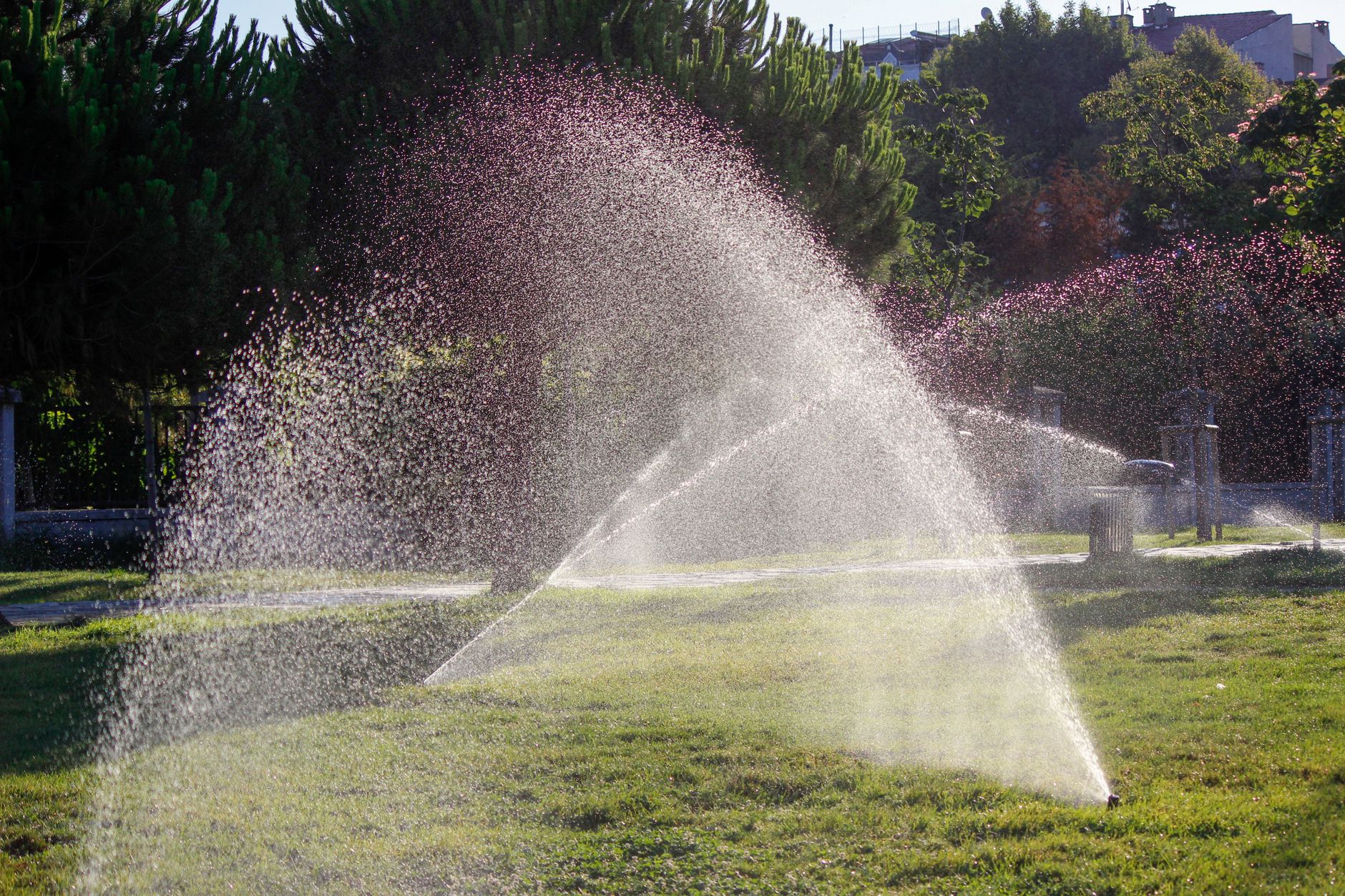
Spring Sprinkler Startup: What Irrigation Contractors Find Wrong Every Year (And What It Costs You)