Foundation Crack Injection Repair — Midwest 2026
Foundation Crack Injection Repair: The Midwest Homeowner's Complete Guide for 2026
You spotted a crack in your foundation wall. Maybe you noticed it during a basement cleanout, or water showed up after the snow melted. Either way, your stomach dropped — and then you Googled it, which probably made things worse.
Here's the honest truth: most foundation cracks are not disasters. The majority of what homeowners discover is serviceable or cosmetic in nature — not structural failures.
That said, some cracks are serious — and knowing the difference can save you thousands of dollars, or save your home. This guide walks you through how to read your cracks, which injection method to use, when to put the caulk gun down and call an engineer, and what it actually costs to fix this in the Midwest in 2026.

Not All Foundation Cracks Are Created Equal
Hairline vs. Structural: Width Matters First
Before you worry about orientation, look at width. Foundation engineers use three categories:
- Cosmetic cracks — hairline width, under 1/16 inch. Caused by normal thermal cycling from weather and HVAC. No structural concern. You can fill these with flexible grout or sealant for under $50, or simply monitor them.
- Serviceable cracks — wider than a hairline but generally under 1/4 inch. Not necessarily structural, but they let in moisture, reduce energy efficiency, and can flag to future buyers. Worth sealing. May or may not need a pro depending on orientation.
- Structural cracks — the rarest type but the most serious. Compromise the structural integrity of the home. Always require professional or engineering assessment. A key diagnostic: isolated cracks are less concerning than clusters — a group of stress cracks concentrated in one area signals more serious structural loading than a single crack alone.
| Crack Width | Classification | Recommended Action |
|---|---|---|
| Under 1/16" (hairline) | Cosmetic | Monitor; fill with grout if stable |
| 1/16" – 1/8" | Serviceable | Monitor monthly; seal if stable |
| 1/8" – 1/4" | Serviceable / moderate | Quality DIY injection or professional assessment |
| 1/4" – 1/2" | Moderate / serious | Professional assessment recommended |
| Over 1/2" | Serious | Structural engineer required |
Crack Orientation: What Direction Tells You
Once you know the width, orientation tells the story of why the crack formed — and how urgent it is.
Vertical cracks are the most common type in poured concrete foundations. They usually result from normal concrete shrinkage during curing or minor settling of the home over time. On their own, vertical cracks are generally not a structural concern — but they are a waterproofing concern. Water and moisture move through them freely, which is why sealing them matters even when the structure is fine. These are the cracks most DIYers successfully repair with polyurethane injection.
Horizontal cracks are a different story entirely. A horizontal crack means the wall is being pushed inward by hydrostatic pressure — water-saturated soil pressing against the foundation from outside. Unlike vertical cracks, horizontal foundation cracks are a serious structural warning sign — they indicate lateral pressure pushing inward on the wall and should not be ignored. Do not DIY a horizontal crack. Standard epoxy injection is not sufficient here. Call a professional immediately, and if there is any visible bowing or bulge in the wall, call a structural engineer before a contractor.
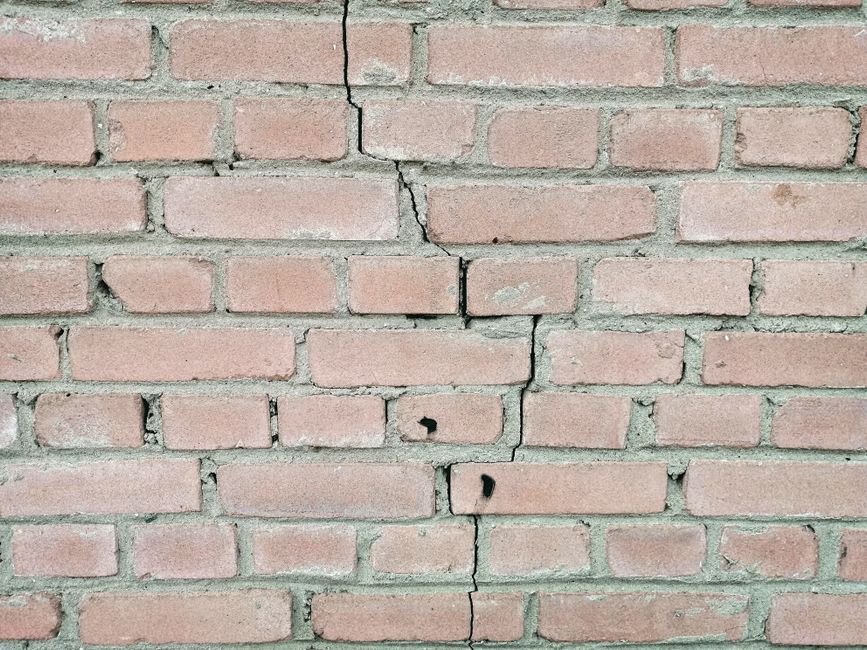
Diagonal and stair-step cracks typically indicate differential settlement — the foundation sinking unevenly beneath the home. A stair-step pattern running through block or brick foundations in particular signals that soil is moving beneath and around the home, putting changing pressure on the structure. Diagonal cracks may or may not be urgent, but they warrant monitoring and professional evaluation if they are actively widening. Stair-step cracks in Cleveland and Detroit neighborhoods — where clay-heavy soils shift seasonally — should be taken seriously.
The rule of thumb: Vertical and stable? Usually DIY-friendly. Horizontal? Stop and call a pro. Growing, grouped, or accompanied by bowing walls, sticking doors, or uneven floors? Call a structural engineer, not a contractor's sales line.
Polyurethane Foam vs. Epoxy Injection: Which One Does Your Crack Need?

Walk into any Lowe's or Home Depot in Columbus, Indianapolis, or suburban Milwaukee and you'll find both polyurethane foam kits and epoxy injection kits on the shelf. They are not interchangeable. Using the wrong one is a common and expensive mistake.
Polyurethane foam injection is a two-part expanding foam injected through ports installed every 12–18 inches along the crack. The foam expands to fill the entire void, bonds to the concrete, and hardens into a flexible, watertight seal. It works in wet and damp conditions — critical for Midwest spring repairs when walls are actively weeping from snowmelt. For most homeowners with a standard vertical crack and moisture infiltration, polyurethane is the right call.
Epoxy injection uses a two-part structural epoxy injected under low pressure. When it cures, the bond can exceed the tensile strength of the surrounding concrete — it's genuinely structural repair, not just a seal. The catch: epoxy will not bond in wet or damp conditions. In a Midwest spring, when most homeowners are first discovering their cracks, the basement wall is often damp enough to cause epoxy failure. Epoxy is the right tool for stable, dry, vertical cracks where structural restoration is the goal. It's not the right tool for active water infiltration.
| Factor | Polyurethane Foam | Epoxy Injection |
|---|---|---|
| Moisture tolerance | Works in wet / damp cracks | Dry cracks only |
| Flexibility | Flexible — accommodates minor movement | Rigid — can re-crack if wall moves again |
| Waterproofing | Excellent | Good, but primarily structural |
| Structural repair | Moderate | Excellent |
| DIY difficulty | Intermediate | Intermediate to advanced |
| DIY material cost | $50–$150 per crack | $75–$200 per crack |
| Professional cost | $300–$600 per crack | $500–$1,000 per crack |
| Best for | Active, wet, or spring-season cracks | Stable, dry, structural cracks |
How to DIY Foundation Crack Injection: Step by Step

For a stable, vertical crack under 1/4 inch wide with no signs of active structural movement, polyurethane injection is a reasonable two-day intermediate DIY project. Here's the process:
- Evaluate and mark. Measure the crack length and width at several points. If it has been widening over the past month, mark the endpoints with a pencil and date it. Do not inject an actively growing crack — let it stabilize or call a professional.
- Clean the crack. Use a wire brush or grinder to remove loose concrete, efflorescence (white mineral deposits), and any old sealant from previous repairs. The surface needs to be clean for ports and prep paste to adhere.
- Install injection ports. Snap or tap surface ports into the crack every 12–18 inches along its length. Ports should sit flush against the wall and align with the crack opening.
- Apply prep paste. Using the epoxy paste included in your kit, seal the crack surface between the ports and around each port base. Leave the port openings clear. Allow to cure per manufacturer instructions (usually 30–60 minutes).
- Inject the polyurethane. Starting at the lowest port (for vertical cracks), insert the injection nozzle and pump in the polyurethane solution. Watch the next port up: when solution begins to appear there, cap the lower port and move up. Continue up the crack.
- Allow to cure. Polyurethane foam needs approximately 12 hours to fully expand and harden. Do not disturb the area.
- Remove the ports and smooth. Once cured, snap off the port stems and use a chisel or grinder to flush the surface. Apply a surface sealant if desired for a clean finish.
Total material cost for one crack: $50–$150 for a complete kit. Allow a full weekend and read the kit instructions completely before starting — the mixing ratio and working time matter.
A note for older homes in Cleveland, Detroit, and similar markets: If your foundation is block or brick rather than poured concrete, injection through ports does not work the same way. Block foundations have hollow cores and mortar joints that require different repair approaches. If you're unsure what type of foundation you have, look at the wall texture — poured concrete is smooth or slightly textured; block foundations show visible rectangular units.
When to Stop DIYing and Call a Structural Engineer

Knowing when to put the caulk gun down is as important as knowing how to use it. Here's the decision framework:
DIY is appropriate when: You have a single, stable vertical crack under 1/4 inch wide that has not changed in 2–3 months of monitoring, no moisture penetration beyond minor seepage, and no other signs of distress (sticking doors, sloped floors, cracked drywall elsewhere in the home).
Call a contractor when: Multiple cracks have appeared together, a crack is actively growing (more than 1/16 inch in a month), you have diagonal or stair-step cracking, or cracks are accompanied by sticking doors or windows and uneven floors.
Call a structural engineer — not just a contractor — when: You have any horizontal crack, any crack over 1/2 inch wide, visible wall bowing or bulging, multiple cracks concentrated in one zone, or foundation cracking combined with structural symptoms throughout the home. This is a critical distinction. Be aware that when homeowners search online for foundation help, results are often dominated by repair contractors operating on commission — their incentive is to sell a repair. A structural engineer or forensic geotechnical engineer gives you an objective assessment — they are not selling a repair.
Midwest-specific note: Homeowners in Indianapolis, Columbus, and Chicago metro areas living on heavy clay soils should take stair-step and diagonal cracks more seriously than the national guidance suggests. Clay soils in these regions shrink significantly during summer drought conditions and expand when saturated — that movement drives differential settlement more often than in sandy-soil regions. If you're seeing diagonal cracking in a home on Marion County clay or the Chicago metropolitan glacial plain, engineer eyes are worth the $300–$500 consultation fee.
Waterproofing Context: When Injection Is Enough — and When It's Not

Foundation crack injection is primarily a waterproofing strategy. For most homeowners with one or two vertical cracks and occasional moisture infiltration, polyurethane injection is the right first step and often the only step needed. But it is not always enough on its own.
When injection is sufficient: One or two isolated vertical cracks with moisture infiltration limited to the crack itself, no floor-wall joint weeping, and no general wall dampness beyond the crack area. Fix the grading and drainage issues first (see below), then inject.
When you need interior drainage: If multiple cracks are present, walls are generally damp throughout rather than just at the crack, or the floor-wall joint is weeping, crack injection treats the symptom but not the problem. An interior drain tile system — a perimeter French drain installed at footing level that directs water to a sump pump — is the next level of solution. Industry estimates suggest cost in Columbus or Indianapolis runs $7,000–$12,000 for a full perimeter; Chicago-area homeowners should budget $9,000–$16,000 (contractor quotes vary). Any home without a sump pump, more common in pre-1980 homes in Cleveland and Detroit, particularly those built before local drainage codes began requiring them, should have one installed simultaneously for $800–$2,500.
When exterior waterproofing makes sense: Excavating around the foundation, applying a waterproof membrane, and installing exterior drain tile is the most complete and permanent solution — but at $15,000–$30,000 or more for a full perimeter, it is typically only done during major foundation repair or new construction. It is not the usual recommendation for a crack injection scenario.
Address the water source first. One of the most common and costly mistakes is injecting a crack without addressing what sent water there in the first place. Check that soil grades away from the foundation (6 inches of drop over 10 feet is the standard), gutters are clear, and downspouts discharge at least 4–6 feet from the foundation. Fixing a crack without fixing drainage is treating the symptom — you may be back in the same spot next spring.
What This Costs in the Midwest

Urban vs. Suburban vs. Rural
Professional crack injection pricing varies significantly across Midwest markets. Here's how costs break down by rate bucket:
| Markets | Per-Crack Rate (Polyurethane) | Notes |
|---|---|---|
| Chicago (city proper), Minneapolis | $600–$950 | Union labor density, higher permit fees, elevated contractor overhead |
| Naperville, Aurora, Detroit metro, Cleveland metro | $400–$750 | Suburban Midwest; mix of union and open-shop; strong competitive market |
| Columbus (incl. Dublin, Westerville), Indianapolis (incl. Carmel), Milwaukee, Livonia MI | $350–$700 | Near national average; open-shop competitive markets; newer housing stock in suburbs |
| Rural Indiana, rural Ohio, rural Michigan | $400–$800+ (despite lower base wages) | Fewer specialty contractors; travel fees added; 4–8 week scheduling delays vs. 1–2 weeks suburban |
Epoxy injection runs approximately 50–70% more than polyurethane at any tier — a crack that costs $500 in polyurethane may cost $750–$900 in epoxy. Horizontal crack repair with carbon fiber reinforcement runs $800–$1,500 per crack and above, with full wall repair scenarios reaching $2,000–$8,000 depending on severity and approach.
In suburban markets like Carmel, Dublin, and Naperville, newer housing stock (post-2000 poured concrete foundations) tends to produce more shrinkage cracking from the curing process — there is strong demand for injection repair in these markets, which keeps contractors plentiful and pricing competitive. In older urban cores, the calculus shifts.
Outside the metro ring — rural stretches of central Indiana, southeast Ohio, or Michigan's Upper Peninsula — expect fewer competing quotes, longer lead times, and travel surcharges that can add $150–$300 to any job.
Local Factors That Affect Your Quote
Heavy clay soils in Indianapolis and Columbus metro areas. Both cities sit atop glacial clay deposited by the Laurentide ice sheet — the same soil system that runs through much of the Chicago metropolitan area. This clay shrinks significantly during summer drought conditions, causing foundation settlement, and expands when saturated, exerting lateral pressure against foundation walls. The result: more frequent cracking, more lateral cracking (versus simple vertical shrinkage cracks), and repairs that may need revisiting sooner if drainage issues are not also addressed. Contractors in Indy's north suburbs and Columbus's outer ring (Dublin, Grove City) often factor soil behavior into their bids — ask specifically whether your soil conditions affect the repair scope.
Freeze-thaw cycles accelerating crack progression in northern markets. Minneapolis can see dozens of freeze-thaw cycles per year; Milwaukee and Chicago see similar patterns across a typical winter. Each cycle pushes water deeper into micro-cracks, then freezes it — water expands roughly 9% in volume when it freezes, exerting significant pressure in confined spaces. By early spring in Minneapolis or Milwaukee, a hairline crack from October may be a 1/4-inch crack that now requires professional injection. The same crack in Indianapolis, which sees 30–50 cycles, may have widened only slightly. This translates directly into job scope and cost: northern Midwest homeowners should budget more aggressively for larger repair scopes than equivalent homes further south.
Older poured concrete and block foundations in Detroit and Cleveland. Detroit and Cleveland neighborhoods built before 1960 have a high proportion of block and brick foundations, not poured concrete. Injection repair is designed for poured concrete — block foundations require a different approach (parging, interior waterproofing, or masonry repair) that is often more labor-intensive and expensive. If you are getting quotes in Livonia, Dearborn, or Cleveland's inner suburbs, confirm that the contractor has assessed your foundation type before accepting a price. An injection quote on a block foundation is the wrong quote.
Spring scheduling crunch across the entire Midwest. The Midwest freeze-thaw season means most homeowners discover foundation issues in February through April — and call contractors simultaneously. Spring books out fast across all markets. In Columbus, Indianapolis, and Milwaukee, reputable specialty contractors are booking 3–5 weeks out by mid-March; in Chicago and Minneapolis, the lead time extends to 6–8 weeks. Scheduling in January or early February — before you see active water infiltration — typically gets better pricing and significantly better availability. If you're reading this in March or later, call sooner rather than later.
What to Ask a Contractor Before You Sign

Not all foundation repair companies are equal, and the industry has a documented history of overselling repairs. Here are the questions worth asking before any contract is signed:
- Are you a licensed structural contractor or a foundation repair specialty company? Know who you're talking to. Specialty foundation repair franchises often operate on commission structures that create incentives to upsell.
- What is the crack type and classification in your assessment? Ask them to name it: vertical shrinkage, horizontal hydrostatic, stair-step differential settlement. If they can't or won't characterize it precisely, that's a flag.
- Why polyurethane vs. epoxy for this specific crack? A knowledgeable contractor will have a clear answer based on moisture condition, crack stability, and what outcome you're repairing toward.
- Does this repair come with a warranty, and what does it cover? Industry standard is 5–10 years on injection repairs. Get it in writing and confirm what voids the warranty.
- Are you recommending additional work beyond injection? If they're immediately suggesting interior drainage, carbon fiber, or piering on a first visit without an engineer's assessment, ask what objective evidence supports that scope. It may be warranted — or it may not be.
- Do you recommend an independent structural engineer for this? A contractor who genuinely doesn't think engineering is needed will say so clearly. One who deflects the question warrants skepticism.
- What will you do about drainage and grading? A contractor who repairs the crack without discussing the water source is not giving you the full picture.
Get at least two quotes for any job over $500. For anything involving horizontal cracks, active bowing, or multi-crack patterns, pay the $300–$500 for an independent structural engineer's opinion before committing to repair work.
Get a Contractor Match for Foundation Repair in the Midwest

Not sure who to trust for foundation crack repair in your area? Saorr connects Midwest homeowners with vetted local contractors for foundation repair, waterproofing, and structural work — in Indianapolis, Columbus, Chicago, Cleveland, Detroit, Milwaukee, and the suburbs in between.
Answer a few questions about your crack and your home, and Saorr will match you with contractors who actually specialize in this work — no commission-driven sales calls, no national call centers. Local experts, matched to your specific situation.
Find Trusted Pros Near You
Ready to start your project? Connect with vetted, top-rated contractors in your area.
Get Started