
Your Garage Door Spring Is About to Break — and February Is Why

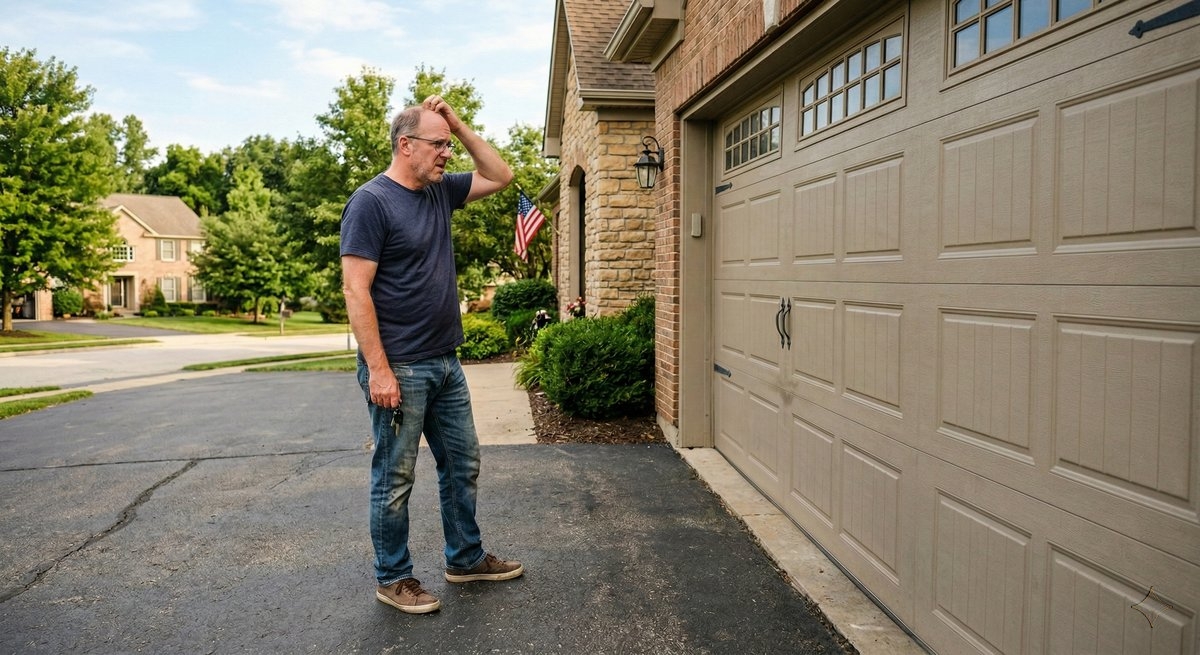
A Midwest home in February. The garage door is front and center — and so are the springs behind it.
It happens every year, somewhere around now. A homeowner walks into the garage, hits the button, and hears it: a loud, metallic BANG — like someone dropped a pipe on the concrete floor. Except nothing fell. The sound came from above the door. And now the garage door won't budge.
Welcome to February in the Midwest. The season of frozen pipes, rock-solid driveways, and — if your garage door technicians are to be believed — more broken springs than any other time of year.
This isn't bad luck. It's physics. And once you understand what's been happening to that spring since November, you'll want to do something about it before you're calling a repair company at 6 AM on a Monday with the car stuck inside.
Why February Is the Worst Month for Garage Door Springs
Your garage door has a spring system — either one or two large torsion springs mounted horizontally above the door, or a pair of extension springs running along the tracks on each side. These springs do the actual heavy lifting. Your garage door opener gets the credit, but the springs are doing most of the work, counterbalancing a door that might weigh 200 to 400 pounds.
Here's what's been happening all winter: every time the temperature drops below freezing and then climbs back up, the steel in those springs contracts and expands. It's a tiny amount of movement, but it happens repeatedly — dozens of times through a typical Midwest winter. November. December. January. February. Every cold night followed by a slightly warmer afternoon.
Each of those cycles deposits what materials engineers call metal fatigue — microscopic stress fractures in the coils. Think of it like bending a paperclip back and forth. Nothing happens for the first few bends. But bend it twenty times and you'll feel it weakening. Bend it thirty and it snaps.
By February, your garage door spring has been "bent" hundreds of times by the Indianapolis or Chicago climate. It's not one cold snap that kills the spring — it's three months of cumulative damage. Which is why the spring that was fine in October feels like Russian roulette by the time February rolls around.
Add the fact that most Midwest homeowners use their garage as the primary entry point all winter long — never wanting to stand outside in the cold longer than necessary — and those springs are also logging serious cycle counts. At 10 open-and-close cycles per day, a standard torsion spring rated for 10,000 cycles will hit its limit in about 2.5 years. At 4 cycles a day, you get roughly 7 years. That daily habit of "just use the garage door" is burning through spring life faster than you think.

Torsion Springs vs. Extension Springs: What You Have
Before we go further, a quick primer on which type of spring system you're working with.
Torsion springs are the single (or sometimes double) coiled spring(s) mounted horizontally on a metal shaft directly above your garage door opening. Most homes built in the last 20 years have torsion springs. They last longer (8–15 years), operate more smoothly, and are the current industry standard.
Extension springs are long, narrower springs mounted along the horizontal tracks on each side of the door — you'll see them running parallel to the ceiling on either side. Common in older homes. They last 7–12 years and are generally less expensive to replace.
Why does it matter? Mostly for cost and what to look for when inspecting. Torsion springs are more expensive to replace ($192–$371 per set including labor, per This Old House), but they're also more predictable in their failure. Extension springs are cheaper ($98–$200) but occasionally snap violently if a safety cable isn't in place — another reason to have a pro handle it.
Both types can and do fail in winter. Both require a professional to replace.
5 Warning Signs Your Spring Is About to Go
Don't wait for the BANG. Here's what to watch for:
1. New sounds during operation
If your garage door suddenly sounds different than it did last fall — creaking, popping, grinding, or an intermittent metallic groan — pay attention. Those sounds are metal stress at the structural level. The coils are telling you something.
2. The door moves unevenly
Watch the door as it opens. Does it hesitate? Does one side seem to move faster than the other? Does it look slightly crooked or tilted? That's asymmetric spring tension, and it typically means one spring is significantly weaker than the other.
3. The balance test
This is the most reliable DIY diagnostic. Close the garage door, then pull the red release cord on the opener (this disconnects the motor). Lift the door manually to about waist height and let go. A properly balanced door should stay put — hovering in place without help. If it falls back down or climbs on its own, the springs are worn and no longer providing proper counterbalance.
4. Visible gap in the spring coils
Walk out and look at your torsion spring (the horizontal one above the door). A broken spring will often have a visible gap or separation in the coils — it looks like part of the spring is missing. If you see that, the door shouldn't be used at all.
5. The door feels extremely heavy with the opener disconnected
A properly functioning spring system should make a 300-pound garage door feel like it weighs almost nothing by hand. If you disconnect the opener and the door feels like it weighs a ton to lift, the spring has lost its counterbalance function.

Garage door technicians work on wall-mounted components including brackets, openers, and spring systems. What looks simple from the outside involves high-tension mechanics that demand professional hands.
What Does Garage Door Spring Repair Actually Cost?
Here's the honest breakdown:
| Repair Type | Typical Cost |
|---|---|
| Extension spring replacement (pair) | $98–$200 |
| Torsion spring replacement (pair) | $192–$371 |
| Cable replacement | $98–$120 |
| Track repair | $147–$200 |
| Basic tune-up + lubrication | $45–$100 |
| Professional inspection | ~$70 per door |
| Emergency/after-hours call | Add $50–$150+ |
The average spring repair runs about $235, though torsion spring jobs tend to land in the $200–$350 range with a reputable technician. If your springs are original and your house is 10+ years old, it's worth asking the tech to replace both at once — even if only one has visibly failed, the other is on the same timeline.
What you don't want to do is force the opener against a door with broken springs. That opener wasn't designed to compensate for a failed spring. Running it repeatedly against the resistance will burn out the motor, turning a $250 spring repair into a $371–$450 opener replacement on top of it.

Some maintenance tasks are squarely in homeowner territory. Spring replacement is not — these components operate under extreme stored tension. Photo: Prakash Chavda / Pexels
What You Can Handle. And What You Can't.
Let's be real: some of this stuff is legitimate DIY territory.
Things homeowners can safely do:
- Lubricate the springs, rollers, and hinges twice a year with a spray lubricant like WD-40. Don't wipe off the excess — it needs time to penetrate. This reduces friction, prevents corrosion, and can meaningfully extend spring life.
- Tighten hardware — vibration loosens bolts over time. Every six months, do a walkthrough with a socket wrench and snug up any loose fasteners on the tracks and opener mount.
- Test the auto-reverse safety feature — place a 2×4 flat on the floor under the door and close it. The door should stop and reverse within two seconds of touching the block. If it doesn't, stop using the door and call a pro.
- Clean the photo sensors — those little sensors mounted near the floor on either side of the door frame can get dusty or knocked out of alignment. Wipe the lenses and make sure they're aimed at each other.
Things you should not attempt yourself:
- Spring replacement. Full stop. Torsion springs operate under extreme tension. When they fail during replacement, the consequences can include broken fingers, broken arms, and concussions. Professional garage door technicians have the specialized winding bars and training to do this safely. The $200 you might save is not worth the trip to the ER.
- Cable replacement. Same reason. Cables are connected to the spring system and carry significant tension.
- Any adjustment to the spring tension. This is the step where DIY videos on YouTube have ended badly for a lot of people.
How to Find a Good Garage Door Technician in Indianapolis or Chicago
The good news: garage door repair is typically a same-day repair. Here's how to find a technician worth trusting:
Look for a company that:
- Has been in business for several years (check founding date, not just reviews)
- Is licensed and insured (ask directly; any reputable shop will confirm without hesitation)
- Gives you a written quote before starting — broken-spring jobs should never be "we'll tell you when it's done"
- Carries the replacement parts in the service van (a tech who has to "order" standard torsion springs is wasting your time)
- Ask about their parts and labor warranty — what they cover and for how long tells you a lot about how confident they are in their work
Red flags to avoid:
- Prices that seem extremely low on the phone (usually bait-and-switch once they're in your garage)
- Pressure to replace the entire door when you called about a spring
- No written estimate
- Won't provide proof of insurance
If you need to find vetted garage door contractors in Indianapolis or Chicago, Saorr connects you with pre-screened local pros who show up when they say they will and charge honest rates.

A licensed garage door technician — company uniform, parts on the van, ready to work. This is who you want on the phone before February turns into an emergency.
Don't Wait for the Bang
The good news about garage door spring failure is that it usually telegraphs itself. The creaking, the uneven movement, the way the door hesitates when it used to sail up smoothly — these are warnings, not random noise.
If you've owned your home for 7+ years and haven't thought about the garage door springs once, now is the time. Run the balance test. Listen to how the door sounds this week. And if something seems off, schedule a professional inspection before February turns into a $350 emergency call on a day when every garage door tech in town is already backed up.
The spring has been working hard since November. Give it the same attention you'd give any other piece of equipment that runs your daily life — because the morning your car is stuck inside and you're standing in the cold realizing the door won't open is a terrible time to think about preventive maintenance.
Find a trusted garage door contractor in Indianapolis or Chicago on Saorr →
Find Trusted Pros Near You
Ready to start your project? Connect with vetted, top-rated contractors in your area.
Get StartedRelated Articles

Spring Pest Control 2026: When to Spray, What to Watch For, and Why March Is Already Too Late to Wait
Spring Sprinkler Startup: What Irrigation Contractors Find Wrong Every Year (And What It Costs You)