
Before the Spring Rains: Your Complete Guide to Gutter Cleaning, Repair, and Replacement in Indianapolis and Chicago
Indianapolis gets 4.34 inches of rain in April alone — that's not a drizzle, that's a reckoning. Chicago isn't far behind at 3.75 inches. All of that water has to go somewhere, and if your gutters aren't doing their job, it's going straight down your foundation wall. According to a 2025 LeafFilter industry report, 40% of homeowners have already written a check to fix damage caused by gutter neglect — water-stained ceilings, cracked foundations, rotted fascia. They paid a premium for ignoring a $200 problem until it became a $5,000 one.
This guide is for the other 60%. By the time you finish reading, you'll know exactly what shape your gutters are in, what needs to happen next, and whether you should grab a ladder or pick up the phone. No fluff, no upselling — just the framework to make a smart decision before the April rains show up uninvited.
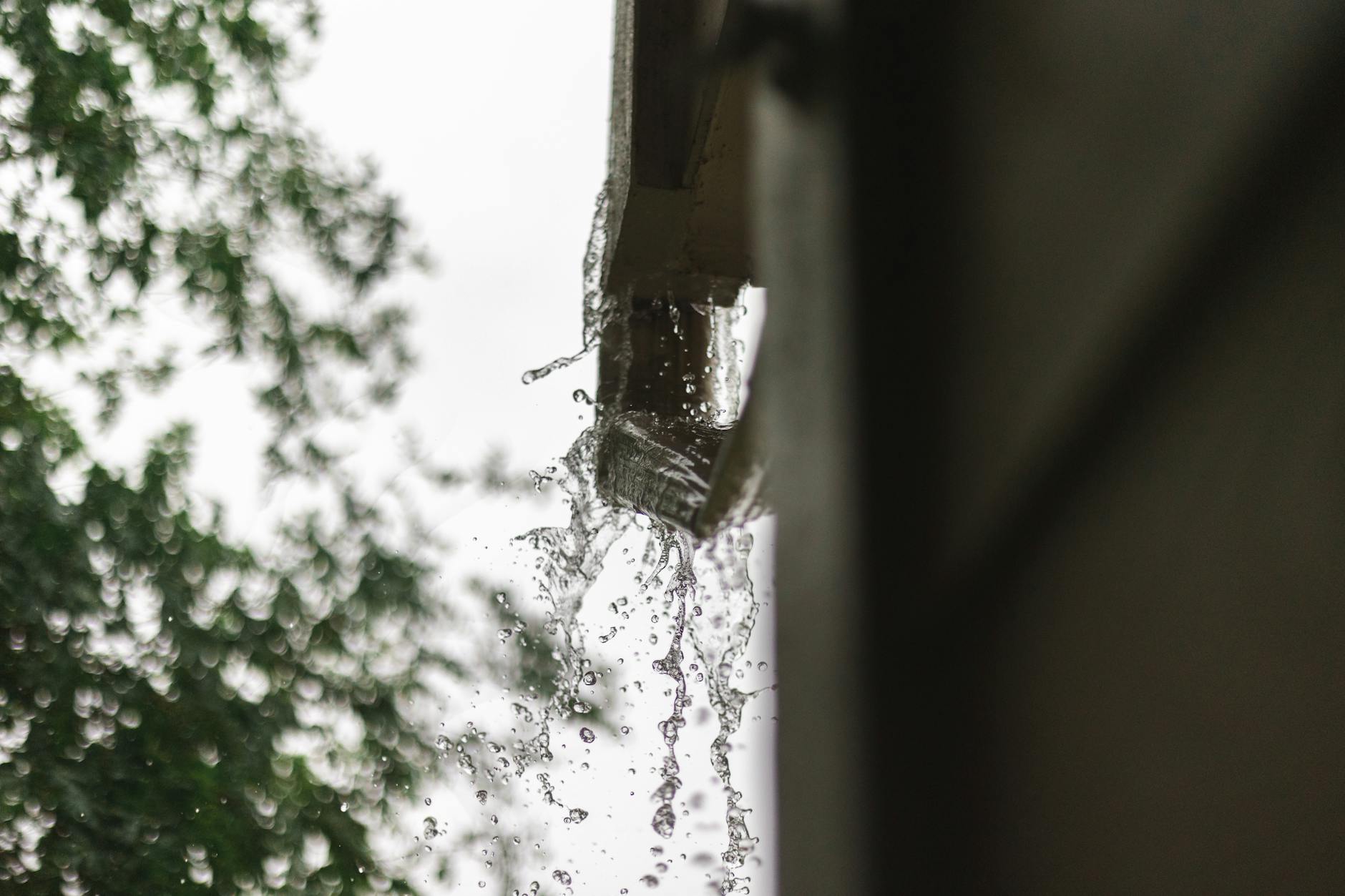
Indianapolis averages 4.34 inches of rain in April alone — gutters that can't keep up pay the price.
Why Spring Is the Critical Window for Midwest Gutters
Let's talk numbers first. According to National Weather Service climate normals, Indianapolis averages 3.69 inches of rain in March and 4.34 inches in April. Chicago averages 2.45 inches in March and 3.75 inches in April. That's roughly 7–8 inches of precipitation hitting your roof in a two-month window — after a winter that spent four months testing every joint, seam, and hanger on your gutter system.
Here's what makes spring uniquely dangerous: it's not just the rain volume. It's what comes before it. Midwest winters hammer gutters with freeze-thaw cycles, ice dam loads, and the accumulated weight of wet leaves that never got cleaned out in the fall. By February, your gutters have already been through a war. They may look fine from the driveway, but up close, the damage tells a different story.
The real threat is what happens underground. Both Indiana and Illinois have significant clay soil content — and clay soil is unpredictable. When it gets saturated with water, it expands. When it dries out, it contracts. Run that cycle repeatedly along your foundation, and you get cracking. We're talking about structural damage ranging $2,200–$8,100 — and climbing fast from there. Gutters that direct water 4–6 feet away from your foundation break that cycle. Gutters that overflow, leak, or discharge at the base of your house feed it.
The window to fix this is right now — late February through mid-March. Once the April rains start, you're already behind. Contractors are booked out 2–4 weeks, and your gutters are working full-time under conditions they may not be ready for.
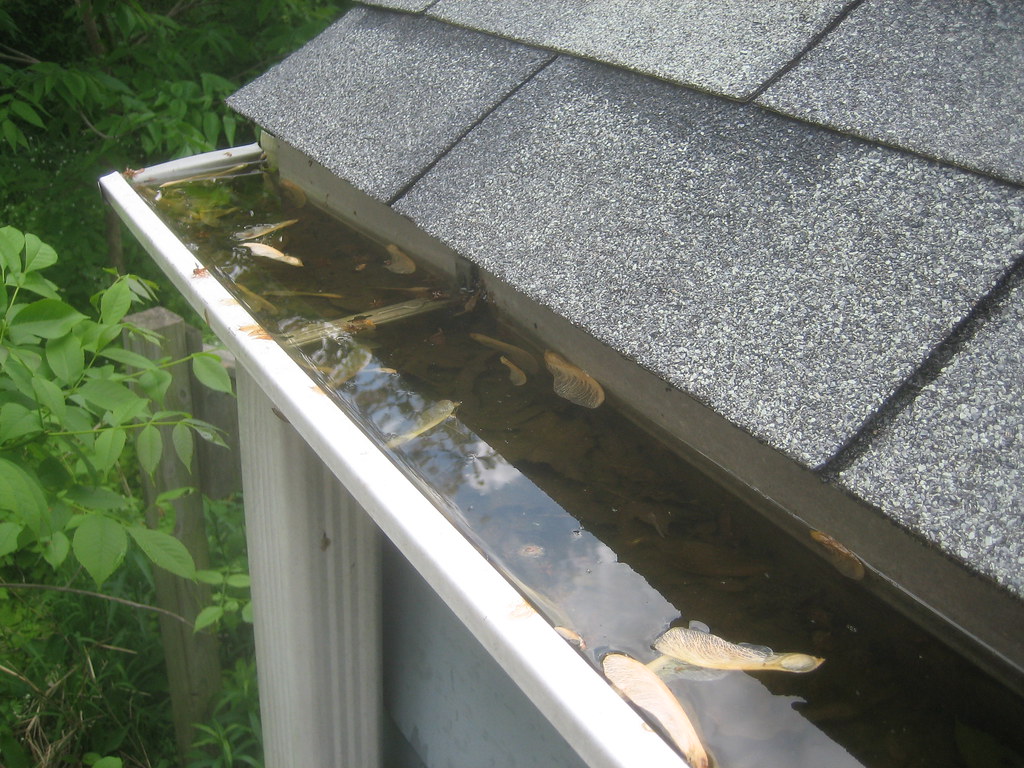
Clogged gutters force water over the edge and down your foundation — the slow drip that becomes a big bill.
Clean, Repair, or Replace? The Decision Framework
This is the question that separates a $200 cleaning call from an unnecessary $3,000 replacement — or worse, a patch job on a system that's done. Here's how to read what you're actually looking at.
Clean If:
- Downspouts are slow to drain or backing up during rain
- You can see visible debris — leaves, sticks, shingle grit — from the ground or a ladder
- The gutters look structurally sound; they just haven't been emptied
- It's been 6+ months since the last cleaning (or you genuinely can't remember)
- Cost: $145–$250 for single-story; $180–$360 for two-story professional cleaning. DIY: $50–$100 if you have the gear.
Repair If:
- You've got small holes or cracks at the joints — not throughout the run
- One or two hangers are loose or sections are sagging in isolated spots
- A seam has separated in one or two places
- A single downspout is clogged, damaged, or disconnected
- Cost: $195–$625 depending on scope; $385 is a typical repair bill
Replace If:
- Multiple sections are sagging system-wide — not one or two spots
- Widespread rust, cracks, or holes throughout the run
- Gutters are pulling away from the fascia in multiple locations
- The system is 20+ years old (aluminum) or 10+ years old (vinyl)
- Ice dam damage has bent or detached multiple sections over the winter
- Cost: $1,700–$3,100 for a full replacement on a typical home
The decision tree is straightforward: isolated problems get repaired, systemic problems get replaced. Don't let a contractor talk you into a full replacement if the system is fundamentally sound and just needs cleaning and a few spot repairs. Equally, don't keep patching a 25-year-old vinyl system that has six different failure points — you're spending repair money on a system that's already done.
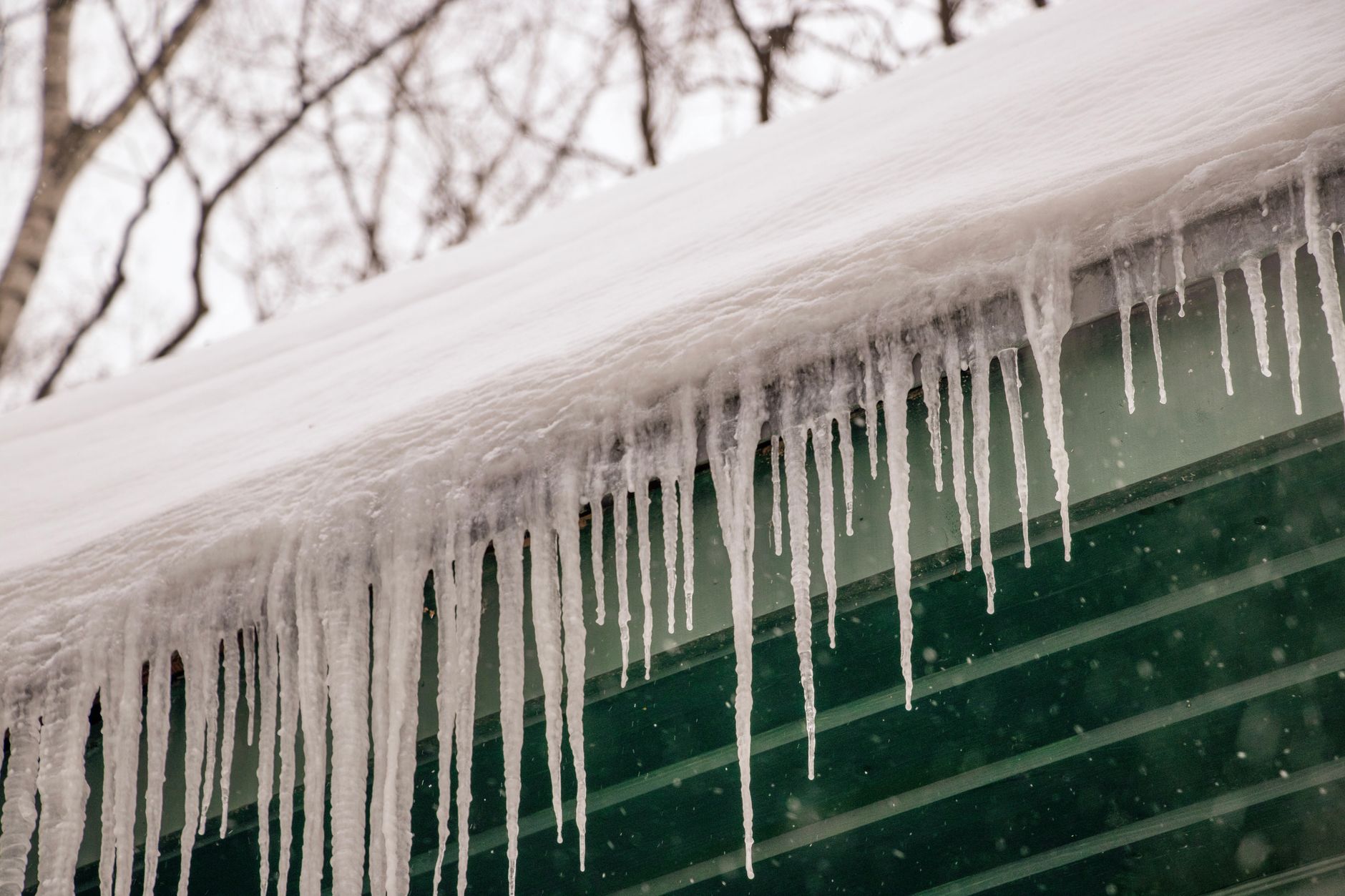
Midwest freeze-thaw cycles stress every seam and hanger in your gutter system. Vinyl is especially vulnerable.
What Midwest Winters Do to Your Gutters (The Ice Dam Problem)
If you've lived in Indianapolis or Chicago for more than a few winters, you know the drill. Temperatures swing from the 40s to the single digits and back again — sometimes inside the same week. That freeze-thaw cycle is the hidden enemy of every gutter system in the Midwest.
Here's how ice dams form: snow on your roof melts from the inside out — heat escaping through the attic warms the upper roof, melts the snow, and sends water running down toward the eaves. But the eaves are cold, sitting above unheated space. The water hits the cold gutter and refreezes. Do that enough times and you've got an ice dam — a frozen wall at the gutter line that traps meltwater behind it. That water has nowhere to go but under your shingles or into your gutter system.
Vinyl gutters take the worst of it. Below 32°F, vinyl becomes brittle. An ice dam can carry significant weight — enough to crack vinyl, deform sections, or rip the gutter from the fascia entirely. Aluminum handles it better; steel handles it best. But even metal gutters suffer from seam separation and hanger fatigue after a season of thermal expansion and contraction.
Your spring inspection checklist should specifically target ice dam damage: look for bent or bowed sections, detached gutter runs, seam separations wider than a hairline crack, and fascia boards that show soft spots, discoloration, or rot. If the wood behind the gutter is compromised, new gutters won't solve the problem — that has to be addressed first.
Seamless aluminum is the Midwest sweet spot: 20–30 year lifespan, handles temperature swings, no joint seams to fail.
Gutter Material Guide — What Actually Lasts in the Midwest
Not all gutters are built for a Midwest climate. Here's the honest breakdown of what's out there and what it means for someone in Indianapolis or Chicago.
Vinyl
The cheapest option up front — and the most expensive over time in the Midwest. Vinyl has a lifespan of 10–20 years under ideal conditions, but freeze-thaw cycles accelerate that clock significantly. It becomes brittle in cold temperatures, cracks under ice load, and fades in UV. If you're replacing a vinyl system, don't replace it with vinyl. You'll be back in 10 years.
Aluminum (Seamless)
This is the Midwest sweet spot. Seamless aluminum handles temperature swings without becoming brittle, resists rust, and installs as a continuous run — no seams to separate. Lifespan: 20–30 years. Installed cost: $8–14 per linear foot. For most homeowners in Indy or Chicago, this is the answer unless you have a specific reason to go up the ladder.
Steel
Stronger than aluminum and handles heavy ice loads well. The downside is rust — even galvanized steel eventually shows corrosion at cut ends and fastener points. Typical lifespan: 20 years, though heavily coating-dependent. Installed cost: $12–20 per linear foot. A legitimate option for heavy-snow or high-wind areas, but requires more maintenance attention.
Copper
The premium tier. Copper won't rust, won't corrode, and looks better with age. Lifespan exceeds 50 years on a properly installed system. Installed cost: $25–40+ per linear foot. Reserved for historic homes, high-end renovations, or homeowners who want to solve the gutter problem permanently and never think about it again.
Seamless vs. Sectional
Whatever material you choose, always get seamless for a new installation. Sectional gutters — the kind sold at home improvement stores in 10-foot lengths — create a seam every 10 feet. Each seam is a future leak point. Seamless gutters are fabricated on-site as a continuous run from end to downspout, eliminating 95% of the seam failures that cause the typical gutter problems people deal with. This isn't an upsell — it's just the smarter installation method, and in the Midwest climate, it matters.
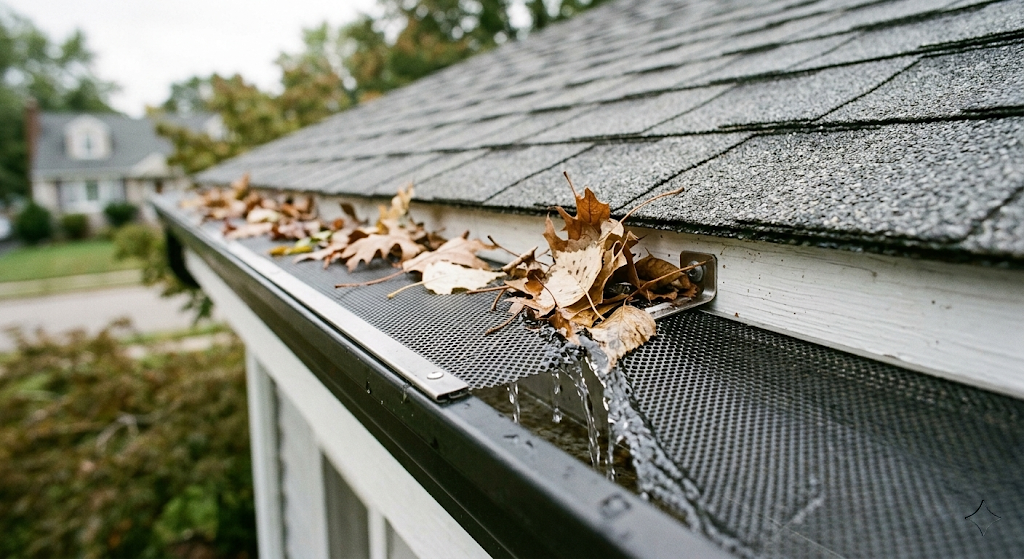
Quality micro-mesh guards reduce cleaning frequency — but they don't eliminate it. In cold climates, skip the foam and plastic options.
Are Gutter Guards Worth It? (The Data-Driven Answer)
The gutter guard industry wants you to think these are a set-it-and-forget-it solution. They're not. But that doesn't mean they're worthless. Here's the real math.
A standard gutter guard installation on a typical home runs about $1,125 total, or $6–13 per linear foot installed, depending on the guard type and your home's footprint. The claim is that guards eliminate the need for cleaning. The reality is that quality guards reduce cleaning frequency from twice a year to roughly once a year. That's a meaningful difference — but it's not the same as never cleaning your gutters again.
The 10-year math: if professional cleaning costs $175/visit and you do it twice a year, you're spending $3,500 over 10 years. With guards, you drop to once a year — $1,750 over 10 years. Subtract the $1,125 installation cost, and you've saved about $625. That's real money, but the bigger value is convenience and the reduction in blockage risk between cleanings.
There are two important Midwest-specific caveats. First, if you live in a tree-heavy neighborhood — we're talking Lincoln Park, Oak Park, Broad Ripple, Butler-Tarkington — heavy fall leaf drop can overwhelm even premium micro-mesh guards. They'll reduce the problem; they won't eliminate it. Second, some guard designs create a shelf at the eave that traps meltwater and makes ice dam conditions worse. In cold climates, only buy premium micro-mesh guards — the ones with a fine stainless steel mesh over a solid aluminum body. Avoid plastic mesh, foam inserts, or brush-style guards entirely in a climate that sees hard freezes.
Bottom line: Gutter guards are worth it if you have significant tree coverage over your home. They're an optional upgrade if you don't. Either way, they don't replace cleaning — they just reduce how often you have to do it.

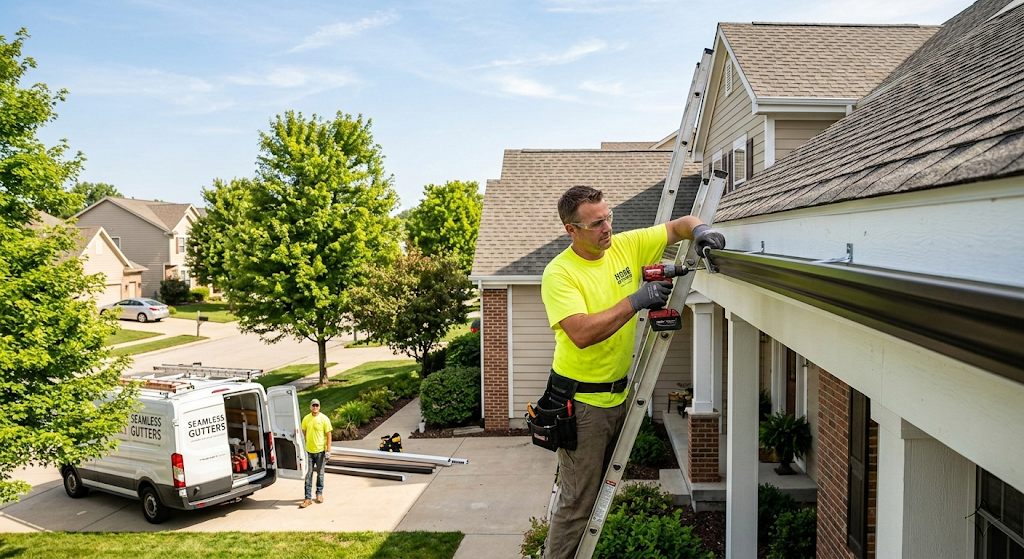
Book your spring gutter inspection early — contractors in Indianapolis and Chicago fill up fast between February and April.
Hiring a Gutter Contractor in Indianapolis or Chicago — What to Look For
The timing reality first: spring is the busiest window for gutter contractors in both markets. From late February through April, reputable crews book out 2–4 weeks. If you're reading this in March and thinking about calling next week — you're already behind. Book now.
When you do call, here are five questions that separate professional operations from guys with a pickup truck and a ladder:
- Are you licensed and insured? Ask specifically for general liability coverage and worker's compensation. If a worker falls off your roof without worker's comp, the injury claim can come back to your homeowner's insurance. Don't skip this question.
- Seamless or sectional? For any new installation, the answer should always be seamless. If they push back, call someone else.
- What gauge aluminum? The minimum you want is .032-inch gauge. Some contractors cut costs by using .027-inch — it's thinner, dents more easily, and won't last as long. Ask directly.
- What's the warranty on labor and materials? A professional shop stands behind their work. Get the warranty in writing, including what's covered and for how long.
- Do you haul away debris? Sounds minor, but some contractors leave cleaned-out gutter debris in your yard or gutters for you to deal with. Clarify upfront.
Red Flags — Walk Away If You See These
- A quote that comes in 40%+ below the other bids — that gap almost always means thinner materials, skipped steps, or both
- Cash only, no written contract
- No verifiable license number or business address
- "I'm in your neighborhood today only" — high-pressure same-day close tactics are a hallmark of storm chasers and fly-by-night operations
- No itemized quote — you should see a line-by-line breakdown of materials, labor, and any add-ons

Single-story DIY cleaning is manageable with the right gear — ladder stabilizer, gloves, hose, and a bucket.
DIY vs. Pro — Knowing Where to Draw the Line
There are things you can reasonably do yourself on your gutters, and there are things where the risk-to-reward ratio just doesn't pencil out. Knowing the difference keeps both your gutters and your bones intact.
DIY Is Reasonable For:
- Cleaning a single-story home's gutters — manageable ladder height, low fall risk
- Sealing small cracks at joints with gutter sealant or caulk
- Tightening loose hanger screws where you can safely reach them
- Clearing a downspout clog with a garden hose or plumber's snake from ground level
Call a Pro For:
- Any work on a two-story or higher home — full stop
- Full system replacement (the equipment alone — a seamless gutter machine — costs tens of thousands of dollars)
- Any fascia board repair or replacement
- Work near the roof edge where you'd need to lean outward on a ladder
Here's the stat that should settle the debate on second-story work: 36,338 people in the U.S. died from falls in 2017. That's more than car accidents. The overwhelming majority of residential ladder deaths involve heights under 10 feet — which is exactly where you'd be cleaning second-story gutters. It's not about being cautious; it's about recognizing when the job genuinely isn't worth the risk.
If you are doing single-story DIY cleaning, here's the gear checklist that separates a safe job from a trip to urgent care:
- Ladder stabilizer/standoff — attaches to the ladder and keeps it away from the gutter so you don't crush the run or lose contact. Never rest a ladder directly on the gutter itself.
- Heavy work gloves — gutter edges are sharp, and whatever's decomposing in there isn't something you want in a cut
- Garden hose with a spray nozzle — flush from the closed end toward the downspout
- Bucket and hand trowel or gutter scoop — scoop wet debris into the bucket, not onto the ground where you'll track it inside
- Safety glasses — flushing debris downward puts it at eye level

Don't wait until April to book — licensed gutter contractors in Indianapolis and Chicago are booking out 2–4 weeks as spring approaches.
Your Pre-Spring Gutter Checklist (Do This This Weekend)
You don't need a contractor to do a basic assessment. Grab an hour this weekend and walk through this checklist. It tells you whether you're scheduling a cleaning, a repair, or a replacement call — and it takes less time than the rain delay you're trying to avoid.
- ☐ Walk the full perimeter after the last freeze. Look up at the gutter line from below — bent sections, visible sag, or daylight between the gutter and fascia are your warning signs.
- ☐ Check every downspout outlet. They should be clear and discharging water at least 4–6 feet away from the foundation. Extensions are cheap insurance.
- ☐ Flush the system from the closed end toward the downspout. Use a garden hose. Watch for water backing up or leaking at joints — that tells you where the blockages and cracks are.
- ☐ Look for rust streaks or staining on the siding below the gutters. Peeling paint directly beneath a gutter run means it's been overflowing long enough to soak into the siding. Fascia staining is worse — check whether the wood feels soft.
- ☐ Check the pitch. Gutters should drop ¼ inch per 10 feet toward the downspout. If water pools and stands after a rain instead of draining, the pitch is off — that's a hanger adjustment or re-hang job.
- ☐ Check every hanger. They should be tight to the fascia with no visible gap between the back of the gutter and the board. A loose hanger is a $10 fix; a detached gutter in a rainstorm is not.
- ☐ Found ice dam damage? Bent sections, detached runs, or seam separations that look fresh are likely winter casualties. Schedule a professional inspection before the April rains arrive — you want that diagnosis in hand before you need the repairs done.
- ☐ Schedule your first spring cleaning. Target late March or early April — after the last freeze risk but before the heavy spring rain window opens. If you're hiring out, book that appointment this week.
Your gutters are the drainage workers of your house. They don't ask for much — a cleaning twice a year, a hanger check in the spring, and the occasional seam repair. Ignore them long enough and they'll hand you a bill that makes regular maintenance look like a bargain. The spring rains are coming. Indianapolis and Chicago don't ease into the season — they open the valve. Make sure your system is ready to handle it.
Ready to get your gutters sorted before the spring rains hit? Saorr connects you with licensed, vetted gutter contractors in Indianapolis and Chicago who know this climate, know the materials, and will give you a straight answer about what your system actually needs — not the most expensive answer. Get a free estimate today and get it scheduled before the April rush closes the calendar.
Find Trusted Pros Near You
Ready to start your project? Connect with vetted, top-rated contractors in your area.
Get StartedRelated Articles

Spring Pest Control 2026: When to Spray, What to Watch For, and Why March Is Already Too Late to Wait

Spring Sprinkler Startup: What Irrigation Contractors Find Wrong Every Year (And What It Costs You)