
Hot Water Recirculation Pump Installation
Hot Water Recirculation Pump Installation: What It Really Costs in 2026
You turn on the shower, and you wait. And wait. Thirty seconds. A minute. Sometimes two. That's not just annoying — it's gallons of cold water going straight down the drain every single morning. Over a year, the average household wastes 8,000 to 12,000 gallons just waiting for hot water to arrive, according to EPA WaterSense estimates.
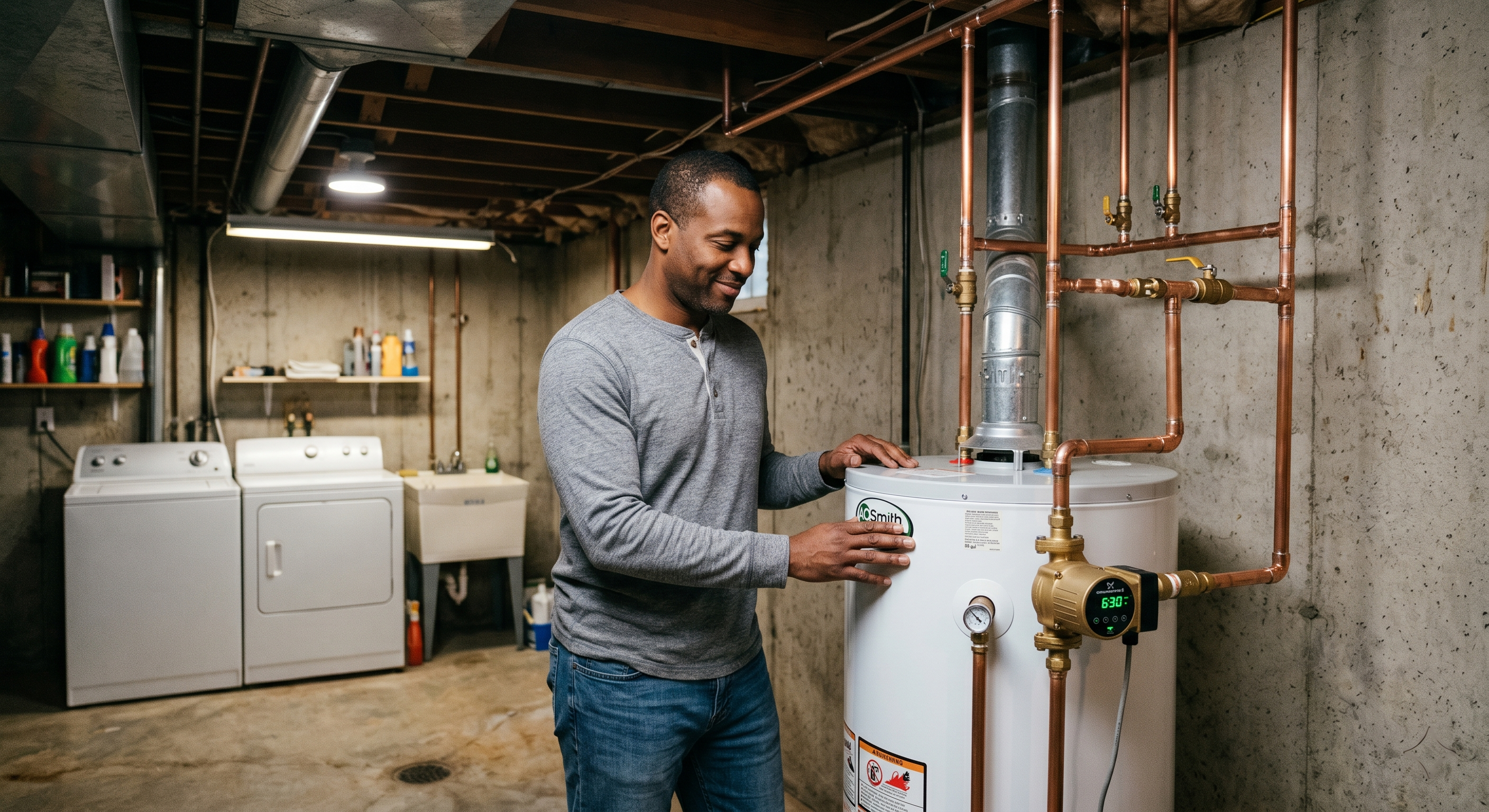
A hot water recirculation pump solves that. It keeps hot water circulating through your pipes so it's right there the moment you need it — no more waiting, no more waste. It's a small piece of equipment (about the size of a large thermos) that installs near your water heater, and it can genuinely change your daily routine.
The real question is: what does it cost to install one? The honest answer is it depends where you live. A plumber in Boston bills very differently than one in San Antonio, and your home's pipe layout matters just as much as the pump you pick. This guide breaks it all down — nationally, and by region — so you can plan your budget and hire smart.
How Hot Water Recirculation Pumps Work
The basic idea is simple: instead of letting hot water sit idle in your pipes (cooling down between uses), a recirculation pump keeps it slowly moving in a loop so it stays warm at every fixture.
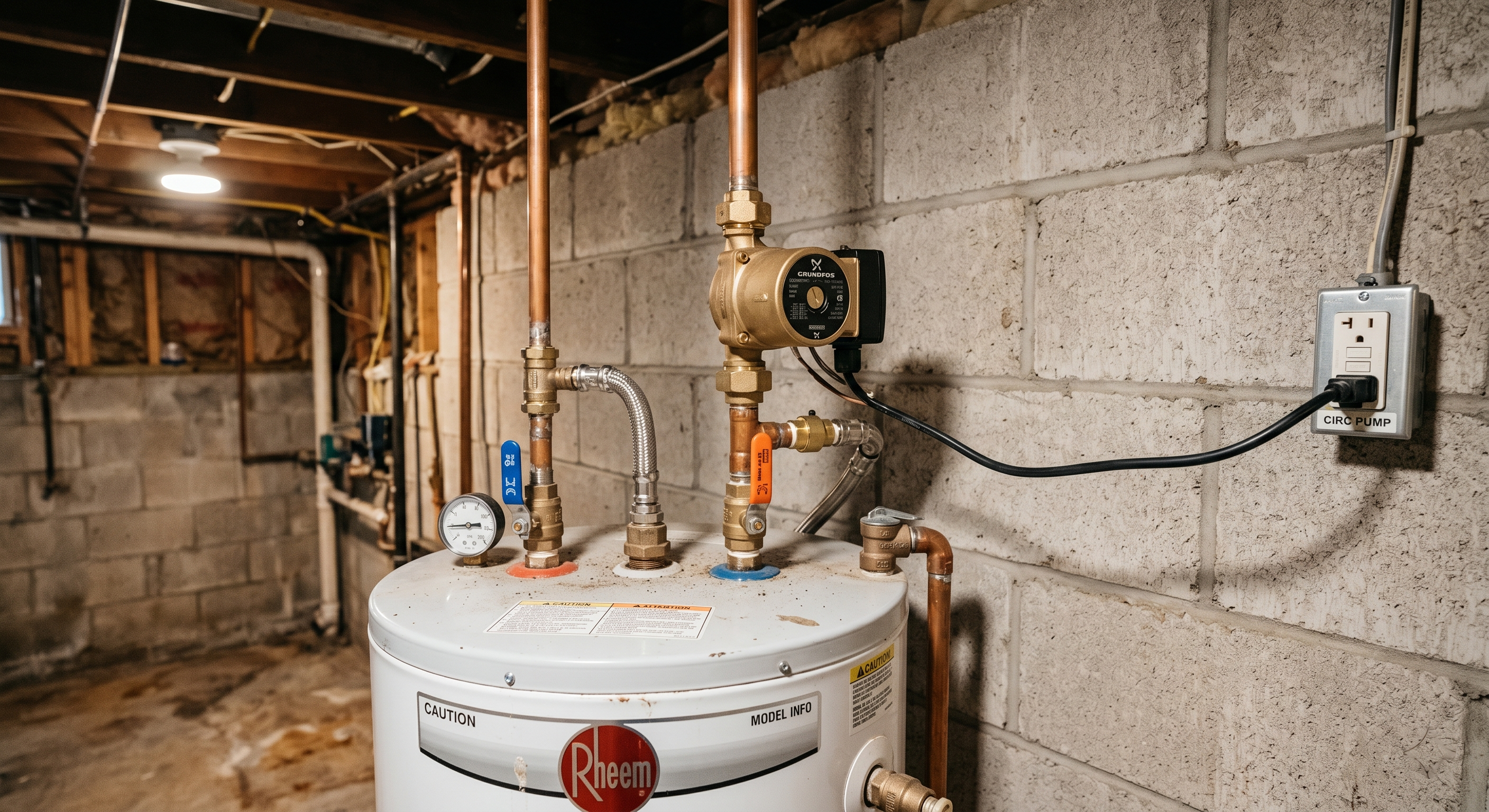
There are two main system types, and the one you need depends on your home:
Comfort / Bypass System (Most Common Retrofit)
This is the go-to option for existing homes. It uses your cold water pipe as a return line — no new plumbing required. A small pump mounts at the water heater, and a sensor valve (also called a bypass valve) installs under the sink at your farthest fixture. When the water in that run gets too cool, the pump kicks on and cycles hot water back through. Most homeowners can add this system in an afternoon with basic plumbing skills.
- Pump cost: $150–$500 (basic timer to smart Wi-Fi models)
- Professional install: $300–$600 in labor
- Total installed: $500–$1,100 nationally
- Best for: Existing homes, retrofits, single-family homes
Dedicated Return Loop (New Construction or Full Retrofit)
This is the premium version. A dedicated return pipe runs from your farthest fixture all the way back to the water heater — the "proper" plumbing-textbook setup. It delivers faster, more consistent hot water and works better in large homes with multiple bathrooms. The catch: you need a third pipe run, which means opening walls or planning it in during construction.
- Pump + components: $300–$800
- Additional plumbing/pipe: $500–$1,500+
- Labor: $600–$2,500 (can run multi-day in finished homes)
- Total installed: $1,500–$5,000+
- Best for: New builds, major renovations, large multi-bath homes
For most homeowners reading this, the comfort/bypass system is the right call. It's less invasive, far cheaper, and handles the job well in homes up to about 4,000 square feet.
One more thing worth knowing: these pumps draw about 25 watts of electricity — similar to a dim light bulb. When equipped with a timer, thermostat, or demand sensor, annual operating costs run roughly $30–$50 in electricity. Factoring in water savings, many homeowners recoup the install cost in 2–3 years.
What Hot Water Recirculation Pump Installation Costs Across the US
Labor is the biggest variable in what you'll pay. Plumber wages vary by more than 2:1 across the country — from a mean of $24.92/hr in Florida to $46.97/hr in New Jersey (BLS OEWS 2023). By the time you factor in overhead, insurance, and service call minimums, residential billing rates typically run $75–$200/hr depending on the market. Here's what that means for your wallet, broken down by region.
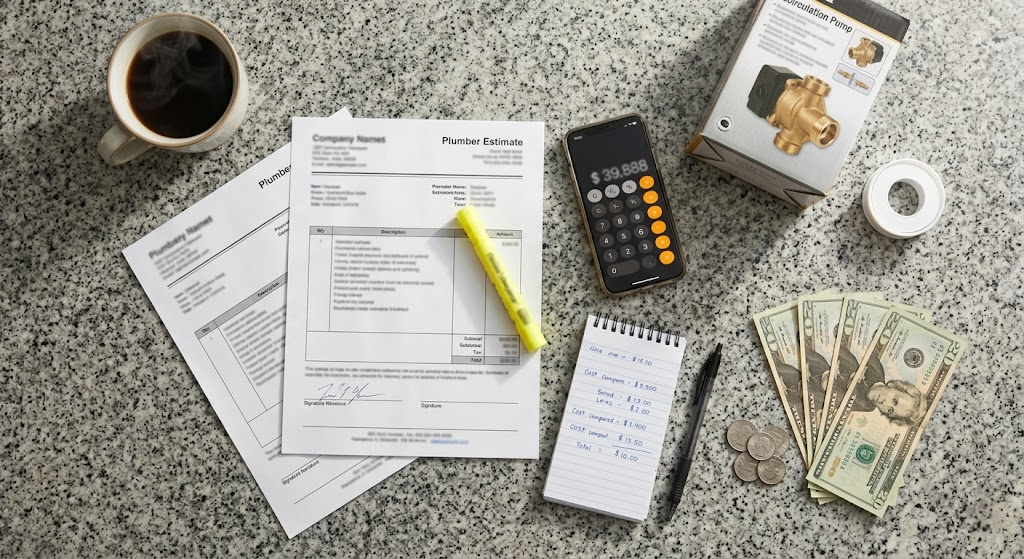
All prices below reflect a comfort/bypass system (the most common retrofit). Dedicated loop systems scale proportionally — roughly 2–3× the comfort system price.
Northeast — Boston / New York City
Boston, New York City: $900–$1,500
Hartford, Providence, Albany: $700–$1,100
The Northeast is the most expensive region for plumbing work, full stop. Massachusetts plumbers average $42.86/hr (32% above the national mean), and New York City adds union labor premiums on top of that. Older housing stock — pre-1940 brick rowhouses in Boston, narrow brownstones in Brooklyn — often means tricky pipe routing and longer labor time. Hartford, Providence, and Albany run meaningfully cheaper than the T1 metros, though New England winters drive steady demand that keeps prices from dropping much further.
Mid-Atlantic — Washington DC / Baltimore
Washington DC, Baltimore: $850–$1,400
Pittsburgh, Richmond: $600–$950
DC-area plumbers benefit from a dense, well-paid contractor market — New Jersey (the wage proxy for the DC metro corridor) has one of the highest mean plumber wages in the country at $46.97/hr. DC row homes and Baltimore's older housing stock share the same challenge as Boston: long pipe runs and tight access add labor hours. Pittsburgh and Richmond come in notably cheaper, with a more price-competitive independent contractor market and lower overhead costs.
Southeast — Atlanta / Miami / Charlotte
Atlanta, Miami, Charlotte: $500–$850
Raleigh, Tampa, Nashville: $450–$750
The Southeast is the most affordable region for recirculation pump installs. Florida plumbers average just $24.92/hr — the lowest in the country — and the open-shop labor market across Georgia, the Carolinas, and Tennessee keeps prices competitive. The South also leads the US in new single-family home construction (per NAHB 2024 data), which means more plumbers are active and available. Miami's older condo and Art Deco building stock can complicate installs, but even there, prices stay well below Northern averages.
Midwest — Chicago / Detroit / Minneapolis
Chicago, Detroit, Minneapolis: $750–$1,300
Indianapolis, Columbus, Milwaukee: $550–$900
Chicago is the Midwest outlier — strong union plumber presence (Illinois mean: $42.51/hr, 3rd highest nationally), strict permitting, and an active lead service line replacement program that has tightened plumber availability all push costs toward the upper range. Detroit and Minneapolis sit more in the middle of the pack, though Minneapolis homeowners see strong ROI given the brutal winters (-20°F+ common) that make instant hot water genuinely valuable. Indianapolis, Columbus, and Milwaukee offer significantly better value with lower BLS wage bases and strong competition among independent shops.
South & Gulf Coast — Houston / Dallas
Houston, Dallas: $480–$800
San Antonio, Austin, Oklahoma City: $420–$700
Texas consistently comes in as one of the most affordable large-metro markets for plumbing work. No state income tax keeps contractor overhead lower, the open-shop market is highly competitive, and both Houston and Dallas have massive plumber populations. After Winter Storm Uri in 2021, awareness of home plumbing vulnerabilities spiked — and interest in recirculation systems has stayed elevated. Austin trends slightly higher than the other T2 cities thanks to tech-driven demand and cost of living increases, but it's still well below what you'd pay in the Northeast or Pacific Coast.
Mountain West — Denver / Phoenix
Denver, Phoenix: $600–$1,000
Salt Lake City, Boise, Albuquerque: $500–$800
Denver sits slightly above the national average thanks to above-median plumber wages (~$30–$34/hr) and strong residential demand. Phoenix comes in closer to national parity — the warm, dry climate eliminates freeze-driven urgency surges, though sprawling ranch homes with long pipe runs make recirculation systems genuinely useful year-round. Salt Lake City homeowners should note that extremely hard water is a significant factor: calcium and magnesium buildup can shorten pump life, and many plumbers recommend adding an inline filter — budget an extra $50–$150 for that. Boise is trending upward as Idaho in-migration outpaces plumber supply.
Pacific Coast — Seattle / Los Angeles / San Francisco
Seattle, Los Angeles, San Francisco: $950–$1,600
Portland, San Diego, Sacramento: $750–$1,200
The Pacific Coast is neck-and-neck with the Northeast as the priciest region. Oregon plumbers average $41.19/hr (4th highest nationally), Washington State plumbers are in the same range, and California's Bay Area contractors routinely bill $125–$200+/hr for residential service calls. California also has strict water conservation rules (including Title 24 building energy codes) that favor demand-controlled recirculation systems — which cost a bit more upfront but are required in some new construction contexts. Portland and Sacramento offer meaningful relief compared to the T1 metros, and San Diego benefits from strong competition among its large residential contractor base.
What Drives the Price Up (or Down)
Beyond your zip code, here are the factors that move the needle most on your final invoice:
System Type
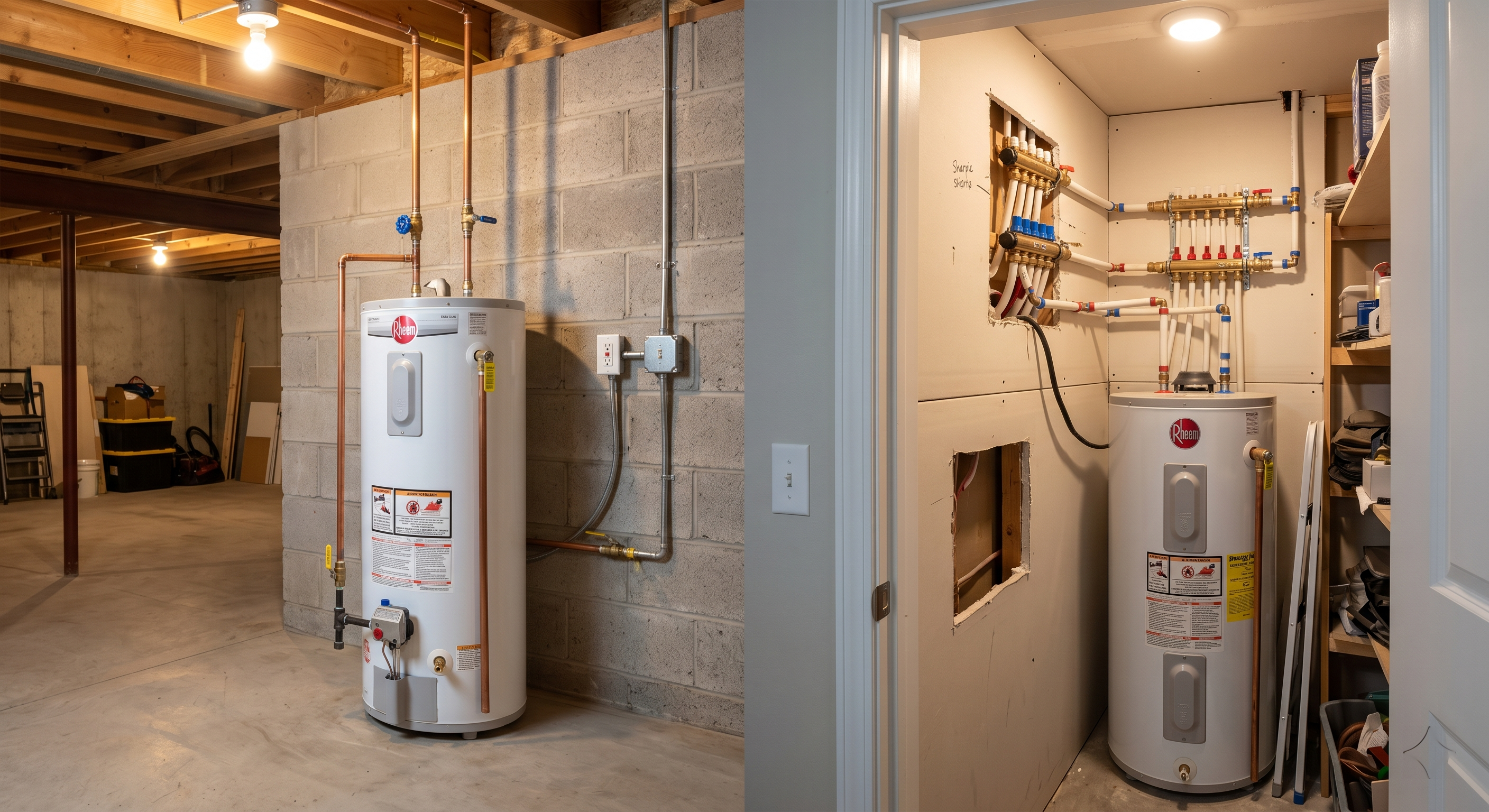
This is the biggest single variable. A comfort/bypass system runs $500–$1,100 installed in most markets. A dedicated return loop in a finished home can hit $3,000–$5,000 or more, because it involves running new pipe — which often means opening drywall.
Home Size and Pipe Run Length
The farther hot water has to travel from your water heater to your farthest fixture, the harder the system has to work — and the more valuable the upgrade becomes. Homes over 2,500 square feet with two or more full bathrooms are prime candidates. Smaller homes under 1,500 square feet may see shorter wait times to begin with, making the ROI case weaker.
Access to Existing Plumbing
Unfinished basement? The job is straightforward. Slab-on-grade construction (dominant in Texas, Florida, Arizona)? Still manageable for a comfort system. Finished walls with no easy access to pipe runs? That's where retrofit costs climb quickly — any time a plumber has to cut drywall, expect to add $200–$600 or more for patching.
Pump Model and Controls
Basic timer-controlled pumps start around $150. Smart Wi-Fi models (Grundfos Comfort, Watts SmartHome, Taco Comfort) run $300–$500 and let you set schedules via app or connect to Alexa/Google Home. The smarter the pump, the lower the operating cost — because it only runs when you actually need hot water. For most households, the mid-range timer model ($200–$300) hits the sweet spot.
Tankless Water Heaters
Got a tankless unit? Good news: recirculation pumps are compatible. Slightly complicated news: not all tankless heaters work with all pump models — some require specific "recirculation-ready" units or a buffer tank. Your plumber should verify compatibility before ordering anything.
DIY vs. Hiring a Plumber
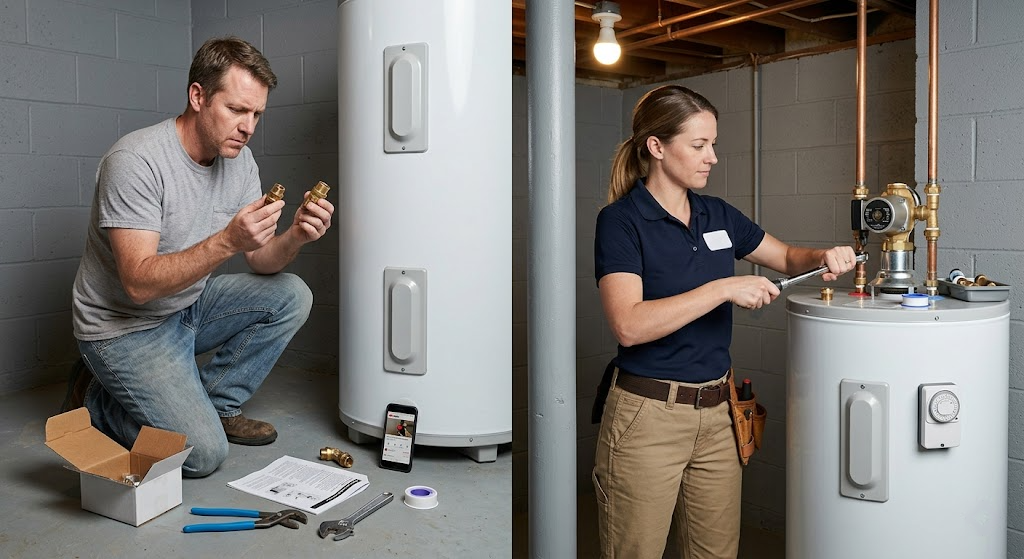
Let's be straight about this: a comfort/bypass system is a legitimate DIY project for someone comfortable with basic plumbing. Family Handyman rates it "moderate DIY" — meaning if you've replaced a faucet or installed a toilet, you're probably in range. If your idea of home repair is changing light bulbs, hire a plumber.
What DIY Requires
- Ability to shut off water at the water heater and drain the line
- Basic pipe fitting — the pump typically connects to existing hot and cold connections at the heater (often with push-fit or threaded fittings)
- Installing the bypass valve under the sink at your farthest fixture (usually a simple swap of the supply shutoff valve)
- Electrical work: the pump needs a standard 120V outlet nearby (most water heaters already have one)
- Time: plan 2–4 hours including reading the instructions, not 45 minutes
When to Just Call a Plumber
- You have a dedicated return loop system (this requires real plumbing skill)
- Your water heater is in an awkward location (attic, crawlspace, no outlet nearby)
- You have a tankless water heater and aren't sure about compatibility
- Your area requires a permit for the installation (some jurisdictions do, especially for return loop systems)
- You've looked at the installation video twice and you're still not sure — seriously, just call someone
The DIY Cost Reality
DIY saves you $300–$600 in labor. A comfort system pump costs $150–$500 depending on the model. So your all-in DIY cost runs roughly $200–$500, versus $500–$1,100 installed by a pro. That's real money — but only if the install goes smoothly. A botched connection that leads to a water damage claim costs far more than the labor you saved.
The conservative play: buy the pump yourself (saves markup), then hire the plumber for the actual installation. You get the parts savings without carrying all the risk.
How to Hire a Plumber for This Job
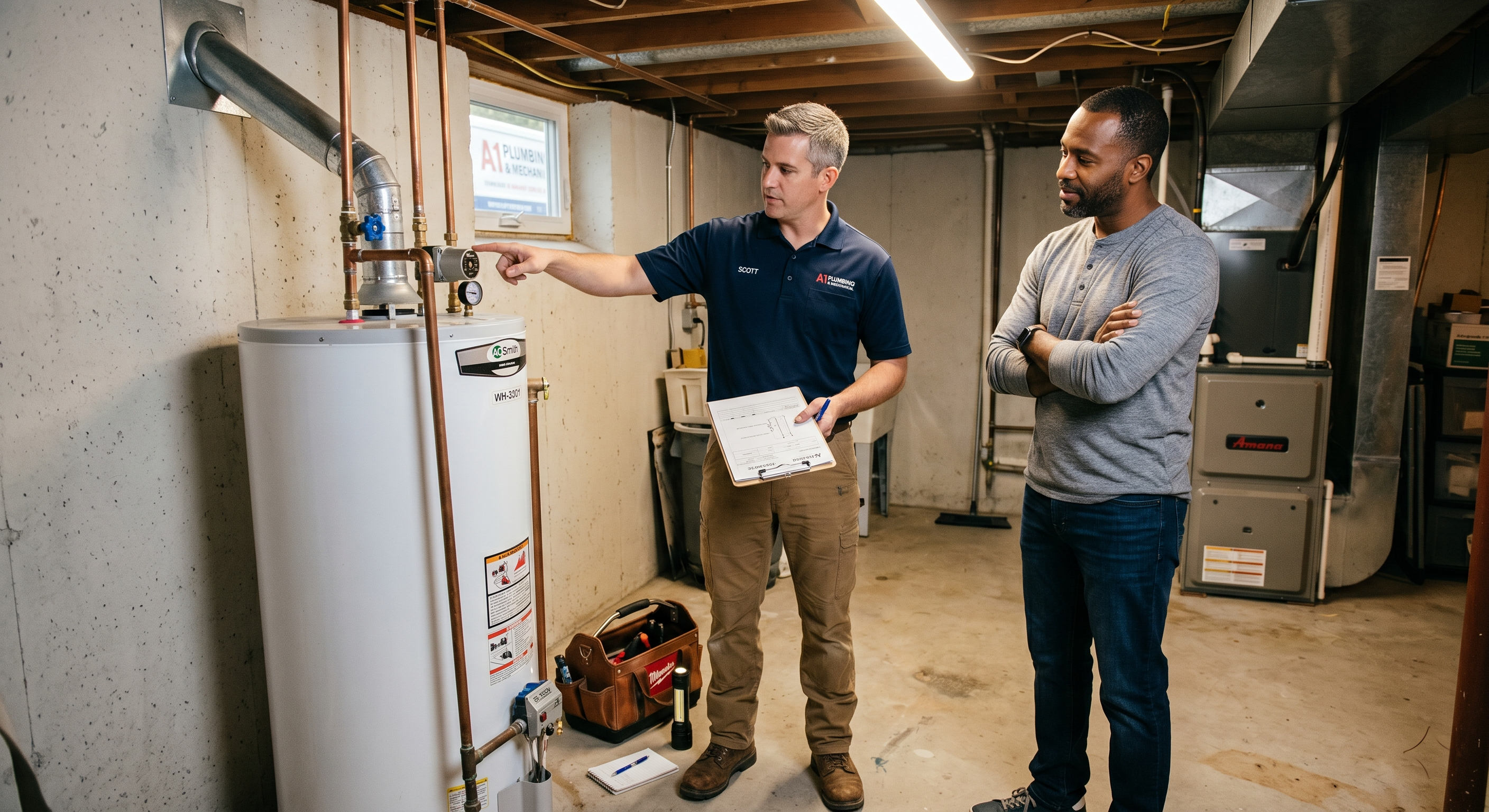
This is a job that takes a licensed plumber 1–3 hours, start to finish. That simplicity is actually your leverage — you're not locked into whoever answers the phone first, and you don't need a massive company with a fleet of trucks. Here's how to find someone good without overpaying.
What to Ask Before You Hire
- "Do you install recirculation pumps regularly?" — You want someone who's done this before, not figuring it out on your dime.
- "What brands do you recommend, and why?" — Good answer: Grundfos, Watts, or Taco with a reason. Bad answer: "Whatever you buy on Amazon."
- "Is a permit required for this job in my area?" — A comfort system usually doesn't need one. A return loop often does. The plumber should know.
- "What's your service call rate, and is the first hour included?" — Many residential plumbers charge a flat service call fee ($75–$150) plus hourly. Get this in writing.
- "Are you licensed and insured in this state?" — Non-negotiable. Every state requires plumbing licenses; verify it.
Get Multiple Quotes
For a job this size, get at least two quotes — three if you can manage it. The spread between low and high bids on a simple comfort system install can be $200–$400, which is meaningful. Most plumbers will give you a phone estimate if you describe the job accurately: system type, water heater location, approximate home size, and whether you're supplying the pump or want them to.
Supplying Your Own Pump
Buying the pump yourself is often smart. Contractors typically mark up materials 20–40%. A Grundfos Comfort 10-17-BU/T runs about $200 online; a plumber might charge $280–$320 for the same unit. Check the plumber's policy on customer-supplied parts first — some won't warranty labor on parts they didn't supply, which is reasonable. If they say they won't use your pump at all, that's a yellow flag.
Rebates Worth Checking
Standalone recirculation pumps don't qualify for the federal 25C tax credit — that credit applies to the water heater itself (heat pump water heaters get 30% up to $2,000). But if you're pairing this upgrade with a new water heater, that combo can hit the threshold. Check your local utility's rebate programs — MassSave (Massachusetts), Xcel Energy (Minnesota/Colorado), LADWP (Los Angeles), and Seattle City Light all offer water efficiency incentives that may apply.
Is a Recirculation Pump Worth It?
Let's run the numbers honestly.
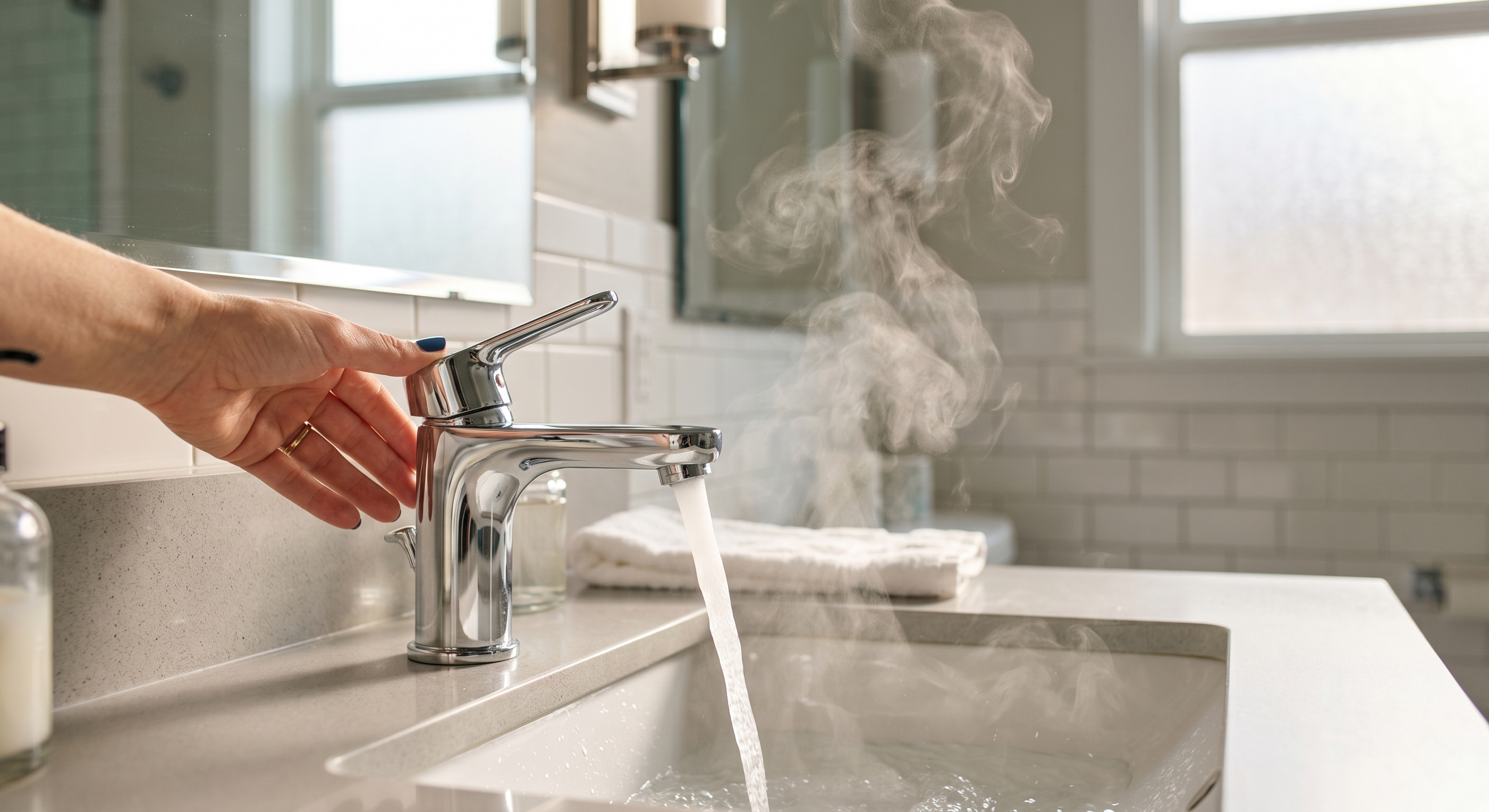
Average household wastes roughly 10,000 gallons per year waiting for hot water. At $0.005–$0.010 per gallon (typical US water rates), that's $50–$100 in water cost annually. Factor in the energy cost of reheating that water, and estimates from working plumbers put total annual savings at around $100–$150/year for an average home.
At $600–$800 installed (national average for a comfort system), you're looking at a 5–8 year payback period on pure economics. That's not a home run. But here's what the math misses:
- Convenience has real value. Instant hot water every morning isn't a luxury — it's a quality-of-life upgrade you notice 365 days a year.
- Water scarcity is real in much of the West. In California, Phoenix, or Denver, eliminating wasted water has both economic and environmental weight.
- It adds home sale appeal. In competitive markets (Seattle, Denver, Austin), smart home features like Wi-Fi recirculation pumps are increasingly expected.
- Large homes see better ROI. A 4,000 sq ft home with 3+ bathrooms might waste 15,000–20,000 gallons annually. The math gets much better fast.
Bottom line: if you're in a large home, in a water-scarce region, or you just can't stand waiting — do it. If you're in a 1,200 sq ft condo with a tankless heater two walls from your shower, you probably don't need it.
Ready to Stop Waiting for Hot Water?
A hot water recirculation pump is one of those upgrades that sounds mundane until you have it — and then you can't imagine living without it. The job is fast, the equipment is proven, and the plumbers who do it regularly knock it out in a couple hours.
What you pay depends on where you live, what type of system you need, and who you hire. Use the regional pricing in this guide as your baseline. Get 2–3 quotes from licensed plumbers. Ask about permit requirements in your area. And if you're handy, seriously consider doing the comfort system yourself — it's well within reach.
Want to connect with licensed plumbers in your area who specialize in water heater and recirculation system installs? Find qualified pros near you and get quotes today.
Find Trusted Pros Near You
Ready to start your project? Connect with vetted, top-rated contractors in your area.
Get Started