The Truth About Paver Patio Costs in Indianapolis & Chicago (And Why You Need to Book Now)
The Truth About Paver Patio Costs in Indianapolis & Chicago (And Why You Need to Book Now)
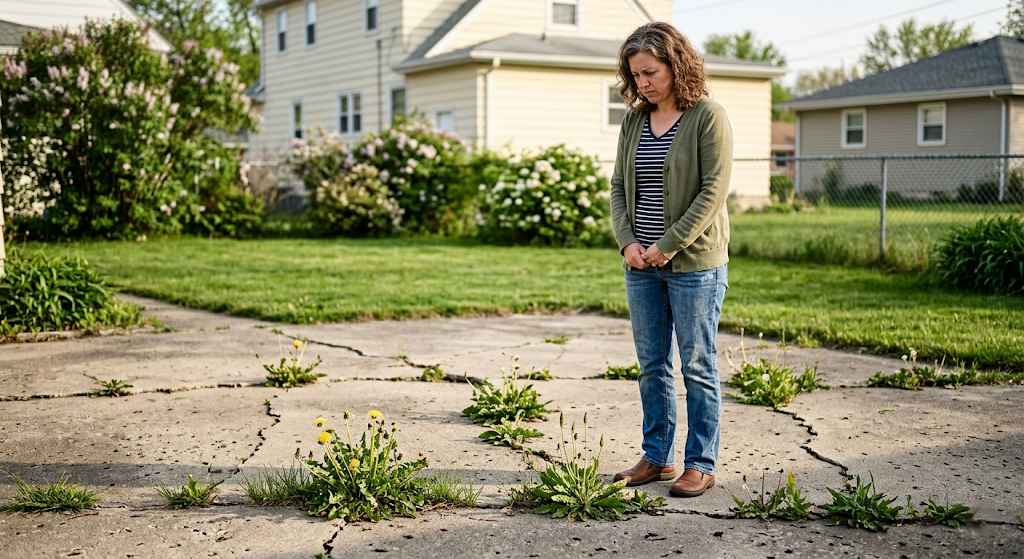
Three years ago, a woman named Renata in Fishers, Indiana got three quotes for a new paver patio. Same backyard. Same rough dimensions — about 400 square feet. Same basic ask: tear out the old concrete slab, put in a nice brick-pattern paver patio with some low edging.
The quotes came back at $4,200, $9,800, and $18,500.
Renata did what most people do when they see those numbers side by side: she assumed the cheapest guy knew what he was doing and she was just avoiding a rip-off. The $4,200 bid was more than she'd hoped to spend anyway. She signed on the dotted line.
By the second winter, the edges were pulling away. By the third, she had pavers sinking in two spots where water was pooling after every rain. Last spring, she called a new contractor. The verdict: the original crew had laid the pavers over a two-inch sand base. No compacted gravel. No proper slope. Just pavers sitting on top of the native soil with a little sand thrown in between.
She paid to have it redone. The second job cost her $11,400.
So her total patio investment? $15,600 — for a job a good contractor would have done right the first time for under $12,000.
This is the story of paver patios: the real costs, why quotes vary so wildly, what separates a job that lasts 40 years from one that falls apart in two winters, and why if you're thinking about doing this in Indianapolis or Chicago, the time to act is right now.
What Actually Drives the Cost of a Paver Patio
Let's start with the number everyone wants: what does a paver patio cost?
The honest answer is: it depends. Nationally, installed paver patios run anywhere from $8 to $25 per square foot. In the Midwest — Indianapolis, Chicago, the suburbs in between — expect $15 to $25 per square foot for a quality concrete paver installation, and $25 to $50 per square foot if you're going with premium natural stone.
For a typical 400-square-foot patio, you're looking at $8,000 to $16,000 fully installed. A smaller 200-square-foot patio might run $4,000 to $8,000. Step up to 600 square feet with curves and a fire pit pad, and you're looking at $15,000 to $25,000 or more.
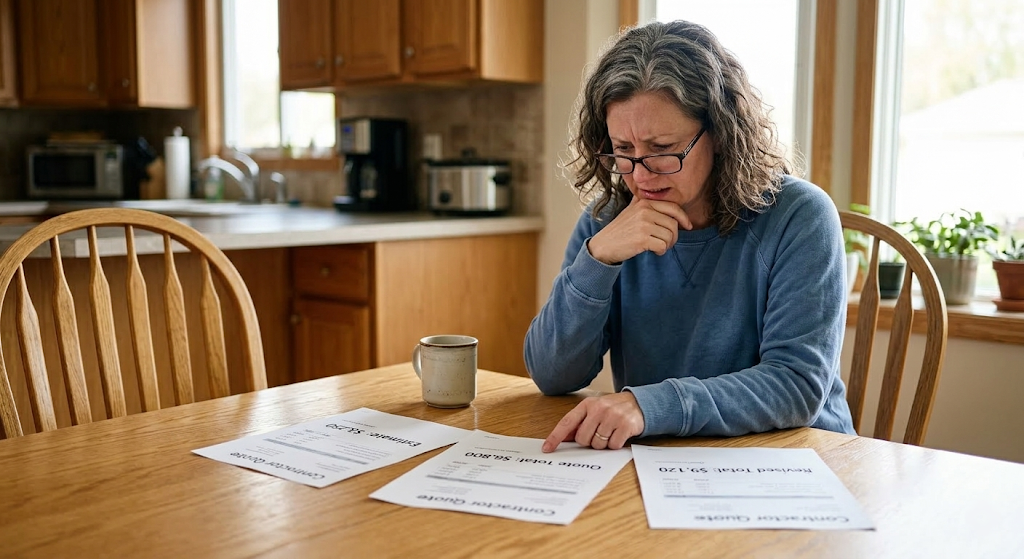
So why do quotes vary by $14,000 for the same job? Here's what's actually driving the price:
The base preparation. This is the single biggest variable between a cheap quote and a real one, and we'll dig into it more in a minute because it's the whole ballgame in a Midwest climate.
Paver material. Concrete pavers run $4 to $8 per square foot for materials alone. Natural stone runs $8 to $20. Premium porcelain runs $10 to $20. The material choice swings the total cost significantly.
Size and shape complexity. A simple rectangle is the cheapest to install. Start adding curves, diagonal patterns, or intricate designs and you're adding cut time. Every custom cut costs labor.
Demo of what's already there. Ripping out an old concrete slab adds $1,000 to $3,000+ depending on how thick it is and how accessible the yard is.
Edging and drainage work. Proper edge restraints, grading, and sometimes French drains or channel drains add cost — but they're what make the patio last.
Sealing. Some contractors include the initial seal coat. Others quote it separately at $1 to $3 per square foot.
When you see a $4,200 quote for a job everyone else is pricing at $10,000 to $14,000, the question to ask is not "how do I get this deal?" The question is: what is this person leaving out?
Material Matters: Why Concrete Pavers Are the Midwest Smart Choice

Walk into any landscape supply yard in Indianapolis or Chicago and you'll see everything from classic concrete pavers to natural bluestone, imported travertine, reclaimed brick, and sleek porcelain tiles. They all look great in the showroom. They don't all perform the same when January hits.
Here's the quick breakdown:
Concrete pavers are the workhorse of the Midwest hardscape world. Manufactured to tight tolerances, they absorb less than 5% of their weight in water — which matters enormously when that water freezes. They come in dozens of colors, shapes, and patterns. They're easy to replace if one cracks or a utility crew digs through your yard. And they're built for the freeze-thaw cycle in a way that most natural materials simply aren't. For most Indianapolis and Chicago homeowners, concrete pavers are the sweet spot: great performance, solid aesthetics, reasonable price.
Brick pavers are the classic choice and they hold up reasonably well. Older reclaimed brick can be more porous and prone to chipping, but modern manufactured brick pavers perform similarly to concrete. They tend to cost a bit more than standard concrete pavers and offer a warmer, more traditional look.
Natural stone — bluestone, flagstone, granite — is beautiful and can last a hundred years. But porous natural stone absorbs water. In a climate that cycles above and below freezing dozens of times each winter, that absorbed water expands and contracts, and over time it cracks the stone. Proper sealing helps, but it's an ongoing commitment.
Travertine is a popular choice in warmer climates, and you'll see it on plenty of Instagram mood boards. In Indianapolis and Chicago, it's a gamble. Travertine is a porous limestone. It performs well in hot, dry climates. In a Midwest winter, it needs to be sealed diligently and installed perfectly or it will deteriorate. Most experienced local contractors will steer you toward concrete pavers or sealed porcelain over travertine for an Indiana or Illinois yard.
Porcelain pavers are the premium freeze-thaw performer — near-zero porosity, virtually no water absorption. They look stunning and they're extremely durable. The downside is cost ($10–$20 per square foot for materials alone) and brittleness; they're harder to cut and a cracked paver is harder to match down the road.
For most Midwest homeowners, the calculus is straightforward: concrete pavers give you 90% of the look at a fraction of the premium material cost, and they're the most resilient choice for a climate that swings from 90°F summers to single-digit winters.
The Base Is Everything — Here's Why Cheap Installs Fail
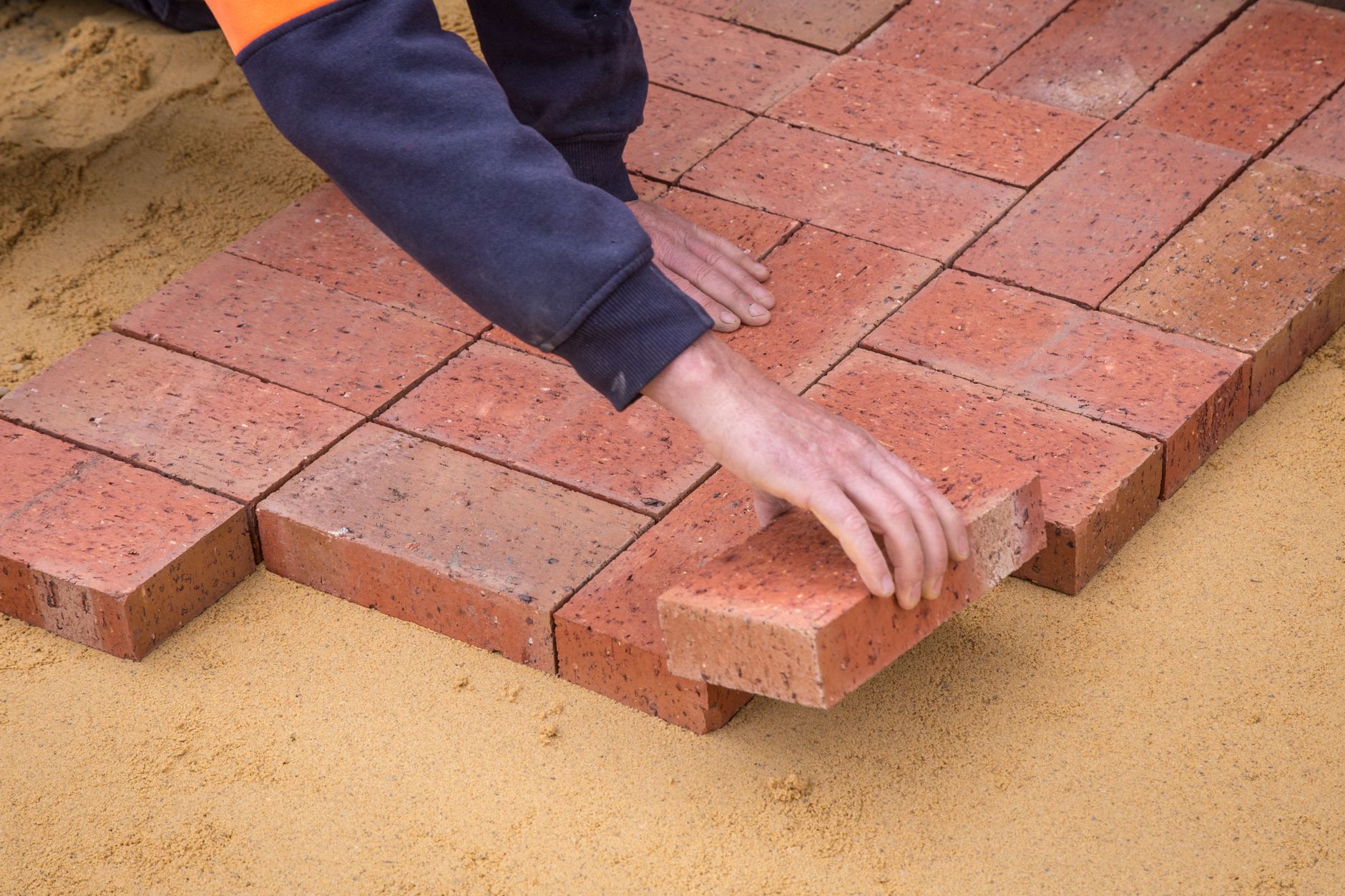
You could have the most beautiful pavers money can buy. If the base is wrong, your patio will fail. Guaranteed. And in Indianapolis and Chicago — cities that both experience significant freeze-thaw cycling every winter — a bad base doesn't just mean ugly; it means a complete tear-out and redo.
Here's how a proper paver patio base is built:
First, you excavate. The total depth needs to be 7 to 8 inches minimum to accommodate everything that follows. For Midwest conditions with clay-heavy soil (extremely common in both cities), experienced contractors often go 8 to 10 inches.
Second, you lay and compact the gravel base. This is the critical layer — a minimum of 4 to 6 inches of compacted crushed gravel (angular, not rounded). This layer is what handles water drainage and what prevents frost heave. Compact it in 2-inch lifts with a mechanical plate compactor — not a hand tamper. A hand tamper will not achieve the compaction density needed. This is exactly where Renata's original $4,200 contractor cut corners.
Third, a 1-inch layer of bedding sand goes down over the gravel. This is where the pavers sit. This layer is NOT compacted before the pavers go down — a common DIY mistake that creates an unstable surface.
Fourth, pavers are laid and the whole surface is compacted together and swept with polymeric joint sand.
Fifth, proper slope. The patio needs to pitch away from your house at 1/8 to 1/4 inch per foot minimum to move water away. Get this wrong and you're pooling water against your foundation.
This is why base preparation represents 60 to 70% of the real cost and effort of a paver project. When you see a suspiciously cheap quote, the contractor is almost always cutting here. They skip the gravel, go shallow, or use a hand tamper. It works fine in June. By February it's shifting.
When you're getting quotes, ask every single contractor: "How deep are you excavating? What's your base material? How are you compacting it?" A quality contractor will answer without hesitation. One cutting corners will be vague.
Do You Need a Permit?

Good news: in most cases, a standard ground-level paver patio doesn't require a building permit.
In Indianapolis (Marion County), a ground-level patio sitting flush with the yard typically falls outside the permit requirement. Marion County has historically treated ground-level flatwork as outside the permit requirement. However, if any part of the structure is over 18 inches in height — think a raised patio or retaining wall sections — you're in permit territory. Bottom line: check with the Indianapolis Department of Code Enforcement before you start, especially if your project has any elevation change or is near a property line.
In the City of Chicago, the city explicitly states that a building permit is not required for installing a non-combustible (concrete or brick) patio that's not in the public way. This is in the official city FAQ on building permits.
In unincorporated Cook County, the rules are different — flatwork including patios does require a permit through the Cook County ePermit system.
And everywhere: check your HOA rules. Even if the county doesn't require a permit, your homeowners association might have its own approval process for hardscaping projects.
The takeaway: most standard paver patio jobs won't need a permit, but confirm with your local authority before breaking ground. A good contractor will know the requirements for your specific area and will pull any required permits — if they're telling you permits "aren't necessary" without checking, that's a flag.
The DIY Reality Check
Let's be honest about the DIY question. Can you install a paver patio yourself? Yes. Will it turn out right? Depends on two things: how serious you are about the base prep, and whether you're in a freeze-thaw climate.
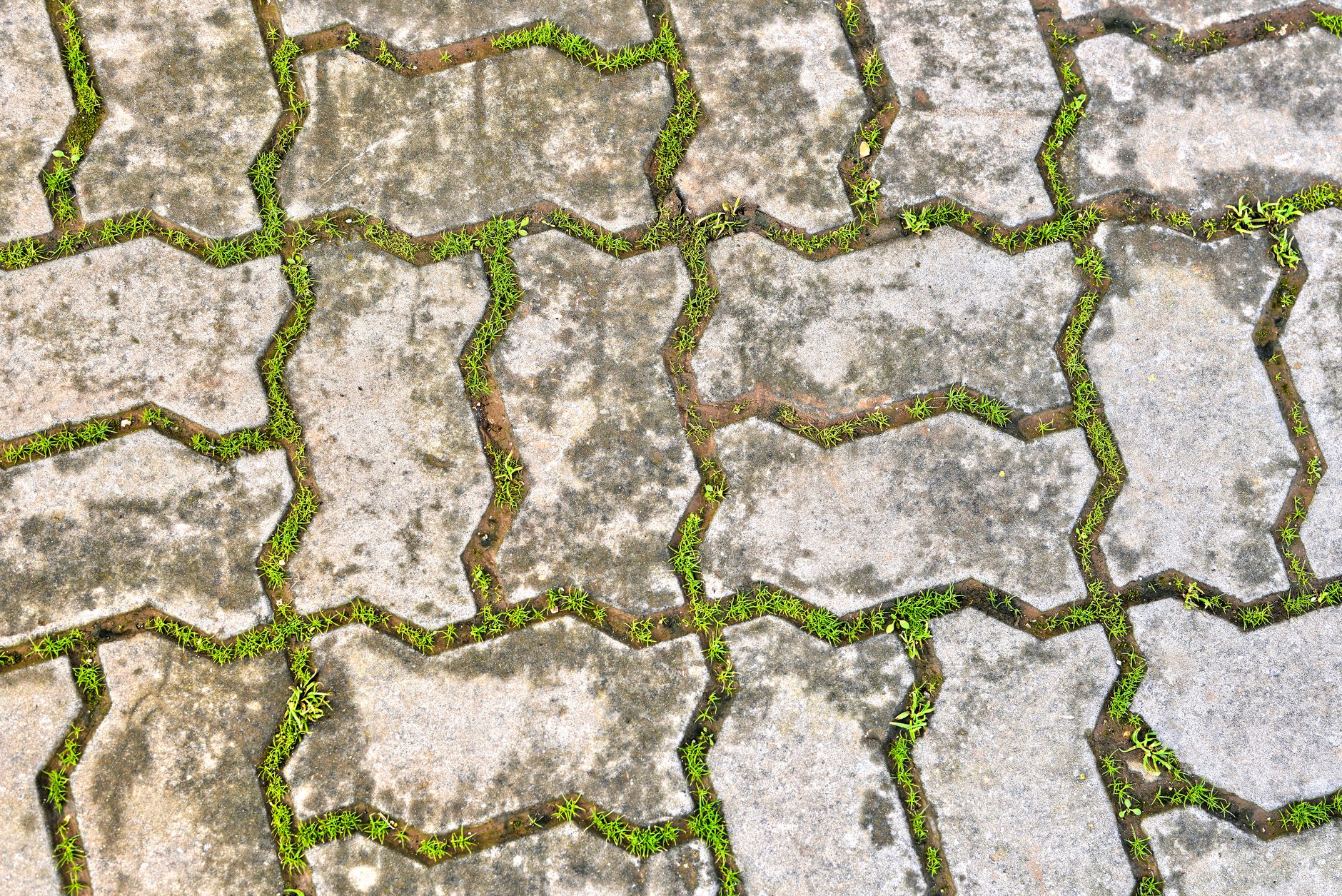
Here in Indianapolis and Chicago, DIY paver patios have one enemy above all: the freeze-thaw cycle. Any shortcut in your base — not deep enough, not properly compacted, wrong drainage slope — and your first winter will expose it. Water gets into micro-gaps, freezes, expands, shifts pavers. Repeat 50 or more times over the course of a year and your patio looks like a bad quilt.
If you're set on DIYing, here's what separates a patio that holds from one that fails:
Rent a plate compactor — don't buy a hand tamper. This single tool makes more difference than anything else. Excavate to at least 7 to 8 inches. Use crushed angular gravel (not rounded pea gravel) for your base and compact it in layers. Get your drainage slope right — use a level and a tape measure, not your eyeball. Use polymeric jointing sand, not regular sand.
Where DIY makes sense: flat yard, simple rectangle, under 200 square feet, good natural drainage, and you have a full weekend to do it right.
Where DIY gets expensive: any yard with drainage issues, slopes, clay soil, or a complex design. The cost of redoing it two years later dwarfs the cost of hiring it out in the first place. Ask Renata.
How to Vet a Paving Contractor

Getting three quotes is the minimum. Getting three good quotes is the goal.
Here's what to ask every contractor who comes through your gate:
Are you licensed and insured? Get proof — general liability and workers' compensation. If a worker gets hurt on your property and there's no comp coverage, that's your problem. No exceptions here.
How many years have you been installing pavers in this climate? This isn't about flattering their ego. Midwest hardscaping is different from Florida hardscaping. You want someone who's seen what happens to a bad base after three Indianapolis winters.
Walk me through your base preparation. Listen carefully. You want to hear: excavation depth, crushed gravel base, plate compactor, proper slope for drainage. If they say "we put down a few inches of sand and compact it," walk away.
Do you handle permits? They should know what's required in your municipality without you having to tell them.
What's your labor warranty? A quality contractor stands behind their work. One to two years on labor is standard; some offer more.
Can you give me three local references from the past two years? Call them. Ask specifically: how does the patio look after its first winter? Any shifting, any pooling water?
Red flags to watch: Cash-only payment (no paper trail, no protection). A bid that's 40–50% lower than everyone else. Vague or defensive answers about base preparation. High-pressure closes ("I can only hold this price until Friday"). No written contract. No local references.
The lowest quote almost never reflects the best value. Ask yourself: if this contractor is charging $4,200 for a job everyone else is doing at $10,000+, what exactly are they leaving out?
Why You Need to Book Right Now

Here's the part most homeowners don't think about until it's too late.
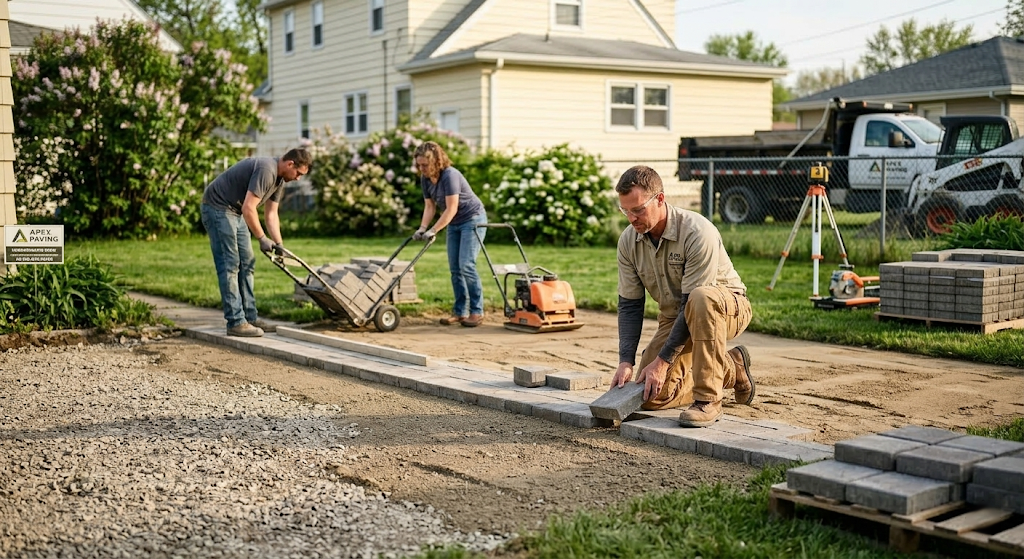
Quality hardscape contractors in Indianapolis and Chicago don't have unlimited capacity. They have a crew, a limited number of project slots, and a season that runs from roughly April through October. That's about 26–28 working weeks — and a significant chunk of April and May often gets pushed by spring rain and still-soft soil.
When does everyone decide they want a patio? May. When they're at the first cookout of the year, looking at their sad concrete slab, wishing they had something nicer. The problem is, by May, the best contractors in both cities are already booked through June or July. If you call in May expecting a June start, a lot of good contractors will tell you August at the earliest.
If you call in February or March, you get April or May. If you wait until May, you get August — or you take whoever still has open slots, which is often a contractor who isn't booked out for a reason.
This is why the time to make your decision is now, not in three months when spring fever hits. Planning season is winter and early spring. Install season is April through September. Those two seasons overlap for exactly one brief window, and the window is closing.
Get your quotes now. Get your materials picked now. Get on a contractor's calendar now. Your neighbor who books in February will be hosting backyard parties in May. The neighbor who waits until June will be looking at a project start date in August, if they're lucky.
Your Patio, Done Right
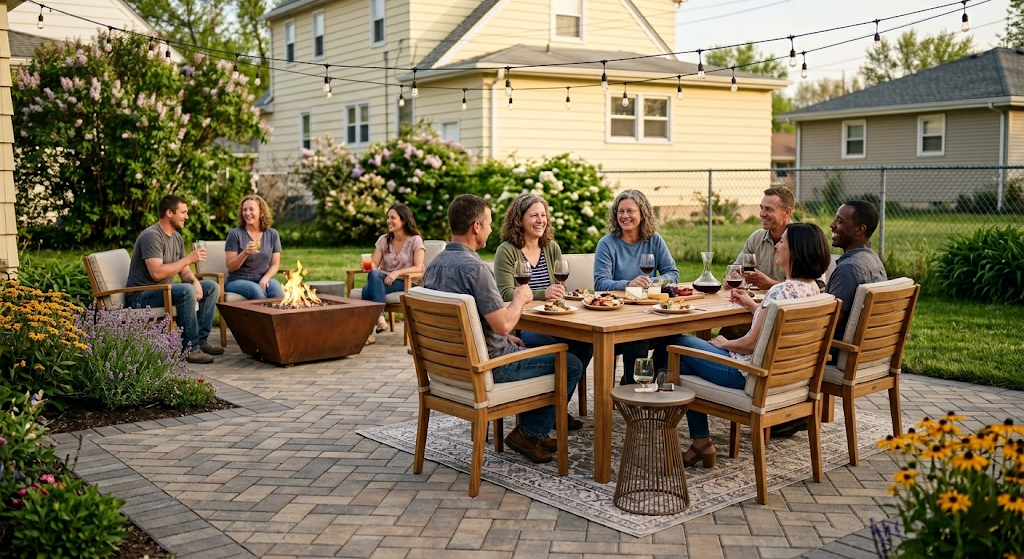
A paver patio done properly — good materials, proper base, quality installation — lasts 40 to 50 years with routine maintenance. Reseal it every two to three years, top up the joint sand every few years, and it'll outlast multiple reroof jobs and probably the deck you build alongside it.
The difference between a patio that lasts and one that fails isn't the brand of paver or the pattern you chose. It's whether the person who built it understood what's happening six inches below the surface on a February night when the temperature drops to 12 degrees.
Get the right contractor, ask the right questions, and get moving before the spring rush locks you out until fall.
Find a vetted patio contractor on Saorr — Indianapolis and Chicago pros are booking spring and summer slots now. Get started at saorr.com
Find Trusted Pros Near You
Ready to start your project? Connect with vetted, top-rated contractors in your area.
Get Started