Swimming Pool Spring Opening Guide
Swimming Pool Spring Opening: What It Really Costs in 2026
You pull back the corner of the winter cover and the first thing you see is a swamp. Green water, a dead frog on the floor, and a pump that hasn't run in five months. Welcome to pool opening season.
For most homeowners, spring pool opening is one of those tasks that sounds simple until it isn't. Skip a step, rush the chemistry, or ignore a cracked fitting, and you're looking at hundreds of dollars in repairs before you ever swim a lap. Do it right, and you're in the water by Memorial Day weekend.
This guide covers everything: what the process actually involves, what it costs from Boston to Houston to Phoenix, whether DIY makes sense for your situation, and how to find a pool service company that won't leave you with a cloudy green mess. Prices below reflect 2026 national data derived from BLS regional labor rates and national service cost baselines.
What a Pool Opening Actually Includes
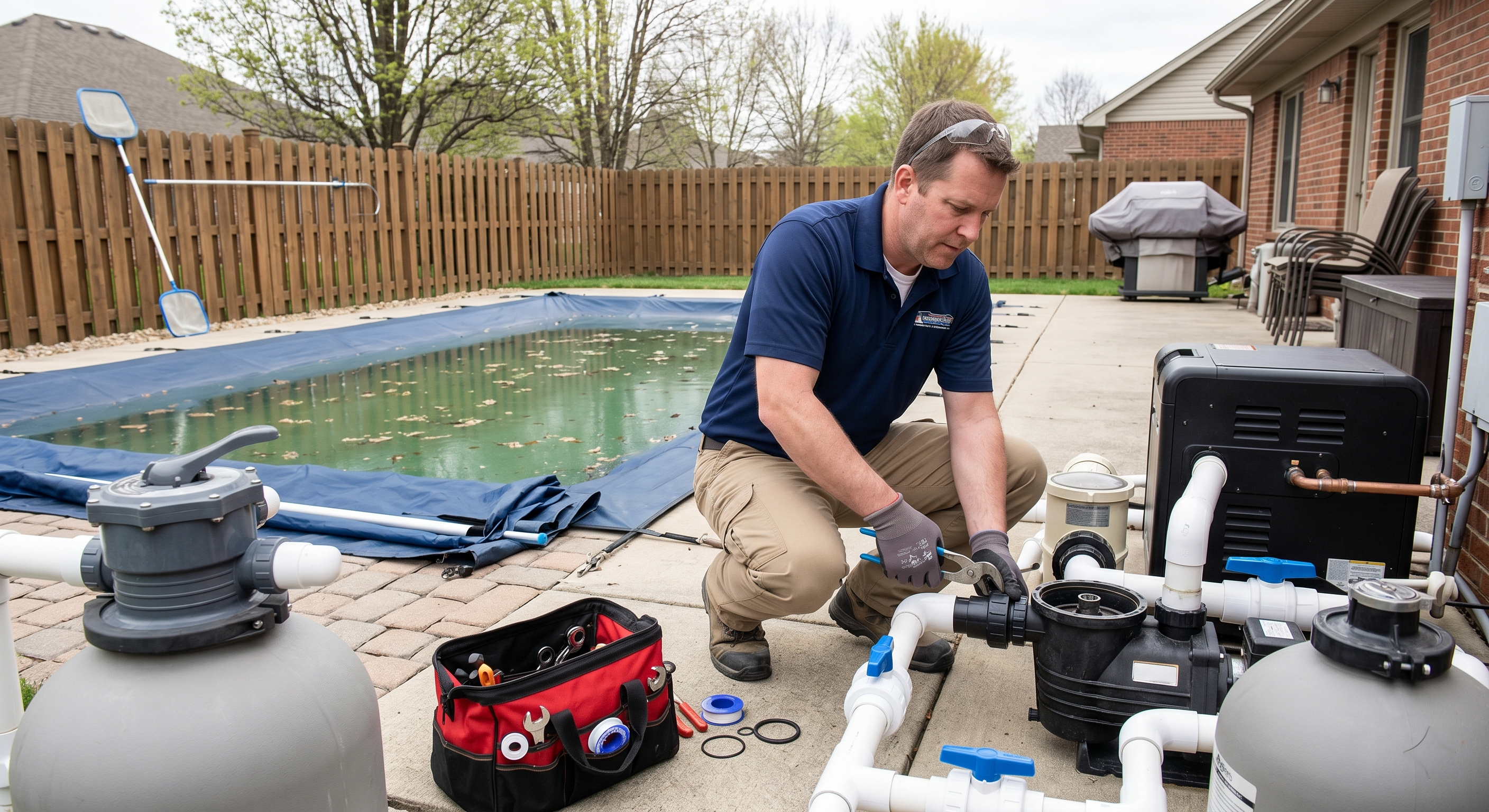
A professional pool opening isn't just yanking off the cover and flipping the pump switch. A legitimate spring startup includes all of the following:
- Cover removal, cleaning, and storage — The cover gets pumped, brushed, dried, and folded before being stored. This alone takes 30–60 minutes for a large mesh or solid cover.
- Winter plug removal / drain plug reinstallation — All the threaded plugs that protected your plumbing from freezing get swapped back out. Miss one and you'll know it fast when you start the pump.
- Reinstall all hardware — Ladders, handrails, diving board, and any equipment that was removed for winter. Bolts strip, hardware corrodes — it takes time to do it right.
- Reconnect pump, filter, heater, and automation — Equipment gets remounted, plumbing lines are reconnected, and the system gets primed to remove air locks before startup.
- Equipment inspection — Any decent pool tech will check pump seals, filter media, heater connections, and look for cracked unions or fittings from freeze-thaw cycles. In cold-weather markets, this step often catches expensive problems before they get worse.
- Water fill to operating level — If the pool dropped below skimmer level over winter, it gets topped off before testing.
- Full water chemistry test and balance — pH, total alkalinity, calcium hardness, cyanuric acid, and chlorine levels all get tested and adjusted. This typically means adding 2–4 chemicals in the correct sequence.
- Shock treatment — A heavy initial chlorine dose to knock out any bacteria, algae spores, and organic waste that built up over winter.
- Equipment run and verification — System runs for 24–48 hours before the job is considered complete. The pro verifies flow rate, checks for leaks, and confirms the heater fires.
Add-ons that increase cost: If your pool has a spa, expect to add $50–$150 for spa equipment reconnection. Automated control systems (Hayward OmniLogic, Pentair IntelliConnect) require reprogramming at startup — add $75–$150. And if you pull back that cover to find a full algae bloom? A green pool cleanup adds $150–$400 on top of standard opening cost, and in severe cases, a full drain-and-clean runs $500–$700.
Above-ground pool openings follow the same general sequence but are simpler — no drain plugs to swap, lighter cover handling, and less complex plumbing. Expect to pay 25–40% less than in-ground pricing across all markets.
What Pool Opening Costs Across the US
The national average for a professional pool opening runs $250–$400 for a standard in-ground pool, with costs climbing significantly in high-labor markets. That national number hides a wide spread — what you'll actually pay depends heavily on where you live. Labor markets, seasonal demand windows, local licensing requirements, and how hard your winters are all factor into the final bill.
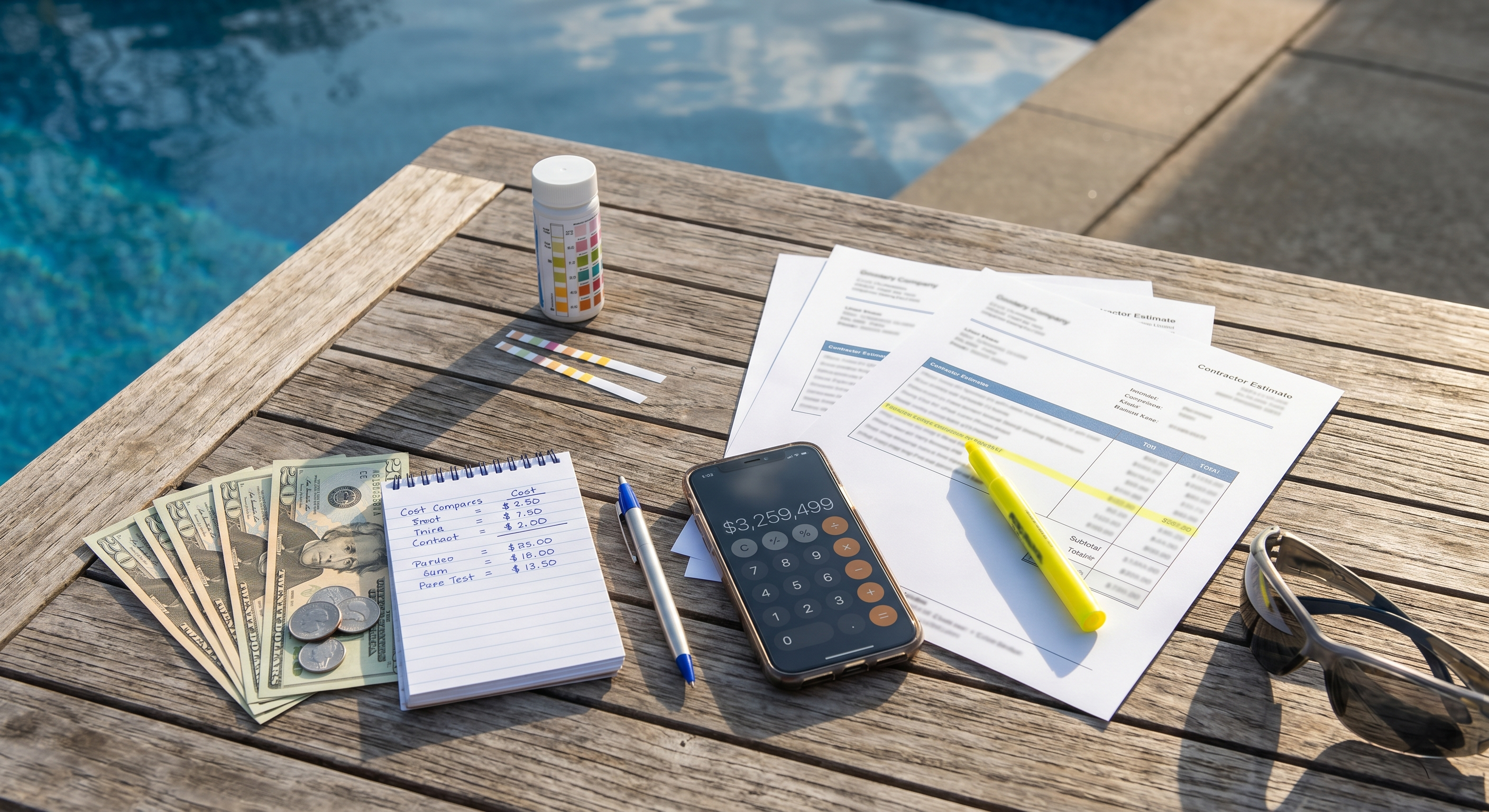
Here's what pool opening actually costs in every region of the US, based on BLS 2024 regional labor data applied to the national baseline.
Northeast — Maine, New Hampshire, Vermont, Massachusetts, Rhode Island, Connecticut, New York, New Jersey
Boston, New York City: $500–$750
Hartford, Providence, Albany: $400–$600
The Northeast carries the highest pool opening costs in the country. BLS 2024 labor rates hit $30.69–$33.26/hour — the top of the national range — and union labor in NYC and Boston markets pushes the floor even higher. Full winterization with serious freeze-thaw exposure means opening scope is comprehensive; cracked unions and blown fittings are common finds. Spring demand is extremely compressed (late April to mid-May), with top contractors filling 4–6 weeks in advance. T2 cities like Hartford, Providence, and Albany typically land 15–25% below T1.
Mid-Atlantic — Pennsylvania, Maryland, Washington DC, Virginia, West Virginia, Delaware
Washington DC / Northern Virginia, Baltimore: $450–$650
Pittsburgh, Richmond: $350–$525
DC and Baltimore run 15–25% above the national average — driven by high cost of living and dense pool ownership in suburban counties. Maryland requires pool service contractors to hold state registration, a compliance cost built into pricing. Winters are milder than New England, so freeze damage is less of a wildcard. Pittsburgh tracks closer to Midwest T2 pricing; Richmond benefits from competition with Southeast contractors further south.
Southeast — North Carolina, South Carolina, Georgia, Florida, Alabama, Mississippi, Tennessee, Arkansas, Kentucky
Atlanta, Miami, Charlotte: $275–$425
Raleigh, Tampa, Nashville: $225–$375
BLS 2024 labor rates of $18.00–$19.56/hour are the lowest of any US region, and Florida and Georgia rank top-five nationally by pool count — meaning genuine price competition. Miami pools often run year-round, so "spring opening" is mostly a chemistry refresh at the low end of the T1 range. Hot, humid conditions mean algae blooms during opening week are common; budget an extra $50–$150 if the cover looked questionable going in.
Midwest — Ohio, Indiana, Illinois, Michigan, Wisconsin, Minnesota, Iowa, Missouri
Chicago, Detroit, Minneapolis: $450–$650
Indianapolis, Columbus, Milwaukee: $350–$525
The shortest pool season in the contiguous US — roughly Memorial Day to Labor Day — creates serious spring demand compression. Chicago labor rates approach Northeast levels ($28–$32/hour), and Illinois requires a licensed plumber for any plumbing modifications to pool systems. Freeze damage is a routine find at opening across the entire region. Top Midwest contractors in Chicago and Minneapolis fill 6–8 weeks out; book by mid-March if you can.
South & Gulf Coast — Texas, Oklahoma, Louisiana, Arkansas, Mississippi
Houston, Dallas: $250–$400
San Antonio, Austin, Oklahoma City: $200–$350
Texas is one of the three largest pool markets in the country (behind Florida and California) — no state licensing requirement for pool service techs, BLS 2024 labor at $19.00–$22.65/hour, and fierce contractor competition in DFW and Houston. Many pools barely close, so "opening" scope is minimal: restart the pump, rebalance chemistry, done. Austin is trending slightly up as population growth outpaces the contractor base. OKC has a more complete seasonal closure, so scope and pricing there are closer to a full Midwest-style startup.
Mountain West — Colorado, Utah, Arizona, New Mexico, Idaho, Nevada, Wyoming, Montana
Denver, Phoenix: $300–$500
Salt Lake City, Boise, Albuquerque: $250–$425
The most internally split region in the country. Denver follows full Midwest-style winterization — altitude creates sharp freeze-thaw cycles that add opening-day diagnostic scope, trending toward the high end of T1. Phoenix is near-year-round with abundant contractors; opening is often a spring chemistry reset at the low end. Arizona requires a Registrar of Contractors (ROC) license, adding compliance overhead. Boise has cold winters and a limited contractor market — one of the more DIY-by-necessity markets in the West.
Pacific Coast — California, Oregon, Washington, Alaska, Hawaii
Seattle, Los Angeles, San Francisco Bay Area: $475–$700
Portland, San Diego, Sacramento: $375–$575
Pacific Coast labor tops the national range at $29.14–$34.19/hour (BLS 2024). California's CSLB C-53 Pool and Spa Contractor license requirement is built into every legitimate pro quote in the state. Seattle has a genuine seasonal closure and a compressed May demand window with fewer pool service contractors per capita than California. San Diego runs near-year-round with competitive pricing at the low T2 end. California's Title 20 efficiency regulations (CEC) mandating variable-speed pumps and drought restrictions in LA and the Bay Area add startup complexity.
Quick Reference: Cost by Market
| Markets | Pro Opening Cost | Key Driver |
|---|---|---|
| NYC, Boston, Seattle, SF Bay Area | $475–$750 | Highest labor rates, union markets, freeze damage scope, licensing |
| DC/Baltimore, Chicago, Denver, Los Angeles | $400–$650 | Above-average labor, seasonal compression, licensing requirements |
| Pittsburgh, Minneapolis, Indianapolis, Columbus, Portland | $325–$525 | Mid-range labor, full seasonal scope |
| Atlanta, Charlotte, Nashville, San Diego, Sacramento | $250–$425 | Competitive markets, moderate labor, partial-year pools |
| Houston, Dallas, Phoenix, Miami, Tampa | $225–$400 | Low labor rates, large contractor base, minimal winter closure scope |
| San Antonio, Austin, OKC, Salt Lake City, Boise | $200–$375 | Below-average labor, competitive or moderate markets |
Above-Ground vs. In-Ground: Does Pool Type Change the Price?
Yes — significantly. In-ground pools involve more complex plumbing, heavier covers, full equipment pads, and more hardware to reinstall. Above-ground pools are simpler in almost every dimension.
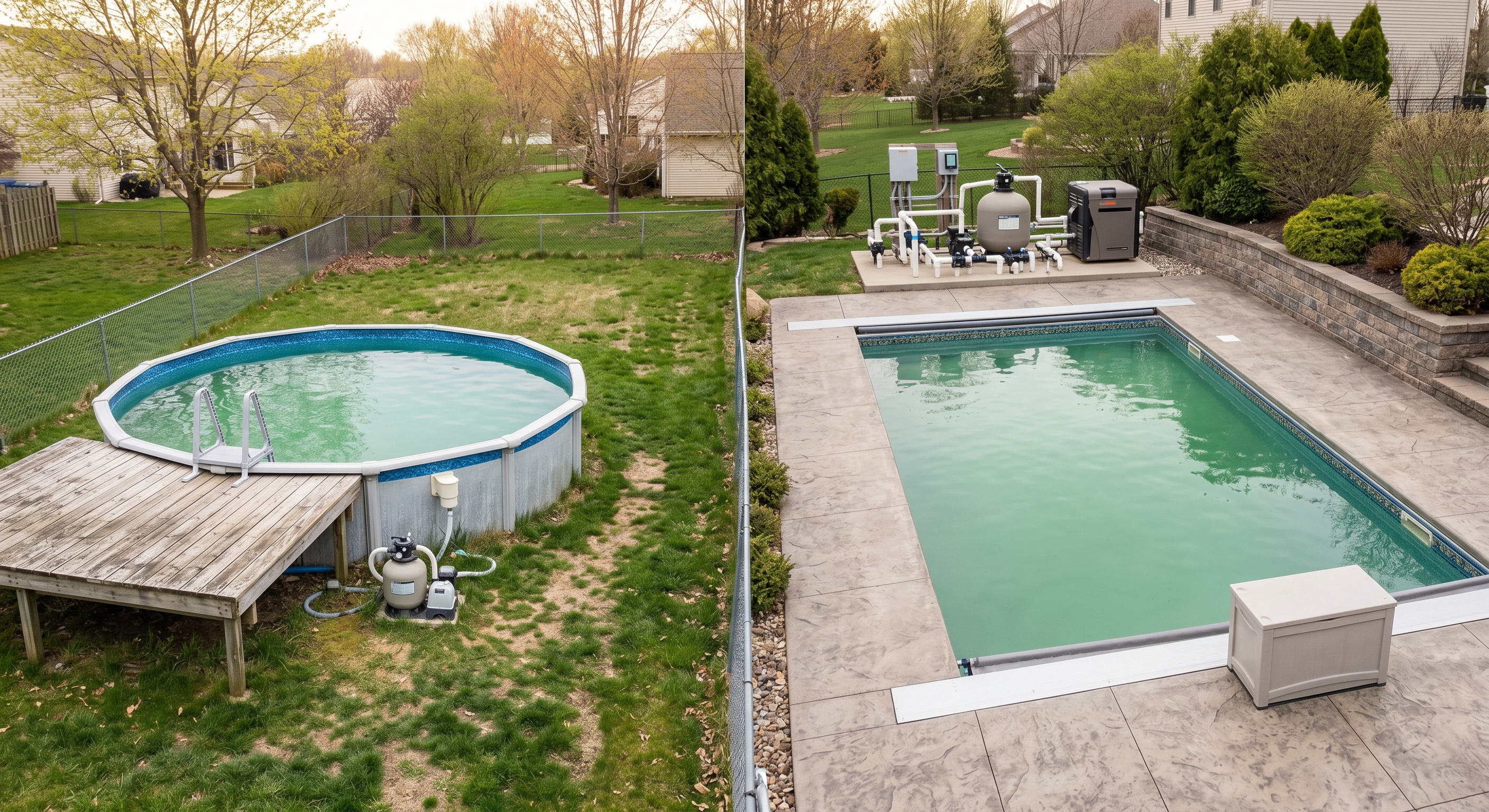
- Above-ground pool opening (professional): $150–$300 nationally
- In-ground pool opening (professional): $375–$500+ nationally
The 25–40% price difference holds roughly across all regions — the same labor rate premiums and seasonal factors apply, just at a lower baseline. If you have an above-ground pool in a Southeast or South/Gulf Coast market, a professional opening can drop as low as $125–$175. In a Northeast or Pacific Coast market with an in-ground pool and a spa, you could easily hit $750–$900 once add-ons are included.
The pool-with-spa multiplier: If your backyard setup includes a spa or hot tub connected to the pool system, add $50–$150 for the extra equipment reconnection and chemistry work. Automation system reprogramming (Hayward OmniLogic, Pentair IntelliConnect) adds another $75–$150 if those systems were powered down for winter.
The green pool problem: If your winter cover failed or you're opening a pool that sat for more than one season, you're not looking at a standard opening — you're looking at an algae remediation job. Depending on severity: mild green water adds $150–$300 in chemical treatment; a full black algae infestation with a drain-and-clean runs $500–$700 or more. Get this diagnosed before you agree to a flat opening price.
DIY vs. Hiring a Pro: Straight Talk
DIY pool opening is genuinely viable — but only in specific situations. Here's how to think about it honestly.
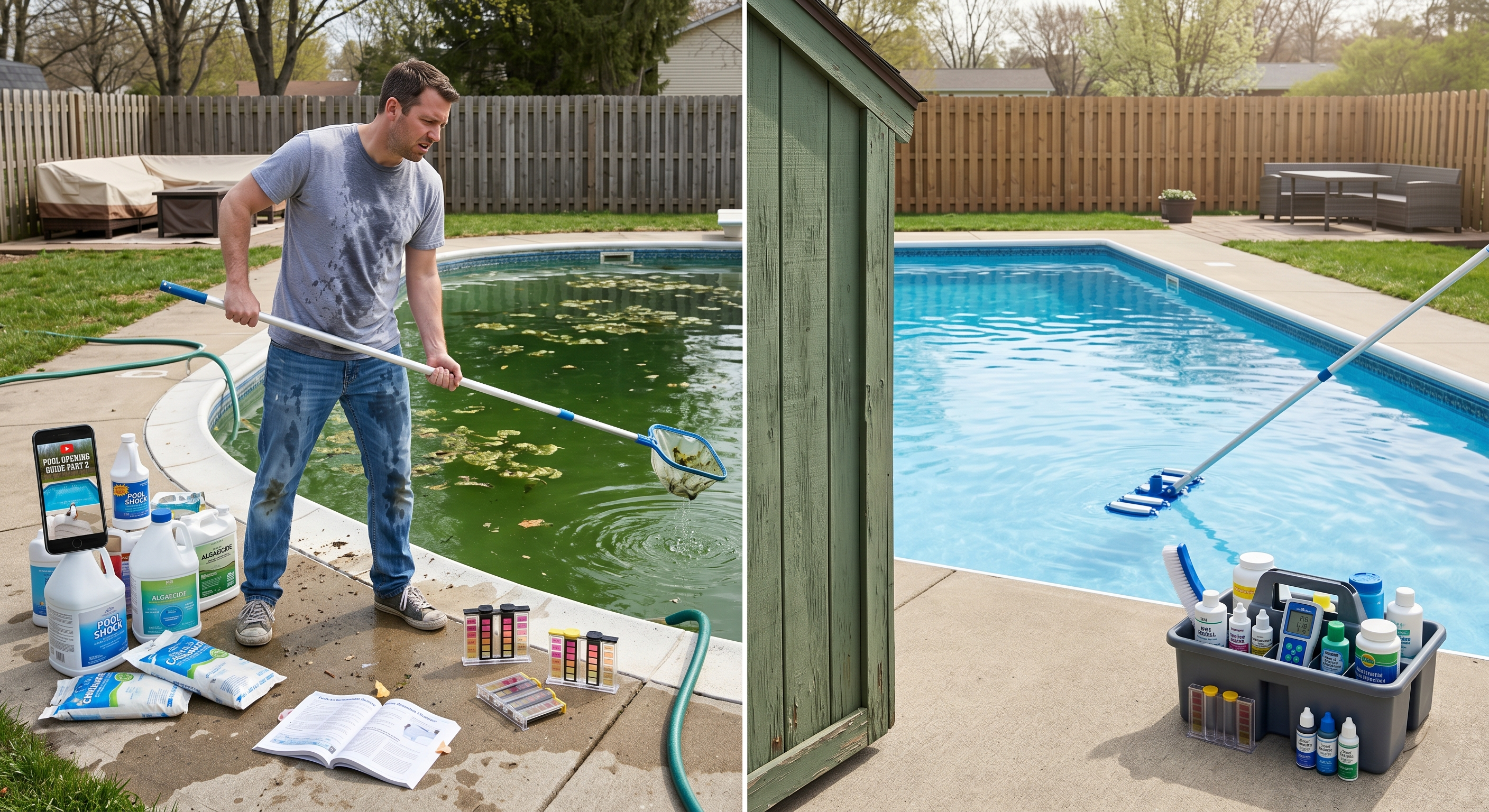
DIY makes sense when:
- You closed the pool yourself and documented what you did
- You have a basic understanding of your equipment and how to prime the pump
- You're in a warm-winter market (Texas, Florida, Arizona, Southeast) where freeze damage risk is low
- The pool water is clear or only slightly cloudy — not green
- Your pool is above-ground with standard equipment
Hire a pro when:
- The pool hasn't been professionally opened in 2+ years
- You're in a freeze-risk market (Northeast, Midwest, Mountain West) and you're not sure the winterization was done correctly
- The water is green — algae treatment requires the right chemical sequence and dosing; guessing wrong wastes money
- You have an automated system, a heater, or equipment you haven't personally reconnected before
- You're in California, Illinois, Massachusetts, or another state where certain pool equipment work requires a licensed contractor
- The cover looks damaged or the pool level dropped significantly over winter
What DIY actually costs
DIY pool opening runs $50–$150 nationally — that's chemicals and supplies only. A basic kit includes pool shock, pH adjuster, alkalinity increaser, clarifier, and possibly algaecide. Your labor savings compared to hiring a pro: $200–$400 depending on your market.
One legitimate cost-saving consideration: variable-speed pool pumps. ENERGY STAR data shows variable-speed pumps save up to $450/year compared to single-speed models. If you're doing DIY maintenance anyway, swapping the pump at opening time is one of the best long-term investments in your pool system.
How to Hire a Pool Service Company
Not all pool companies are equal. Here's how to hire one you won't regret.
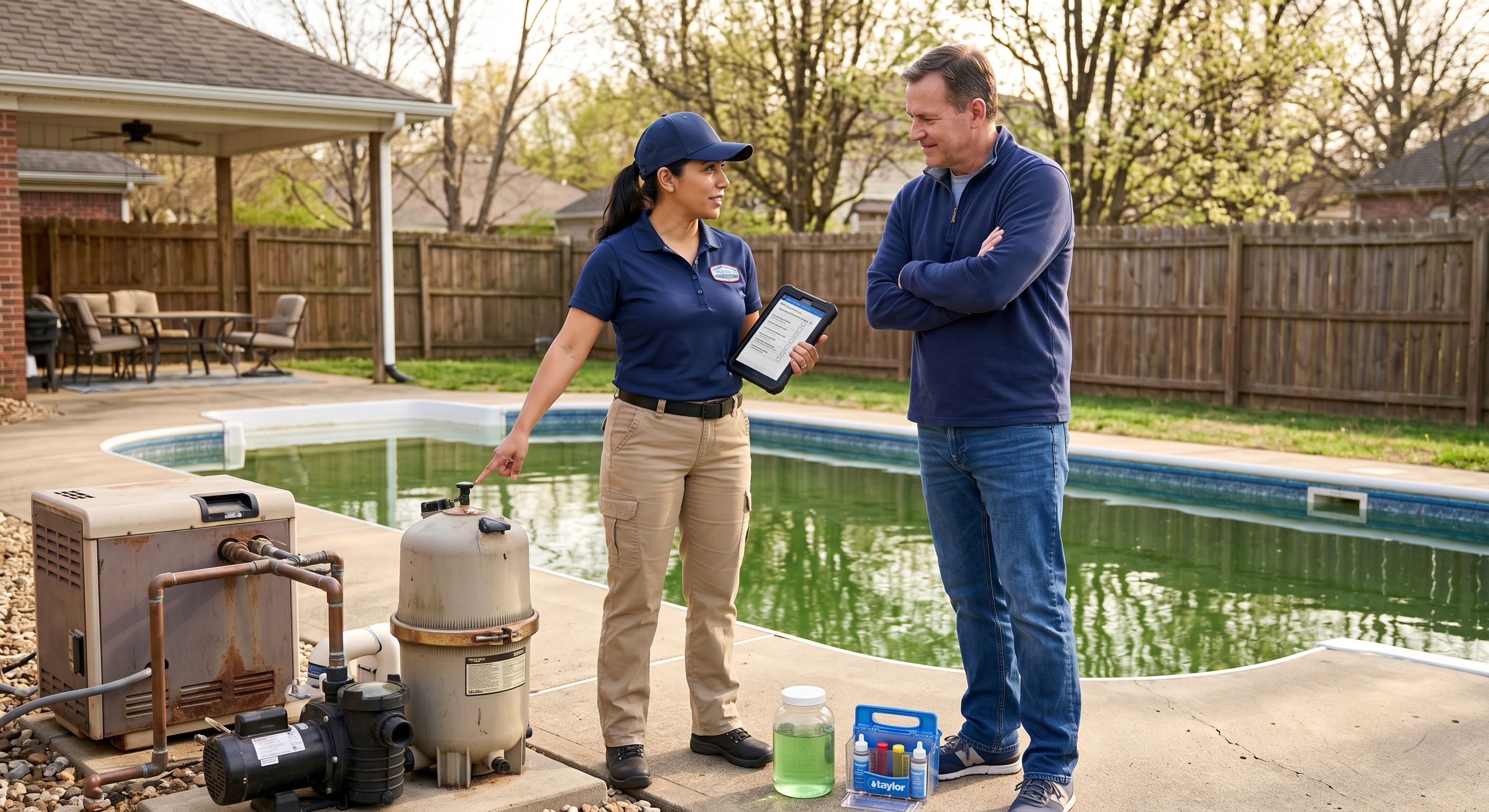
Start early
In cold-weather markets — Chicago, Boston, Minneapolis, Seattle — the best pool service companies fill their spring calendar 4–8 weeks in advance. Book in March if possible. In warm-weather markets (Texas, Florida, Phoenix), the window is more flexible, but the busiest companies still fill up by mid-April.
Check licensing and insurance
Several states require licensed contractors for pool equipment work: California (CSLB C-53 Pool and Spa Contractor), Arizona (ROC B-5/B-6 pool contractor), and Massachusetts (licensed contractor for heater and mechanical work). Illinois requires a licensed plumber for plumbing modifications — not routine service. Ask for proof of license and general liability insurance before signing anything.
Get 3 quotes — and read them carefully
Ask each company to itemize what's included. A $375 opening that includes cover removal, chemical balancing, and equipment reconnection is apples-to-apples with the national average. A $275 quote that skips chemical balancing or equipment inspection is not — the difference shows up in your pool water.
Ask about the green pool clause
Many companies price the opening assuming clean or slightly cloudy water. If they pull back the cover and find an algae bloom, the price changes. Ask upfront: "What's your pricing if the water is green when you arrive?" A reputable company gives you a straight answer.
Look for package deals
Many pool companies — especially in the Midwest — offer spring opening bundles that include the opening plus the first maintenance visit or a full-season service contract at a discount. In markets like suburban Chicago, Indianapolis, and Columbus, these bundles can save 10–20% over booking services individually.
Ways to Cut Your Pool Opening Cost Without Cutting Corners
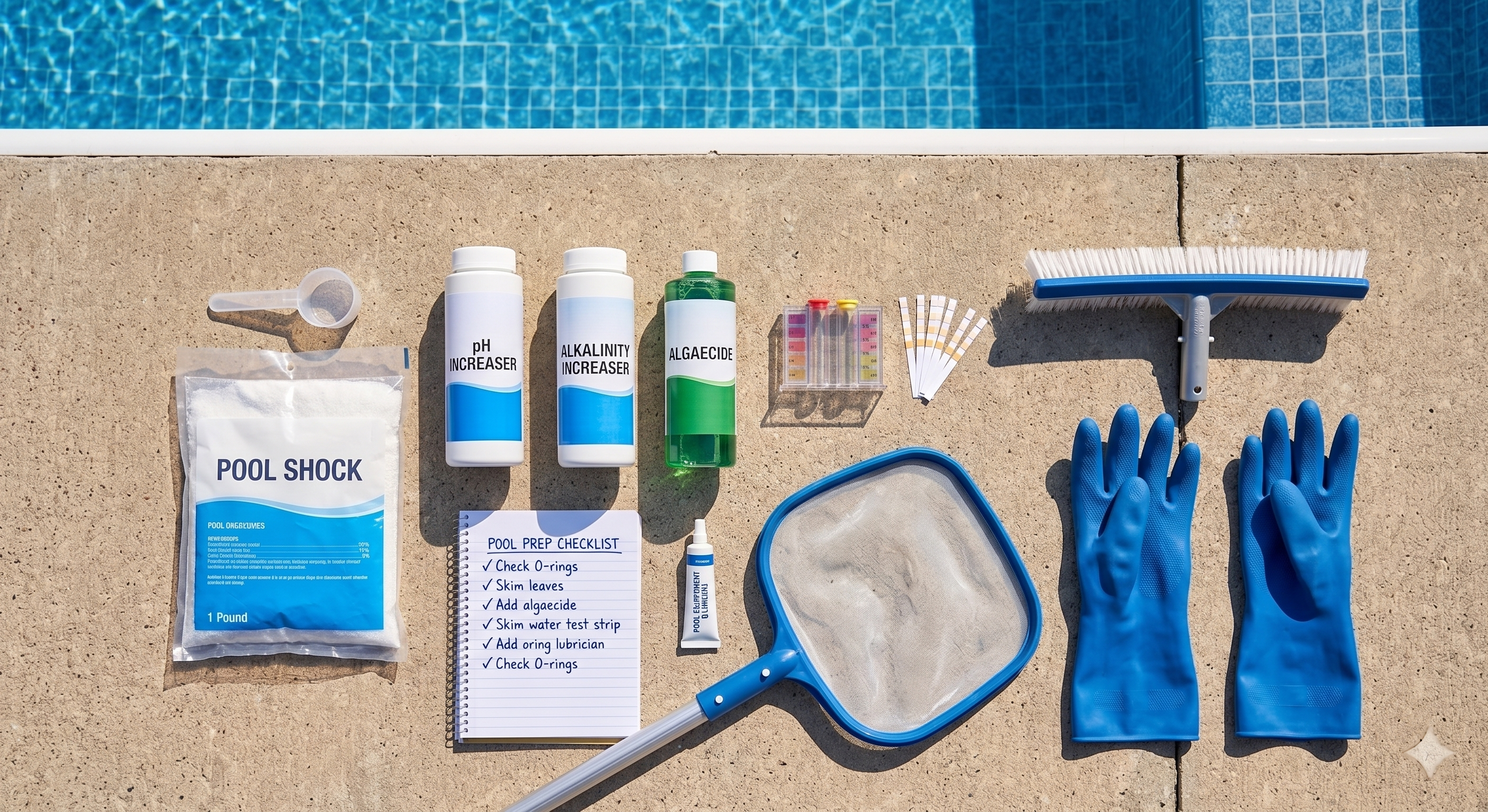
- Handle the cover yourself. Cover removal is often the most time-consuming part of an opening visit. If you remove, clean, and fold the cover before the tech arrives, some companies will knock $50–$75 off the bill.
- Book in the off-peak window. In cold-weather markets, late March and early April bookings are often cheaper than late April/May — demand is lower and companies have more flexibility.
- Buy your own chemicals. Pool shock, pH adjuster, and alkalinity increaser are available at any hardware store for 20–40% less than what a pool service company charges at point-of-service. Ask if the company will apply your chemicals rather than theirs.
- Bundle opening and closing. Companies that do both often discount the pair by 10–15%. Commit to the full season in the spring and ask for the combined rate.
- Do the prep work. A clean pool deck, an accessible equipment area, and a pool level already at operating height all save the tech time — and time is money when add-ons are billed hourly.
Getting Your Pool Open the Right Way
Pool opening isn't the most glamorous home maintenance task, but it's one where doing it right pays dividends for the entire swimming season. A properly opened pool has balanced chemistry from day one, which means less chemical spend all summer, a longer equipment lifespan, and no mid-July algae bloom to ruin a weekend.
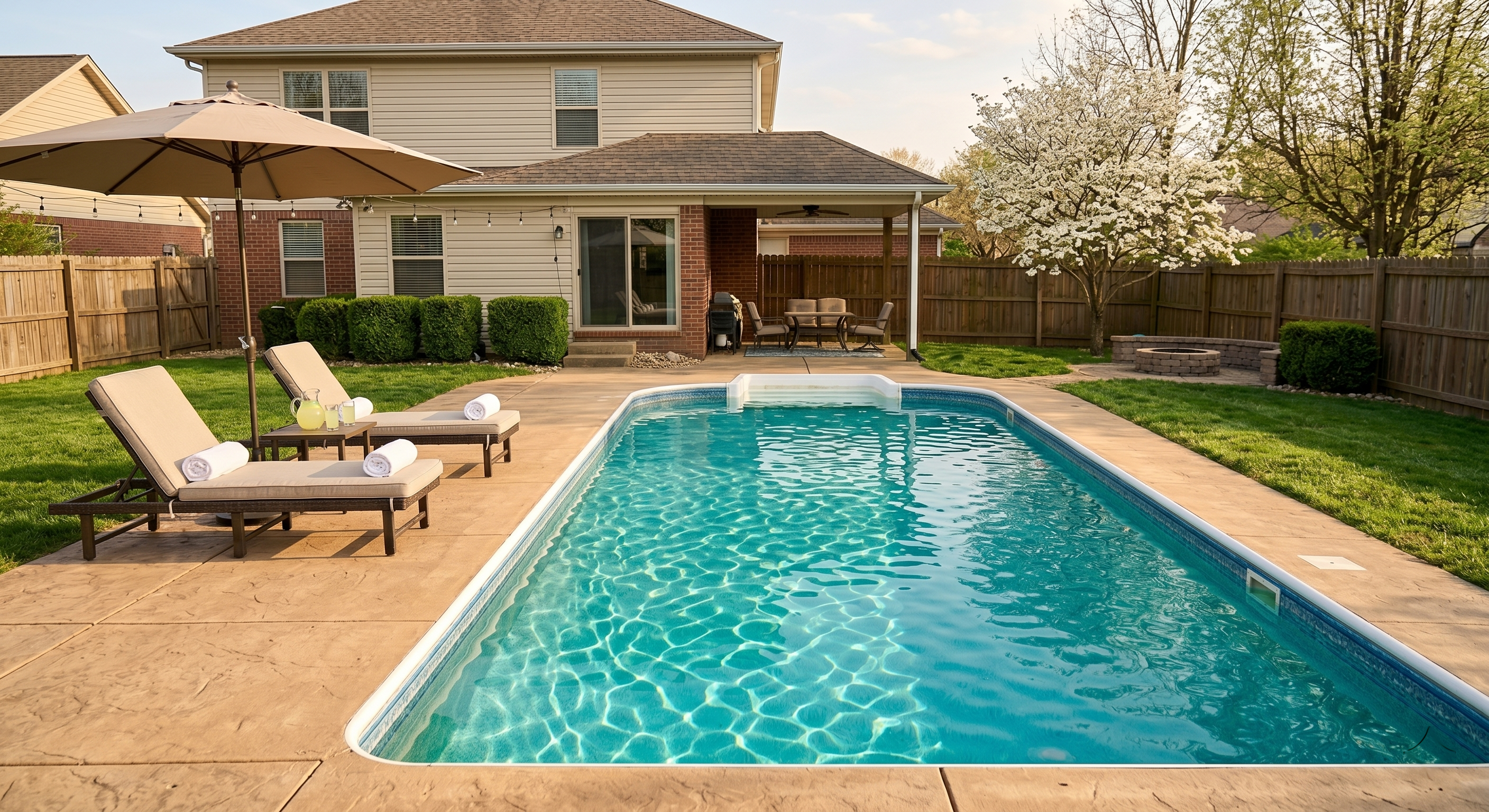
Here's the bottom line by market:
- Northeast and Pacific Coast: Budget $475–$750 for a professional in-ground opening, book early (late March at the latest), and check licensing before hiring.
- Midwest: Plan for $350–$650 depending on your market, assume freeze damage inspection is part of the scope, and don't wait until May to call.
- Mid-Atlantic: $350–$650 covers most markets; DC and Baltimore run toward the top, Pittsburgh and Richmond toward the bottom.
- Southeast: $225–$425 with genuine price competition — get three quotes and don't skip algae pre-treatment if the cover looks questionable.
- South and Gulf Coast: $200–$400 in most Texas markets; if you're in Houston or San Antonio and the pool barely closed, you may need nothing more than a chemistry reset.
- Mountain West: $250–$500 depending on whether you're in Denver (full seasonal scope) or Phoenix (minimal closure, chemistry refresh).
Ready to get your pool open? Use our contractor finder to get quotes from licensed pool service companies in your area — real pricing, real reviews, no middleman markup. Your first swim of the season is closer than you think.
Find Trusted Pros Near You
Ready to start your project? Connect with vetted, top-rated contractors in your area.
Get Started

