Planning a Deck in 2026? Why February Is Your Last Chance to Lock In Spring Pricing
Planning a Deck in 2026? Why February Is Your Last Chance to Lock In Spring Pricing
Here's a number worth sitting with: 16 weeks. That's roughly how long it'll be before Memorial Day weekend — the unofficial opening day of outdoor living season in the Midwest. And right now, in late February, the best deck and patio contractors in Indianapolis and Chicago are already booking their spring calendars.
If you've been saying "we should really get a deck this year," that sentence just got a deadline attached to it.
The good news: you still have a narrow window. Homeowners who plan now, get permits in motion, and lock in a contractor before March 15 will be sitting on their new deck in June. Those who wait until April will be in a queue — paying spring premium prices, competing with every other procrastinator who had the same idea.
This guide covers everything you need to know: costs, materials, timelines, how to spot a great contractor, and why your zip code matters more than you think.
Why Late February Is the Sweet Spot
Deck contractors run on a predictable seasonal rhythm. In the Midwest, the cycle looks like this:
- November–January: Off-season. Contractors have open schedules, materials are sometimes discounted, and you'll get their full attention during planning.
- February–March: The booking window. The best contractors start filling spring slots. This is the last chance to lock in reasonable lead times.
- April–May: Spring rush. Fully booked, prices rise, lead times stretch to 6–10 weeks or more.
- June–August: Peak season. Contractors are juggling multiple projects. Wait times can exceed 3 months for new quotes.
Industry experts are direct about this. According to a 2026 guide from Hard Decks, homeowners who want a spring build should "secure contractor bookings by February" to avoid lengthy wait times during the summer peak. Applying for permits now is equally smart — permit offices also slow down under spring volume.
What Does a Deck Actually Cost in 2026?
Real numbers, because vague ranges aren't useful when you're budgeting:

Pressure-Treated Wood
- Installed cost: $16–$28 per square foot
- A typical 300 sq ft deck: $4,800–$8,400
- Lifespan: 15–25 years with annual maintenance
- Annual upkeep: Cleaning, staining, or sealing every 1–3 years
- Best for: Budget-conscious homeowners, short-to-medium ownership horizon
Composite Decking (Trex, TimberTech, etc.)
- Installed cost: $25–$54 per square foot
- A typical 300 sq ft deck: $7,500–$16,200
- Lifespan: 25–30+ years, often with manufacturer warranty
- Annual upkeep: Soap and water, once or twice a year
- Best for: Long-term owners, high-traffic households, homeowners who hate maintenance
One thing worth knowing: composite decking is made from recycled wood fibers and plastic. It won't splinter, won't rot, and resists the Midwest freeze-thaw cycle far better than natural wood. For families with kids or dogs, or anyone who's ever had to spend a weekend sanding and re-staining, the premium often pays for itself in aggravation avoided.
ROI: Does a Deck Actually Add Value to Your Home?
Short answer: yes — and more reliably than most home improvements. National remodeling data consistently shows homeowners recover 65–85% of their deck investment at resale, with some markets seeing returns as high as 89–95% for well-built projects in desirable neighborhoods (AdvantageLumber, 2026).
That's better ROI than a kitchen remodel (which averages around 60–80% recoup) and far better than a sunroom addition or luxury bathroom upgrade. More importantly: a deck adds usable square footage that buyers can see and feel. It's not a hidden improvement — it's a selling point on day one.
The Project Timeline: What to Actually Expect
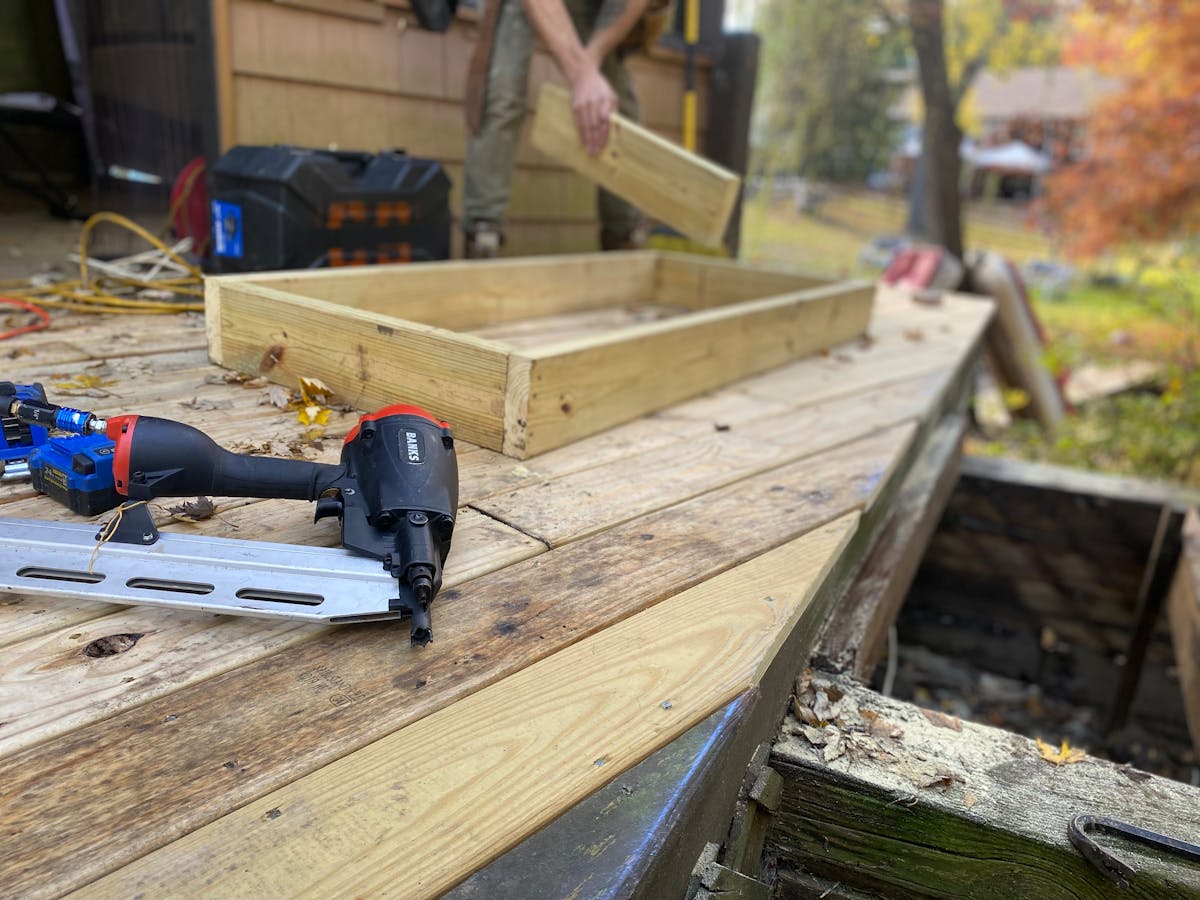
Most homeowners are surprised by how much of deck construction happens before the first board is laid. Here's a realistic timeline for a typical 300 sq ft deck:
- Design + quoting (1–3 weeks): Meeting with contractors, reviewing design options, getting 2–3 bids. Don't skip this step — significant price variation exists between contractors for identical projects.
- Permit application (1–4 weeks): Most Indianapolis and Chicago municipalities require permits for decks over a certain height or size. Permit processing times vary but can run 2–4 weeks in spring. Starting now means your permit is in hand before ground thaw.
- Material ordering (1–2 weeks): Composite decking and specific hardware may need to be ordered. Supply chains have normalized, but specialty colors and profiles can have lead times.
- Construction (3–7 days): Footings, framing, decking, railings, and finishing. A straightforward deck goes up fast — the prep work is what takes time.
- Inspection and punch list (2–5 days): Final inspection required by most municipalities, plus any small finishing items.
Total realistic timeline from "let's do this" to "let's sit on this": 6–10 weeks. Which means starting now = ready by early April. Starting in April = ready by June at best, July if you hit snags.
What to Look for in a Deck Contractor
Deck construction is one of those trades where the gap between great work and shoddy work is enormous — and not always visible until year two. Footings that aren't deep enough fail in freeze-thaw cycles. Ledger boards that aren't properly flashed cause rot behind your house's siding. Railings that look fine today can fail a bounce test.
Green flags when evaluating contractors:
- Provides a written contract with materials specified (brand, grade, dimensions — not just "composite decking")
- Pulls the permit themselves (contractors who ask you to pull your own permit are a red flag — it shifts liability to you)
- Has photos of previous local work you can verify
- Carries general liability insurance and workers' comp — ask for the certificate, not just their word
- References from projects they completed at least 2 years ago (so you can ask if it's held up)
Red flags:
- Large cash deposit required upfront (more than 30% is unusual)
- No physical business address — only a phone number
- Pressure to sign immediately without time to review
- Quote significantly lower than competitors without explanation
Indianapolis vs. Chicago: Local Considerations
Indianapolis homeowners: Marion County and surrounding suburbs (Carmel, Fishers, Zionsville, Greenwood) all have specific permit requirements. In many Indianapolis neighborhoods, decks over 30 inches above grade require permits, and some HOAs have additional restrictions on materials and colors. The heavy clay soil in central Indiana also means footings need to go deeper — a good contractor will know this; a bad one won't mention it until there's a problem.
Chicago homeowners: The Chicago area's extreme temperature swings — from -20°F winters to 95°F summers — make material choice especially important. Composite decking was practically designed for climates like Chicagoland's; it doesn't expand and contract the way wood does, and it handles moisture far better. Suburban Chicago permit requirements vary significantly by municipality, so confirm locally before starting.
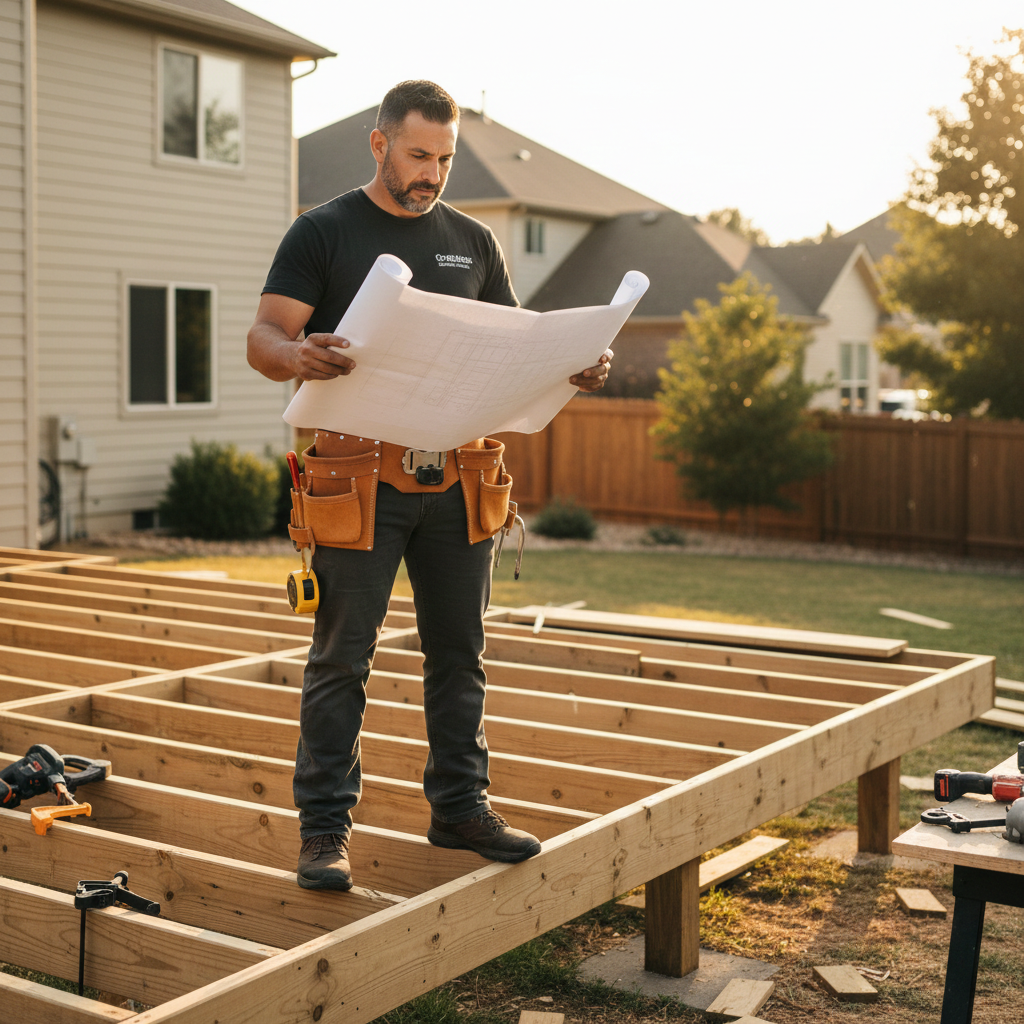
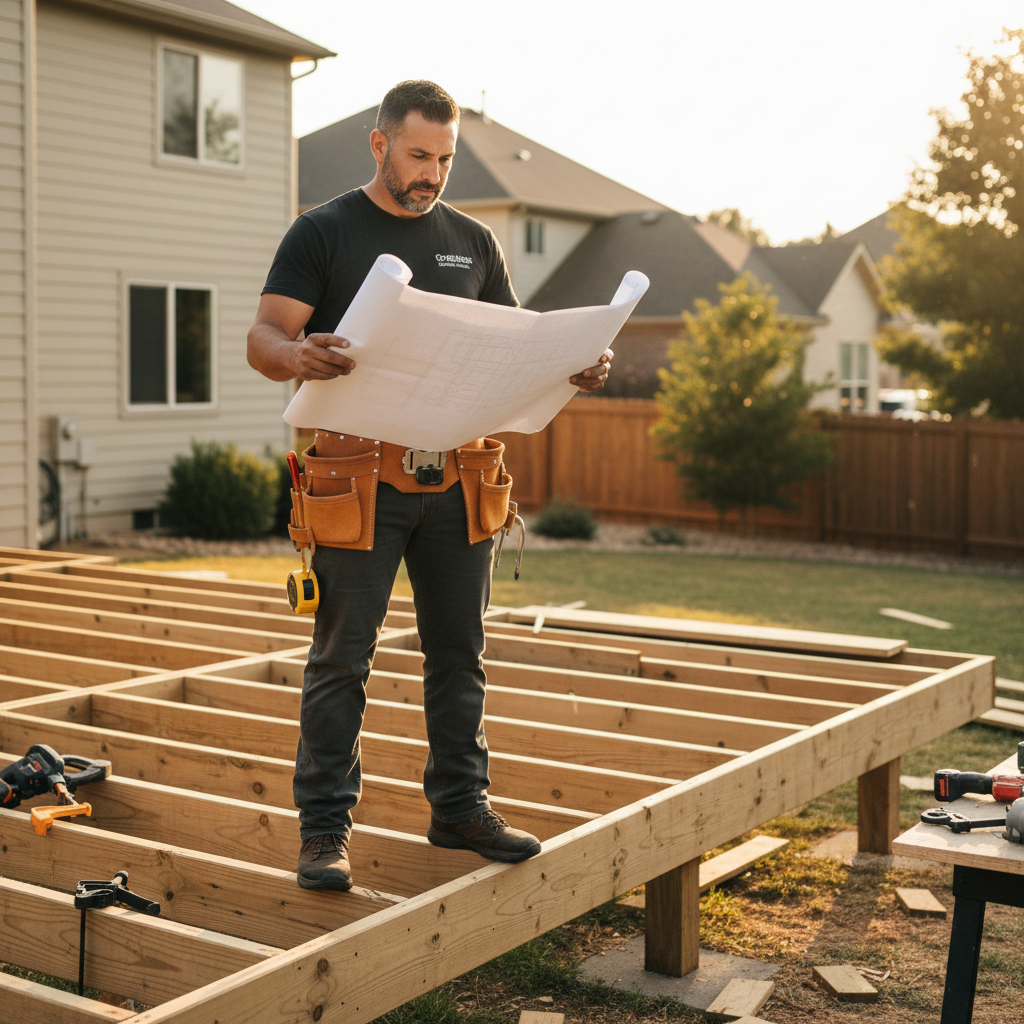
A professional deck contractor reviews the build plan on-site before breaking ground.
Your Action Plan: This Week
- Decide on size and scope. A rough sketch on paper is enough. Measure the area, think about how you'll use it — dining, lounging, grilling? That determines railing placement and layout.
- Get at least 3 quotes. Even in winter, most contractors will come out for an estimate. Price variation can be 30–40% for identical work — you need multiple data points.
- Ask about permit timeline. Find out if your contractor handles permits (they should), and how long your municipality takes. Start the clock now.
- Lock in your contractor before March 15. Spring calendars fill in March. A signed contract with a deposit secures your spot.
Find Deck & Patio Contractors Near You
Ready to get started? Browse verified deck and patio contractors in your area on Fixxit — read real reviews, compare profiles, and request quotes in minutes.
Indianapolis: Browse Indianapolis Deck Contractors →
Chicago: Browse Chicago Deck Contractors →
Carmel / Fishers / Zionsville: Browse North Indy Contractors →
Free quotes • Verified reviews • Licensed & insured professionals
Find Trusted Pros Near You
Ready to start your project? Connect with vetted, top-rated contractors in your area.
Get Started