Read the Cracks: How to Spot Winter Concrete Damage on Your Driveway, Sidewalk & Steps
Every winter, the concrete around your home absorbs water, freezes, thaws, re-freezes, and repeats — sometimes dozens of times in a single Midwest season. By late February in Indianapolis and Chicago, that cycle is starting to wind down, and what's left behind is a roadmap of damage hidden under the slush and salt.
Most homeowners walk past these cracks every day without knowing what they're actually looking at. Some cracks are cosmetic. Some are structural. Some are literally about to become trip hazards or water infiltration points that will cost you thousands if you ignore them until summer.
This guide will teach you how to read your concrete — what each type of damage means, how urgent it is, and when you need a professional.
Why the Midwest Is So Hard on Concrete
Indianapolis averages around 25 freeze-thaw cycles per year. Chicago sees even more. Each time water seeps into a concrete pore or crack, freezes, and expands (water expands roughly 9% when it freezes), it pushes the concrete apart from the inside. Add road salt and de-icing chemicals — which accelerate surface breakdown — and you have a formula for serious damage accumulating over every winter.
The damage isn't always dramatic. It starts as invisible micro-cracks, then hairline cracks you can feel with your shoe, then surface scaling, then structural cracking, and eventually full slab failure. Catching it at steps two or three is far cheaper than waiting for step five.
The 5 Types of Winter Concrete Damage (And What Each One Means)
1. Surface Scaling & Pitting
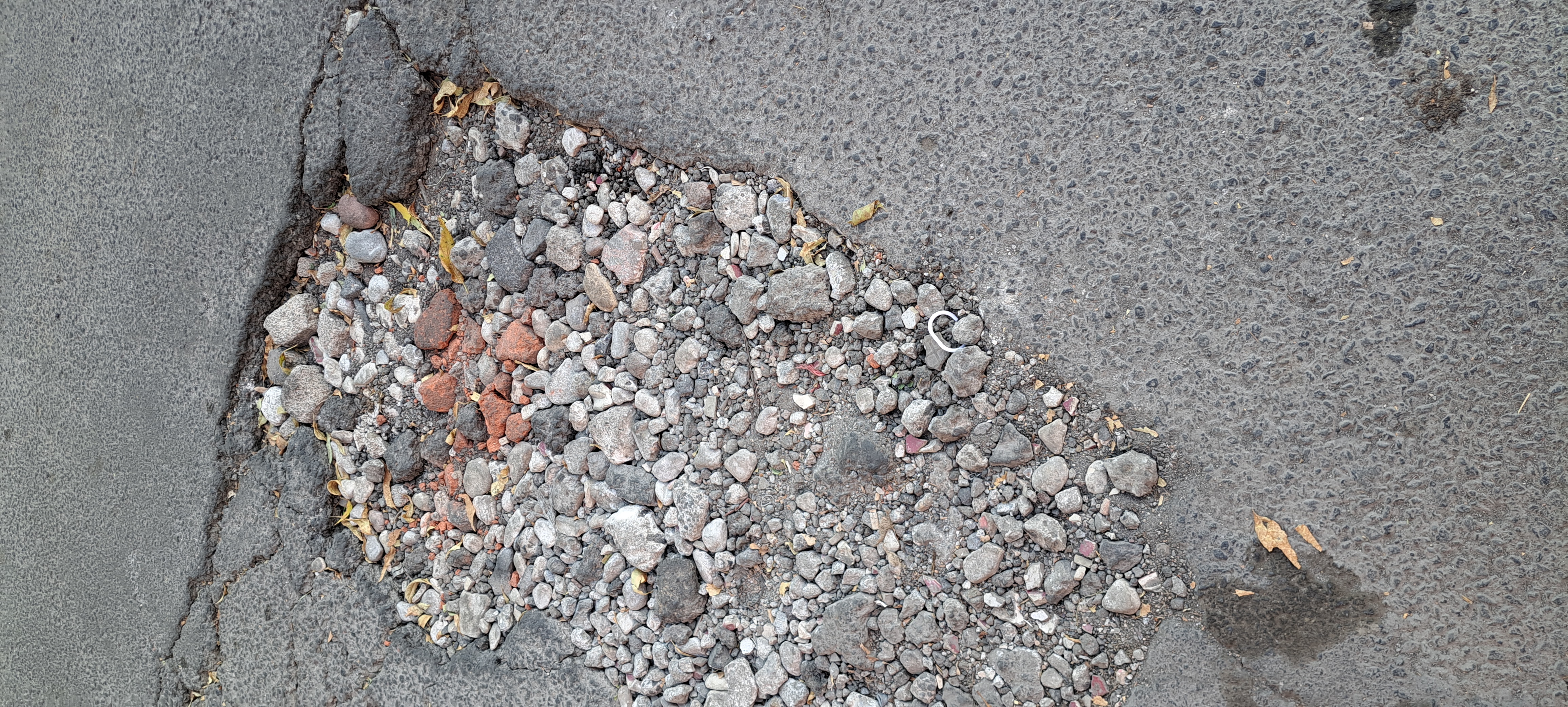
What it looks like: The surface looks rough, flaky, or sandy. Small chips and flakes are peeling off. The aggregate (the pebble-like bits inside the mix) starts showing through.
What's happening: This is almost always caused by de-icing salt combined with freeze-thaw cycling. The salt lowers the freezing point unevenly, creating more rapid expansion and contraction cycles in the top inch of the slab.
Urgency: Medium. If caught early, concrete resurfacing ($5–$12/sq ft professionally) can restore the surface. Left for another winter, it progresses quickly to the kind of total surface failure shown above.
DIY or Pro? Small areas (under 10 sq ft) can be DIY patched. Larger scaling should be professionally resurfaced for a lasting bond.
2. Hairline Cracks
What it looks like: Thin lines running through the slab, often following the length or width. You can feel them but barely see them.
What's happening: Normal concrete shrinkage over time, or early freeze-thaw damage. These are the first warning signs of water infiltration.
Urgency: Low-to-Medium. Seal them now. Unsealed hairline cracks invite water in, which will widen them every winter until they become structural cracks.
DIY or Pro? DIY-friendly with concrete crack sealant ($15–$40 at hardware stores). Just clean the crack first — dirt prevents adhesion.
3. Structural Cracks (Wide or Deep)
What it looks like: Cracks wider than 1/4 inch, or cracks where the two sides are at different heights (called "differential settlement"). Often run diagonally across a slab corner.
What's happening: The sub-base beneath the slab has shifted, either from water erosion, freeze-thaw heaving, or soil compaction issues. This is no longer a surface problem — it's a foundation problem.
Urgency: High. These will get worse every season and can create serious trip hazards and water pathways toward your foundation.
DIY or Pro? Pro. Depending on severity, options include crack injection ($300–$800), slab jacking/mudjacking ($600–$1,500 per section), or full slab replacement ($10–$15/sq ft).
4. Concrete Spalling (Deeper Chunk Loss)
What it looks like: Chunks of concrete breaking off, sometimes revealing the steel reinforcement (rebar) beneath. The edges of the damage are jagged and the damage goes deeper than the surface layer.
What's happening: Once water reaches the rebar inside the slab, the steel corrodes and expands — pushing concrete apart from within. This is an accelerating cycle: the more rebar is exposed, the faster it corrodes.
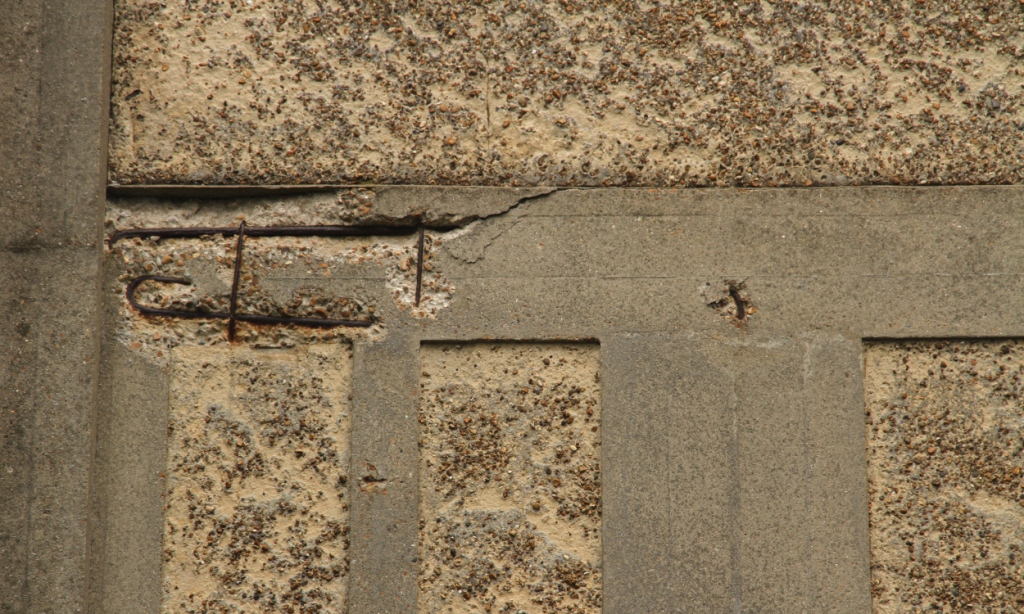
Urgency: Very High. Exposed rebar damage does not stay stable — it accelerates. Get a contractor assessment within weeks, not months.
DIY or Pro? Pro only. Rebar must be treated for corrosion before patching, or the patch will fail within a year or two.
5. Heaving & Settled Slabs
What it looks like: One concrete slab is noticeably higher or lower than the adjacent slab, creating a lip or step. Sometimes entire sections tilt or sink.
What's happening: The soil beneath the slab has either heaved (from frost pushing it up) or settled (from soil erosion or compaction). This is extremely common on sidewalks, garage aprons, and patio slabs near downspouts.
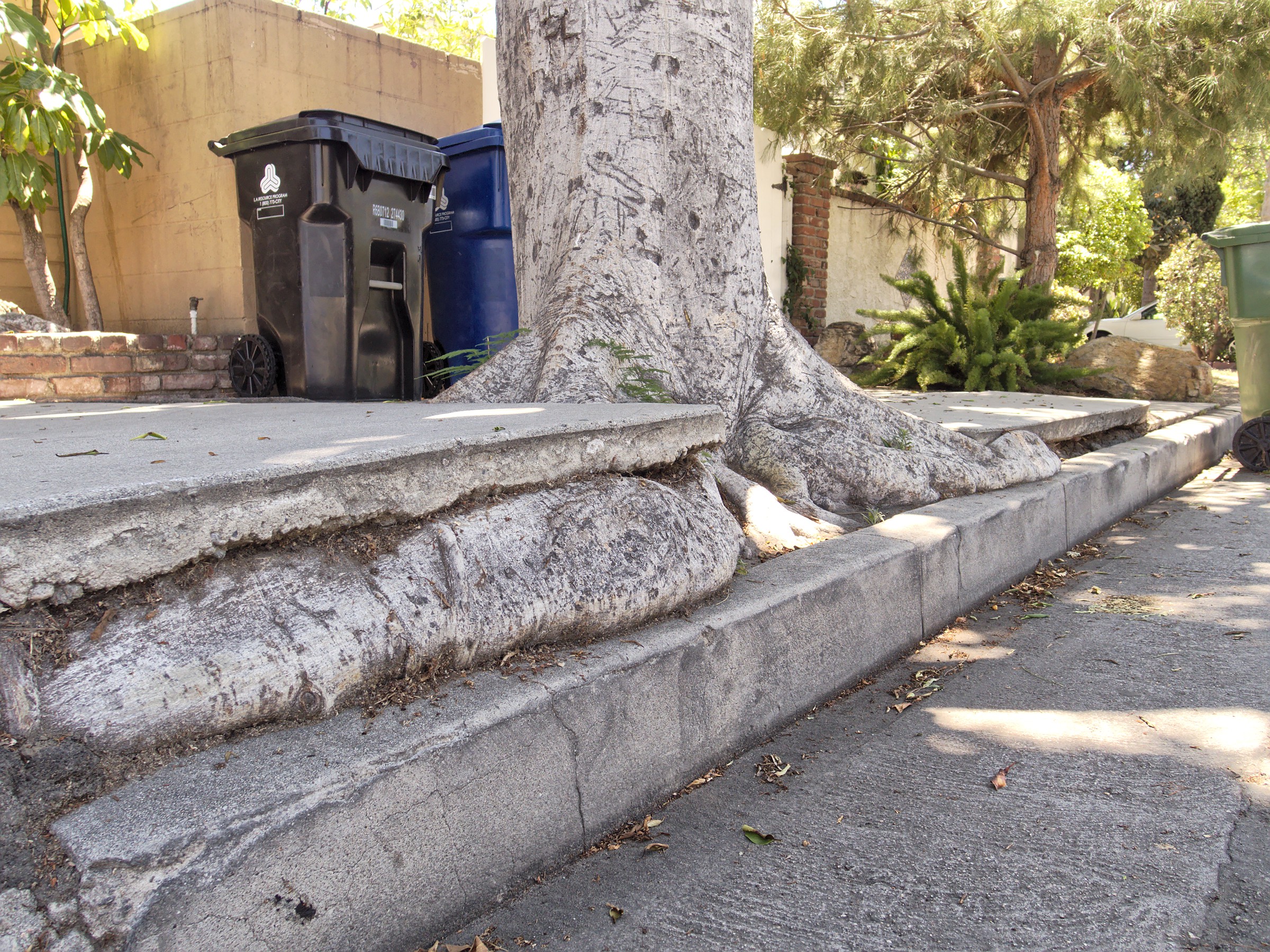
Urgency: Medium-to-High (higher if on a public sidewalk). Settled sections create water pooling, which accelerates freeze-thaw damage. Heaved sections are trip hazards.
DIY or Pro? Pro. Mudjacking or polyurethane foam injection ($600–$1,500 per section) can lift settled slabs without replacement. Full replacement runs $10–$15/sq ft plus mobilization.
Your Late-February Inspection Checklist
Walk your driveway, sidewalks, front steps, patio, and garage apron. Look for:
- ☐ Any cracking (note width and whether sides are at different heights)
- ☐ Surface flaking, pitting, or sandy texture
- ☐ Chunks or holes (especially near control joints)
- ☐ Any slab sections that rock or feel uneven underfoot
- ☐ Water pooling in places it didn't before
- ☐ Rust stains coming through the surface (sign of rebar corrosion below)
- ☐ Gaps at the joint between your driveway and garage apron (slab settling)
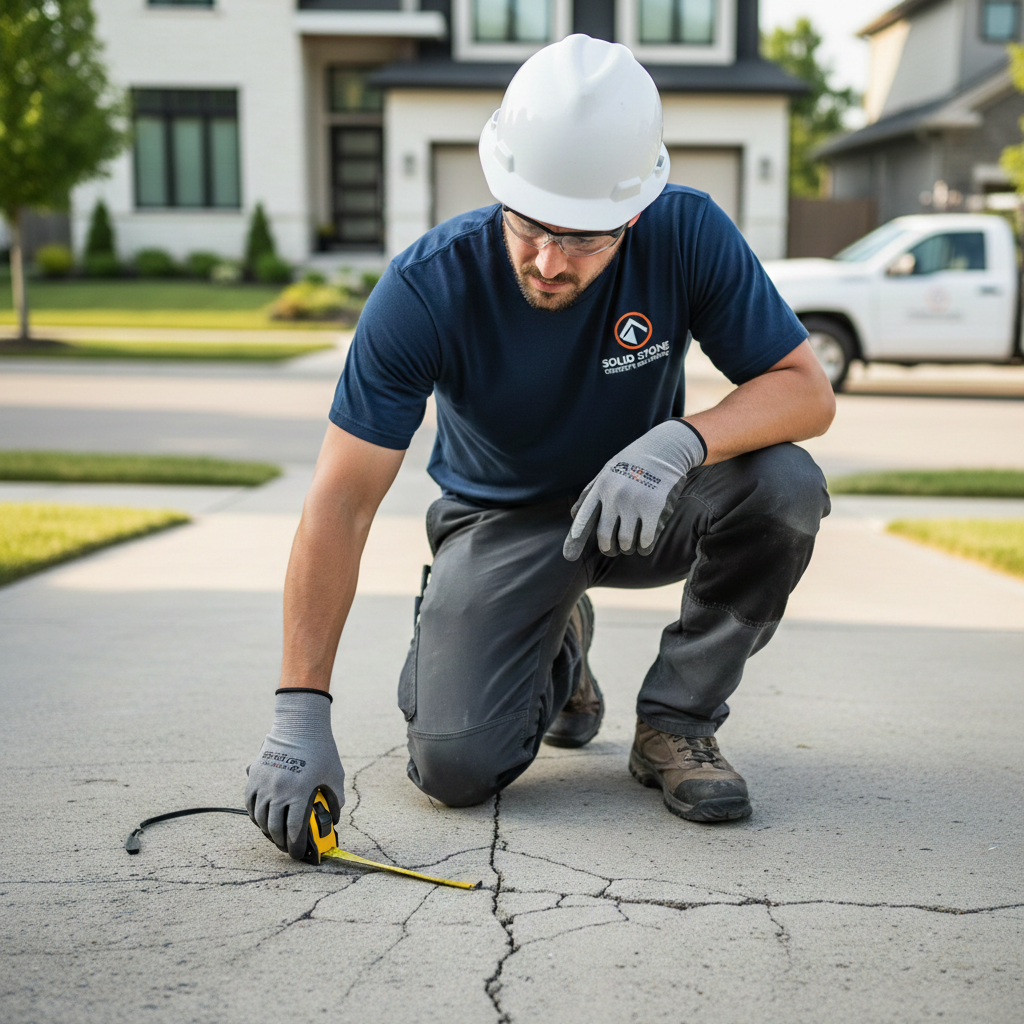
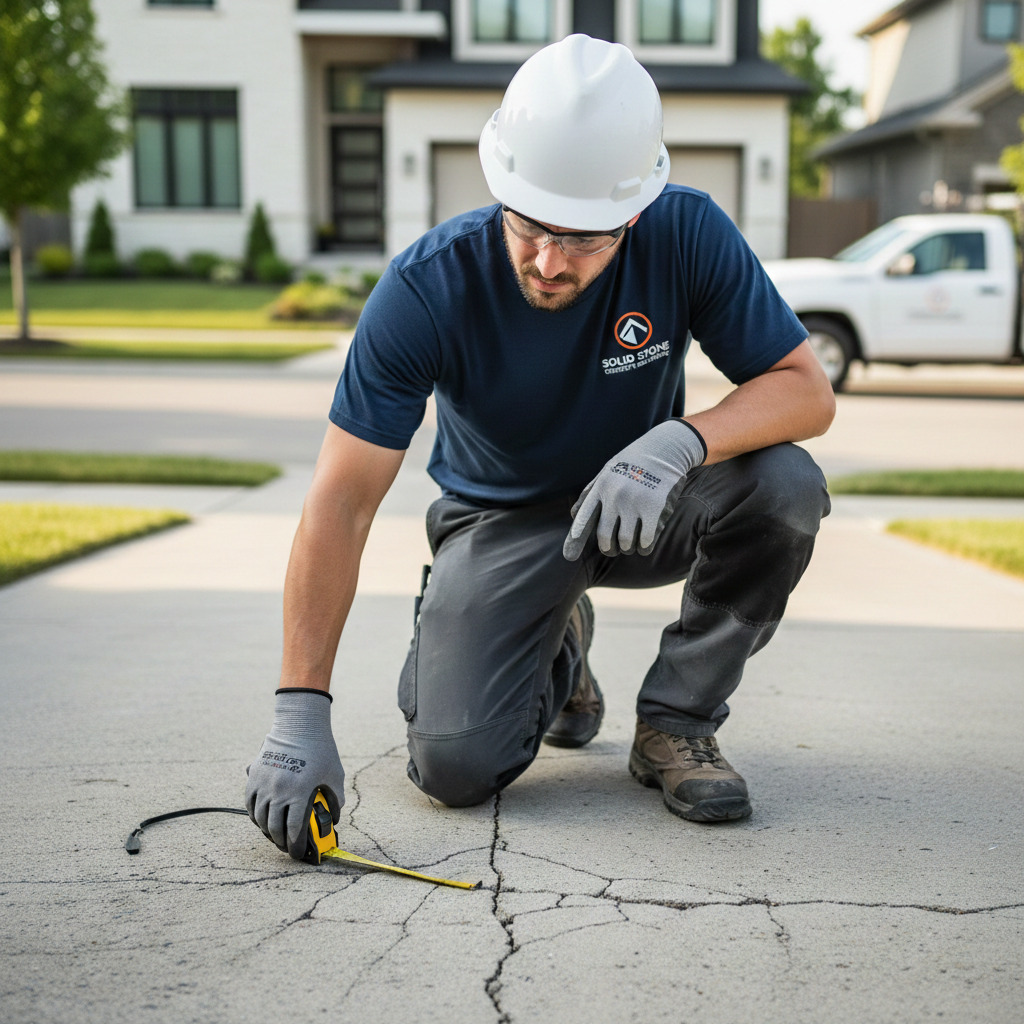
A licensed concrete contractor inspects driveway cracking — early assessment prevents costly repairs down the road.
Why February Is Actually the Right Time to Book a Contractor
Concrete work is highly weather-dependent — contractors need temperatures consistently above 40°F to pour, patch, or resurface properly. That means the real work window opens in late March through early May in Indianapolis and Chicago.
But contractor calendars fill fast. The homeowners who call in February get the spring slots. The ones who call in April are waiting until June — and paying more.
If your inspection reveals anything beyond hairline cracks, now is the right time to get quotes. A concrete contractor can assess the damage, give you a repair plan, and lock in spring pricing before the rush begins.
Ready to find a vetted concrete contractor in Indianapolis or Chicago? Browse Saorr's contractor network — every pro is reviewed and ready for spring bookings.
Find Trusted Pros Near You
Ready to start your project? Connect with vetted, top-rated contractors in your area.
Get StartedRelated Articles

Spring Pest Control 2026: When to Spray, What to Watch For, and Why March Is Already Too Late to Wait
Spring Sprinkler Startup: What Irrigation Contractors Find Wrong Every Year (And What It Costs You)