

Spring Roof Inspection: What Indiana Homeowners Need to Check Before April Storms
Your roof survived the winter. Good. That doesn't mean it's fine.
Indiana winters are slow-motion wrecking balls. Freeze-thaw cycles, ice dams, wind events — they don't punch a hole through your shingles and announce themselves. They work quietly, loosening flashing seals, driving water under shingle tabs, soaking decking and insulation. You don't see the damage in December. You see the ceiling stain in April, after the first real storm of the season, when every roofer in the 317 is already booked solid.
The window to get ahead of this is right now — late February and early March. Before storm season. Before the phone lines jam. Before a $400 repair turns into something that requires a serious conversation with your insurance company. Here's exactly what to check.
Why Late February Is the Right Time to Deal With This
There are three reasons this timing matters, and they stack on top of each other.
First: winter damage accumulates, but the symptoms lag. An ice dam in January can drive water under shingles, soak into your decking and insulation, and not show up as a ceiling stain until the first heavy rain in April. By then you're in emergency mode, not planned maintenance mode. The damage happened months ago. You just didn't know yet.
Second: Indiana's severe weather season starts in April. Indiana averages 22 tornadoes per year. April through September brings hail events, sustained winds topping 70 mph, and flash flooding. A roof with compromised flashing or lifted shingle tabs going into a May hailstorm isn't bad luck — it's foreseeable damage. You had the window to fix it.
Third: contractor availability is dramatically better right now. Call a roofer in February, you get on the schedule. Call in May after a storm, you join a waiting list — competing with every other homeowner on your block for the same contractor slots. Post-storm demand also means prices go up. Book early, get better pricing, get better availability, get the job done before the season opens.

What Indiana Winters Actually Do to Roofs
Let's talk specifics. Here's what the last four months may have done to your roof while you weren't watching.
Ice dams. Heat escaping through your attic warms the roof deck. Snow melts, runs toward the eaves, and refreezes where it gets colder. That ice ridge traps meltwater — and that water finds a way under your shingles. It gets into the decking, the insulation, the wall cavities. The repair cost for a significant ice dam event runs from a few hundred dollars for minor work up to tens of thousands for structural damage. Not a typo.
From the outside, look for large icicles hanging from the roofline or uneven snow melt patterns — areas that melted bare while the rest stayed snow-covered. Those bare spots show where heat is escaping. From inside, look for water stains on upper-floor ceilings near exterior walls, bubbling paint, or drywall that looks swollen.
Freeze-thaw flashing failures. Every temperature swing through 32°F is a stress cycle for the metal flashing around your chimney, vents, skylights, and roof valleys. Indiana runs through dozens of these cycles each winter. Caulk cracks. Metal expands and contracts. Sealants fail. You won't see water coming in until you get a driving rainstorm — but the failure is already there.
Wind damage. Indiana winter storms push 40–60 mph sustained winds, with gusts higher. Missing shingles are obvious. What isn't obvious: lifted corners, cracked tabs, and loosened nail patterns. These need close inspection to find — the kind of inspection you can't do from your driveway.
Granule loss. If your home was built in the 1990s or 2000s, your roof is 25–35 years old — at or past the end of its designed life. Granules on asphalt shingles aren't just texture. They protect the asphalt from UV degradation. Once they're gone, the shingles deteriorate fast. Check your gutters and downspout splash zones. Shingle granules collecting there mean your roof is aging out.
Fascia and gutters. Ice weight pulls gutters from their hangers. Water that backs up behind ice dams overflows onto fascia boards, soaks in, and causes rot. Sagging gutters = standing water = more rot risk to the fascia and foundation. If your gutters are pulling away from the house, that's not just a cosmetic issue.

What You Can Inspect Right Now — No Ladder Required
Don't get on the roof. Seriously. Steep pitches, February's hidden ice patches, and the fact that most people aren't trained roofers make that a bad combination. Everything below you can do safely from the ground or from inside.
Ground-level visual check (grab binoculars):
- Walk the full perimeter of the house, slowly. Check from the street if it gives you a better sightline.
- Missing shingles — visible gaps or exposed decking
- Curling or cupping shingle edges — edges lifting up or centers buckling down
- Cracked or broken shingles — especially on the south-facing slope
- Sagging sections anywhere on the roof plane — this can mean rotted decking underneath
- Roofline that waves or dips instead of running straight
- Moss or dark algae streaks — these trap moisture and cause rot underneath
- Chimney and vent stack condition — look for gaps, loose caps, or separation from the roof surface
- Ridge cap condition — the row of shingles along the very peak takes the worst of wind damage
- Soffit and fascia — look for warping, paint peeling, or sections pulling away from the house

Gutter check (step stool, no roof required):
- Are they pulling away from the fascia?
- Visibly sagging, bent, or with separated seams?
- Check the downspout splash zone on the ground. Shingle granules in the pile means the roof coating is failing.
Attic inspection — this is the most underused step and the most valuable:
Grab a flashlight and go in. Most people never do this. They should.
- Any daylight visible through the decking boards — means actual gaps
- Water stains on the underside of the decking — brown rings or dark streaks
- Black staining or mold — indicates chronic moisture over time
- Soft or spongy areas when you press on the decking — rot
- Wet or matted insulation, especially near the eaves
- Frost or ice deposits — sign of poor ventilation
- Check around all penetrations: plumbing vents, exhaust fans, chimney framing — these are where leaks enter
Ceiling walk: Every room. Look at corners and the areas near exterior walls. Water stains mean an active or past roof leak. Upper floors matter most.

When to Stop and Call a Roofer
Your ground inspection has a ceiling. Here's what you're looking for that automatically means you need a professional on the roof:
- Any interior water staining. Water travels. The stain is rarely directly below where it entered. A pro traces the source.
- Multiple missing shingles. More than 2–3 in isolated spots.
- Sagging roofline or soft decking. Structural issue. Don't wait on this one.
- Granules filling the gutters. Widespread degradation, not a single bad section.
- Flashing separation around chimneys, vents, or skylights.
- Your roof is 20+ years old. Age alone warrants a professional assessment.
- After any hail event. Even marble-sized hail damages shingles in ways invisible from the ground. Hail bruises the mat under the granules — failure shows up 2–5 years later if it's not caught now.
- After winds above 50 mph. Nail pattern and tab integrity need to be checked by someone who can walk the deck.
- Planning to sell or refinance. Get it documented before it becomes someone else's negotiating chip.
What a pro does that you physically can't from the driveway: walks the full deck to check nail patterns and shingle adhesion, checks every flashing penetration hands-on, probes decking for soft spots across the whole surface, provides a documented photo report for insurance purposes, and gives you a real repair-vs-replace recommendation based on actual condition.

A proper roof assessment goes section by section — ridge, flashing, gutters, valleys, soffits. If an inspector finds any of these on the clipboard, it's contractor time.
What Common Repairs Actually Cost in Indiana (2026)
Real numbers. No vague ranges designed to get you on the phone.
Inspection: Most licensed Indianapolis roofers offer free inspections, especially before you commit to a project. A formal written report with photos — useful for insurance claims or real estate transactions — runs $150–$350. Drone or thermal inspection: $300–$600.
Shingle repair (partial patch, localized damage):
- Minor — a few shingles, isolated area: $150–$500
- Moderate — multiple sections with partial decking: $500–$1,500
Full roof replacement (Indianapolis metro, 2026):
| Home Size | Architectural Asphalt | Standing Seam Metal |
|---|---|---|
| 1,500 sq ft (small ranch) | $9,500 – $13,500 | $15,000 – $22,000 |
| 2,000 sq ft (standard) | $12,000 – $18,000 | $19,000 – $28,000 |
| 2,500 sq ft (two-story) | $15,500 – $22,000 | $26,000 – $38,000 |
| 3,500+ sq ft (large) | $21,000 – $30,000+ | $38,000 – $55,000+ |
One thing to ask upfront: Indiana building code allows two layers of shingles. If you already have two layers on the roof, a full tear-off to bare decking is required before re-roofing. That adds roughly $1.00–$3.00 per square foot to the total. Ask about it before you sign anything, not after.
Other common repairs:
- Chimney or vent flashing re-seal: $200–$600
- Valley flashing replacement: $500–$1,500
- Ridge cap repair: $300–$800
- Fascia replacement: $5–$12 per linear foot installed
- Soffit replacement: $4–$22 per linear foot installed
- Full fascia and soffit replacement (average home): $2,600–$6,000+
- Gutter repair (re-hanging, seam sealing): $200–$600
- Full gutter replacement: $1,500–$4,000 for an average 2,000 sq ft home
- Rotted decking — per sheet of plywood installed: $70–$100
That last line on decking matters. Rot gets found after tear-off, not before. Always ask any contractor: "What's your rate per sheet if you find bad decking?" Get the answer in writing before the job starts.
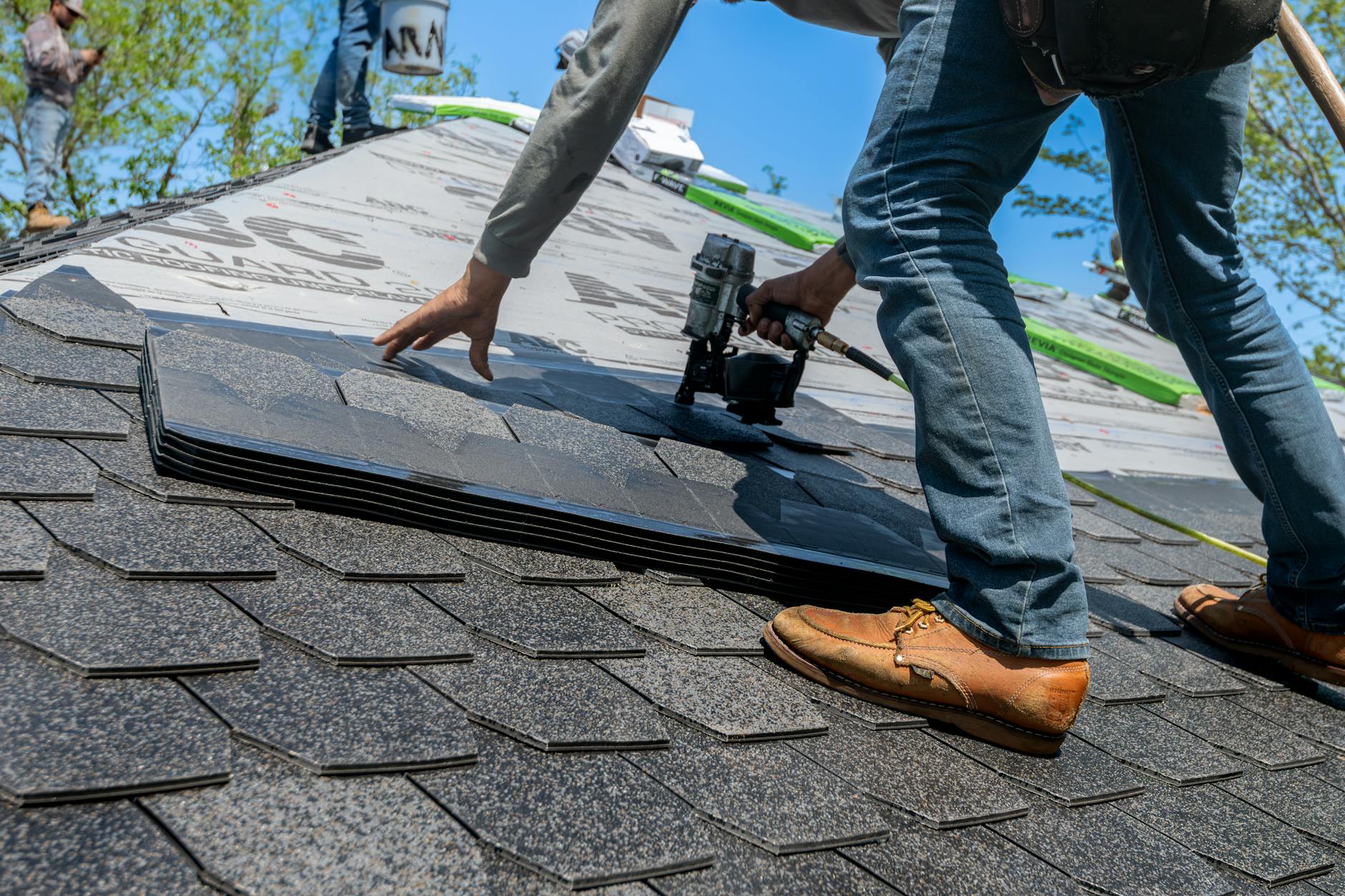
Labor typically runs $150–$300 per square (100 sq ft) in Indiana. Materials are the other big variable — entry-level shingles vs. architectural-grade 30-year shingles is a $1,500–$3,000 swing on a typical ranch.
Indiana Has No State Roofing License — Here's What That Actually Means
This is the thing most Indiana homeowners don't know, and it's the most important consumer protection fact in this whole article:
Indiana has no state-level licensing requirement for roofers.
Any person can legally do roofing work in Indiana without a state license, certification, or demonstrated training. Illinois requires IDFPR licensing. Indiana does not. The burden of vetting a contractor falls entirely on you.
Indianapolis and Marion County have their own contractor licensing system through indy.gov — you can ask any Indianapolis roofer to confirm their City of Indianapolis contractor registration. Suburbs like Carmel, Fishers, Noblesville, Westfield, and Greenwood have their own permit and registration requirements — verify with your local municipality.
Since there's no state license to check, here's your vetting checklist:
- Verify a local physical address. A PO Box or "we serve all of Indiana" with no local office is a red flag.
- Check Google Reviews and BBB together. Look for review patterns across two or more years, not a sudden burst of new reviews after a storm.
- Demand proof of insurance. General liability plus workers' compensation. Ask for the certificate directly from their insurer — not a document they hand you.
- Get at least three written quotes. If one is dramatically lower, ask why in writing.
- Ask about decking rates upfront. How they answer tells you a lot about their transparency.
- Require a detailed written contract before any work starts. Scope, materials (brand and product line), cost, timeline, payment schedule, and warranty terms.
- Reasonable deposit: 10–30%. Anyone demanding 50%+ upfront or full payment before work begins is a serious red flag.

How to Spot a Storm Chaser Before the Storm Even Hits
Indiana is ground zero for storm chaser contractor fraud. Active severe weather season, no state roofing license requirement, high post-storm demand — it's the exact environment that attracts out-of-state crews who show up, collect money, do shoddy work or disappear entirely, and move on to the next storm market.
Most homeowner advice about storm chasers is post-storm. Here's the pre-storm version: know the red flags now, so when April hits and someone knocks on your door, you already know what you're looking at.
Eight red flags:
- Unsolicited door knocking after a storm. Legitimate local contractors don't solicit door-to-door. The ones who do have learned that post-storm urgency makes homeowners skip their due diligence.
- Out-of-state plates on unmarked vehicles. No local presence means no local accountability. When something goes wrong — and with storm chasers, something usually does — there's nobody to call.
- Offering to "cover your deductible." This is insurance fraud under Indiana law. If they get caught, you can be implicated. Walk away.
- "Free roof from insurance" pitch. Legitimate contractors don't promise insurance outcomes they can't guarantee. This is a manipulation tactic designed to get you to sign fast.
- Large upfront payment demands — 50%+ or full payment before work starts. They take it and move on. Or they do the minimum work possible and disappear before you notice.
- "Today only" pressure. Real contractors don't create artificial urgency. Pressure to sign immediately is a manipulation technique, full stop.
- Vague or missing written contract. A contract with no scope of work, no material specifications, or no timeline isn't a contract — it's a blank check.
- Fabricating damage during the "free inspection." Some dishonest inspectors create damage while on your roof to justify work. Always be present during any inspection. Watch what they're doing.
And two more to know by name:
Assignment of Benefits (AOB): Some contractors ask you to sign over your insurance claim rights to them directly — meaning they deal with your insurer without you in the loop. In Indiana, this gives a contractor enormous leverage and can leave you on the hook for disputes you didn't know existed. Never sign an AOB without consulting your insurer or an attorney first.
FEMA does not endorse contractors. Ever. Post-disaster, some chasers claim FEMA affiliation or federal endorsement. It's a lie. Full stop.
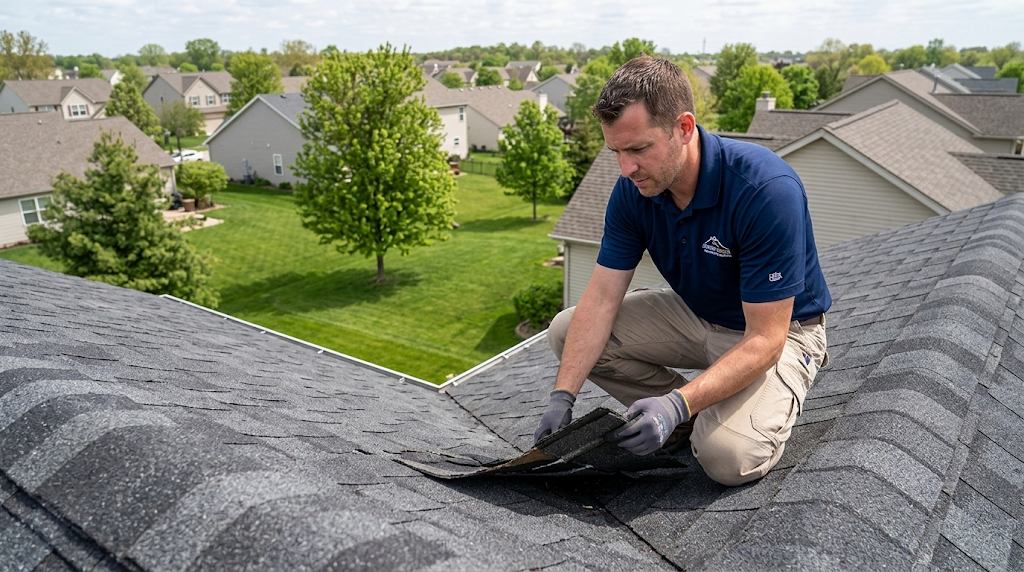
Ready to Get Your Roof Inspected? Find a Vetted Indiana Roofer on Saorr
You've done your ground check. Maybe you've been in the attic. You know what you're looking at — or you know you need someone who does.
Here's the reality: the window between "fix it now" and "emergency repair" in Indiana is roughly six weeks. March inspection and repair schedules fill fast. By April, after the first serious storm rolls through, you're competing with every other homeowner who waited.
Saorr lists local Indiana roofing contractors with a verified local address, real reviews, and documented insurance. No storm chasers, no out-of-state crews. Just contractors who know Indiana roofs and will still be around when you need a warranty call.
Get your roof looked at before April. It takes about two minutes to find someone on Saorr.
Find Trusted Pros Near You
Ready to start your project? Connect with vetted, top-rated contractors in your area.
Get StartedRelated Articles

Spring Pest Control 2026: When to Spray, What to Watch For, and Why March Is Already Too Late to Wait

Spring Sprinkler Startup: What Irrigation Contractors Find Wrong Every Year (And What It Costs You)