
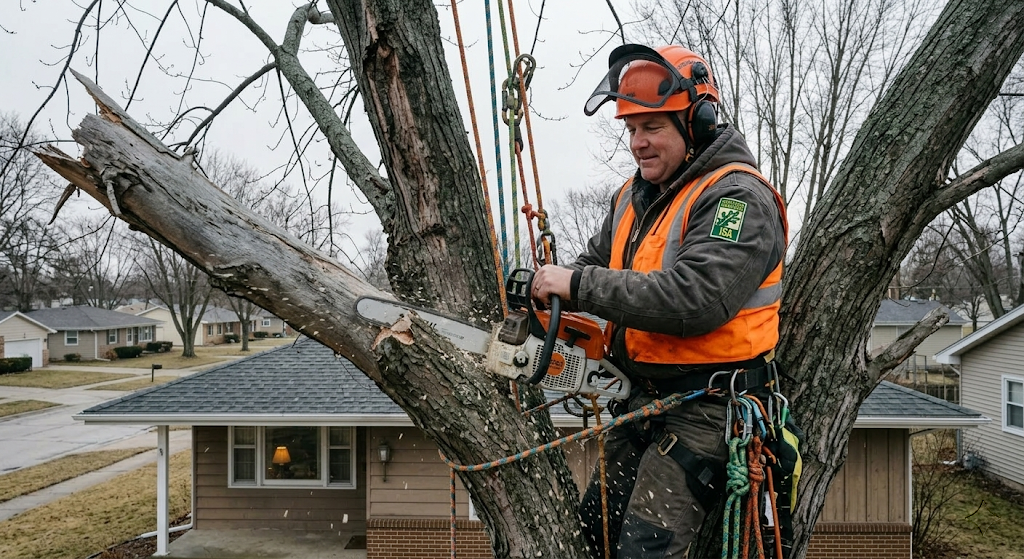
Spring Tree Trimming and Removal: What Indianapolis and Chicago Homeowners Need to Know Before Storm Season
Spring Tree Trimming and Removal: What Indianapolis and Chicago Homeowners Need to Know Before Storm Season
Published March 2026 | Indianapolis & Chicago homeowners | Estimated read time: 9 minutes
You know that limb. The big one. The dead one hanging over your roof that you noticed last October, told yourself you'd deal with "this spring," and then promptly forgot about all winter. Spring is here. That limb is still there. And the first real windstorm of the season is coming.
Here's the thing about trees: they don't give you a warning before they take out your roof. They just go. Usually at night. Usually during a storm. Usually on a Friday so the contractors charge emergency weekend rates. By the time you're pulling a tarp over your living room ceiling at midnight, a $400 trim job has turned into a $15,000 insurance claim — and that's if you're lucky.
This post is about not being that person. We're going to cover what to look for, when you can handle it yourself (and when you absolutely cannot), what it costs in Indianapolis and Chicago specifically, and how to find someone competent enough to trust with a chainsaw and a ladder near your house. Let's get into it.
Why Spring Is Your Last Chance to Deal With That Tree
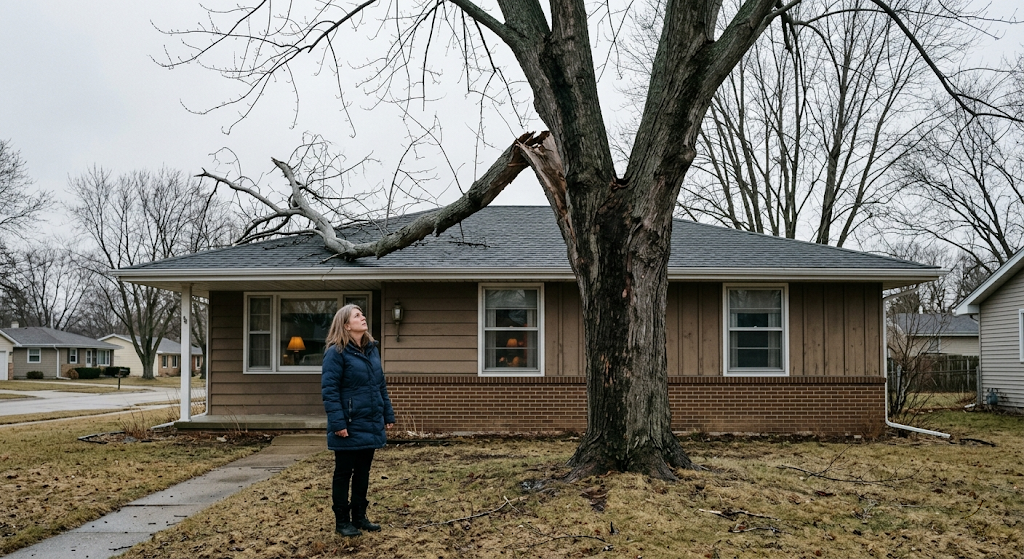
Late winter through early March is the optimal window for tree work in Indiana and Illinois — and it's closing fast. When trees are dormant, pruning wounds seal faster, disease-spreading insects are still inactive, and a skilled arborist can actually see the tree's structure clearly without leaves obscuring the problem areas.
Once temperatures climb above freezing consistently and bud break starts, the calculus changes. Certain species — oaks especially — become genuinely dangerous to trim during the growing season. Oak wilt, a devastating fungal disease spread by sap beetles that are active April through October, can be transmitted through a fresh pruning wound. One wrong cut on an oak in May could kill a tree that's been standing since before your neighborhood existed. Never trim oaks between April and October. If you have oaks that need attention, March is your last clean shot at it.
There's also the ice storm factor. Indiana and Illinois get hammered periodically — the 1991 ice storm left 200,000 Indiana homes without power and caused $80–$100 million in damage. After ice storms, trees can look fine from the street while carrying internal wood cracks, split branch unions, and structural damage that won't reveal itself until the first 60 mph spring gust. If you had any significant winter ice this year, a professional assessment isn't paranoia — it's property protection.
And then there's the contractor calendar. Tree services are slammed from April through June. Homeowners who wait until the leaves are fully out, or worse, until after a storm, are looking at multi-week backlogs and emergency pricing. Scheduling now means lower rates and faster availability. March is the window. Don't sleep through it.
What Every Homeowner Should Know
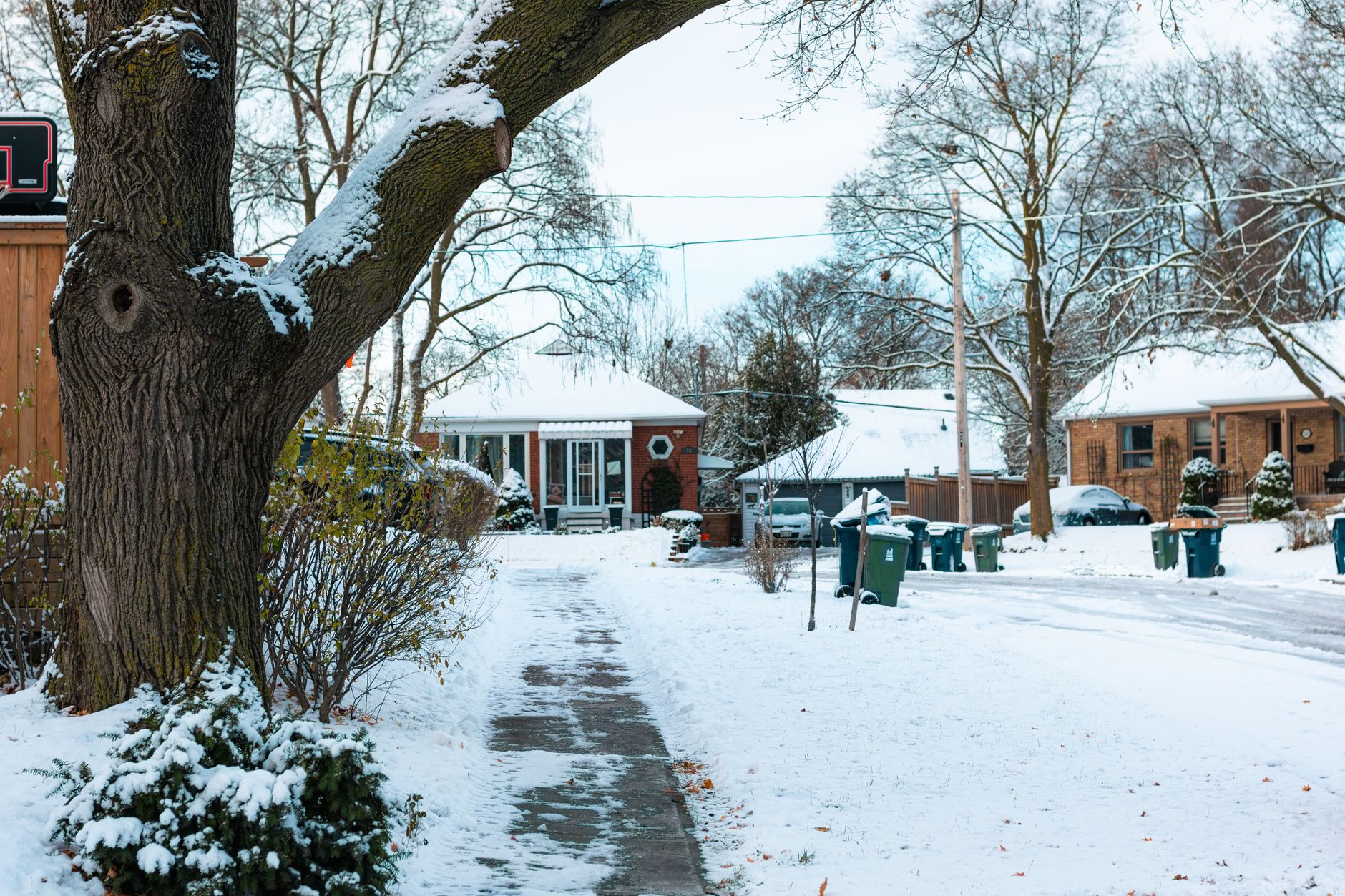
Photo by Anurag Jamwal on Pexels
Not every tree problem is the same problem. There's a difference between a tree that needs a trim and a tree that needs to come down — and getting that wrong is expensive in either direction.
Signs Your Tree Needs Trimming
- Dead or hanging branches ("widow makers") — Heavy deadwood limbs above structures or walkways. These don't need a storm to fall; gravity handles it eventually.
- Crossing or rubbing branches — They create wounds that invite disease.
- Canopy too dense — Restricts airflow, increases fungal risk, catches more wind in storms.
- Branches on or near the roof and gutters — Continuous abrasion damage to roofing material, plus a fast lane for squirrels and moisture.
- Water sprouts — Vigorous vertical shoots from main limbs that weaken the structure over time.
Signs Your Tree Needs to Come Down
- More than 50% of the canopy is dead or dying — You're not saving it. You're delaying the inevitable and adding risk.
- Trunk cracks or cavities — Especially with shelf fungus at the base. Fungal growth means internal rot you can't see from the outside.
- Root heaving — Soil pushing up at the base means the root system is failing. That tree is going down one way or another.
- Significant recent lean — A tree that has always leaned slightly is one thing. A tree that has started leaning this year is something else entirely.
- EAB infestation on an ash tree — See below. This one has its own section.
The Emerald Ash Borer — Indiana and Illinois Are Ground Zero
If you have an ash tree — any ash tree — stop what you're doing and pay attention to this part.
The Emerald Ash Borer (EAB) is an invasive beetle that has been systematically destroying ash trees across the Midwest since the early 2000s. It has killed tens of millions of ash trees across the U.S. and Canada — 40 million in Michigan alone, according to the Arbor Day Foundation. The survival rate for an attacked ash tree that receives no treatment: less than 1%. That is not a typo. More than 99% of ash trees attacked by EAB die.
In Chicago alone, 85,000 street ash trees and an estimated 300,000 private ash trees are at risk. The projected cost to remove and replace EAB-killed ash trees in Illinois, Indiana, Michigan, and Wisconsin alone runs between $13.4 and $26 billion.
Signs of EAB infestation include D-shaped exit holes in the bark (about the size of a pencil eraser), S-shaped feeding galleries visible under peeling bark, unusual woodpecker activity (they go after the larvae), and canopy dieback starting at the top and working down. Dead ash trees become brittle fast — the longer you wait, the more dangerous and expensive the removal becomes.
The City of Chicago's own guidance is direct: consult with an ISA certified arborist to determine the best management solution for ash trees on your property. If your ash tree has been treated and is holding, great — keep monitoring. If it hasn't been treated and hasn't been assessed, do that this week. The window for preventive treatment narrows as infestation progresses.
The Silver Maple and Cottonwood Problem
These two species are everywhere in Indianapolis and Chicago suburbs, and they're among the most structurally problematic trees you'll find in a residential yard. Silver maples grow fast, which sounds good until you realize fast growth means weak wood. They develop multiple competing leaders (co-dominant trunks) with V-shaped unions that are prone to splitting — especially under ice load or in high winds. Cottonwoods are similar: fast, brittle, and capable of dropping enormous limbs with no warning.
If you have a silver maple or cottonwood within falling distance of your house, a professional structural assessment every spring is not excessive. It's math.
The Power Line Question
Before you call anyone about a tree near a power line, understand who's responsible for what. Your electric utility — AES Indiana in Indianapolis, ComEd in Chicago — is responsible for trimming trees around transmission and distribution lines. They have the easements, the equipment, and the trained crews. Call them first: AES Indiana: 1-800-275-2990 | ComEd: 1-800-334-7661.
The gray zone is the service drop — the line running from the utility pole to your house. Ameren Illinois is explicit: trees near that line are the property owner's responsibility. Indiana law gives utilities the right to trim but not remove a tree on your property without your consent unless ordered by the Indiana Utility Regulatory Commission.
Do not hire a random contractor to work near live power lines. This requires utility coordination and specialized training. Call your utility company first, get clarity on who handles what, and only then engage a private arborist for any remaining scope.
DIY vs. Calling an Arborist — Know the Line
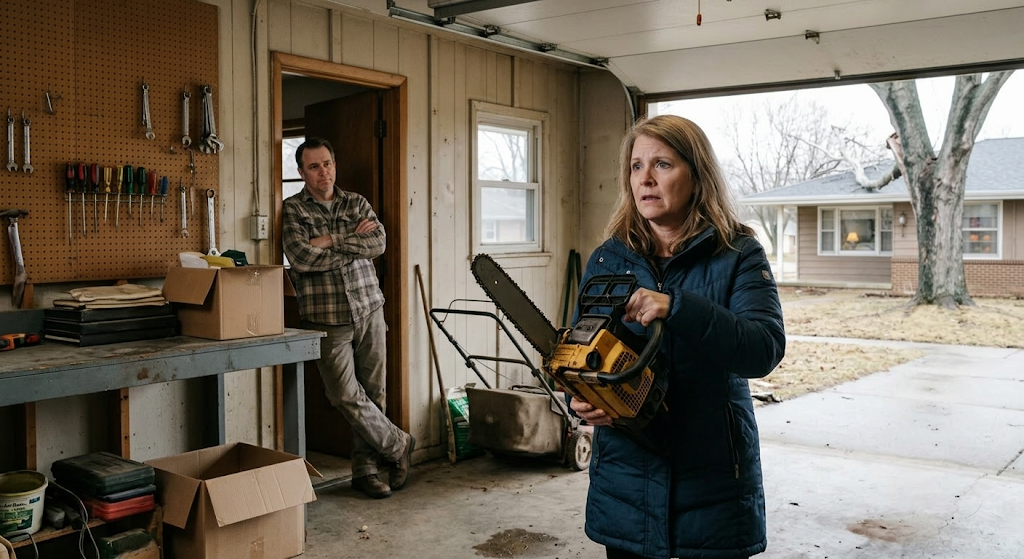
There's some tree work a homeowner can handle. Then there's tree work that sends people to the emergency room. The line between those two categories is clearly defined — you just have to know where it is.
What You Can Do Yourself
- Remove small branches under 2 inches in diameter that you can reach from the ground with hand pruners
- Clean up fallen branches and debris after a storm (no chainsaw needed)
- Light pruning of ornamental shrubs and young trees under 10 feet tall
- Identify and photograph problem areas before calling an arborist — saves them time, saves you money
Call a Professional — No Exceptions
| Situation | Why It's Pro Territory |
|---|---|
| Anything requiring a ladder | Falls are the #1 cause of tree work fatality. Full stop. |
| Anything near power lines | Electrocution risk; requires utility coordination |
| Trees over 20 feet tall | Requires rigging, ropes, and chainsaw skills under load |
| Full tree removal | Controlled felling requires training; wrong cut = property damage or death |
| EAB-infested ash trees | Dead ash is brittle and unpredictable at the top; upper sections fail without warning |
| Storm-damaged trees with hanging limbs | "Widow maker" limbs are under tension; they spring when cut |
| Trees within falling distance of structures | Precision felling required; one mistake = roof or fence damage |
| Any oak tree | Oak wilt risk — wrong timing kills the tree and spreads to neighbors |
Here's the number that should end this conversation: 27,500 chainsaw-related ER visits happen every year in the United States. Over 36,000 chainsaw injuries annually. Tree care workers — trained professionals with proper equipment — die at 15 times the rate of the average American worker. And they know what they're doing. You, on a ladder, with a chainsaw you bought last year and used twice, working on a dead limb that's hanging at tension over your garage — that's how people die doing yard work.
Three words. If the job involves all three: ladder + chainsaw + tree — call a pro.
Not sure which side of the line your situation falls on? Saorr connects you with ISA-certified arborists in Indianapolis and Chicago who can assess your trees before storm season hits. Find a tree pro on Saorr.
What It Costs in Indianapolis and Chicago

Photo by Mikhail Nilov on Pexels
Let's talk real numbers, not national averages that don't reflect what you'll actually pay in your market.
Tree Trimming Costs
| Tree Size | Indianapolis | Chicago | National Average |
|---|---|---|---|
| Small (<30 ft) | $80–$450 | $150–$562 | $80–$450 |
| Medium (30–60 ft) | $150–$880 | $562–$683 | $150–$880 |
| Large (>60 ft) | $400–$1,800 | $683–$1,500+ | up to $1,800 |
| Bucket truck required | +25–50% | +25–50% | — |
| Emergency / after-storm | +50–100% | +50–100% | — |
Tree Removal Costs
| Tree Size | Estimated Cost Range | Notes |
|---|---|---|
| Small (<30 ft) | $200–$700 | Basic removal, clear access |
| Medium (30–60 ft) | $700–$1,500 | Most common suburban size |
| Large (60–80 ft) | $1,500–$3,000 | Mature oaks, cottonwoods, silver maples |
| Very large (>80 ft) | $3,000–$6,000+ | Tight access, urban canopy trees |
| EAB ash (dead/brittle) | Premium pricing | Dead wood is unpredictable; adds risk and time |
| Emergency removal | +50–100%+ | Storm damage, weekend calls, same-day |
Chicago labor rates run 15–25% above Indianapolis market rates across the board.
Stump Grinding
Don't skip this. A stump left in place is a tripping hazard, a termite magnet, and an ongoing eyesore that can affect your property value. In Indianapolis/Marion County, expect to pay $81–$139 per stump on the low end, up to $238 for larger stumps. The national average is $272. Get it quoted as part of the tree removal job — you'll almost always get a better rate bundled.
The Number That Matters Most
| Scenario | Estimated Cost |
|---|---|
| Annual trimming of a mature tree | $300–$700 |
| Scheduled tree removal (proactive) | $700–$2,000 |
| Emergency removal after storm damage | $2,000–$5,000+ |
| Roof damage from a fallen tree | $5,000–$25,000+ |
| Vehicle damage from fallen limb | $2,000–$10,000 |
A $500 trim job now, or a $20,000 insurance claim in June. That is the actual choice you're making when you put this off.
How to Hire a Tree Service You Can Trust
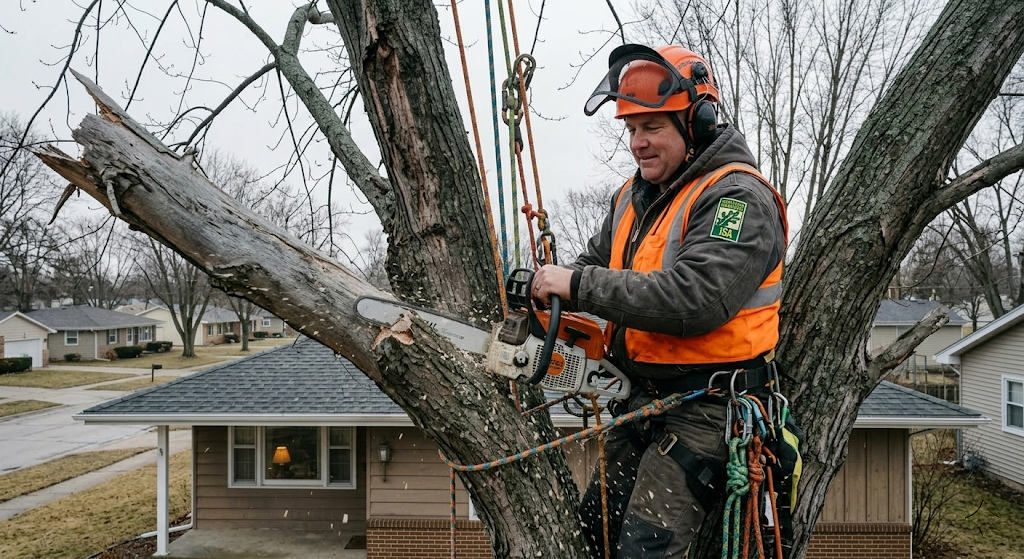
The tree service industry has a lot of capable professionals in it. It also has a lot of guys with a truck, a chainsaw, and zero insurance who'll knock on your door after a storm and do $8,000 worth of damage to your property for $600 cash. Knowing the difference is the whole ballgame.
ISA Certification — The Gold Standard
An ISA Certified Arborist credential requires documented field experience (3+ years), passing a comprehensive exam covering tree biology, risk assessment, pruning standards, and safety, plus ongoing continuing education to maintain. It is the industry's verified professional standard.
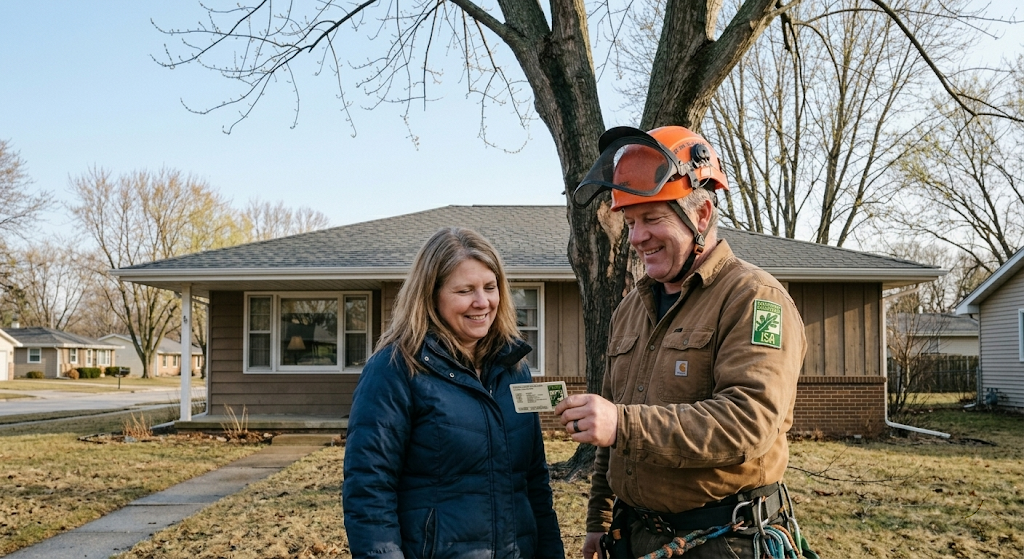
Anybody can call themselves an arborist. Not everybody has an ISA credential — and the ones who do are verifiable. You can look up any arborist's certification status at treesaregood.org. Use it. It takes 30 seconds and weeds out the pretenders immediately.
Insurance — Non-Negotiable
Before any contractor sets foot on your property: get a certificate of liability insurance AND proof of workers' compensation coverage. A worker injured on your property without workers' comp can become your liability under Indiana law. No paperwork, no work. This isn't being difficult — it's being a property owner.
Permit Requirements — Know Your Market
Indianapolis: Indiana has no statewide license requirement for tree contractors. However, Indianapolis/Marion County may require permits for removal of large or mature trees, and trees in designated historic districts have additional protections. Verify with the Indianapolis Urban Forest program before any significant removal. Your arborist should know local requirements — if they don't, that's a red flag.
Chicago: More regulated. The Chicago Bureau of Forestry issues permits for certain tree removals, and as a condition of the permit, replacement trees or compensation for lost tree value may be required. A contractor working in Chicago who doesn't know this is a contractor who's going to create problems for you. Verify permit requirements before signing anything.
Red Flags — Walk Away
- Door-to-door solicitation after a storm — Classic storm chaser operation. Often uninsured, always overpriced.
- "Cash today, no contract" — No paper trail means no accountability.
- Recommends topping — Topping is not an accepted arboricultural practice. It destroys tree structure and invites disease. Any arborist recommending it is either unqualified or dishonest.
- Can't produce insurance certificates on the spot — Walk away.
- Wants full payment upfront — Legitimate contractors take a deposit. They don't need your full payment before the job starts.
- No written scope of work — Verbal agreements in tree work lead to "I thought that included the stump" arguments after the truck leaves.
Questions to Ask Before You Hire
- Are you ISA Certified? (Ask for the credential number and verify it.)
- Can you provide a certificate of liability insurance and workers' comp right now?
- Will you provide a written estimate with detailed scope of work?
- Do you follow ANSI A300 pruning standards?
- What happens to the debris — hauled away or left?
- Is stump grinding included or priced separately?
- Do I need a permit for this work, and will you handle it?
Frequently Asked Questions

When is the best time to trim trees in Indiana and Illinois?
Late fall through early March — while trees are dormant. For oaks specifically, November through February only. After April bud break, trimming stress increases and disease transmission risk (especially oak wilt) rises sharply.
My ash tree looks a little thin at the top. Should I be worried?
Yes. Canopy dieback starting at the top is a primary EAB symptom. Call an ISA-certified arborist for an assessment immediately. If EAB has already progressed beyond the point where treatment is viable, you're in removal territory — and the sooner you do it, the less it costs and the less dangerous the job is. Dead ash goes brittle fast.
Can I trim trees near my power line myself?
No. Call your utility first — AES Indiana (1-800-275-2990) for Indianapolis area, ComEd (1-800-334-7661) for Chicago. They handle work near transmission and distribution lines. The service drop to your house may be your responsibility — but still requires a qualified contractor with proper equipment and utility coordination. Never hire an unlicensed contractor for power line clearance.
Do I need a permit to remove a tree in Indianapolis?
Possibly. Indiana has no statewide permit requirement for removal on private property, but Indianapolis/Marion County may require one for large or mature trees and trees in historic districts. Check with the Indianapolis Urban Forest program before you proceed: indy.gov/activity/urban-forest.
Do I need a permit to remove a tree in Chicago?
Quite possibly. The Chicago Bureau of Forestry requires permits for certain removals, and may require replacement trees as a condition. Your arborist should know this — if they don't, find a different arborist. Contact Chicago Forestry at 312-746-5254 to verify before any work starts.
How do I know if a tree company is legitimate?
Three things: ISA certification (verify at treesaregood.org), proof of liability insurance AND workers' comp, and a written estimate with a clear scope of work. If any of those are missing, the conversation is over.
What's the difference between trimming and topping?
Trimming removes specific dead, crossing, or structurally problematic branches following proper pruning cuts that allow the tree to heal. Topping cuts large branches or the main trunk at arbitrary heights — it's destructive, weakens the tree, and creates hazardous regrowth. Any contractor recommending topping should not be working on your property.

Photo by Henk Schuurmans on Pexels
Ready to Get Your Trees Sorted?
March doesn't last long. The dormant window is closing, contractor calendars fill up in April, and the first real windstorm of spring doesn't care whether you got around to calling someone yet.
If you've got a dead limb over your roof, an ash tree that hasn't been assessed for EAB, a silver maple with a split trunk, or any tree you've been meaning to deal with — this weekend is the time to get eyes on it. Not April. Not after the storm. Now, while it's still a $400 trim job instead of a $15,000 insurance situation.
What you need is a certified arborist who knows what they're looking at and will give you a straight answer — not someone trying to upsell you on removal you don't need, and not someone who'll miss the problem that matters.
Saorr connects Indianapolis and Chicago homeowners with vetted, ISA-certified arborists who carry proper insurance and know your local permit requirements. No door-knockers. No storm chasers. No guessing whether the guy showing up actually knows what he's doing.
Get your trees assessed before storm season makes the decision for you.
Find a vetted tree pro near you at Saorr.com →
Sources: City of Chicago Bureau of Forestry (chicago.gov), Illinois Extension / UIUC (EAB impact data), Purdue Landscape Report (April 2025), NWS Indianapolis (ice storm data), International Society of Arboriculture (isa-arbor.com), Bob Vila (trimming cost data, 2025), Manta / Homeyou (Indianapolis/Chicago market pricing), LawnStarter (stump grinding, Dec 2025), BLS / Tree Care Industry Magazine (fatality rate data), Unitil / CPSC (chainsaw injury data), Davey Tree / Ameren Illinois (power line responsibility), Indianapolis Urban Forest (indy.gov), Chicago Bureau of Forestry.
Find Trusted Pros Near You
Ready to start your project? Connect with vetted, top-rated contractors in your area.
Get Started