

Sump Pump Maintenance & Installation: What Midwest Homeowners Need to Know Before Spring
Sump Pump Maintenance & Installation: What Midwest Homeowners Need to Know Before Spring
Published February 2026 | Indianapolis & Chicago homeowners | Estimated read time: 8 minutes

Here's a number that should ruin your morning: 98% of basements will experience water damage in their lifetime. Not "some basements." Not "basements in flood zones." Ninety-eight percent. Odds are, yours is on that list.
Now here's the part nobody tells you: most of the time, the basement doesn't flood because of a once-in-a-generation storm. It floods because of a pump that silently stopped working while you were asleep. No warning. No error message. Just a motor that seized, a float switch that got stuck, or a discharge line that froze solid in January — and you had no idea until you walked down the stairs in your socks.
It's late February in Indiana and Illinois. The ground is frozen 10 to 20 inches deep. There's ice in the rivers. And the forecast is warming. When that changes — and it's going to change fast — all that snowmelt and spring rain has to go somewhere. Your sump pump is the one thing standing between your basement and a $13,954 average insurance claim. Fourteen thousand water damage emergencies happen across the country every single day (per WaterDamageDefense).
So let's talk about your sump pump. What it does, why it fails, how to check it yourself, when to call a plumber, and what it costs — in real numbers, for Indianapolis and Chicago specifically. Not national averages. Not "it depends." Actual numbers.
Why Spring Is the Most Dangerous Season for Your Sump Pump

People think summer storms are the danger zone. They're not. March and April are.
Here's what's happening right now across Indiana and Illinois: the ground is still frozen 10 to 20 inches deep, river ice is breaking up, and NOAA's current outlook shows above-average temperatures heading into March. Even in a below-average snow year — and this winter's snowpack has been lighter than typical — the combination of thawing ground, rising water tables, and spring rain is enough to push any sump pump hard. The risk isn't "if." It's "when."
When warm air hits all of that at once, the water has nowhere to go except into the ground, the drains, and your basement. That's when your sump pump gets called up from the bench for the first time all season.
And that's exactly when pumps fail.
A sump pump that sat idle all winter — motor cold, float switch untested, discharge pipe potentially frozen — hits its first major workload of the year in March. If there's any weakness in the system, that's when you'll find out about it. Usually at 2 AM during a rainstorm.
The risk window is right now: February through April. Not "sometime this spring." Now. Before the thaw hits and every plumber in Indianapolis and Chicago is booked two weeks out because your neighbor's basement is also underwater.
Your Sump Pump Won't Warn You Before It Fails
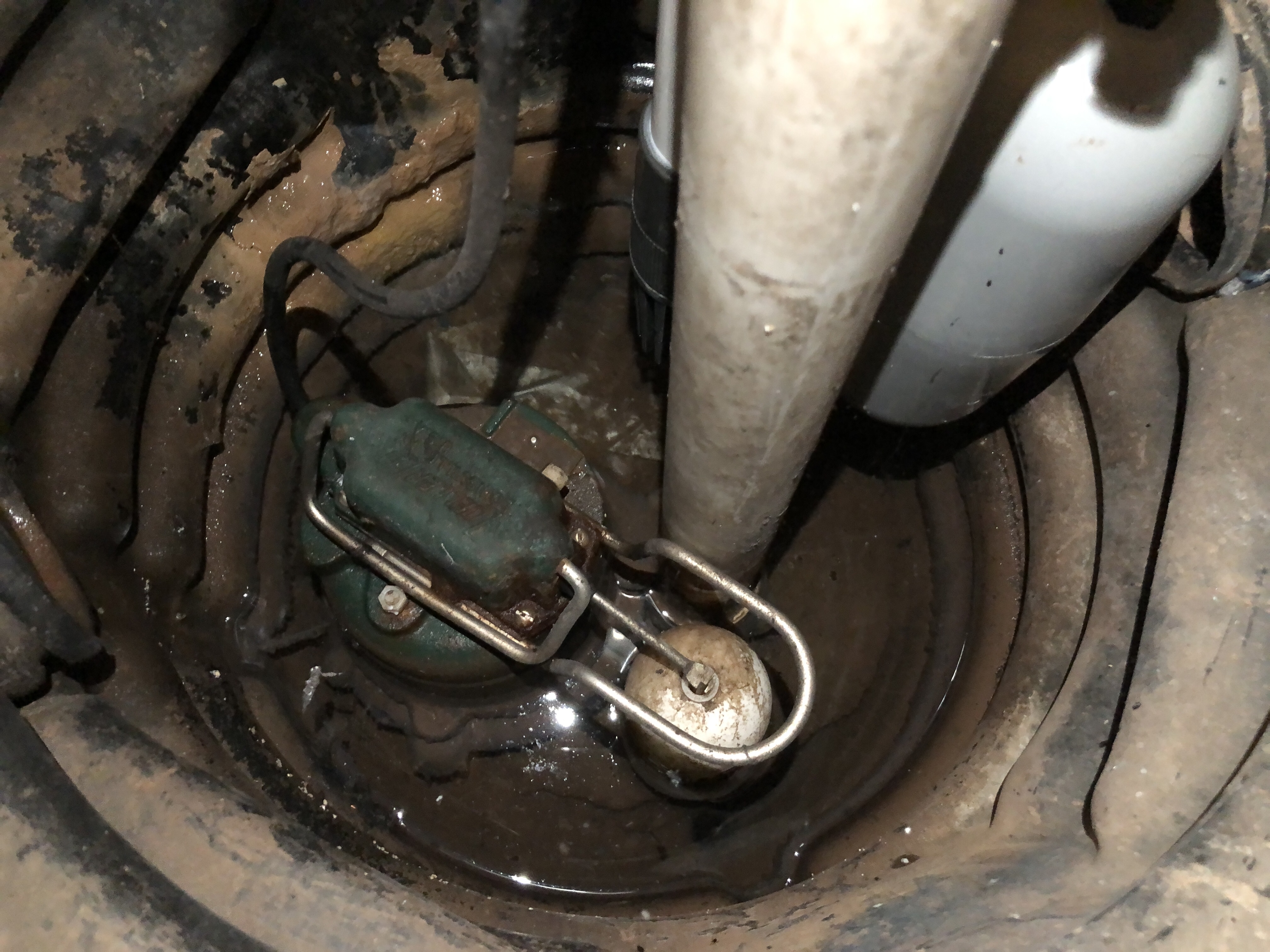
This is the part that gets people. A sump pump doesn't check engine light you. It doesn't send a notification to your phone. It either works or it doesn't — and you only find out which one when you actually need it.
The most common failure mode is a stuck float switch. That little float rises with the water level and triggers the pump to run. If it gets tangled, shifts position, or corrodes, the pump just sits there while water fills your basement. It's the number one cause of sump pump failure, and it's completely invisible until you test it.
Second most common? Power outages. Your pump is electric. Spring storms knock out power. No power, no pump — and the water keeps coming in through your perimeter drains regardless. A pump without a battery backup is a pump that will fail during the exact storm that makes it necessary.
Then there's the frozen discharge line — the pipe that runs outside your house to dump the water away from the foundation. In an Indiana or Illinois winter, that pipe can freeze solid. The pump runs, can't push water anywhere, and burns the motor out. You don't notice until the ground thaws and the pump is toast.
Other failure modes include clogged intake screens, worn-out motors (they have a lifespan of 7–10 years — no exceptions), stuck check valves that make the pump short-cycle constantly, and iron bacteria buildup that clogs everything with rust-colored slime.
Warning signs to check right now:
- Pump runs constantly, even in dry weather — wrong size or stuck valve
- Pump never runs, even when the pit has water in it — float switch failure
- Visible rust, corrosion, or slimy residue in the pit
- Grinding, rattling, humming, or gurgling sounds
- Your pump is over 7 years old with no maintenance history
- No battery backup — this is a single point of failure, full stop
- Burning smell near the unit
- Discharge pipe aimed at your foundation or running uphill
If you're checking that list and nodding along to more than one item, keep reading.
The Sump Pump Maintenance Checklist You Can Do This Weekend
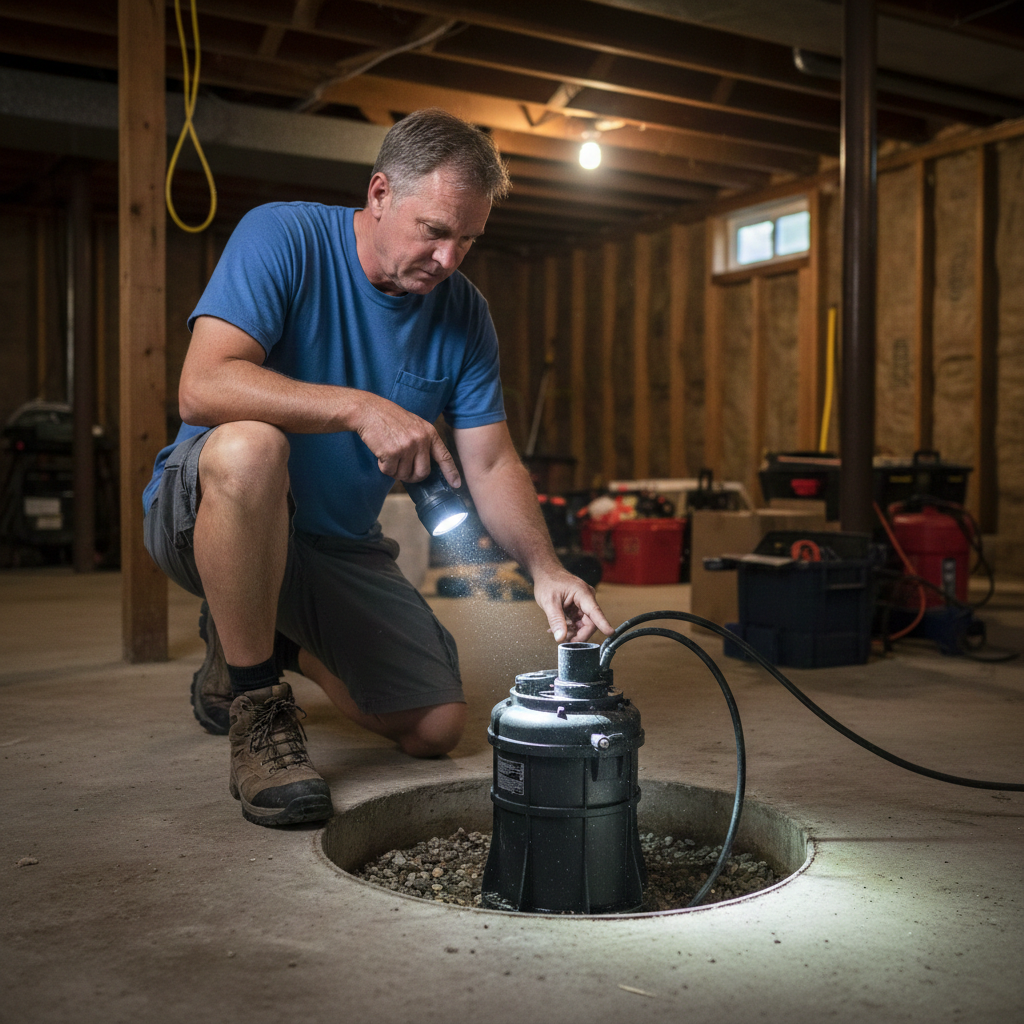
Good news: most basic sump pump maintenance is well within DIY territory. You don't need a plumber to do these checks. You need 30–45 minutes and a willingness to get your hands a little dirty.
Step 1: Test the float switch (5 minutes)
Slowly pour a 5-gallon bucket of water into the pit. The pump should activate before the water gets more than a few inches above the pump inlet. It should run until the water level drops, then shut off. If it doesn't start, or doesn't stop, you have a float switch problem. If it hums but doesn't pump, the motor is seized. Either way — that's a call to a plumber.
Step 2: Clean the pit (15 minutes)
Unplug the pump first. Always. Remove the pump from the pit if your model allows it, or work around it. Pull out any debris — gravel, leaves, sediment, anything that's accumulated. Rinse the pit walls with a garden hose. Buildup in the pit restricts flow and gives the pump extra work to do.
Step 3: Rinse the inlet screen (10 minutes)
The inlet screen keeps debris from getting pulled into the impeller. Over time it clogs. With the pump unplugged, use a garden hose to rinse it clean. If you see rust-colored slime (iron bacteria), soak it in a 1:1 solution of water and white vinegar for an hour.
Step 4: Inspect the discharge pipe outside (5 minutes)
Walk outside and find where your discharge pipe exits the house. Confirm it's not frozen, not cracked, and not pointed at your foundation. The pipe should terminate at least 10 feet from the house and discharge downhill. If it's pointing back toward your home, you're cycling water right back into the system.
Step 5: Test the battery backup (5 minutes)
If you have one — and you should — unplug the main pump from the wall. The battery backup should activate automatically. If it doesn't, or the battery indicator shows red, you need a new battery. Backup batteries typically last 3–5 years. They're a $100–$200 part. Don't skip this test.
Step 6: Check the GFCI outlet (2 minutes)
Your sump pump is plugged into a GFCI outlet (the kind with the test/reset buttons). Press the Test button — the outlet should cut power. Press Reset — it should restore it. A tripped GFCI outlet that nobody noticed is one of the dumber ways to end up with a flooded basement.
If the pump fails any of these tests, don't ignore it and hope for the best. Hope is not a maintenance strategy. Move on to the next section.
When to Stop DIYing and Call a Plumber
There's a clear line between what a homeowner should handle and what requires a licensed plumber. Here it is, without the usual hand-wringing:
| Situation | Why You Need a Pro |
|---|---|
| Pump fails the float switch test | May indicate wrong pump size, not just a bad switch |
| Motor makes noise or runs slow | Internal failure — no DIY fix, needs replacement evaluation |
| New installation (no existing pit) | Requires excavation, drainage design, potentially permits |
| Replacing a failed pump | Correct sizing matters — wrong size means constant failure |
| Adding a battery backup system | Electrical connections, proper inverter sizing |
| Frozen or cracked discharge line | Pipe work and re-routing — not a homeowner job |
| Pump runs but water stays high | May be undersized for your home's water table — pro assessment needed |
| Water is already in your basement | Call a plumber and a water mitigation company, now |
The rule of thumb is simple: If water is already in your basement, call a plumber. If you're trying to prevent it — start with the checklist yourself.
When you do call a plumber, ask them: What size pump is appropriate for my home and water table? What discharge routing do you recommend? Do you install battery backups? How do you handle a frozen discharge line situation? A contractor who can answer those questions clearly is worth their hourly rate. One who can't — keep looking.
Finding a vetted plumber in Indianapolis or Chicago who specializes in sump pump work is exactly what Saorr is built for — more on that at the end.
What It Actually Costs — Maintenance vs. Replacement vs. Flood Damage

Let's talk money. Real numbers, local market, 2026.
Indianapolis Market
| Service | Low | High | Notes |
|---|---|---|---|
| DIY annual maintenance | $0 | $50 | Just your time + maybe a new battery |
| Professional maintenance checkup | $100 | $300 | Plumber inspection + test + report |
| Sump pump replacement (unit + labor) | $800 | $1,600 | Carter's My Plumber, Indy 2026 |
| Battery backup add-on | $150 | $300 | Add to replacement project |
| Sump pump + battery backup installed | $900 | $1,200 | Real quote from Indy homeowners (package deal pricing) |
| New installation (no existing pit) | $1,500 | $3,000+ | Includes excavation + pit |
| Emergency / after-hours call | 2x rate | 2x rate | Weekend and night surcharges |
Chicago Market
| Service | Low | High | Notes |
|---|---|---|---|
| Sump pump replacement (unit + labor) | $800 | $2,000 | Higher labor rates in metro |
| Battery backup installation | $300 | $800 | Higher than Indy due to labor costs |
| Emergency call (storm season) | Premium | Premium | Book before the season hits |
Now here's the number that should put all of that in perspective:
Water damage mitigation for a flooded finished basement: $6,500+. That's just to dry it out. That doesn't include new carpet, new drywall, replacing the stuff that was stored down there, or the mold remediation you might need 60 days later. The national average insurance payout for water and flooding damage is $13,954 — and that's assuming you have the right coverage, which many homeowners don't.
A $150–$300 battery backup installation in Indianapolis. A $300–$800 one in Chicago. Against a $6,500 floor on your worst-case scenario. That math isn't complicated.
When to repair vs. replace: If your pump is under 5 years old and the issue is an isolated float switch or clogged inlet, repair it. If it's 7+ years old, making noise, or has never been serviced — replace it. The cost difference between repairing an aging pump and replacing it is often a few hundred dollars, and a new pump comes with a warranty. An old pump that keeps failing does not.
One more thing: never call a plumber during a storm. Emergency rates are double. Standard rates apply. Book your plumber in February or early March — before your neighbor's basement floods and you're competing for the same service call at 2x the cost.
Should You Add a Battery Backup? (Yes. Here's Why.)

Power goes out during thunderstorms. This is not a controversial statement. It happens in Indianapolis. It happens in Chicago. It happens on exactly the nights when your sump pump is working its hardest.
An electric sump pump without a battery backup has a single point of failure: the power grid. When the lights go out, the pump stops. The water doesn't.
There are three main types of backup systems:
- DC battery backup — The most common. Runs on a deep-cycle battery (similar to a car battery) that charges continuously. When power drops, it switches automatically. Typical runtime: 5–8 hours of continuous operation (longer for intermittent pumping).
- Water-powered backup — Uses municipal water pressure to power a secondary pump. No battery needed, no electricity required. Downside: uses a lot of water and requires strong municipal pressure — not ideal for all homes.
- Combination units — Primary and backup built into one unit. More expensive but cleaner installation and integrated monitoring.
For most Indianapolis and Chicago homeowners, a standard DC battery backup is the right call. It covers 90% of outage scenarios, the battery is replaceable every 3–5 years for $100–$200, and a qualified plumber can add it to any existing sump pump installation.
Cost in Indianapolis: $150–$300 added to a pump replacement project. In Chicago: $300–$800 standalone installation.
This is the cheapest insurance you'll ever buy. Buy it.
Finding a Plumber You Can Actually Trust in Indianapolis or Chicago
Here's a reality of the home services market: when your basement is flooding at midnight in March, you will hire the first plumber you can reach. That's exactly when you're most likely to get taken advantage of.
The time to find a good plumber is right now, before you need one urgently.
When vetting a sump pump contractor, ask these questions:
- Are you licensed in Indiana / Illinois for plumbing work?
- Do you carry liability insurance?
- How do you determine the right pump size for my home?
- Do you install battery backup systems?
- What's your emergency call policy and rate?
- Can you provide references from recent sump pump work?
A contractor who answers these questions clearly and doesn't make you feel stupid for asking them is a contractor worth calling. The ones who dodge the questions, quote over the phone without seeing the pit, or push you to decide right now — pass.
Getting vetted, reviewed contractors in Indianapolis and Chicago is what Saorr is built to do. No door-knockers. No mystery pricing. Plumbers who have been reviewed by real homeowners in your area.
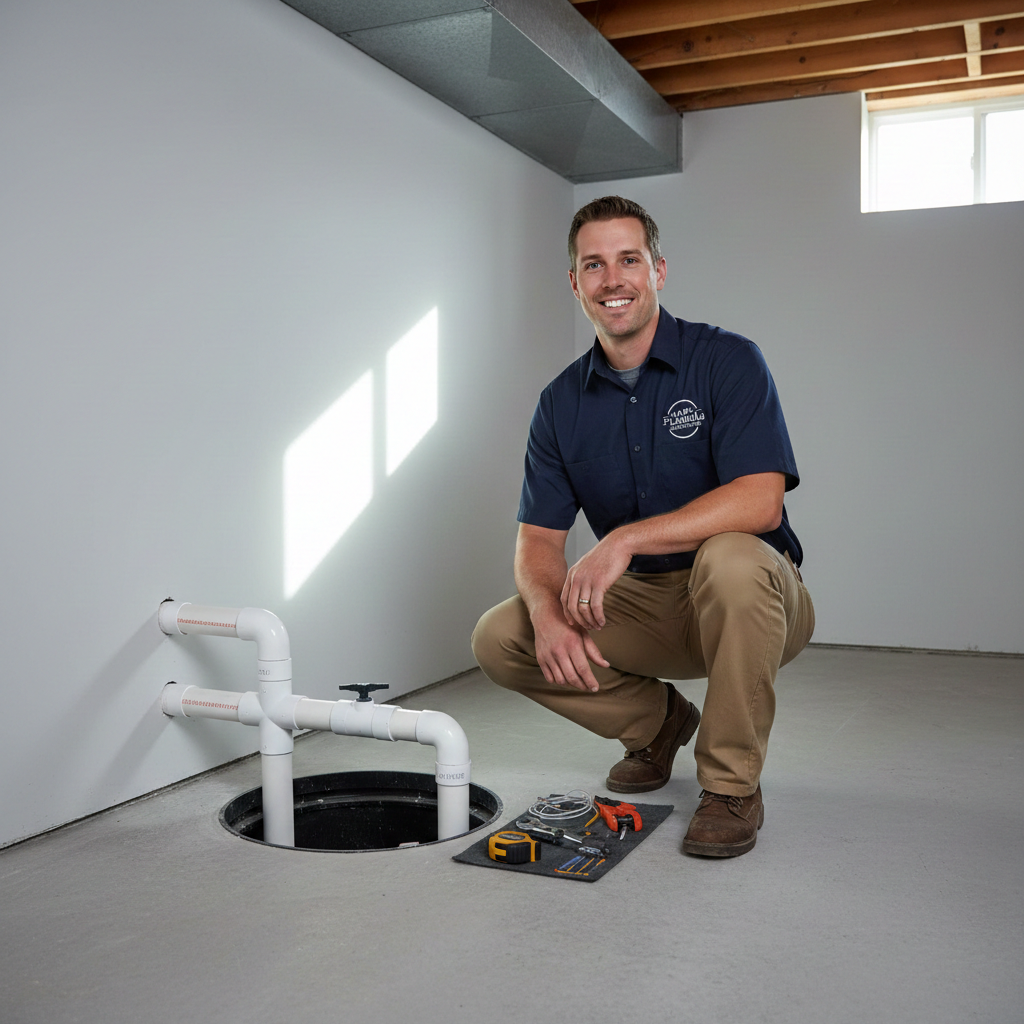
A licensed waterproofing specialist inspects a sump pump installation — the right setup before spring rains hit.
Don't Wait for the Warning You're Not Going to Get
Your sump pump is not going to tell you it's dying. It's not going to slow down gradually, flash a warning light, or send you a push notification. It's going to work, and then one day it isn't going to work — and you are going to find out about it by walking into water.
Seventy-five to ninety percent of Midwest homes have basements (per NAHB / U.S. Waterproofing). Ninety-eight percent of those basements will see water damage at some point. The ones that don't are the ones where somebody paid attention before March.
Spend 30–45 minutes this weekend running through that checklist. Pour water in the pit. Check the discharge pipe. Test the battery backup. If something fails the test, you've just learned a $200 lesson instead of a $6,500 one. That's a good day.
If your pump needs replacing, get it scheduled now — before the thaw hits and every plumber in your city is booked solid with emergency calls from people who didn't do what you just did.
Find a vetted, reviewed sump pump contractor in Indianapolis or Chicago at Saorr.com. No guesswork. No cold calls. Just qualified local plumbers who do this work and have the reviews to prove it.
Your basement will thank you. Probably silently. But still.
Image credits: Zion, IL flood photo — U.S. National Archives and Records Administration (NARA), public domain. Sump pump pit and backup system photos — Wikimedia Commons contributor, CC BY-SA 4.0.
Find Trusted Pros Near You
Ready to start your project? Connect with vetted, top-rated contractors in your area.
Get StartedRelated Articles

Spring Pest Control 2026: When to Spray, What to Watch For, and Why March Is Already Too Late to Wait
Spring Sprinkler Startup: What Irrigation Contractors Find Wrong Every Year (And What It Costs You)