Water Softener Installation Guide — Northeast
Water Softener Installation Guide for Northeast Homeowners
If you're on Long Island, in suburban Connecticut, or anywhere across northern New Jersey, there's a good chance your water is quietly wrecking your pipes, water heater, and appliances. Mineral buildup from hard water is one of those slow-burn problems — you don't notice it until your water heater's already lined with sediment or your shower fixtures are caked in white scale that won't scrub off.
This guide covers what a water softener install actually involves, what it costs in real Northeast markets, and what you should know before you hire someone. The Northeast has its own set of complications — old housing stock, state permits, union labor in the big cities, and water hardness that swings wildly depending on whether you're in Boston or Bridgeport. Let's get into it.
What Is a Water Softener and Do You Need One?
A water softener removes dissolved calcium and magnesium from your water supply through a process called ion exchange. Hard water minerals pass through a resin tank, swap out for sodium ions, and what comes out the other side is treated water that won't leave scale deposits on everything it touches.

Whether you actually need one depends on your water hardness — and in the Northeast, that varies a lot. If you're on municipal water in Boston, you're probably fine: the Quabbin and Wachusett reservoirs feed the metro area with naturally soft water (20–50 mg/L). But if you're on a private well in central Connecticut, pulling from a limestone-adjacent aquifer, you could be looking at 200–300 mg/L — hard enough to noticeably shorten appliance life and leave deposits on everything.
Before you buy anything, get your water tested. A DIY kit runs $10–$40 and will tell you your hardness level. A professional water quality test goes deeper — $50–$150 — and makes sense if you're on a private well where hardness is only one of several potential issues. You might also have iron, manganese, or tannins that require a different or combined system.
Northeast hardness quick reference:
- Long Island, NY: 150–250 mg/L — strongly yes
- Northern NJ (Morris, Somerset, Hunterdon): 150–300 mg/L — strongly yes
- Hartford area, CT: 100–300 mg/L, varies by town — usually yes
- Lancaster/Chester County, PA: 150–250 mg/L — strongly yes
- Albany, NY / Hudson Valley: 100–200 mg/L — often yes
- Boston metro (Quabbin/Wachusett supply): 20–50 mg/L — rarely needed for hardness alone
- Providence, RI (reservoir supply): 50–100 mg/L — sometimes; well water areas run higher
- Rural VT, ME, NH: Highly variable — get a test before buying anything
What's Involved in the Installation?
A standard whole-house water softener installation connects to your main water supply line, usually in the basement or utility room. The installer cuts into the line, adds a bypass valve, sets up the softener tank and brine tank (for salt-based systems), runs a drain line for the regeneration cycle, and connects to a power outlet.
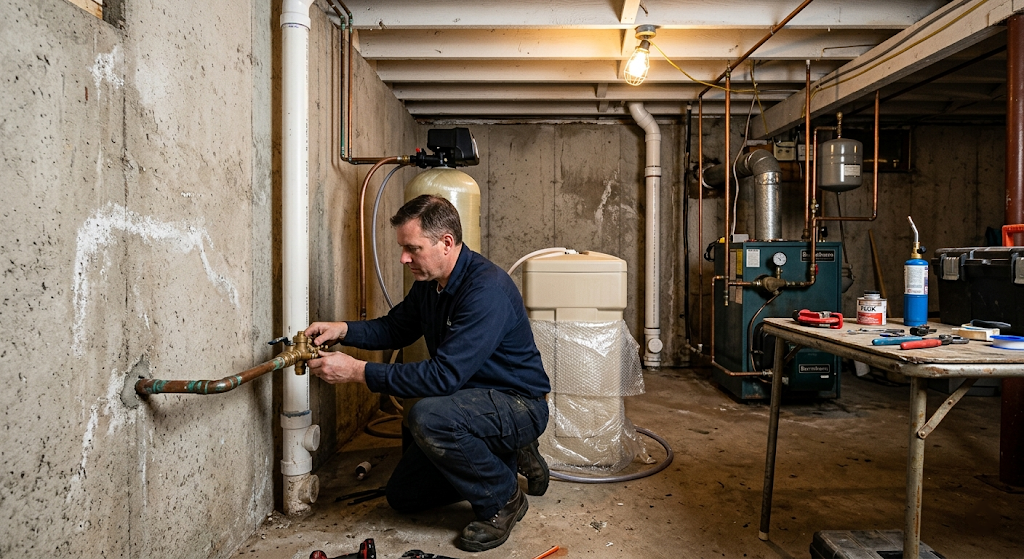
On paper, it's a half-day job for an experienced plumber. In the Northeast, it's often not that simple.
Older homes — and the Northeast has the oldest housing stock in the country — can add real scope to the project. Massachusetts has over 50% of its homes built before 1960. Rhode Island is close behind. If your supply lines are galvanized steel from the 1950s, they're likely already scaled down from decades of hard water deposits. A plumber may recommend replacing those lines while they're already in there, which adds $500–$2,000 depending on extent. A finished basement, tight utility room, or HVAC equipment crowding the water main adds labor time on top of that.
Here's what a typical project scope looks like:
- System sizing based on household size and water hardness level
- Main line shutoff and bypass valve installation
- Softener and brine tank setup and plumbing connection
- Drain line installation for regeneration brine discharge
- Electrical outlet (if one isn't nearby — factor in $3–$5/sq ft for electrical runs)
- Post-install water testing to confirm output hardness
- Permit filing and inspection (required in most Northeast states)
Ongoing costs after install: plan on $100–$300 per year for maintenance, plus $5–$10 per 40-lb bag of salt every one to three months. If you go salt-free with a potassium system, budget $50–$70 per refill instead.
What This Costs Across the US
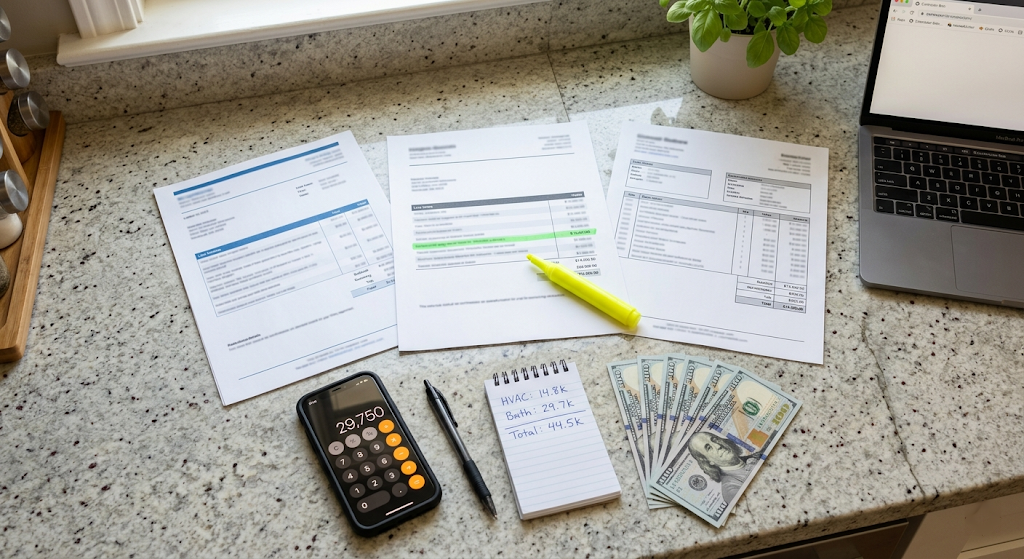
Nationally, the average water softener installation runs about $1,500 all-in, with a full range of $200–$6,000 depending on system type, home complexity, and local labor rates. Labor alone runs $150–$1,000, with plumber hourly rates ranging from $45–$200/hr nationally.
Urban, Suburban & Rural Pricing
In the Northeast, expect to pay above the national average. Here's how the market breaks into tiers:
| Markets | Estimated All-In Cost | Why |
|---|---|---|
| NYC metro, Boston metro, northern NJ (Bergen, Morris) | $2,000–$5,500 | Union labor, strict licensing, high cost of living, older housing stock |
| Philadelphia, Hartford suburbs, Providence, Long Island, Albany | $1,400–$3,200 | Mix of union and non-union; permit required; hard water common |
| Rural VT, ME, NH, upstate NY (rural) | $1,500–$3,500 | Travel surcharges, contractor scarcity, well water complexity |
Note that rural pricing overlaps with — and sometimes exceeds — suburban pricing. That's the travel surcharge effect. A plumber driving 45 minutes each way typically adds $75–$200 to the invoice. If you're on a private well with iron content on top of hardness, you may need a combined filtration and softener system that pushes the total to $2,500–$6,000+.
How This Varies Across the US
Water softener costs and demand vary significantly by region. Here's how other parts of the country compare:
Midwest (IL, OH, MI, IN, WI, MN)
- Pricing: Slightly below the national average in most markets — $1,200–$2,500 for a standard install in Columbus, Cleveland, Indianapolis, and Detroit. Chicago runs higher ($1,800–$3,500) due to cost of living and union labor through UA Local 130.
- Seasonality: Demand peaks in spring (March–May) and again in fall before freeze season — a similar pattern to the Northeast. Summer is noticeably slower.
- Contractor availability: Good in major metros. Rural Wisconsin, Michigan, and Indiana see moderate scarcity but not as severe as rural New England.
- Notable: The Midwest sits on limestone bedrock — Milwaukee, Indianapolis, and Columbus all have famously hard municipal water in the 150–250 mg/L range. Minnesota has actively studied brine discharge impacts on lakes; some MN counties near sensitive water bodies restrict salt-based softeners or require high-efficiency models.
Southeast (GA, NC, FL, TN, VA)
- Pricing: Near or slightly below the national average. Atlanta, Charlotte, Raleigh, and Nashville run $1,200–$2,800. Miami and Orlando $1,300–$2,600. Less union presence keeps labor costs competitive.
- Seasonality: Minimal seasonal variation in most markets. Florida is year-round. No freeze-thaw demand driver like the Northeast has.
- Contractor availability: Generally good. Florida and Georgia have well-developed water treatment contractor markets driven by consistent hard water demand and population growth.
- Notable: Hardness is highly variable. South Florida — Miami-Dade, Broward, Palm Beach — draws from the Biscayne limestone aquifer and commonly tests at 200–400 mg/L, some of the hardest water in the country. Coastal Carolinas and Georgia are often soft. Southeast homes are typically built 1990–2020 with newer plumbing (CPVC, PEX), which means fewer pipe complications and lower add-on scope compared to the Northeast.
Mountain West (CO, AZ, UT, NV, NM)
- Pricing: Mixed. Phoenix and Las Vegas are competitive ($1,300–$2,800) despite high cost of living. Denver runs $1,500–$3,000. Rural Mountain West adds significant travel surcharges.
- Seasonality: Relatively flat in Phoenix, Las Vegas, and Albuquerque. Denver and Salt Lake City see a modest spring uptick. Year-round contractor availability in AZ and NV markets.
- Contractor availability: Excellent in major metros — high demand has produced a large base of specialized water treatment contractors. Genuinely scarce in rural NM, ID, and Wyoming.
- Notable: This is the hardest water in the country. Phoenix can exceed 350 mg/L; Las Vegas runs around 278 mg/L; Salt Lake City 250+ mg/L. A water softener isn't a luxury here — it's close to a necessity. Utah has enacted state-level water softener efficiency standards; only high-efficiency models may be sold. Some Southwest utilities actively encourage or require salt-free (potassium) systems due to brine disposal concerns in water-scarce regions.
South / Gulf Coast (TX, LA, OK)
- Pricing: Competitive. Houston $1,200–$2,500; Dallas/Fort Worth $1,200–$2,600; San Antonio $1,100–$2,300; Austin $1,300–$2,700 with rising labor costs. Open-shop labor market keeps overall pricing lower than the Northeast.
- Seasonality: Year-round demand in major Texas markets. No true slow season. Hurricane prep season (May–September) occasionally disrupts contractor scheduling in coastal areas.
- Contractor availability: Excellent in major Texas metros. Houston, Dallas, and San Antonio have large, established water treatment contractor markets. West Texas and rural Oklahoma are more variable.
- Notable: San Antonio draws from the Edwards Aquifer limestone belt and is known for extremely hard water — 400+ mg/L in some areas. Texas doesn't require a plumber's license for water softener installation in all counties, which creates a wider range of installer quality. Still recommend a licensed plumber for any supply-line connections regardless of what local code technically requires.
Pacific Coast (CA, WA, OR)
- Pricing: High in California. SF Bay Area: $2,000–$5,000. LA/Orange County: $1,800–$4,000. San Diego: $1,700–$3,500. Seattle/Portland: $1,600–$3,200 — less union-heavy than NYC or SF but still high cost of living.
- Seasonality: Year-round in Southern California. Pacific Northwest sees a slight spring peak. Mild winters mean no freeze-thaw demand driver.
- Contractor availability: Strong in all major metros. Specialized water treatment companies are well-established in Southern California due to consistent hard water demand.
- Notable: Hardness varies dramatically within the region. San Diego receives Colorado River water and runs very hard (350+ mg/L). SF city water is relatively soft (40–80 mg/L from Sierra Nevada snowmelt). Seattle and Portland water is very soft (10–50 mg/L from mountain runoff) — minimal softener demand in the PNW. California has strict environmental regulations on brine discharge; LA city permits can add $200–$500 to project cost.
Local Factors That Affect Your Quote
If you're in the Northeast, a handful of factors shape your number more than anywhere else in the country.
Your water may come from limestone geology. Much of Connecticut's suburban well water, Long Island's glacial aquifer system, and the limestone belt running through Lancaster and Chester counties in Pennsylvania register 150–300 mg/L. That's not marginally hard — it's scale-on-everything hard. If you're on city water, check your utility's annual water quality report before assuming you have a problem. Boston metro homeowners on Quabbin and Wachusett reservoir supply are often surprised to learn they don't actually need a softener for hardness.
Old pipes mean more work. The Northeast has the oldest housing stock in the US — over 53% of Massachusetts homes and roughly 55% of Rhode Island homes were built before 1960. Pre-1960 galvanized supply lines have often already narrowed from decades of scale buildup. A plumber may recommend replacing sections while they're in the job. Budget an additional $200–$600 for this kind of add-on scope in older homes; if galvanized replacement becomes part of the conversation, it can run $500–$2,000 more depending on extent.
You likely need a permit — and a licensed plumber to pull it. Massachusetts and Rhode Island require a licensed Master or Journeyman plumber for any work connecting to supply lines. Connecticut, New York, New Jersey, and Pennsylvania require permits for plumbing work in most municipalities. In NYC, a licensed plumber must file with the DOB, and permit fees alone can run $150–$500+. Anyone offering to do this job without a licensed plumber and permit is leaving you with non-compliant work that shows up as a problem at resale.
Union labor drives up the price in major cities. NYC's UA Local 1 and Boston's UA Local 12 are active, well-organized markets. Union billing rates in NYC run $150–$250/hr; Boston $120–$175/hr; Philadelphia $100–$150/hr. Outside those urban cores — Hartford, Providence, Albany — you'll find a more competitive mix of union and non-union shops running $80–$130/hr.
Watershed rules may eliminate salt-based systems in some CT and NJ towns. If you're in a town near a protected reservoir in Connecticut — Simsbury, Canton, and Avon are documented examples — local regulations may restrict or discourage salt-based softeners due to chloride runoff concerns. New Jersey's DEP has raised similar concerns about sodium chloride discharge to groundwater, particularly in some Passaic County water protection zones. Ask your installer directly if you're in a water-sensitive area.
Timing matters more here than most places. Spring (March–May) is the peak season — plumbers in metro areas book 2–4 weeks out as homeowners assess winter scale damage. Fall (September–October) is the secondary peak before heating season. Scheduling in summer or mid-winter typically means faster availability and occasionally better pricing.
Hiring a Pro vs. DIY
Water softener manufacturers sell direct-to-consumer systems for $300–$1,500, and some are designed for homeowner installation. For a straightforward bypass connection on newer copper or PEX plumbing, a competent DIYer can handle it. The system typically comes with fittings and basic instructions.
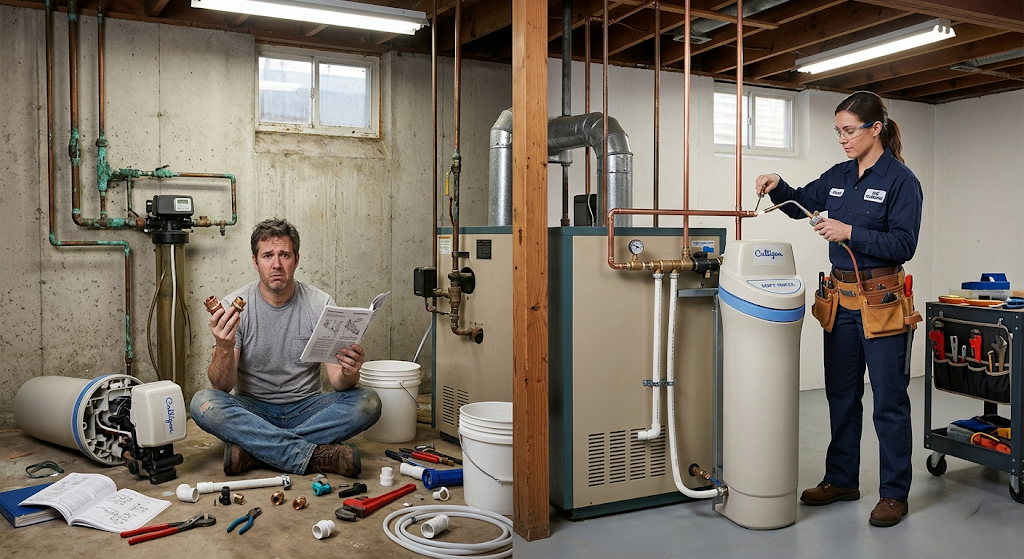
In the Northeast, the calculation shifts toward hiring a pro for several reasons. If your home was built before 1960, cutting into supply lines in a century-old basement is not beginner territory — you may hit corroded fittings, galvanized that needs replacing, or plumbing configurations that don't match what the install guide assumes. If you're in a state that requires a licensed plumber and permit (Massachusetts, Rhode Island, and most municipalities in CT, NY, NJ, PA), DIY-connecting to supply lines puts you out of compliance. And the brine drain line needs to terminate correctly — improper drainage causes real problems, especially if you're on a septic system.
DIY makes the most sense in the Northeast for rural homeowners who are genuinely handy, have newer plumbing, and are looking at 8-week contractor wait times. Under-sink reverse osmosis systems ($1,500–$1,800 installed professionally) are also a reasonable DIY option for apartment dwellers or households where a whole-house system isn't practical.
How to Find and Vet a Contractor
For a water softener install, you want a licensed plumber — not just a "water treatment specialist." In most Northeast states, connecting to your supply line is plumbing work and legally requires a licensed plumber. Some water treatment companies employ licensed plumbers; others subcontract. Ask directly: "Who's doing the plumbing connection, and are they a licensed plumber in this state?"
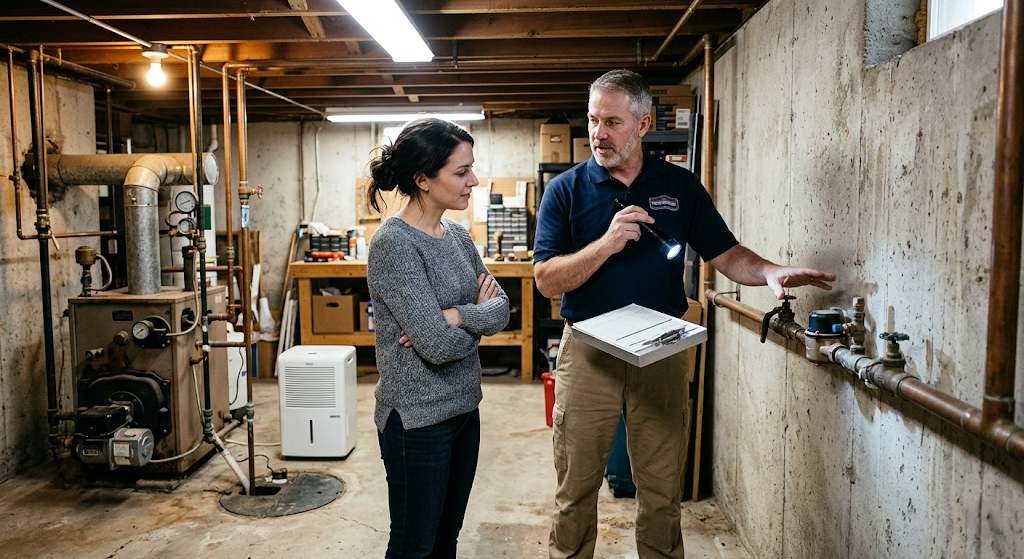
Get at least three quotes. Prices vary more than you'd expect — especially between union and non-union shops in metro areas. Make sure each quote clearly includes:
- System type and model (so you're comparing apples to apples)
- Labor broken out from equipment cost
- Whether permit filing is included or billed separately
- Hourly rate for add-on scope if they find pipe issues mid-job
Verify licensing through your state's contractor lookup. In Massachusetts, check the Board of State Examiners of Plumbers and Gas Fitters. In New Jersey, the NJDCA. In New York, the NYC DOB for city work or your county for upstate. Ask for proof of liability insurance — not just a certificate on paper, but confirmation it's current and active.
Avoid anyone who quotes a flat price without seeing your water main, your basement, and your existing plumbing first. A good installer asks to look at the space before giving you a number. A phone quote that doesn't change once they're in the job is a rarity — make sure you understand what's included and what triggers additional charges before you sign anything.
Final Thoughts
If you're on Long Island, in suburban Connecticut, across northern New Jersey, or in much of upstate New York, the odds are good that you have hard water and it's doing quiet damage to your home. A water softener is a legitimate investment, not just a convenience upgrade. Test your water first, know whether your town has restrictions on salt-based systems near sensitive watersheds, and budget for the reality that Northeast installs run well above the national average.
The national average of $1,500 is a starting point, not an expectation. In the Northeast, factor in housing age, state permit requirements, and whether you're in a union labor market. A realistic budget for most Northeast suburban homes lands somewhere between $1,800 and $3,500, with NYC on the high end and rural New England following its own pricing logic driven by contractor scarcity and travel costs.
Book in summer or early winter if you can. Get three quotes. Make sure whoever connects to your supply line is a licensed plumber. And if you're on a private well, get a full water quality test — not just a hardness strip — before you commit to any system type. Rural Northeast wells often have iron, tannins, or other issues that a standard ion-exchange softener alone won't solve.
Find Trusted Pros Near You
Ready to start your project? Connect with vetted, top-rated contractors in your area.
Get Started