Window Well Covers & Drainage Guide
Window Well Covers & Drainage: What Every Homeowner Needs to Know in 2026
Window wells are one of those things you don't think about — until the day you walk downstairs and find six inches of water on the basement floor. That semicircular excavation around your below-grade window is supposed to let in light and provide emergency egress. What it's actually doing, if it has no cover or a failing drainage bed, is collecting leaves, debris, ice, and rainwater, then funneling all of it directly toward your foundation.
The fix isn't complicated, but there are real choices to make: what type of cover fits your well, whether you need a new drainage bed or just a gravel refresh, and whether this is a weekend DIY project or a job for a licensed waterproofing crew. This guide walks you through all of it — cover types, drainage systems, national and regional costs, and how to find someone worth hiring if you decide to go that route.
Why Window Wells Fail — and What It Costs You When They Do
Window wells fail two ways: drainage failure and cover failure. Often it's both at once.
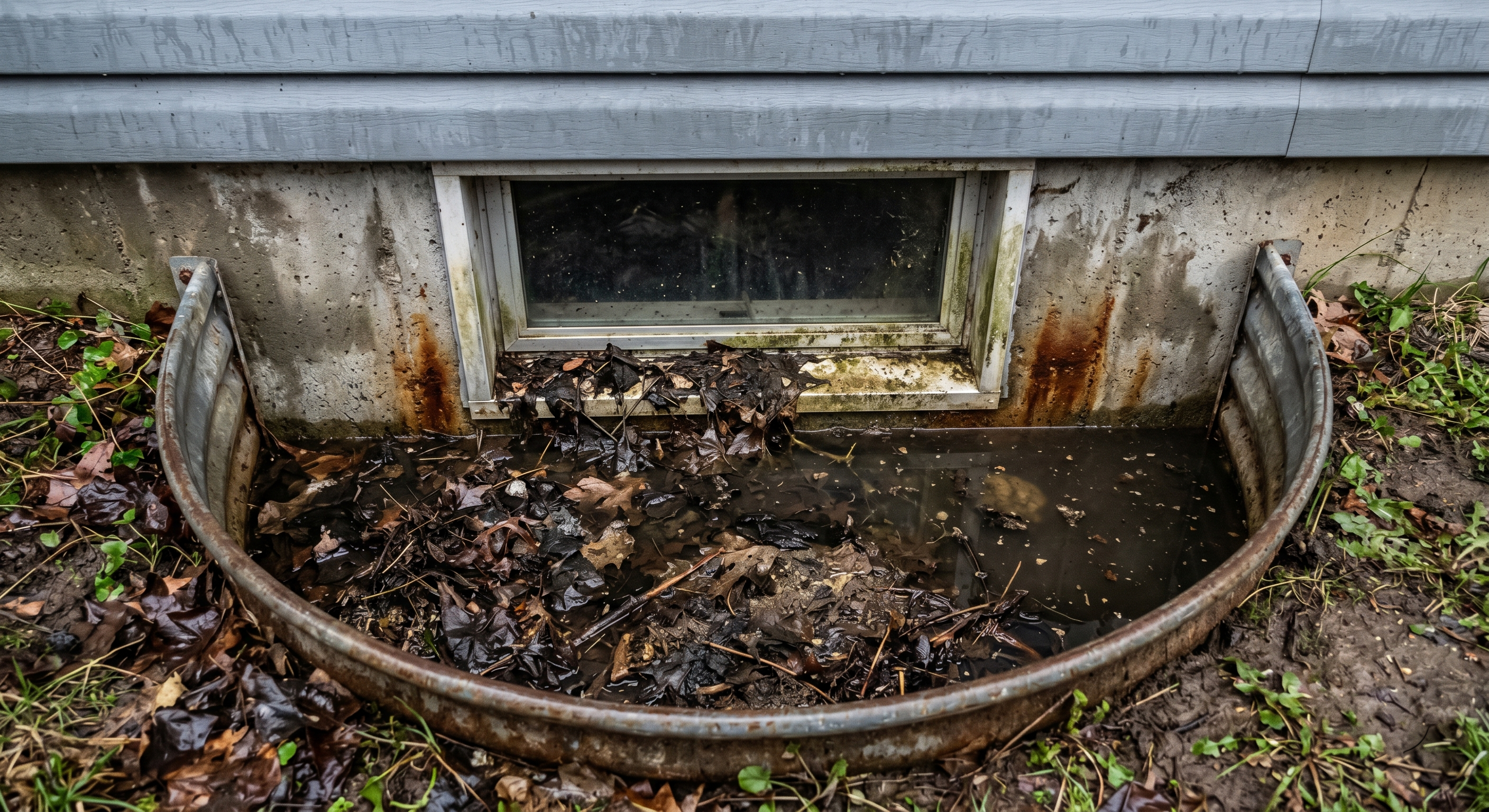
Drainage failure happens when the gravel bed at the bottom of the well gets compacted, saturated with fine soil particles, or was never properly installed in the first place. Waterproofing professionals consistently specify at least 6 inches of washed gravel beneath the well to allow water to percolate down and away from the foundation � a best practice aligned with IRC Section R405.1 foundation drainage requirements, even if your local code does not specify the exact depth for window well gravel beds. In older homes — especially those built before 1970 — that bed may be clay, compacted soil, or nothing at all. When heavy rain hits, the well fills up like a bucket, and water eventually finds its way through the window frame or along the foundation wall.
Cover failure is simpler: there's no cover, the cover broke, or the cover was installed wrong and lets debris accumulate underneath it anyway. A well packed with wet leaves holds moisture against the window frame year-round. Wood frames rot. Aluminum frames oxidize. The seal around the glass deteriorates. And once water gets past the frame, you're looking at mold remediation, not just a cover replacement.
The financial stakes are real. A basic cover and drainage refresh runs $500–$1,200 per well nationwide. Ignore it, and you're potentially looking at $3,000–$15,000+ in water damage, mold remediation, and window replacement — all of which your homeowner's insurance may not cover if they determine it was gradual/preventable damage.
Window Well Cover Types and Drainage Options — Know What You're Buying
Before you price anything out, you need to know what's actually on the market. Covers and drainage systems aren't one-size-fits-all.

Cover Types
Polycarbonate bubble/dome covers are the most common DIY option. They run $30–$150 for standard well sizes and snap or bolt onto the well frame. They let in light, shed water, and keep debris out. Lightweight — which is great for egress (you can push one off in an emergency) but means they can crack or shift in heavy snow loads. Fine for moderate climates; not the right call in Chicago or Minneapolis without a reinforced model.
Flat polycarbonate panels run $80–$250 and are semi-rigid. Some cut to fit non-standard wells. More snow-load capacity than dome styles but still not structural. Good middle-ground for most regions.
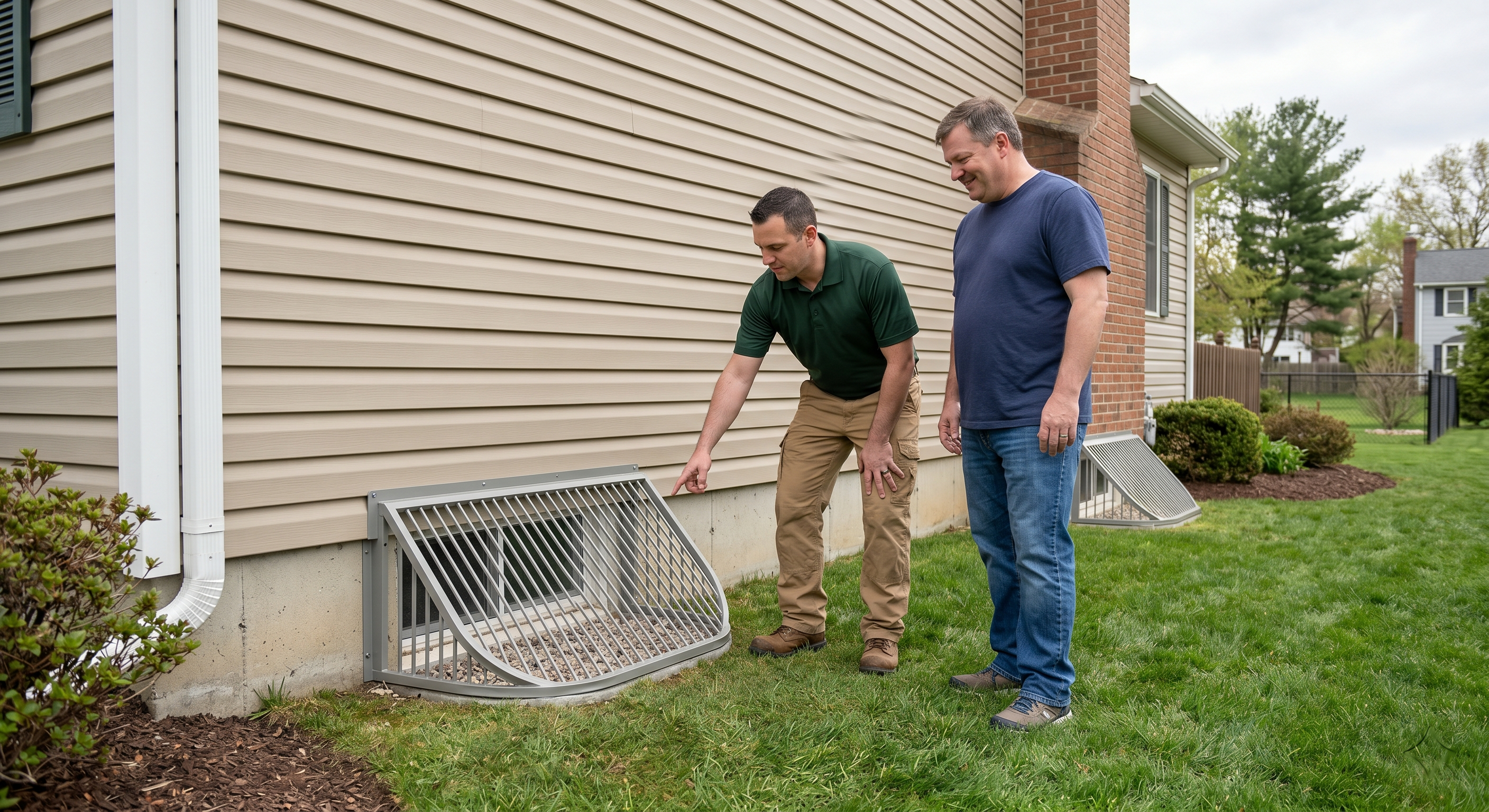
Metal grating with polycarbonate insert — steel or aluminum frame with a polycarbonate panel — runs $200–$500 and is the right choice for anything in the frost belt. These withstand foot traffic, heavy snow, and ice without warping or cracking. They're also more secure against animals and unauthorized entry. Installation typically requires basic hardware.
Custom steel covers are welded to your exact well dimensions and run $400–$2,000+. This is what you want for oversized wells, irregularly shaped wells (common in homes built before 1960), or any commercial application. Custom fabrication adds 1–3 weeks lead time.
Drainage Systems
Gravel drainage bed — the baseline that all window wells should have. Six to twelve inches of washed, crushed stone beneath the well floor allows water to percolate down rather than pool. Cost: $100–$400 per well for materials and labor to excavate and fill. If your current well is sitting on compacted clay or original native soil, start here.
Perforated drain pipe to daylight or sump — a 4-inch perforated pipe runs from the bottom of the gravel bed to either a daylighted outlet on a slope or into your interior sump system. Handles overflow that the gravel bed can't absorb fast enough. Cost: $200–$800 per well, depending on pipe run length and connection point.
Interior French drain tie-in — for serious water intrusion, the well drain connects to a full perimeter interior drainage system. This is a professional job requiring permits in most jurisdictions. Cost:$40–$100 per linear foot of French drain; full perimeter systems typically run $7,000–$20,000+ for the whole basement.
Sump pump installation — if you don't have one already and your basement sits below the water table or in a flood-prone area, a sump pump is the last line of defense. Cost: $1,200–$2,500 installed (pump, pit, and electrical connection per This Old House 2026 estimates).
What Window Well Covers and Drainage Cost Across the US
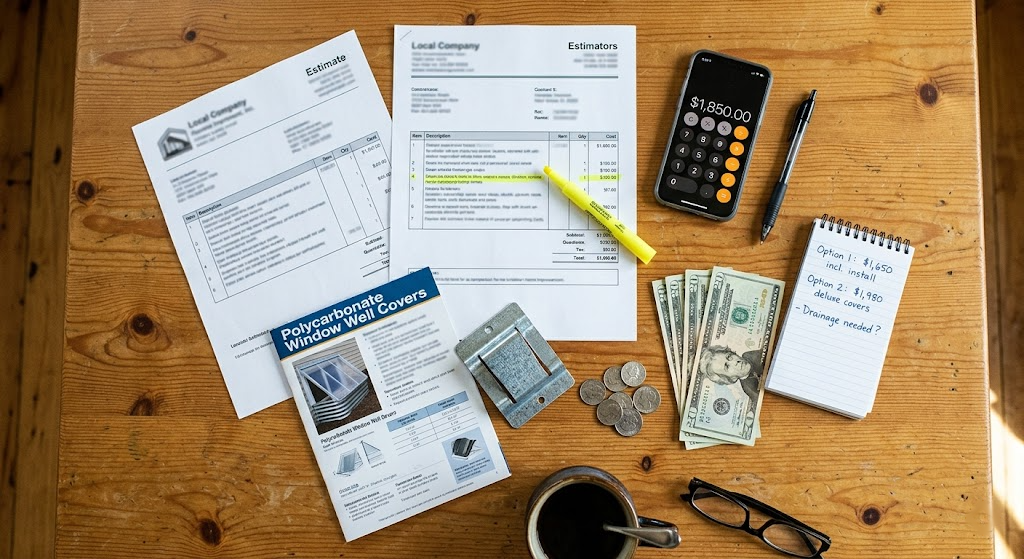
The ranges below represent a standard project scope: one window well, new polycarbonate or metal cover professionally fitted, plus a gravel drainage bed refresh. If you need drain pipe installation, sump tie-in, or a full interior French drain system, add those costs from the section above. Prices are per well.
Northeast — Maine, New Hampshire, Vermont, Massachusetts, Rhode Island, Connecticut, New York, New Jersey
Boston MA, New York City NY: $800–$1,900 per well
Hartford CT, Providence RI, Albany NY: $700–$1,500 per well
The Northeast is the most expensive region for this work. NYC union labor runs 35–55% above the national construction mean (BLS 2024), and NYC permit costs alone add $150–$500 to any foundation-adjacent project. Pre-war housing stock throughout the region — think 1880s–1940s brownstones and colonials — frequently has non-standard well dimensions that require custom covers, pushing material costs up significantly. Boston and Hartford experience 40–60 freeze-thaw cycles per year, so lightweight polycarbonate domes typically fail within two seasons; contractors in this region default to metal-frame covers as the standard install.
Mid-Atlantic — Pennsylvania, Maryland, Washington DC, Virginia, West Virginia, Delaware
Washington DC / Northern Virginia, Baltimore MD: $750–$1,650 per well
Pittsburgh PA, Richmond VA: $650–$1,400 per well
DC-area labor rates run 20–30% above the national average, and the mid-Atlantic's heavy clay soils — particularly in the Virginia and Maryland Piedmont — make drainage excavation more labor-intensive than in sandier regions. Baltimore's dense row-home construction means tight exterior access for any foundation work, which often results in a labor surcharge. Pittsburgh's river-valley geography puts some properties on historically high water tables, making proper drainage bed sizing critical; Richmond's red clay soil is notoriously slow-draining and can overwhelm undersized gravel beds during heavy spring rains.
Southeast — North Carolina, South Carolina, Georgia, Florida, Alabama, Mississippi, Tennessee, Arkansas, Kentucky
Atlanta GA, Miami FL, Charlotte NC: $650–$1,450 per well
Raleigh NC, Tampa FL, Nashville TN: $600–$1,300 per well
Growth-market demand in Atlanta and Charlotte keeps contractors booked out and prices above the national floor; Miami adds flood-zone compliance costs that can require engineering review for any foundation-adjacent drainage work. The Southeast has a lower rate of basement homes overall — especially in newer Florida and coastal construction, which is largely slab-on-grade — so true basement waterproofing specialists are less plentiful here than in the Midwest or Northeast, which can push costs up due to scarcity. Nashville's karst limestone geology creates unique drainage challenges in some areas, requiring deeper gravel beds or more complex drain routing than the standard install.
Midwest — Ohio, Indiana, Illinois, Michigan, Wisconsin, Minnesota, Iowa, Missouri, and Great Plains States
Chicago IL, Detroit MI, Minneapolis MN: $700–$1,550 per well
Indianapolis IN, Columbus OH, Milwaukee WI: $600–$1,250 per well
The Midwest is where this project is most common — 70–85% of single-family homes in this region have basements (U.S. Census data), and contractors here do this work constantly. Chicago's Cook County union labor runs 20–30% above the national mean, and Chicago's notorious clay soil drains poorly, which often means drainage bed work is more involved than a simple gravel swap. Minneapolis averages 54 inches of snow per year; covers here must carry a structural rating of 40+ lbs per square foot, which almost always means metal-frame construction. Indianapolis, Columbus, and Milwaukee hit near the national average — these are competitive markets with strong contractor supply and no extreme labor premiums.
South & Gulf Coast — Texas, Oklahoma, Louisiana, Arkansas, Mississippi
Houston TX, Dallas TX: $650–$1,400 per well
San Antonio TX, Austin TX, Oklahoma City OK: $575–$1,200 per well
A note upfront: window wells are uncommon in this region because most construction here is slab-on-grade. If you have them, you likely own an older home, a custom build, or a property in a flood-prone area where the original owner chose to go below grade. Houston and Dallas both see labor rates 10–15% above national due to sustained residential building demand, and Houston's "gumbo" clay soil and high water table make drainage system sizing genuinely critical — cover-only installs aren't enough in many Houston-area properties. Austin's fractured limestone caliche rock increases excavation costs substantially if drainage work goes more than 12 inches deep; in Oklahoma City, specialist waterproofing contractors are thin on the ground, so expect longer lead times and fewer competitive bids.
Mountain West — Colorado, Utah, Nevada, Arizona, New Mexico, Idaho, Wyoming, Montana
Denver CO, Phoenix AZ: $650–$1,500 per well
Salt Lake City UT, Boise ID, Albuquerque NM: $580–$1,250 per well
Denver's rapid population growth has pushed construction labor 15–25% above the national mean, and Colorado's notorious bentonite clay soil — one of the most expansive soil types in the country — often requires a geotechnical assessment before any drainage installation near the foundation. Phoenix looks cheap on paper, but monsoon season delivers 1–3 inches of rain in under an hour, which overwhelms standard drainage beds; contractors who spec for average annual rainfall here aren't sizing for peak events. Salt Lake City, Boise, and Albuquerque sit at or slightly below the national average for labor, making these among the better-value markets in the country for this type of work.
Pacific Coast — California, Oregon, Washington, Alaska, Hawaii
Seattle WA, Los Angeles CA, San Francisco Bay Area CA: $850–$2,000 per well
Portland OR, San Diego CA, Sacramento CA: $700–$1,650 per well
The Pacific Coast is the most expensive region after the Northeast. San Francisco and Seattle construction labor runs 40–60% above the national mean (BLS 2024), and California's permit process — particularly in SF, where foundation-adjacent work permits can cost $300–$800+ — adds meaningful overhead to every project. Seattle's persistent 37 inches of annual rainfall makes drainage bed sizing genuinely critical: a cover-only install in the Pacific Northwest is treating the symptom, not the cause. California's Title 24 Energy Code affects egress cover specifications, and HOA restrictions in many suburban California communities regulate cover materials and appearance, which can force homeowners toward more expensive custom options.
DIY or Hire a Pro? Be Honest With Yourself
Here's the honest breakdown.

What You Can Reasonably DIY
Replacing a standard polycarbonate dome cover is one of the most accessible DIY projects in home improvement. Measure your well (width × depth), order a matching cover ($30–$150 at any big-box home store or online), and snap or bolt it in place. Total time: under two hours. This is a legitimate weekend project.
Refreshing a gravel drainage bed is physically demanding but straightforward. Dig out the old compacted material, fill with 6–12 inches of washed crushed stone (not pea gravel — it migrates), and re-level. Materials run $50–$200 depending on your well size and how deep you're going. Half-day project. Requires a shovel, a wheelbarrow, and a strong back.
Clearing debris and checking drain flow — pull out leaves and organic matter, run a garden hose into the well for several minutes, and watch where the water goes. If it pools more than 2 inches and doesn't drain within 20–30 minutes, your bed is compromised or your drain is clogged. This diagnostic takes 30 minutes and costs nothing.
When to Call a Pro
Any new drain pipe installation or sump tie-in requires a permit in most jurisdictions and involves work adjacent to your foundation. This is not the place to wing it. A bad drain installation can redirect water toward the foundation rather than away from it — and that's a five-figure mistake.
Excavation work around the foundation carries real risk of undermining footings if done incorrectly. A licensed contractor knows how deep to dig and how to protect the footing during work.
Egress window wells — the ones that serve as emergency exits from bedrooms or living spaces — must meet IRC requirements, including covers that are openable from inside without tools. Several states (Massachusetts, Washington, California) have additional state-level requirements on top of IRC. If you're touching an egress well, get a professional who knows the code in your state.
Custom cover fabrication for non-standard well sizes is a professional buy. Unless you have metalworking skills and equipment, a custom steel cover is ordered through a fabricator your contractor sources or through a specialty window well manufacturer.
How to Find and Hire a Window Well Contractor Worth Trusting
"Waterproofing contractor" is a broad category. The person who seals your foundation crack is not necessarily the same person who should be speccing your window well drainage system. Here's how to find someone who actually knows this work.

Who to Look For
Start with basement waterproofing specialists — not general contractors. Companies that focus specifically on basement water management (names like "Dry Basement," "Basement Systems" franchises, or regional specialists) are most likely to have done dozens or hundreds of window well drainage projects and will know your local soil conditions and codes. In the Midwest especially, this is a well-developed specialty trade.
For cover-only installs on standard wells, a general contractor or handyman service is fine. This is not complex work if the drainage is already sound.
What to Ask Before Signing Anything
- Are you licensed and insured in this state? — Licensing requirements vary; some states license waterproofing contractors separately. Always verify.
- Do you pull permits for drainage work? — If they say permits aren't needed for drain pipe installation near the foundation, that's a red flag in most jurisdictions.
- What drainage system are you recommending and why? — A contractor who just wants to drop a cover on a waterlogged well without fixing the drainage bed isn't solving your problem.
- Can you show me completed work nearby? — References and local examples matter. Drainage is mostly hidden work — you want evidence they've done it right before.
- What's the warranty on your work? — Reputable waterproofing contractors often offer warranties of 5–25 years on drainage systems. A cover install with no warranty is fine. A $3,000 drainage project with no warranty is not.
Getting Quotes
Get at least three quotes. In dense metro areas (Chicago, Atlanta, Seattle), you'll have no shortage of options; use that competition. In rural markets or smaller cities, you may only find two or three contractors willing to do this work — that's normal, but it means you should pressure-test each quote more carefully.
Watch for quotes that are dramatically lower than the others. In this trade, low price usually means cut-corner drainage bed prep, undersized gravel, or a subcontractor who's never done window well work before. The cover itself is cheap. The drainage work is where quality matters.
After Installation: What to Expect and How to Keep It Working
A properly installed window well cover and drainage system is low-maintenance — but not no-maintenance. Here's what to actually expect.
Immediate Post-Install
Run a hose test within the first week. Fill the well to within an inch of the top and watch: water should begin draining within 5–10 minutes. If it pools for more than 30 minutes after you stop the hose, call your contractor back before the warranty period runs. This is the single best way to confirm the drainage was installed correctly.
Annual Maintenance (Takes 30 Minutes)
- Every fall before leaf drop: clear any debris from the cover surface and check that the drain opening isn't blocked with leaves or sediment.
- Every spring after snowmelt: check the cover for cracks or warping (freeze-thaw stress in the frost belt). Look for any signs of water staining on the basement wall near the well — this tells you the system isn't draining as designed.
- Every 3–5 years: lift the cover, check the gravel bed for compaction or soil intrusion. If the gravel has fines mixed in and no longer looks like clean stone, it's time to refresh it.
When to Call Again
If your basement shows new water stains at or below window well height, don't assume it's the same old problem — it may be a new crack, a failed drain connection, or a saturated gravel bed. A waterproofing contractor can assess this in a short site visit. Don't wait for it to become a flooding event.
Bottom Line: A Small Investment That Protects a Big One
Most homeowners spend $500–$1,200 per window well to get a proper cover and a refreshed drainage bed — less if you DIY the cover on a standard-sized well, more if you need drain pipe work or live in a high-cost market like Boston, San Francisco, or Seattle. That's a reasonable number to protect against basement flooding, mold remediation, window frame rot, and the general misery of a wet basement.

The job is straightforward when caught early. A cracked polycarbonate dome that's been sitting there for eight years, a drainage bed that's turned to compacted clay, or a well with no cover at all — these are solvable problems. They become expensive ones when you wait.
If you're a Midwest homeowner: this is standard seasonal maintenance and your contractors have done it hundreds of times. If you're in the Southeast or Gulf Coast with a basement home: find a specialist, because the general contractor pool in your region has less experience with below-grade waterproofing. If you're in the Pacific Northwest: start with the drainage bed, not the cover — Seattle-area rainfall will overwhelm a gravel-less well regardless of how good your cover is.
Ready to Get This Fixed?
Don't wait for a wet basement to take window well covers seriously. Whether you need a cover-only swap or a full drainage system overhaul, connecting with a qualified local contractor is the fastest way to know what you're actually dealing with.

Get matched with a vetted window well and basement waterproofing contractor in your area — get a quote, understand your options, and stop guessing. It takes two minutes.
Find Trusted Pros Near You
Ready to start your project? Connect with vetted, top-rated contractors in your area.
Get Started